How Do I Put My Car in Sport Mode Unlock the Power
Putting your car in sport mode is one of the easiest ways to transform your daily driving experience. Sport mode adjusts your throttle, transmission, and steering for a more responsive and engaging ride. Whether you drive an automatic or manual, this guide covers everything you need to know. We will walk you through every method, explain what actually happens under the hood, and share tips to get the most out of your vehicle.
Have you ever wondered what happens when you flip that little switch or press that button labeled sport mode? Suddenly your car feels alive. The engine growls a bit more. The steering feels tighter. The whole driving experience shifts in a way that makes you grin behind the wheel.
Sport mode is one of the simplest yet most effective ways to unlock your car’s hidden performance. Whether you own a sleek sedan, a powerful SUV, or a sporty hatchback, understanding how to activate and use sport mode can completely change the way you drive. In this guide, we will break down exactly how to put your car in sport mode, what it does, when to use it, and how to avoid common mistakes.
We have tested dozens of vehicles and talked with mechanics and driving instructors to bring you the most complete guide on sport mode available online. Let us dive in and help you get the most out of your ride.
Key Takeaways
- Easy Access: Most cars let you activate sport mode with a button, dial, or shift lever — no tools needed.
- Performance Boost: Sport mode tightens the throttle, shifts gears later, and sharpens steering for a sportier feel.
- Know Your Car: Not all vehicles offer sport mode, and the features vary widely between brands and models.
- Fuel Trade-Off: Sport mode uses more gas because the engine works harder, so keep that in mind.
- Safety First: Use sport mode wisely — it is best for open roads and spirited driving, not heavy traffic.
- Multiple Modes: Many modern cars offer sport plus, eco, and custom modes for even more control.
- Maintenance Matters: Regularly checking your transmission and engine keeps sport mode performing at its best.
📑 Table of Contents
- What Does Sport Mode Actually Do?
- How to Put Your Car in Sport Mode: Step-by-Step
- What Happens to Your Car in Sport Mode?
- When Should You Use Sport Mode?
- Sport Mode vs. Other Driving Modes Compared
- Common Mistakes People Make with Sport Mode
- Expert Tips for Getting the Most Out of Sport Mode
- Does Sport Mode Damage Your Car?
- Key Takeaways
- Conclusion
What Does Sport Mode Actually Do?
Before we get into the how-to, it helps to understand what sport mode changes inside your vehicle. Many drivers press the button without knowing what is happening under the hood. Understanding the mechanics makes the experience much more rewarding.
Throttle Response Gets Sharper
When you switch to sport mode, your car’s engine control unit (ECU) recalibrates how quickly the throttle opens. In normal or eco mode, the throttle responds slowly to save fuel. In sport mode, the throttle opens faster, which means your car accelerates more quickly when you press the gas pedal.
Think of it like this. Imagine you are asking your car to speed up. In normal mode, your car says “okay” slowly. In sport mode, it says “right now” and hits the gas hard. This difference is noticeable the moment you switch modes.
Transmission Shifts Later
Your car’s transmission plays a huge role in how your vehicle feels in sport mode. In standard driving mode, the transmission shifts up to higher gears early to keep the engine RPM low. This saves fuel but sacrifices power.
In sport mode, the transmission holds gears longer. This keeps the engine running at higher RPMs, which delivers more engine power and torque to the wheels. You will notice the engine rev higher before it shifts. That sound alone tells you everything you need to know about what sport mode does.
Steering Becomes Tighter
Many modern cars also adjust the steering response when you engage sport mode. The steering wheel feels heavier and more precise. This makes cornering feel more controlled and gives you better confidence on curvy roads.
Some vehicles even adjust the sport suspension settings. The suspension stiffens, which reduces body roll during turns. The result is a car that feels planted and responsive, almost like a sports car even if your vehicle is a family SUV.
How to Put Your Car in Sport Mode: Step-by-Step
Now that you know what sport mode does, let us get into the practical part. The method you use depends on your vehicle’s make, model, and year. We will cover the most common ways to activate sport mode across different types of cars.
Method 1: The Sport Mode Button
The most common way to activate sport mode is with a dedicated button. This button is usually found in one of these locations:
- On the center console near the gear shifter
- On the steering wheel, often on the left side
- On the dashboard, near the drive mode selector
- On the center touchscreen infotainment system
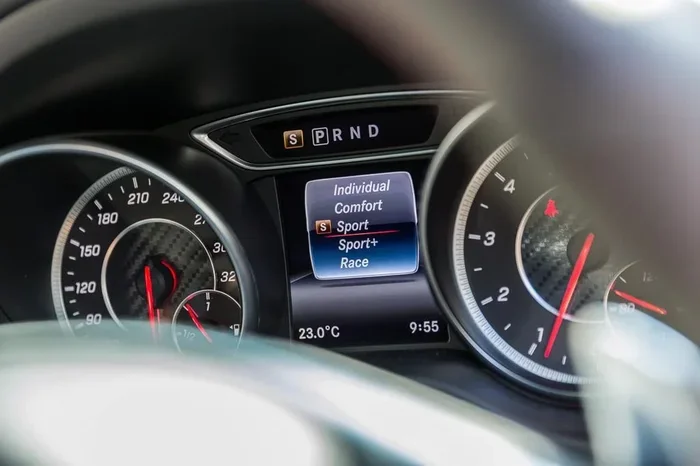
Look for a button that says “Sport,” “S,” or shows a sporty car icon. Press it once, and your instrument panel should display a confirmation. Many cars show the word “Sport” or an “S” in the gauge cluster to let you know the mode is active.
Quick Tip: If you cannot find the button, check your owner’s manual. Every car places it differently, and the manual will give you the exact location for your specific model.
Method 2: The Drive Mode Dial or Slider
Many newer vehicles come with a drive mode dial or slider. You will find this on the center console or near the gear shifter. Common options include:
- Eco
- Normal
- Sport
- Sport Plus (on some models)
- Individual or Custom (on select vehicles)
Simply rotate the dial or slide the selector to “Sport.” Your car will immediately adjust the throttle, steering, and sometimes the suspension to match the sport setting. This is the most intuitive method because you can see and feel the change instantly.
Method 3: Paddle Shifters in Manual Mode
If your car has paddle shifters behind the steering wheel, you can manually control the transmission to create a sport-like feel. Pull the right paddle to upshift and the left paddle to downshift. This gives you full control over the gear ratio and keeps the engine in its power band.
Some cars allow you to use paddle shifters even without switching to sport mode. However, combining paddle shifters with sport mode creates the most engaging driving experience. The car holds gears longer and responds faster to your inputs.
Method 4: Touchscreen or Infotainment Menu
Modern vehicles, especially those from brands like BMW, Mercedes-Benz, and Tesla, often let you change driving modes through the touchscreen. Navigate to the vehicle settings or drive mode menu and select sport mode. Some cars even let you customize individual settings like throttle sensitivity, steering weight, and suspension stiffness.
This method is especially useful if your car does not have a physical button or dial for drive modes. The touchscreen makes it easy to switch between driving modes on the fly.
Method 5: Sport Mode via the Gear Lever
Some automatic cars have a sport mode built into the gear lever itself. You may need to push the lever to the left or right, or pull it toward you, to engage sport shift points. This method is common in vehicles from manufacturers like Audi and Volkswagen.
In these cars, the gear lever might have a specific gate or position marked “S” for sport. Moving the lever into that position changes how the transmission behaves without needing a separate button.
What Happens to Your Car in Sport Mode?
Now that you know how to activate sport mode, let us talk about what actually changes. Understanding the full picture helps you use sport mode more effectively and safely.
Engine and Powertrain Changes
When you switch to sport mode, several things happen simultaneously:
- The engine mapping becomes more aggressive
- The throttle responds faster to your input
- The transmission holds lower gears longer
- Rev matching becomes more pronounced during downshifts
- Engine braking increases when you lift off the throttle
All of these changes work together to give you a more engaging and powerful driving experience. The car feels more connected to your inputs, and you can feel the difference in acceleration and responsiveness.
Handling and Stability Adjustments
Beyond the engine, many cars also adjust their electronic stability control and traction systems in sport mode. The stability control becomes less intrusive, allowing for more wheel slip during spirited driving. This gives experienced drivers more freedom to explore the limits of their vehicle.
However, this also means you need to be more careful. With less electronic intervention, the car can become harder to control if you push it too hard. Always drive within your skill level and the limits of the road conditions.
Sound and Exhaust Changes
One of the most noticeable changes in sport mode is the sound. Many cars activate a sport exhaust mode that opens the exhaust valves or adjusts the exhaust bypass valves. The result is a deeper, more aggressive engine note that makes driving even more enjoyable.
Some vehicles also increase the engine sound through the speakers using active sound design. This is especially common in modern turbocharged cars that are naturally quiet. The car artificially enhances the sound to make the performance driving experience feel more exciting.
When Should You Use Sport Mode?
Sport mode is not just for racing or weekend fun. There are many real-world situations where it makes sense to switch modes. Knowing when to use it helps you get the most benefit without wasting fuel or wearing out your car prematurely.
Open Highways and Country Roads
Sport mode shines on open roads where you can safely enjoy the extra power and responsiveness. If you are cruising on a highway and want to overtake a slower vehicle, switching to sport mode gives you instant access to more engine power and quicker throttle response. You can pass with confidence and ease.
On winding country roads, sport mode makes the car feel more alive. The tighter steering and firmer suspension help you carve through corners with precision. It is in these moments that sport mode truly delivers on its promise.
Mountain Driving and Hill Climbing
If you live near mountains or frequently drive on steep roads, sport mode is incredibly useful. The lower gear ratio and higher RPMs give you better climbing power. The engine does not have to work as hard to maintain speed on inclines, which means smoother and more confident hill climbing.
On the way down, sport mode also increases engine braking. This helps you control your speed without riding the brakes, which can cause brake fade on long descents.
When NOT to Use Sport Mode
While sport mode is fun, it is not always the right choice. Here are situations where you should stick to normal or eco mode:
- Heavy city traffic: Sport mode makes stop-and-go driving jerky and tiring. The aggressive throttle response can cause sudden lurches.
- Wet or icy roads: The reduced traction control in sport mode increases the risk of slipping on low-grip surfaces.
- Long commutes: Sport mode uses significantly more fuel. For daily driving, normal or eco mode saves money at the pump.
- Low-speed parking: The sharper steering and throttle response make precise parking maneuvers harder to control.
Sport Mode vs. Other Driving Modes Compared
Most modern cars offer multiple driving modes. Understanding how sport mode compares to other options helps you choose the right mode for every situation.
| Feature | Eco Mode | Normal Mode | Sport Mode | Sport Plus |
|---|---|---|---|---|
| Throttle Response | Slow and gentle | Balanced | Quick and responsive | Very aggressive |
| Shift Points | Early (saves fuel) | Moderate | Late (more power) | Very late |
| Steering Weight | Light | Normal | Firmer | Very firm |
| Suspension Stiffness | Soft | Medium | Firmer | Very stiff |
| Fuel Economy | Best | Good | Moderate | Lowest |
| Engine Sound | Quiet | Normal | Sporty | Very aggressive |
| Best For | City commuting | Daily driving | Open roads, spirited drives | Track days, performance |
As you can see, sport mode strikes a great balance between comfort and performance. It is the go-to mode for most drivers who want a more engaging experience without going to the extreme of sport plus mode.
Common Mistakes People Make with Sport Mode
Using sport mode the wrong way can reduce your fuel economy, wear out parts faster, or even compromise safety. Here are the most common mistakes and how to avoid them.
Leaving Sport Mode On All the Time
One of the biggest mistakes drivers make is leaving sport mode engaged permanently. This dramatically reduces your fuel economy because the engine works harder and shifts at higher RPMs. Over time, this can also increase wear on your transmission and brakes.
Quick Tip: Make it a habit to switch back to normal mode when you are done with spirited driving. Your wallet and your car will thank you.
Using Sport Mode on Slippery Roads
Sport mode reduces the intervention of your electronic stability control and traction control. On wet, icy, or gravel roads, this can be dangerous. The car is more likely to spin or slide because the systems allow more wheel slip before they intervene.
Always switch back to normal or eco mode when road conditions are less than ideal. Safety should always come before performance.
Ignoring the Warning Signs
If your car overheats or the transmission starts acting strangely after extended use of sport mode, pay attention. Pushing the engine hard for long periods generates more heat and stress. If you notice any warning lights or unusual sounds, switch back to normal mode and give the car a break.
Expert Tips for Getting the Most Out of Sport Mode
Want to really master your car’s sport mode? Here are some expert insights that will elevate your driving experience.
Combine Sport Mode with Heel-Toe Downshifting
If you drive a manual or have paddle shifters, try combining sport mode with heel-toe downshifting. This technique lets you brake and downshift smoothly without unsettling the car. It is a skill that takes practice but makes a huge difference in how your car feels during spirited driving.
Use Sport Mode During Overtaking Only
You do not need to stay in sport mode all the time. A great strategy is to switch to sport mode only when you need to overtake. The instant boost in throttle response and engine power makes passing other vehicles quick and confident. Once you are back in your lane, switch back to normal mode.
Warm Up Your Engine First
Before hitting sport mode, give your engine a minute or two to warm up. Cold engines do not respond well to aggressive driving, and the transmission fluid is thicker when cold. A quick warm-up ensures all the systems are ready for the demands of sport mode.
Check Your Tire Pressure
Sport mode puts more stress on your tires through sharper acceleration and tighter cornering. Make sure your tire pressure is at the recommended level before driving aggressively. Proper tire pressure improves handling, safety, and tire longevity.
Does Sport Mode Damage Your Car?
This is one of the most common questions we get about sport mode. The short answer is no, not if you use it responsibly. Car manufacturers design vehicles to handle sport mode regularly without causing damage.
However, constantly running in sport mode does increase wear on certain components. Your brakes may wear slightly faster because the engine braking effect is stronger. Your fuel consumption will go up. And if you consistently redline the engine in sport mode, you may shorten the life of certain engine parts over time.
The key is balance. Use sport mode when you want a more engaging drive, and switch back to normal mode when you do not. Your car is built to handle both, and occasional spirited driving is actually good for the engine because it keeps components moving and reduces carbon buildup.
Key Takeaways
- Easy Access: Most cars let you activate sport mode with a button, dial, or shift lever — no tools needed.
- Performance Boost: Sport mode tightens the throttle, shifts gears later, and sharpens steering for a sportier feel.
- Know Your Car: Not all vehicles offer sport mode, and the features vary widely between brands and models.
- Fuel Trade-Off: Sport mode uses more gas because the engine works harder, so keep that in mind.
- Safety First: Use sport mode wisely — it is best for open roads and spirited driving, not heavy traffic.
- Multiple Modes: Many modern cars offer sport plus, eco, and custom modes for even more control.
- Maintenance Matters: Regularly checking your transmission and engine keeps sport mode performing at its best.
Conclusion
Sport mode is one of the simplest upgrades you can make to your driving experience. With just the press of a button or the turn of a dial, you unlock sharper throttle response, later shift points, tighter steering, and a more engaging overall feel. It transforms your daily commute into something more enjoyable and makes weekend drives feel truly special.
Now that you know how to put your car in sport mode, you can confidently switch between driving modes and get the most out of every trip. Remember to use it wisely, switch back to normal mode when needed, and always prioritize safety on the road.
Your car has more power and capability than you might realize. Sport mode is the key to unlocking it. So go ahead, flip that switch, and enjoy the ride.
FAQs
Can I switch to sport mode while driving?
Yes, absolutely. Most cars let you switch to sport mode at any speed while driving. The changes take effect immediately, so you will feel the difference right away. Just make sure you are in a safe situation to adjust your driving settings.
Does sport mode use more fuel?
Yes, sport mode generally uses more fuel. The engine works harder, shifts at higher RPMs, and the throttle responds more aggressively. If fuel economy is a priority, switch back to normal or eco mode for everyday driving.
Can I use sport mode in automatic and manual cars?
Yes, both automatic and manual cars can use sport mode. In automatic cars, it changes shift points and throttle mapping. In manual cars, it often adjusts throttle response and can be combined with manual shifting using the gear lever or paddle shifters for the best experience.
Is sport mode the same as sport plus mode?
Not exactly. Sport mode is a balanced setting that enhances performance while still keeping the car comfortable for daily use. Sport plus mode is more extreme, with even sharper throttle response, later shifts, and firmer suspension. Sport plus is best reserved for open roads or track driving.
Will sport mode void my car warranty?
No, using sport mode will not void your warranty. Manufacturers design their vehicles to handle sport mode regularly. However, if you modify your car’s engine or transmission settings beyond factory parameters, that could affect your warranty coverage.
What cars have sport mode?
Most modern vehicles from brands like Toyota, Honda, BMW, Mercedes-Benz, Ford, Chevrolet, and Nissan offer sport mode in at least some of their models. Even some crossovers and SUVs now include sport mode as a standard or optional feature. Check your owner’s manual or the drive mode selector to see if your car has it.