How Can I Remove a Stuck Key From a Door Lock Safely
A stuck key in a door lock is a frustrating problem that many people face, especially with car locks. This guide shows you safe, simple methods to remove a stuck key without damaging your lock. You will learn the causes, the right tools to use, and when to call a locksmith for help.
Key Takeaways
- Gentle rocking motion is the safest first step to free a stuck key from a lock cylinder.
- Lock lubricant spray can loosen a jammed key in seconds without harsh chemicals.
- Never force a stuck key out, as this can break it inside the lock mechanism.
- Needle-nose pliers and key extraction tools are effective for partially stuck or broken keys.
- Regular lock maintenance prevents most stuck key problems from happening again.
- Call a professional locksmith if the key is fully broken or the lock cylinder is damaged.
📑 Table of Contents
- Why Keys Get Stuck in Door Locks
- How to Remove a Stuck Key From a Door Lock Safely
- What to Do When the Key Breaks Inside the Lock
- Tools You Need for Stuck Key Removal
- Preventing a Stuck Key in the Future
- When to Call a Professional Locksmith
- Common Mistakes to Avoid When Removing a Stuck Key
- Key Takeaways
- Conclusion
Why Keys Get Stuck in Door Locks
A stuck key is more common than you think. It happens in home locks and car locks every single day. The good news is that most cases are easy to fix at home. You just need to know what is causing the problem.
Several things can make a key jam inside a lock. Cold weather is one of the biggest culprits. When temperatures drop, the metal in your lock contracts. This tightens the fit around the key. The key then gets stuck and will not move.
Dirt and grime build up inside the lock cylinder over time. This gunk creates friction. The key cannot slide out smoothly. Rust is another common cause. Older locks are especially prone to rust buildup on internal parts.
A worn-out key can also get stuck. If the ridges on your key are smooth from heavy use, it will not turn or pull out easily. Sometimes the lock mechanism itself is misaligned. A bump or impact can shift the lock cylinder slightly. This makes the key jam in place.
Using the wrong key is another simple mistake. Not every key fits every lock perfectly. Even a small difference in the key cuts can cause a stuck key situation. Always double check that you are using the right key for the right lock.
Common Reasons for a Stuck Key in Car Locks
Car locks have their own set of problems. The ignition lock cylinder takes a lot of wear and tear. Over time, the internal pins wear down. This makes the key feel loose or stuck.
Smart keys and transponder keys add another layer of complexity. Sometimes the electronic part of the key fails while the physical key is still in the lock. The car does not recognize the key, and it stays stuck in the ignition.
Debris from your pocket or purse can get into the lock too. Small coins, crumbs, and lint can block the keyway. This prevents the key from coming out smoothly. Keeping your lock area clean helps a lot.
Why Home Door Locks Jam Up
Home door locks face similar issues. Humidity causes internal parts to swell. This is especially true for outdoor locks exposed to rain and snow. The lock cylinder tightens, and the key gets trapped.
Older homes often have older locks. These locks have not been maintained in years. The internal springs and pins become weak. A stuck key in a home lock is very common in older properties.
How to Remove a Stuck Key From a Door Lock Safely
Now let us get into the fix. Removing a stuck key safely is all about patience and the right approach. Never yank or pull hard on the key. This is the number one mistake people make. Forcing the key can break it in half inside the lock. That makes the problem much worse.
Start by staying calm. Take a deep breath. Look at the key closely. Can you see any part of the key sticking out? If yes, you have a good grip to work with. If the key is flush or pushed inside the lock, you need a different approach.
Here is the first thing you should try. Gently wiggle the key side to side. Do not push it in or pull it out yet. Just move it gently left and right. This can help realign the internal pins. Often, a small wiggle is all it takes to free a stuck key.
Next, try a gentle pull. Do not use a lot of force. Pull the key out slowly and steadily. If it does not move, stop. Do not force it. Move on to the next method.
Method 1: Use Lock Lubricant Spray
A lock lubricant spray is one of the best tools for a stuck key. You can buy a can of graphite spray or Teflon-based lubricant at any hardware store. These sprays are cheap and work very well.
Here is how to use it. Hold the spray can about two inches from the lock cylinder. Spray a small amount into the keyhole. Wait about thirty seconds. The lubricant will seep inside and coat the internal parts. Now try wiggling the key again. In most cases, the key will slide right out.
Do not use WD-40 as a long-term solution. WD-40 is a water displacer, not a true lock lubricant. It can attract dust and grime over time. This can make the problem worse in the long run. Use it only in an emergency if you have nothing else.
Method 2: Try the Jiggle and Pull Technique
This method works well for keys that are stuck but not broken. Hold the key firmly with your fingers. Push it in gently about half an inch. Then pull it out while wiggling it up and down. The motion helps the pins inside the lock cylinder reset.
Repeat this a few times. Be patient. Do not rush. Sometimes it takes several tries before the stuck key releases. The goal is to move the internal pins enough for the key to slide out.
Method 3: Use Needle-Nose Pliers
If part of the key is sticking out, needle-nose pliers can help. Choose a pair with a fine, pointed grip. Wrap the pliers gently around the key shaft. Pull straight out with a steady motion.
Do not twist or turn the pliers while pulling. This can bend or break the key. Just pull gently and steadily. A stuck key that is slightly protruding usually comes out with this method.
Make sure the pliers have a good grip on the key. If the key is slippery or wet, dry it off first. A rubber grip sleeve can also help you hold the key better.
Method 4: Use a Key Extraction Tool
For keys that are pushed deep inside the lock or broken off, a key extraction tool is your best friend. These tools are small hooks or claws designed to grab a key from inside the lock cylinder. You can buy a cheap key extraction kit online or at an auto parts store.
To use the tool, insert it into the keyhole alongside the stuck key. Feel around for the key shaft or head. Hook the tool onto the key. Pull it out slowly and carefully.
This method works well for both whole keys that are stuck and broken key pieces. It is one of the most reliable key extraction methods for DIY fixes. Just go slowly and do not force the tool inside the lock.
Method 5: Tap the Lock Cylinder Gently
This sounds unusual, but it works. Take a small hammer or the handle of a screwdriver. Tap the side of the lock cylinder gently. The vibration can help shift the internal pins. This can free a stuck key that is jammed due to misalignment.
Be very gentle with this method. You do not want to damage the lock. A few light taps should do the trick. After tapping, try pulling the key out again.
What to Do When the Key Breaks Inside the Lock
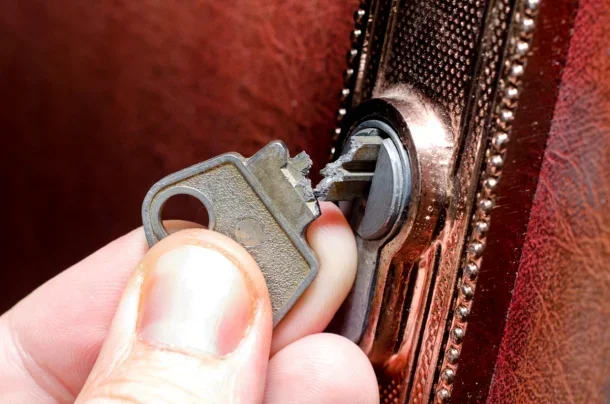
A broken key inside a lock is a more serious situation. It happens when a key is old, weak, or forced too hard. The key snaps in two, and part of it stays inside the lock cylinder. This is a common broken key in lock scenario.
Do not panic. You have several options. The first is to try extracting the broken piece with a key extraction tool. If you can grip the broken end with needle-nose pliers, pull it out carefully.
If the broken piece is flush with the lock face, you need a different approach. A key extraction tool with a hook end works well here. Slide it into the lock alongside the broken piece. Hook the broken end and pull it out.
Another option is to use super glue. Put a small drop of super glue on a thin wire or paperclip. Insert it into the lock and touch it to the broken key piece. Wait a few seconds for the glue to set. Then pull the wire out with the key piece attached.
This super glue method can be risky. If the glue gets inside the lock mechanism, it can cause more problems. Use it only as a last resort and be very careful.
When the Broken Key Is Deep Inside the Cylinder
Sometimes the broken piece goes deep into the lock cylinder. This is when you should call a professional. A locksmith has special tools to extract broken keys from deep inside the cylinder. They can also replace the lock cylinder if needed.
Trying to dig a broken key out with sharp objects can damage the lock. You might end up needing a full lock cylinder replacement instead of a simple extraction. It is better to let a trained locksmith handle this type of job.
Tools You Need for Stuck Key Removal
Having the right tools makes removing a stuck key much easier. Here is a list of the most useful tools to keep on hand.
- Lock lubricant spray – The most essential tool for any stuck key situation.
- Needle-nose pliers – Great for gripping keys that are partially sticking out.
- Key extraction tool kit – Affordable and effective for broken or deeply stuck keys.
- Flathead screwdriver – Useful for gently tapping the lock cylinder.
- Soft cloth or rag – For cleaning the lock area before you start.
- Flashlight – Helps you see inside the keyhole and check the key position.
- Rubber grip sleeve – Gives you better hold on a slippery or stuck key.
You do not need all of these tools for every situation. Start with the lubricant spray. It solves most stuck key problems on its own. Add the other tools as needed based on the situation.
Quick Tips for Using Lock Lubricant
Here are some quick tips for using lock lubricant spray effectively. First, clean the lock area before spraying. Wipe away any dirt or debris from around the keyhole. This prevents particles from getting pushed inside the lock.
Second, spray in short bursts. You do not need a lot of lubricant. A few short sprays are enough. Third, wait at least thirty seconds after spraying. This gives the lubricant time to work its way inside the lock cylinder.
Fourth, do not use the lock for a few minutes after lubricating. Let the lubricant settle into all the moving parts. This ensures long-lasting protection against future stuck key issues.
Preventing a Stuck Key in the Future
Prevention is always better than cure. Taking a few simple steps can save you from a stuck key headache in the future. Here are the best ways to keep your locks working smoothly.
First, lubricate your locks regularly. A spray of lock lubricant every six months keeps the internal parts clean and moving freely. This is one of the most effective ways to prevent a stuck key.
Second, keep your keys in good condition. Replace keys that show signs of wear. Keys with smooth ridges or bends should be replaced. A worn key puts extra stress on the lock cylinder.
Third, be gentle with your locks. Do not force the key when it feels stiff. If the key does not turn easily, stop and apply lubricant. Forcing a stiff key is the fastest way to break it inside the lock.
Fourth, keep locks clean. Wipe down the lock cylinder and keyhole regularly. Dirt and debris are the enemies of smooth lock operation. A clean lock works much better than a dirty one.
Fifth, protect your locks from the elements. Use a lock cover or shield for outdoor locks. This prevents rain, snow, and humidity from causing rust and corrosion. A well-protected lock lasts much longer.
Maintenance Schedule for Your Locks
Here is a simple maintenance schedule you can follow. Every three months, check your locks for stiffness. Spray lubricant if the key feels tight. Every six months, do a full cleaning of all your locks. Every year, inspect the lock cylinders for wear and tear.
Following this schedule greatly reduces the chance of a stuck key. It also extends the life of your locks. A well-maintained lock can last for decades without issues.
When to Call a Professional Locksmith
Not every stuck key situation is a DIY job. Sometimes you need professional help. Knowing when to call a locksmith can save you time, money, and frustration.
Call a locksmith if the key is completely broken inside the lock. A professional has the right tools and skills to extract the broken piece safely. They can also assess whether the lock cylinder needs replacement.
Call a locksmith if the lock is damaged or bent. A damaged lock cannot be fixed with lubricant or wiggling. It needs professional repair or full replacement. Trying to fix a damaged lock yourself can make things worse.
Call a locksmith if you have tried everything and the key is still stuck. Sometimes a stuck key is caused by a deeper internal problem. A locksmith can diagnose the issue and fix it properly.
Also call a locksmith if you are dealing with a high-security lock. These locks have complex mechanisms that require special tools and knowledge. A locksmith trained in high-security locks is the best person for this job.
How to Choose the Right Locksmith
Not all locksmiths are the same. Look for a licensed and insured locksmith in your area. Check online reviews and ratings. Ask friends or family for recommendations. A good locksmith will give you a clear price estimate before starting work.
Make sure the locksmith has experience with your type of lock. Car locks, home locks, and commercial locks all have different mechanisms. Choose a locksmith who knows your specific lock type well.
Common Mistakes to Avoid When Removing a Stuck Key
There are several mistakes that make a stuck key situation worse. Avoiding these mistakes can save you a lot of trouble.
- Forcing the key out – This is the biggest mistake. It can break the key inside the lock.
- Using sharp objects – Poking around the lock with pins or screws can damage the internal mechanism.
- Using too much lubricant – Excess lubricant can attract dirt and create a bigger mess inside the lock.
- Ignoring the problem – A stuck key does not fix itself. Address it quickly before it gets worse.
- Using the wrong key – Always double check that you are using the correct key for the lock.
- Skipping lock maintenance – Regular maintenance prevents most stuck key problems from happening.
By avoiding these mistakes, you increase your chances of a successful stuck key removal. You also protect your lock from damage. A little patience goes a long way.
Key Takeaways
- Start with lubricant spray – it solves most stuck key problems quickly and safely.
- Never force a stuck key out of the lock, as this can break it inside the cylinder.
- Use gentle rocking motions to realign the internal pins before pulling the key out.
- Keep a key extraction tool in your home or car for emergencies.
- Maintain your locks regularly to prevent future stuck key situations.
- Call a professional locksmith when the key is broken or the lock is damaged.
- Prevention beats cure – simple habits keep your locks working smoothly for years.
Conclusion
A stuck key in a door lock is a common problem with straightforward solutions. Most of the time, you can fix it at home with simple tools and a little patience. Start with a good lock lubricant spray. Try gentle wiggling and pulling motions. Use needle-nose pliers or a key extraction tool if needed.
Remember to stay calm and never force the key. If the key breaks or the lock is damaged, a professional locksmith is your best option. They have the expertise and tools to handle even the most difficult stuck key situations.
Prevention is the ultimate solution. Keep your locks lubricated, clean, and well-maintained. Replace worn keys before they cause problems. These simple habits save you from future frustration.
Now that you know how to handle a stuck key, you are prepared for whatever comes your way. Keep these tips in mind, share them with friends and family, and you will never be left stranded with a jammed lock again.
FAQ: Removing a Stuck Key From a Door Lock
Can I use hot water to unfreeze a stuck key in my car lock?
Yes, warm water can help if the stuck key is caused by ice or cold weather. However, use warm water, not boiling water. Boiling water can damage the lock cylinder or the paint on your car. Pour a small amount around the lock and wait a few seconds before trying to remove the key.
Is it safe to use pliers on a stuck key?
Yes, it is safe if you use needle-nose pliers gently. Grip the key shaft carefully and pull straight out. Do not twist or bend the key while pulling. If the key feels like it will break, stop and use a key extraction tool or call a locksmith instead.
How much does it cost to hire a locksmith for a stuck key?
Most locksmiths charge between fifty and one hundred and fifty dollars for a simple stuck key extraction. The cost goes up if the lock cylinder needs replacement. Always ask for a price estimate before the locksmith starts working on your lock.
Can a stuck key damage the lock cylinder?
Yes, forcing a stuck key can damage the lock cylinder. It can bend internal pins, break the key, or crack the cylinder housing. This is why gentle methods and patience are so important. A damaged lock cylinder may need full replacement.
What is the best lock lubricant for preventing stuck keys?
Graphite spray and Teflon-based lubricants are the best choices for most locks. They do not attract dust or grime like oil-based products do. Apply a small amount every six months to keep your lock mechanism running smoothly and prevent future stuck key issues.
How long does it take to remove a stuck key?
Most stuck key removals take only a few minutes if you use the right method. Lubricant spray and gentle wiggling often work within thirty seconds to two minutes. Broken keys or damaged locks may take longer and might require professional help from a locksmith.