Do You Attach Jumper Cables While the Car Is Running
Do You Attach Jumper Cables While the Car Is Running? The short answer is no, and doing so can cause serious damage to your vehicle’s electrical system. You should always connect jumper cables with the engine off to prevent power surges, short circuits, and potential injury. This guide walks you through the safe, step-by-step process of jump starting a car the right way, including common mistakes to avoid and expert tips that every driver should know.
Do You Attach Jumper Cables While the Car Is Running? The answer might surprise you. Many drivers assume it is fine to hook up jumper cables with the engine already on. In reality, this common mistake can lead to costly repairs and serious safety hazards.
Jump starting a car is a skill every driver should know. But doing it the wrong way can harm your vehicle’s electrical system. This guide explains everything you need to know about connecting jumper cables safely. You will learn the correct order, the risks of skipping steps, and how to avoid common errors. By the end, you will feel confident handling a dead battery situation like a pro.
Whether you are stranded in a parking lot or preparing for emergencies, this article covers it all. We will walk through each step in simple terms. No confusing jargon. No fluff. Just clear, practical advice you can use right away.
Key Takeaways
- Never attach jumper cables with the engine running: It can damage the alternator, fuse boxes, and sensitive electronics in both vehicles.
- Always connect cables in the correct order: Positive to positive, then negative to ground, and finally to the dead battery.
- Turn off both engines before connecting: This prevents voltage spikes and protects the electrical systems of both cars.
- Watch for corrosion on battery terminals: Clean terminals ensure a strong connection and a successful jump start.
- Disconnect cables in reverse order: Remove the negative clamp first, then the positive, to avoid sparks near the battery.
- Keep safety precautions front and center: Wear gloves, avoid smoking, and check for cracked batteries before attempting a jump start.
- Consider a portable jump starter: These devices eliminate the need for another vehicle and are a great addition to your emergency kit.
📑 Table of Contents
- What Happens When You Attach Jumper Cables While the Car Is Running
- The Correct Way to Connect Jumper Cables Safely
- Risks of Attaching Jumper Cables While the Car Is Running
- Step-by-Step Jump Start Procedure
- Common Mistakes People Make When Jump Starting
- When to Seek Professional Help Instead
- Expert Insights on Jump Starting Safely
- Conclusion
What Happens When You Attach Jumper Cables While the Car Is Running
Connecting jumper cables with the engine running is one of the most common mistakes drivers make. It might seem harmless, but the electrical consequences can be severe. When your car is running, the alternator is actively generating power. Attaching jumper cables to a live system creates a sudden surge of electricity that your vehicle is not prepared for.
The electrical system in your car is designed to operate within a specific voltage range. When you hook up jumper cables while the engine is running, you introduce an uncontrolled voltage source into that system. This can overwhelm sensitive components like the engine control unit, the infotainment system, and even the sensors throughout the engine bay.
Understanding Your Car’s Electrical System
Your car’s electrical system relies on a delicate balance. The battery provides the initial power to start the engine. Once the engine is running, the alternator takes over and supplies electricity to all the systems. It also recharges the battery. When you introduce an external power source through jumper cables while the alternator is already working, things can go wrong quickly.
Think of it like this. Your alternator is like a steady water pump. The jumper cables are like a high-pressure hose suddenly connected to the same system. The pressure spike can damage pipes, fittings, and everything connected. In your car, those “pipes” are wires, fuses, and computer modules. The damage is not always immediate. Sometimes it shows up weeks or months later as mysterious electrical problems.
The Danger of Power Surges
A power surge is the biggest risk when you attach jumper cables while the car is running. The surge can blow fuses, fry the voltage regulator, or damage the alternator itself. In modern vehicles with complex computer systems, the damage can be even more extensive. A single voltage spike can knock out multiple sensors and modules at once.
Here is what can happen step by step. The running car’s alternator is producing around 13.5 to 14.5 volts. The dead battery might be sitting at 10 or 11 volts. When you connect the two, there is a sudden rush of current from the good battery into the dead one. This creates a voltage spike that travels through the entire electrical system. The result can range from a blown fuse to a completely fried engine computer.
The Correct Way to Connect Jumper Cables Safely
Now that you know why you should never attach jumper cables with the engine running, let us walk through the right way to do it. Following the proper steps protects both vehicles and keeps you safe throughout the process.
What You Need Before You Start
Before you touch a single cable, make sure you have everything ready. Here is a quick checklist of what you need for a safe jump start:
- A set of jumper cables: Make sure they are in good condition with no frayed insulation.
- A working vehicle: The donor car should have a fully charged or healthy battery.
- Safety gear: Wear protective gloves and safety glasses if you have them.
- A clean workspace: Clear the area around both batteries of any debris or flammable materials.
- Knowledge of your battery location: Some cars have the battery in the trunk or under a seat. Check before you start.
Step-by-Step Connection Process
Follow these steps carefully every time you jump start a car. The order matters a lot. Skipping a step or doing things out of order can cause sparks, damage, or even a battery explosion.
Step 1: Park Both Cars Safely. Put both vehicles in park or neutral. Turn off the ignition in both cars. Do not let the vehicles touch each other. Keep the jumper cables from dangling into the engine bay where they could catch on moving parts.
Step 2: Identify the Positive and Negative Terminals. The positive terminal is marked with a plus sign and is usually red. The negative terminal has a minus sign and is typically black. If the terminals are corroded, clean them with a wire brush before connecting the cables.
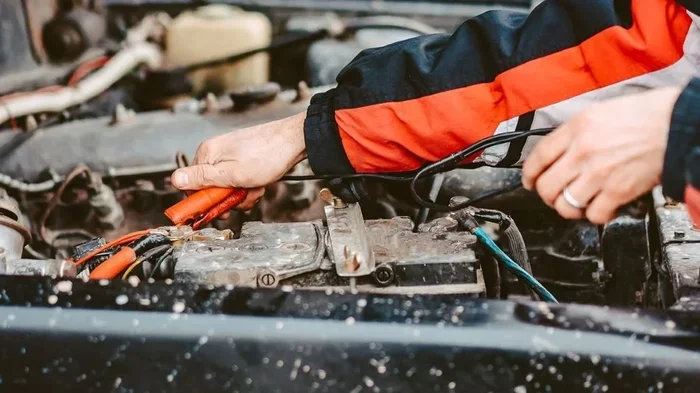
Step 3: Connect the Positive Cables First. Attach the red clamp to the positive terminal of the dead battery. Then attach the other red clamp to the positive terminal of the working battery. Make sure each clamp grips the terminal tightly.
Step 4: Connect the Negative Cables. Attach the black clamp to the negative terminal of the working battery. Then connect the other black clamp to an unpainted metal surface on the dead car’s engine block. This is called grounding. It helps prevent sparks near the battery, where hydrogen gas could ignite.
Step 5: Start the Donor Vehicle. Let the working car run for a few minutes. This allows the dead battery to receive a charge. Do not rev the engine. A steady idle is perfect.
Step 6: Try Starting the Dead Car. Turn the ignition key in the car with the dead battery. If it does not start right away, wait another minute or two and try again. Do not keep cranking for more than 10 seconds at a time. Let the battery rest between attempts.
Quick Tips for Safe Cable Attachment
- Always connect positive first and disconnect positive last. This reduces the risk of short circuits.
- Never let the clamps touch each other once they are connected to a battery. This creates a dangerous spark.
- Check the cable rating. Use cables rated for at least 400 to 600 amps for most passenger vehicles.
- Keep your face and hands away from the battery. Batteries can produce sparks or even small explosions.
- If you smell sulfur or hydrogen, stop immediately. These are signs of a leaking battery that could be dangerous.
Risks of Attaching Jumper Cables While the Car Is Running
Let us be very clear about this. Attaching jumper cables while the car is running carries real risks. Many people do it out of habit or impatience, but the consequences can be expensive and dangerous. Understanding these risks helps you make better decisions when you are faced with a dead battery situation.
Damage to the Alternator and Electrical Components
The alternator is one of the most vulnerable components when you attach jumper cables with the engine running. It is designed to handle a specific range of electrical load. A sudden surge from the good battery can overload it. This can cause the alternator to fail prematurely or completely.
Beyond the alternator, modern cars have dozens of electronic control units. These small computers manage everything from fuel injection to power steering. A voltage spike from improper cable connection can damage these units. Replacing a single ECU can cost several hundred dollars. Replacing multiple units can easily reach into the thousands.
Common Mistakes That Cause Problems
Here are the most common mistakes drivers make when jump starting a car. Avoiding these will keep you and your vehicle safe:
- Connecting cables while the engine is running: This is the biggest mistake and the main focus of this guide.
- Reversing the positive and negative connections: This causes a short circuit and can destroy electrical components instantly.
- Leaving cables connected too long after starting: Once the dead car is running, disconnect the cables promptly.
- Ignoring corrosion on battery terminals: Corrosion prevents a good connection and can cause intermittent electrical problems.
- Not checking the donor battery voltage: A weak donor battery can do more harm than good.
- Jump starting a frozen battery: Never attempt to jump start a battery that has been sitting in freezing temperatures. It could explode.
Comparison Table: Running vs. Off Engine Jump Start
| Factor | Engine Running (Wrong Way) | Engine Off (Correct Way) |
|---|---|---|
| Risk of Electrical Damage | High | Low |
| Voltage Surge Risk | Very High | Minimal |
| Alternator Stress | Severe | Normal |
| Sparks Near Battery | Likely | Rare |
| Damage to ECUs and Sensors | Possible | Very Unlikely |
| Safety Level | Dangerous | Safe When Done Correctly |
| Recommended by Experts | No | Yes |
As the table shows, the differences are clear and significant. Always turn off both engines before connecting jumper cables. This simple step protects your vehicle and keeps you safe.
Step-by-Step Jump Start Procedure
Now let us put it all together. This is the complete procedure for jump starting a car safely and effectively. Follow each step carefully and do not rush.
Positioning the Cars Correctly
Start by parking the working car close to the car with the dead battery. The vehicles should face each other or be parked side by side. Make sure both cars are turned off and the parking brakes are engaged. This prevents either car from rolling while you work.
Open the hoods of both vehicles. Locate the batteries. If you are not sure where the battery is, check the owner’s manual. Some vehicles have a battery disconnect terminal or a dedicated jump start post under the hood. Use those if available.
Connecting the Cables in the Right Order
Remember the order: positive, positive, negative, ground. Let us break that down one more time for clarity.
- Red clamp to dead battery positive terminal. Push it on firmly until it clicks.
- Red clamp to good battery positive terminal. Make sure it is tight and secure.
- Black clamp to good battery negative terminal. This completes the circuit on the donor side.
- Black clamp to bare metal on the dead car’s engine block. Do not connect this to the dead battery directly. Grounding on the engine block prevents sparks near the battery.
Once all four clamps are connected, step back and make sure no one is touching the cables or clamps. Take a breath and double-check your connections.
Starting the Engines Safely
Start the working car first. Let it idle for about two to three minutes. This gives the dead battery time to receive some charge. Then try starting the car with the dead battery. Turn the key gently and do not hold it for more than five to ten seconds at a time.
If the dead car starts, let both cars idle for a few minutes. This allows the dead battery to continue charging. If the car does not start after two or three attempts, stop. The battery may be too far gone, or there could be another problem besides a dead battery.
Disconnecting the Cables Properly
Once the dead car is running, you can disconnect the cables. But the order matters here too. Always disconnect in the reverse order of how you connected them.
- Remove the black clamp from the dead car’s engine block.
- Remove the black clamp from the good battery’s negative terminal.
- Remove the red clamp from the good battery’s positive terminal.
- Remove the red clamp from the dead battery’s positive terminal.
Keep the clamps apart from each other as you remove them. Do not let them touch each other or any metal surfaces on either car. Once all cables are removed, let the jumped car run for at least 15 to 20 minutes to recharge the battery.
Common Mistakes People Make When Jump Starting
Even when people know the correct procedure, mistakes can still happen. Here are the most common errors and how to avoid them.
Skipping Safety Checks
Many people rush through the process without checking the basics. Before you connect anything, look at both batteries. Are there cracks or leaks? Is there heavy corrosion on the terminals? If the battery looks damaged, do not attempt a jump start. Call a towing service or use a portable jump starter instead.
Also check the cable condition. Frayed or damaged cables can cause short circuits or sparks. If your jumper cables look worn out, replace them before your next emergency.
Wrong Cable Order and Reverse Polarity
Connecting the cables in the wrong order is one of the most dangerous mistakes. If you connect the negative clamp to the dead battery terminal instead of grounding it on the engine block, you create a spark right next to the battery. Battery acid and hydrogen gas can ignite, causing an explosion.
Reverse polarity happens when the positive and negative cables are swapped. This sends electricity flowing in the wrong direction through the electrical system. It can blow fuses, damage the alternator, and destroy sensitive electronics. Always double-check your connections before starting either engine.
Leaving Cables Connected Too Long
Some people leave the cables connected for too long after the dead car starts. This is unnecessary and can cause overcharging. Once the dead car is running, disconnect the cables promptly. Then let the car run for a while to recharge the battery naturally through the alternator.
When to Seek Professional Help Instead
Jump starting a car is a useful skill, but it is not the right solution for every situation. Knowing when to call in the experts can save you time, money, and stress.
Signs Your Battery Needs Replacement
If your battery is more than three to five years old, a jump start might only be a temporary fix. Watch for these signs that your battery needs replacing:
- The engine cranks slowly or struggles to start, even after a jump start.
- The battery case looks swollen or bloated.
- You see leaks or corrosion that keeps coming back.
- The dashboard battery light stays on after starting the car.
- You need jump starts frequently, even after driving.
In these cases, a battery charger or a full battery replacement is the better long-term solution. A professional mechanic can test your battery and alternator to determine the right course of action.
Calling a Towing Service or Roadside Assistance
Sometimes the safest choice is to call for help. If you are uncomfortable jump starting a car, if the battery looks damaged, or if you are in an unsafe location, do not hesitate to call a towing service or roadside assistance program. Many insurance plans and car memberships include roadside assistance. Use it.
Another option is a portable jump starter. These compact devices fit in your trunk and can jump start a car without needing another vehicle. They are affordable and incredibly convenient. Every driver should consider keeping one in their emergency kit.
Expert Insights on Jump Starting Safely
Automotive experts agree on one thing: prevention is better than cure. Regular maintenance of your car’s electrical system can prevent dead battery situations in the first place. Here is what the professionals recommend.
Check your battery voltage regularly. A healthy battery should read around 12.6 volts when the engine is off. If it drops below 12.0 volts, it is time to consider a replacement. Use a simple battery tester or ask your mechanic to check it during routine oil changes.
Keep your terminals clean. Corrosion on battery terminals is one of the leading causes of electrical problems. A simple mixture of baking soda and water can clean corrosion off terminals. Apply it with a toothbrush, rinse with water, and dry thoroughly.
Turn off all accessories before starting the car. Headlights, radio, air conditioning, and phone chargers all draw power. When you start the car, these accessories put extra strain on the battery. Turning them off reduces the load and helps the alternator recharge the battery faster.
Drive your car regularly. A car that sits for long periods will lose charge. If you have a secondary vehicle or a car you rarely drive, use a battery maintainer or trickle charger to keep the battery healthy.
Invest in quality jumper cables. Cheap cables with thin wires can overheat during a jump start. Look for cables with at least 6-gauge wire and heavy-duty clamps. Good cables last for years and make the jump start process safer and more reliable.
Conclusion
The answer to Do You Attach Jumper Cables While the Car Is Running is a clear and firm no. Connecting jumper cables with the engine running creates unnecessary risks that can damage your vehicle’s electrical system, harm the alternator, and even cause safety hazards. Always turn off both engines before connecting any cables. Follow the correct connection order, take your time, and never skip safety checks.
Jump starting a car is a straightforward process when you do it the right way. By following the steps in this guide, you can handle a dead battery situation with confidence. Remember to disconnect the cables in reverse order, let the jumped car run long enough to recharge, and seek professional help when needed.
Keep a set of quality jumper cables, a portable jump starter, and basic safety gear in your vehicle. These simple preparations can save you from a stressful roadside situation. Stay safe, stay prepared, and never underestimate the importance of doing things the right way.
Frequently Asked Questions
Can I leave my car running while connected to jumper cables?
No, you should never leave your car running while the jumper cables are being connected. Always turn off both engines before attaching any cables. Running engines create voltage differences that can cause power surges and damage the electrical systems in both vehicles.
What happens if you attach jumper cables wrong?
Attaching jumper cables in the wrong order can cause short circuits, blown fuses, and damage to the alternator and electronic control units. In the worst case, reverse polarity can cause sparks near the battery, leading to a battery explosion. Always follow the correct positive-first, negative-to-ground sequence.
How long should you leave jumper cables connected?
Once the dead car starts, you can disconnect the cables immediately. There is no need to leave them connected for an extended period. Let the jumped car run for 15 to 20 minutes to allow the alternator to recharge the battery before driving.
Is it safe to jump start a car in the rain?
Jump starting a car in the rain is not ideal but can be done if you take proper precautions. Keep all cable connections away from puddles and standing water. Make sure your hands are dry and your boots are dry. If conditions feel unsafe, wait for the rain to stop or call a professional.
Can a dead battery be too dead to jump start?
Yes, a battery that is completely dead, deeply discharged, or physically damaged may not respond to a jump start. If the battery has been dead for a long time or shows signs of swelling, leaking, or cracking, it needs to be replaced rather than jump started. A battery charger or professional testing can help determine the battery’s condition.
Should I drive my car after a jump start?
Yes, you should drive your car for at least 15 to 20 minutes after a jump start. Driving allows the alternator to recharge the battery fully. If you turn the car off too soon, the battery may not have enough charge to start the engine again. Consider driving for a longer period if the battery was very low.