Car Cranks but Wont Start Here Is How to Fix It Fast
Car cranks but won’t start is one of the most common and frustrating problems drivers face. When your engine turns over but refuses to fire up, it usually points to a fuel, spark, or sensor issue. This guide walks you through the most common causes and shows you exactly how to fix them fast with simple steps you can do yourself. You will learn diagnostic tips, quick at-home fixes, and expert advice to save time and money.
When you turn the key and hear your engine crank, you expect it to fire right up. But sometimes nothing happens. The engine turns over, but it just will not start. This is one of the most common car problems drivers face every day. It can happen to any vehicle at any time, no matter how old or new it is. The good news is that most causes are easy to find and fix. You do not need to be a professional mechanic to handle many of them. In this guide, we will walk you through every possible reason your car cranks but won’t start. We will also show you simple fixes you can try right now at home.
A car that cranks but won’t start can ruin your morning routine. You might be late for work or stuck in a parking lot with nowhere to go. Understanding why this happens helps you stay calm and take action. It also helps you decide whether you can fix the problem yourself or need professional help. Let us break down the problem step by step and find a solution fast.
Key Takeaways
- Dead battery or corroded terminals are the top reason a car cranks but won’t start
- Bad starter motor can cause a clicking sound when you turn the key
- Fuel pump failure means gas never reaches the engine even if the tank is full
- Ignition system problems like worn spark plugs or faulty coils prevent firing
- Crankshaft position sensor issues can shut down your engine unexpectedly
- Simple at-home fixes can solve many starting problems in minutes
- Knowing when to call a mechanic saves you from costly mistakes
📑 Table of Contents
Why Does a Car Crank but Won’t Start?
When your car cranks but won’t start, the engine is turning over but not igniting. A healthy engine needs three things to run properly. It needs fuel, spark, and compression. If any one of these three elements is missing, your car will crank but not start. The problem could be as simple as a dead battery. Or it could be something more complex like a bad crankshaft position sensor. Understanding the basics helps you narrow down the cause quickly and confidently.
The cranking process works like this. You turn the key. The starter motor spins the engine. The engine draws in air and fuel. The spark plugs fire to ignite the fuel mixture. The engine catches and runs on its own. When one step in this chain fails, you get a car that cranks but won’t start. The fix depends entirely on which step broke down. That is why knowing the basics gives you a huge advantage.
Fuel, Spark, and Compression: The Three Essentials
Every engine relies on three core elements to start and run. Let us look at each one closely so you understand how they work together.
- Fuel: Gasoline must reach the combustion chamber at the right time. A clogged fuel filter or failed fuel pump can stop this from happening. Without fuel, the engine has nothing to burn.
- Spark: The ignition system creates the spark that ignites the fuel. Worn spark plugs or a bad ignition coil can kill the spark entirely. No spark means no combustion.
- Compression: The engine cylinders must seal tightly to build the right pressure. A broken timing belt or worn piston rings can cause compression loss. Low compression means the engine cannot generate enough power to start.
If your engine has fuel and compression but no spark, you will know the problem is in the ignition system. If it has spark and compression but no fuel, focus on the fuel system. This simple thinking saves you hours of guessing and wasted effort.
The Most Common Causes
Let us look at the most frequent reasons your car cranks but won’t start. These are the problems mechanics see every single day in their shops. Knowing them helps you act faster and think smarter about the fix.
| Cause | Symptom | Difficulty to Fix |
|---|---|---|
| Dead or weak battery | Slow cranking, dim lights, clicking sound | Easy |
| Bad starter motor | Single click, grinding noise, no cranking | Moderate |
| Fuel pump failure | No hum from tank, engine starves for fuel | Moderate |
| Ignition system failure | No spark, engine turns over freely | Easy to moderate |
| Crankshaft position sensor | Check engine light on, sudden no-start | Easy |
| Engine flooding | Strong gas smell, wet spark plugs | Very easy |
| Neutral safety switch | Starts in neutral but not park | Easy |
| Immobilizer or key fob issue | Dash lights flash, no response to key | Very easy |
Use this table as a quick reference guide. Match your symptoms to the causes on the list. This will point you in the right direction before you spend money on parts or repairs.
Dead or Weak Battery
A dead battery is the number one cause of a car that cranks but won’t start. The battery powers the starter motor and the entire electrical system in your vehicle. When the battery is weak or dead, the engine may turn over slowly or not at all. You might notice dim headlights or a single clicking sound when you turn the key.
Corroded battery terminals can also cause this exact problem. Dirt and buildup on the terminals block the electrical connection between the battery and the car. Even if the battery itself is still good, corrosion stops power from flowing properly. Cleaning the terminals with a wire brush and a baking soda solution often fixes this quickly and cheaply.
Quick tip: If your dashboard lights are dim or flickering when you turn the key, the battery is likely the culprit. A simple voltage test with a multimeter can confirm it. A healthy battery should read 12.6 volts or higher when the engine is off. Anything below 12.0 volts means the battery needs charging or replacing.
Bad Starter Motor
The starter motor is what actually cranks the engine when you turn the key. When it fails, you might hear a single click or a grinding noise. The engine will not turn over at all, or it will crank very slowly. A bad starter motor is a common reason a car cranks but won’t start, especially in older vehicles with higher mileage.
Starter motors wear out over time through normal use. The brushes inside the motor wear down and lose contact. The solenoid can also fail to engage properly. Replacing a starter motor costs between 200 and 400 dollars at a repair shop. But if you are handy with tools, you can do it yourself and save a significant amount of money.
Warning sign: If you hear a grinding or whining noise every time you turn the key, the starter gear is grinding against the flywheel. Get this checked right away to avoid more expensive damage to the engine flywheel ring gear.
Fuel Pump Failure
The fuel pump sends gasoline from the tank to the engine under pressure. When it fails completely, fuel never reaches the combustion chamber. Your engine will crank but not start because it is running on empty, even if the fuel gauge shows the tank is full.
Fuel pumps can fail suddenly or slowly over time. A failing fuel pump often makes a whining or buzzing sound from the back of the car near the fuel tank. You might also notice hesitation, stalling, or loss of power while driving before it completely dies. These early warning signs are easy to ignore but they are your chance to fix the problem before you get stranded.
Quick tip: Turn the key to the on position without starting the engine. Wait a few seconds and listen for a soft humming sound from the back seat area. This is the fuel pump priming the system. If you hear nothing at all, the pump might be dead or the fuel pump relay could be faulty.
Ignition System Problems
The ignition system creates the spark that lights the fuel inside the engine. Several parts work together to make this happen. Spark plugs, ignition coils, and the ignition control module all play a critical role. When any of these components fail, the engine will crank but not fire up.
Worn spark plugs are one of the most common ignition problems drivers face. Over thousands of miles, the electrode on each spark plug wears down and can no longer create a strong enough spark to ignite the fuel. Replacing spark plugs is cheap and easy. Most mechanics recommend changing them every 30,000 to 50,000 miles depending on the type of plugs you use.
A bad ignition coil can also cause a no-start condition. The coil transforms the battery’s low voltage into the thousands of volts needed for the spark. When one or more coils fail, those cylinders lose their spark entirely. The engine cranks but cannot start because the fuel is not igniting in the combustion chamber.
Crankshaft Position Sensor
The crankshaft position sensor tells the engine computer exactly where the crankshaft is spinning at any given moment. This information is critical for timing the spark and fuel injection perfectly. When this sensor fails, the engine computer cannot tell when to fire the spark plugs. The result is a car that cranks but won’t start because the timing is completely off.
This sensor is relatively inexpensive to replace compared to other engine parts. But diagnosing it properly requires an OBD-II scanner to read the error codes stored in the engine computer. If your check engine light is on and the car suddenly will not start, a faulty crankshaft position sensor is a very strong possibility that should be checked first.
Engine Flooding
Engine flooding happens when too much fuel enters the combustion chambers. This is more common in older cars with carburetors, but it can happen in modern vehicles too. When the engine is flooded, the spark plugs become soaked in fuel and simply cannot create a spark to ignite the mixture. The car cranks and cranks but never catches.
If you suspect your engine is flooded, try this simple trick. Press the accelerator pedal all the way to the floor and hold it there. Then try to start the engine. This opens the throttle wide and helps clear the excess fuel from the combustion chambers. Hold the pedal down for about 10 seconds and then release it. The engine should catch and start running normally.
Neutral Safety Switch Issues
The neutral safety switch prevents the car from starting unless it is in park or neutral. This is a safety feature that protects you and your vehicle. When this switch fails or gets misaligned, the engine will crank but not start even when the gear selector is in the correct position. This is a common problem in vehicles with higher mileage or those that get a lot of use.
You can test this yourself with a simple trick. Try wiggling the shifter back and forth while turning the key. If the car starts when you move the shifter slightly, the neutral safety switch is likely the problem. Replacing it is usually a quick and affordable repair that a local mechanic can handle in under an hour.
Immobilizer or Key Fob Problems
Modern cars have sophisticated immobilizer systems that prevent theft. The system reads a tiny chip inside your key fob to verify the key is genuine and authorized. If the key fob battery is dead or the chip is damaged, the car will crank but not start. The engine computer refuses to allow fuel and spark because it does not recognize the key.
Try replacing the battery in your key fob first. This is a cheap fix that solves the problem surprisingly often. Most key fobs use a small CR2032 coin battery that costs about 5 dollars. Replacing it takes only 30 seconds. Some cars also have a backup start method with a hidden slot near the steering column or center console where you can place the key fob to start the car manually.
How to Diagnose the Problem Step by Step
Diagnosing a car that cranks but won’t start does not have to be scary or complicated. Follow these steps in order to narrow down the cause. Each step eliminates a possible problem and brings you one step closer to the fix. You do not need expensive tools for most of these checks.
Step 1: Check the Battery
Start with the simplest and most obvious check. Look at your dashboard lights when you turn the key to the on position. Are they bright and normal, or are they dim and flickering? If they are dim, your battery may be weak or dead. Use a multimeter to test the battery voltage directly. A reading below 12.0 volts means the battery needs charging or replacing.
Also inspect the battery terminals carefully. Look for white or greenish buildup on the metal connections. This is corrosion and it blocks electrical flow. Clean the terminals with a mixture of baking soda and water using an old toothbrush or wire brush. Rinse with clean water and dry thoroughly. Tighten the cable connections to make sure they are secure and making good contact.
Step 2: Listen for the Fuel Pump
Turn the key to the on position without starting the engine. Wait a few seconds and listen carefully. You should hear a soft buzzing or humming sound coming from the back seat area or near the fuel tank. This is the fuel pump pressurizing the fuel system. No sound could mean a dead fuel pump or a blown fuel pump relay.
Check the fuel pump relay in your fuse box. The fuse box cover usually has a diagram that labels each fuse and relay. Find the fuel pump relay and try swapping it with a similar relay that has the same amperage rating. This is a free test that takes two minutes and can save you hundreds of dollars in misdiagnosed repairs.
Step 3: Check for Spark
This test tells you right away whether your ignition system is working. Pull out one spark plug and reattach the ignition wire. Hold the spark plug against a metal part of the engine block. Have someone turn the key while you watch closely. You should see a bright blue or purple spark jumping across the plug gap. No spark at all means a problem with the ignition coil, distributor, or spark plug wires.
This test is simple but very effective for diagnosing a car that cranks but won’t start. If you have no spark, check the ignition coil and the crankshaft position sensor next. These are the two most common ignition-related causes of a no-start condition.
Step 4: Scan for Error Codes
An OBD-II scanner is one of the best diagnostic tools for figuring out why a car cranks but won’t start. Plug the scanner into the diagnostic port under your dashboard on the driver’s side. The scanner will read error codes stored in the engine computer’s memory. These codes point you directly to the specific problem area.
You can buy a basic OBD-II scanner for under 30 dollars at any auto parts store. Many stores will also scan your car for free if you ask. Common error codes for a no-start condition include P0335 for the crankshaft position sensor and P0230 for the fuel pump primary circuit. Write down any codes you find and look them up online or ask a parts store employee for help interpreting them.
Step 5: Check Fuel Pressure
If you have confirmed that the battery is good and you have spark, but the car still will not start, check the fuel pressure next. You need a fuel pressure gauge for this test. Attach the gauge to the fuel rail on the engine. Check the reading against your vehicle’s specifications in the service manual. Low pressure means the fuel pump is weakening or the fuel filter is clogged.
Replacing a fuel filter is one of the easiest and cheapest maintenance tasks you can do. Most filters cost under 15 dollars and can be swapped out in under 30 minutes with basic tools. A clogged fuel filter restricts fuel flow to the engine and can absolutely cause a no-start condition. This is an easy fix that many drivers overlook.
Quick Fixes You Can Try at Home
Some starting problems can be solved in just a few minutes with basic tools you probably already have in your garage. Here are the quick fixes that work most often for a car that cranks but won’t start.
Jump Start the Battery
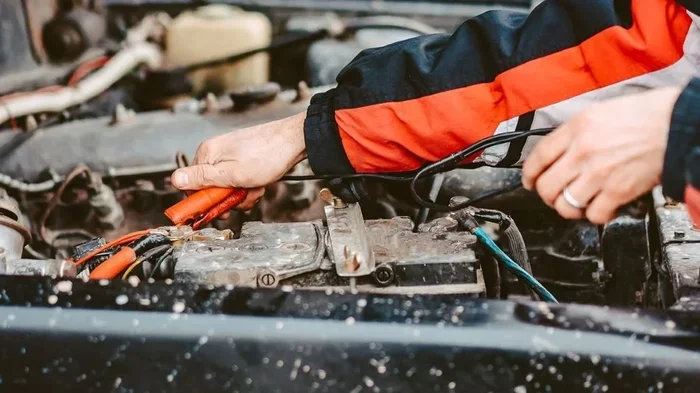
If the battery is dead, a jump start is the fastest and easiest fix. You need jumper cables and another vehicle or a portable jump starter pack. Connect the red cable to the positive terminal on your dead battery first. Then connect the other end of the red cable to the positive terminal on the good battery. Next, connect the black cable to the negative terminal on the good battery. Finally, connect the other black cable to an unpainted metal surface on your engine block, not directly to the dead battery terminal.
Let the good battery charge your dead battery for a few minutes before trying to start the car. Once the car starts, drive it for at least 15 to 20 minutes to recharge the battery fully. If the battery is old and keeps dying after a few days, it is time for a replacement. Most car batteries last between three and five years depending on climate and usage.
Clean Corroded Battery Terminals
Corrosion on battery terminals is a sneaky and common cause of starting problems. The white or blue-green powdery buildup blocks electrical flow from the battery to the rest of the car. Mix baking soda with a little water to make a thick paste. Apply the paste to the corroded terminals and scrub gently with a wire brush. Rinse with clean water and dry the terminals thoroughly with a clean rag. This simple fix can restore full electrical power instantly and get your car started again.
Tap the Starter Motor
If the starter motor is sticking or sticking, a firm tap with a wrench or hammer can sometimes free it up temporarily. Have someone sit in the car and turn the key while you gently tap the starter motor body with a tool. This is not a permanent fix by any means, but it can get you running long enough to drive to a repair shop.
Be careful not to hit the starter too hard. You want to free the stuck internal components, not damage them further. This trick works because the internal parts of the starter motor can stick due to heat buildup or general wear over time. It is a temporary workaround, not a real repair.
Replace the Key Fob Battery
A dead key fob battery is one of the most overlooked causes of a car that cranks but won’t start. Most modern key fobs use a small CR2032 coin battery. Replacing it takes just 30 seconds and costs about 5 dollars. Open the key fob case, swap the old battery for the new one, and try starting the car again.
Some cars have a backup start method built in. Look for a hidden slot near the steering column or center console where you can place the key fob to start the car manually. Check your owner’s manual for the exact location. This backup method works even when the key fob battery is completely dead.
Check and Replace Spark Plugs
Worn spark plugs are an easy fix that many drivers simply ignore until it causes a bigger problem. Remove the old plugs and compare them side by side with new ones. If the electrodes are worn down significantly or covered in thick black soot and carbon buildup, it is definitely time for replacements. New spark plugs cost just a few dollars each and can dramatically improve starting performance and engine reliability.
When to Call a Mechanic
Not every problem should be fixed at home on your own. Some issues require professional tools, specialized knowledge, and years of experience. Knowing when to call a mechanic saves you time, money, and the frustration of making the problem worse.
Call a mechanic if your car cranks but won’t start and you have already checked all the basics. If the battery is good, the fuel pump hums when you turn the key on, and you have confirmed spark at the plugs, the problem is likely deeper. It could be a bad crankshaft position sensor, a clogged fuel injector, a broken timing belt, or an internal engine problem like low compression in one or more cylinders.
Also call a mechanic right away if you smell raw gas when you try to start the car. A fuel leak is dangerous and needs immediate professional attention. The same goes for any unusual noises like knocking, grinding, or scraping coming from the engine bay when you turn the key. These sounds often indicate serious internal problems that only a trained professional should handle.
Expert insight: A good mechanic will have the right diagnostic tools and years of hands-on experience to find problems quickly and accurately. Trying to fix complex issues without the right knowledge and equipment can make things worse and cost you more money in the long run. Trust your instincts. If a repair feels beyond your skill level, it is perfectly okay to ask for professional help. There is no shame in getting expert assistance.
Preventing Future Starting Problems
The best way to deal with a car that cranks but won’t start is to prevent the problem from happening in the first place. Regular maintenance keeps your car reliable and ready to go every single morning without fail. These simple habits take very little time but pay off enormously over the life of your vehicle.
Stick to a Regular Maintenance Schedule
Follow your vehicle’s recommended maintenance schedule for oil changes, spark plug replacements, and fuel filter changes. These simple services prevent many starting problems before they ever have a chance to develop. A well-maintained car starts reliably for years and years without unexpected surprises. Check your owner’s manual for the exact maintenance intervals recommended by your vehicle manufacturer.
Keep the Battery Clean and Charged
Check your battery terminals every few months for corrosion or buildup. Clean off any white or greenish deposits and make sure the cable connections are tight and secure. If you drive short trips frequently or leave your car parked for long periods, consider using a battery maintainer or trickle charger to keep the charge level up. This simple device can extend your battery life by years.
Use Quality Fuel and Replace Filters on Time
Good quality fuel and clean filters keep your engine running smoothly and reliably. Replace your fuel filter every 30,000 to 40,000 miles to prevent clogs that can starve the engine of fuel. Use fuel injector cleaner periodically to prevent harmful buildup inside the fuel system. These small, inexpensive habits go a very long way toward preventing a no-start situation when you least expect it.
Store Your Key Fob Properly
Keep your key fob away from other electronic devices that can interfere with its signal or drain the battery. Replace the fob battery at the very first sign of weak signal strength or difficulty starting the car. A proactive approach saves you from being stranded with a car that cranks but won’t start at the worst possible moment.
Taking these simple preventive steps gives you real peace of mind every day. You will spend less time worrying about your car and more time enjoying the drive. Prevention is always better and cheaper than repair.
Conclusion
A car that cranks but won’t start can be scary and stressful. But most of the time, the cause is something simple and fixable with basic tools and a little knowledge. Whether it is a dead battery, a bad starter motor, a failed fuel pump, or a faulty ignition component, you now have the knowledge to tackle the problem like a pro. Start with the basics and work your way through the diagnostic steps methodically. Many fixes take just a few minutes and cost almost nothing at all.
Remember, knowing what to look for is half the battle. The other half is taking action and not ignoring the warning signs. The longer you wait, the worse the problem can get and the more expensive the repair becomes. Use this guide as your go-to resource the next time your car cranks but won’t start. Stay calm, follow the steps in order, and you will be back on the road running in no time.
Frequently Asked Questions
Can a bad ignition switch cause a car to crank but not start?
Yes, a faulty ignition switch can absolutely cause this problem. The switch controls the flow of electricity to the starter motor and ignition system. When it fails, the engine may crank but not start because the spark and fuel systems are not getting power. A mechanic can test the switch easily with a multimeter.
How do I know if my fuel pump is bad?
Listen for a soft humming sound from the back of the car when you turn the key to the on position. No sound often means the fuel pump is dead. Other signs include engine stalling under load, loss of power while driving, and difficulty starting after the car sits for a while. A fuel pressure gauge test confirms the diagnosis.
Why does my car crank but not start in the morning?
Cold mornings can worsen existing problems like weak batteries, old spark plugs, or condensation in the ignition system. Cold temperatures reduce battery efficiency and make fuel harder to vaporize. If this happens regularly, it is a sign that a component is failing and needs attention before it leaves you stranded.
Can a clogged fuel filter cause a no-start condition?
Yes, a severely clogged fuel filter can completely block fuel flow to the engine. When the filter is blocked, the engine cranks but has no fuel to combust. Replacing the fuel filter is one of the cheapest and easiest maintenance tasks and should be done according to your vehicle’s maintenance schedule.
What does it mean when my car cranks fast but won’t start?
Fast cranking usually points to a fuel or ignition problem rather than a battery issue. The battery has enough power to spin the engine quickly but the engine cannot start because it is missing spark or fuel. Check the spark plugs, ignition coils, and fuel system in that order when you notice fast cranking with no start.
Is it safe to keep trying to start a car that won’t start?
It is safe to try a few times, but do not crank the engine for more than 10 seconds at a time. Let the starter motor cool down for at least 30 seconds between attempts. Continuously cranking can overheat the starter motor and drain the battery further, potentially leaving you with two problems instead of one.