Kansas Window Tint Law Guide Everything You Need to Know
The Kansas window tint law sets clear rules on how dark and reflective your car windows can be. You must follow specific VLT (Visible Light Transmission) percentages for your windshield, front side windows, rear side windows, and rear windshield. Breaking these rules can lead to fines, failed inspections, and even tint removal orders. This guide covers every legal limit, exemption, and practical tip you need to stay compliant and avoid costly mistakes.
Kansas window tint law can feel confusing at first glance. There are specific rules about how dark your tint can be, which windows you can tint, and whether reflective films are allowed. Whether you are buying a new car, tinting your current vehicle, or just trying to understand the rules, this guide breaks it all down for you.
The state of Kansas has clear regulations designed to balance driver privacy, heat reduction, and road safety. Tinting your windows the wrong way can lead to fines, failed vehicle inspections, and even the requirement to remove the tint entirely. That is why understanding the Kansas window tint law before you visit an installer is so important.
In this guide, we cover every legal limit, every exception, and every practical tip you need. We also explain what VLT means, how tint exemptions work, and what penalties you could face. By the end, you will know exactly what is legal and how to stay on the right side of the law.
Key Takeaways
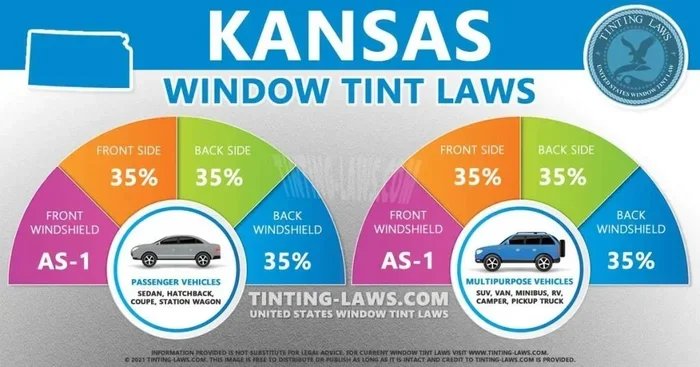
- Windshield tint: Only a non-reflective strip at the top is allowed, and it must not extend below the AS-1 line.
- Front side windows: Must allow more than 35% of light through (VLT above 35%).
- Rear side and rear windows: Can be tinted to any darkness level on vehicles manufactured after 2006.
- Reflective tint is restricted: Mirrored or metallic finishes are not permitted on any window.
- Medical exemptions exist: You can apply for a special permit if you have a qualifying medical condition.
- Penalties are real: Tint violations can result in fines and mandatory tint removal.
- Certification matters: Always choose a licensed installer who provides a compliance certificate.
📑 Table of Contents
- What Is the Kansas Window Tint Law?
- Legal Tint Limits by Vehicle Window
- Tint Exemptions and Special Permits in Kansas
- Penalties for Tint Violations in Kansas
- Choosing the Right Tint Film for Your Vehicle
- Common Mistakes People Make with Window Tinting
- Expert Insights on Kansas Tint Regulations
- Frequently Asked Questions About Kansas Window Tint Law
- Conclusion
What Is the Kansas Window Tint Law?
The Kansas window tint law is a set of rules that governs how much tint you can apply to your vehicle’s windows. These rules are enforced by the Kansas Department of Revenue and are part of the state vehicle equipment regulations. The law focuses on two main factors: tint darkness and tint reflectivity.
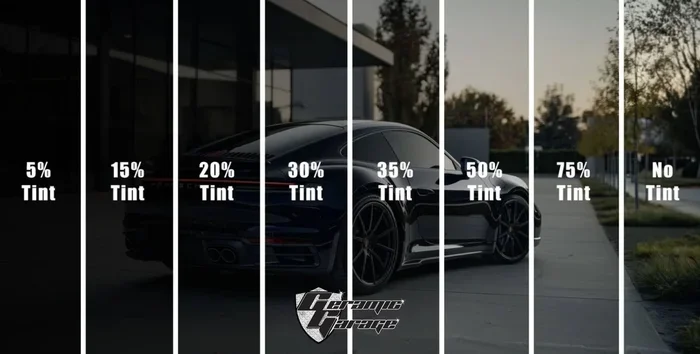
Tint darkness is measured using Visible Light Transmission, or VLT. VLT tells you how much light the tint film allows to pass through the glass. A lower VLT percentage means a darker tint. A higher VLT percentage means a lighter tint. For example, a 35% VLT film allows 35% of light through and blocks 65%.
Reflectivity refers to how much sunlight the tint film bounces off the glass. Highly reflective tints can create a mirror-like effect, which Kansas law restricts because it can blind other drivers. The law applies to passenger cars, SUVs, vans, and most other standard passenger vehicles.
Why Does the Kansas Window Tint Law Exist?
The main reason for these rules is safety. Law enforcement officers need to see through your windows during traffic stops. Tint that is too dark can hide the identity of passengers or the contents inside the vehicle. It can also reduce the driver’s ability to see clearly at night or in poor weather conditions. The state also wants to prevent reflective tints from causing glare and accidents on the road.
Legal Tint Limits by Vehicle Window
This is the most important section of the Kansas window tint law guide. Each window on your vehicle has its own legal limit. Let us break it down window by window.
Windshield Tint Rules
In Kansas, you are not allowed to tint the entire windshield. The only tint permitted on the windshield is a non-reflective strip at the top. This strip must be above the manufacturer’s AS-1 line, which is typically marked on the windshield itself. If your windshield does not have an AS-1 line, the tint strip cannot extend more than five inches down from the top edge.
This rule ensures the driver has a clear, unobstructed view of the road ahead. No tint film that reduces visibility is allowed on the main viewing area of the windshield.
Front Side Window Tint Rules
The front side windows on your vehicle must have a VLT of more than 35%. This means the tint film must allow at least 35% of visible light to pass through the glass. This rule applies to both the driver’s side and the passenger side front windows.
This limit is designed to ensure the driver can see clearly and that law enforcement can observe the interior of the vehicle during stops. Any tint darker than 35% VLT on the front side windows is considered illegal in Kansas.
Rear Side Window and Rear Windshield Tint Rules
Here is where things get more flexible. For the rear side windows and the rear windshield, Kansas law allows any level of tint darkness. You can apply a very dark tint to these windows if you choose. This rule applies to vehicles manufactured after January 1, 2006.
However, there is an important condition. If your rear window is tinted, your vehicle must have functioning dual side mirrors. The tint can reduce rear visibility, so the mirrors help compensate for that loss. This ensures you can still see what is behind you while driving.
Comparison Table: Kansas Legal Tint Limits
Here is a quick reference table that summarizes the legal tint limits for each window in Kansas.
| Window | Legal VLT Limit | Reflective Tint Allowed? |
|---|---|---|
| Windshield | Non-reflective strip only (top 5 inches or above AS-1 line) | No |
| Front Side Windows | Must be above 35% VLT | No |
| Rear Side Windows | Any darkness allowed | No |
| Rear Windshield | Any darkness allowed | No |
As you can see from the table, the Kansas window tint law is strictest on the front windshield and front side windows. The rear windows offer more flexibility, which gives vehicle owners room to customize their cars while staying within the law.
Tint Exemptions and Special Permits in Kansas
Not everyone can follow the standard tint rules. Some people have medical conditions that make them extremely sensitive to sunlight. For these individuals, Kansas offers a medical exemption for window tint.
Who Qualifies for a Medical Exemption?
A medical exemption applies to people with specific conditions that require them to limit their exposure to sunlight. Common qualifying conditions include lupus, porphyria, xeroderma pigmentosum, and severe photosensitivity disorders. If you have one of these conditions, you can apply for a special permit that allows darker tint than the standard legal limits.
To get a medical exemption, you need a signed statement from a licensed physician. The statement must explain your condition and why darker window tint is medically necessary. You then submit this statement to the Kansas Department of Revenue for approval.
How to Apply for a Tint Exemption
The application process is straightforward. First, get a letter from your doctor that details your medical condition and recommends darker tint. Next, fill out the exemption application form from the Kansas DMV or Department of Revenue website. Submit both documents together. If approved, you will receive a certificate that you must keep in your vehicle at all times.
It is important to note that even with an exemption, your tint must still meet certain safety standards. You cannot apply completely opaque tint. The exemption simply allows you to go darker than the standard 35% VLT limit on front side windows.
Penalties for Tint Violations in Kansas
Breaking the Kansas window tint law comes with real consequences. The state takes tint violations seriously, and the penalties can add up quickly.
Fines and Fees
If you are caught driving with illegal tint, you can be fined. The fine amount varies depending on the severity of the violation and your county. In most cases, the first offense results in a fine that can range from $50 to several hundred dollars. Repeat offenses can lead to higher fines.
Mandatory Tint Removal
In many cases, a law enforcement officer will give you a citation and require you to remove the illegal tint within a specified timeframe. If you do not comply, you could face additional penalties. Your vehicle may also fail its annual inspection until the tint is brought into compliance.
Impact on Vehicle Inspection
Kansas requires annual vehicle safety inspections. During the inspection, the tint darkness on your windows will be checked. If your tint does not meet the legal VLT requirements, your vehicle will fail the inspection. You will need to remove or replace the tint before you can pass.
Common mistakes that lead to violations include tinting the front side windows too dark, applying reflective tint, and tinting the windshield below the AS-1 line. Always double-check your tint against the legal limits before you drive.
Choosing the Right Tint Film for Your Vehicle
Now that you understand the legal limits, you might be wondering what kind of tint film to choose. There are several types of tint films available, and each has its own benefits.
Dyed Film
Dyed film is the most common and affordable type of window tint. It uses multiple layers of dye to absorb heat and reduce glare. Dyed film is available in various shades and can help keep your car cooler in the Kansas summer heat. However, it may fade over time and does not offer the best heat rejection compared to more advanced films.
Metalized Film
Metalized tint film contains tiny metallic particles that reflect heat and UV rays. This type of film is very durable and does not fade easily. The downside is that metalized film can interfere with electronic signals, including GPS, cell phone reception, and radio reception. It also tends to have a shiny, reflective appearance, which may not be legal in all cases.
Ceramic Film
Ceramic film is the premium option. It uses nano-ceramic particles to block heat and UV rays without interfering with electronic signals. Ceramic tint offers excellent clarity, does not fade, and provides superior heat rejection. It is more expensive than dyed or metalized film, but it is widely considered the best choice for long-term performance.
Carbon Film
Carbon film is a middle-ground option. It offers good heat rejection, a matte finish that does not fade, and no signal interference. Carbon tint is slightly more expensive than dyed film but provides better performance and a sleek, non-reflective appearance.
Quick Tips for Choosing Tint
- Check the VLT rating before you buy. Make sure it meets Kansas legal limits for the window you are tinting.
- Ask for a compliance certificate from your installer. This document proves your tint meets legal standards.
- Avoid reflective finishes. Kansas law does not allow mirrored or highly reflective tint on any window.
- Choose a licensed installer who knows the local regulations and can advise you on the best film for your needs.
- Consider ceramic or carbon film for the best balance of performance, legality, and durability.
Common Mistakes People Make with Window Tinting
Even with the best intentions, many vehicle owners run into trouble with their window tint. Here are the most common mistakes to avoid.
Mistake 1: Tinting the front side windows too dark. This is the number one violation in Kansas. People love the look of a dark tint, but the front side windows must stay above 35% VLT. Going darker will result in a ticket and a requirement to remove the tint.
Mistake 2: Ignoring the AS-1 line on the windshield. Some installers apply tint too low on the windshield, which is illegal. Always confirm the tint strip stays above the AS-1 line or within the five-inch top margin.
Mistake 3: Choosing reflective tint. Reflective or mirrored tint looks cool, but it is not legal in Kansas. Stick with non-reflective films to stay compliant.
Mistake 4: Skipping the compliance certificate. Without a certificate, you have no proof that your tint is legal. Keep the certificate in your glove box at all times.
Mistake 5: Not checking local county rules. While Kansas state law sets the baseline, some counties may have additional enforcement policies. Check with your local DMV or law enforcement agency to be sure.
Expert Insights on Kansas Tint Regulations
We spoke with a licensed auto tint installer in Wichita who has been working in the industry for over 15 years. Here is what they had to say about staying compliant with the Kansas window tint law.
“The most important thing I tell my customers is to know the VLT of their tint film before installation. Many people buy dark film without checking the percentage and end up with a violation. I always recommend 35% VLT for the front side windows because it looks great and keeps you fully legal.”
They also emphasized the importance of using a reputable installer. A professional will measure the VLT correctly, apply the film evenly, and provide the necessary documentation. Cutting corners on installation can lead to bubbling, peeling, and even legal issues if the tint does not perform as expected.
Expert Tip: Always request a written warranty with your tint installation. Quality films come with warranties that cover fading, bubbling, and peeling. This protects your investment and ensures your tint stays legal-looking for years to come.
Frequently Asked Questions About Kansas Window Tint Law
Can I tint my windshield in Kansas?
Yes, but only a non-reflective strip at the top of the windshield. This strip must be above the AS-1 line or within the top five inches. You cannot tint the main viewing area of the windshield in Kansas.
What is the legal tint darkness for front side windows in Kansas?
The legal VLT for front side windows in Kansas must be above 35%. This means the tint film must allow at least 35% of visible light to pass through the glass. Any tint darker than this is illegal.
Can I tint my rear windows as dark as I want?
Yes, for vehicles manufactured after January 1, 2006, you can tint the rear side windows and rear windshield to any darkness level. However, your vehicle must have functioning dual side mirrors if the rear window is tinted.
Is reflective tint legal in Kansas?
No. Kansas law does not permit reflective or mirrored tint on any window. The tint must be non-reflective across all windows, including the rear side windows and rear windshield.
How do I get a medical exemption for window tint in Kansas?
You need a signed statement from a licensed physician explaining your medical condition and why darker tint is necessary. Submit this statement along with the exemption application to the Kansas Department of Revenue for approval.
What happens if I get caught with illegal tint in Kansas?
You can be fined, and you may be required to remove the illegal tint. Your vehicle may also fail its annual safety inspection until the tint is brought into compliance with state law.
Conclusion
The Kansas window tint law is designed to keep drivers safe while still allowing you to customize your vehicle. By understanding the legal VLT limits, knowing which windows you can tint, and choosing the right film, you can enjoy the benefits of window tint without running into legal trouble.
Remember the key rules: front side windows must stay above 35% VLT, the windshield can only have a non-reflective strip at the top, and reflective tint is not allowed anywhere. If you qualify for a medical exemption, make sure you get the proper documentation and keep it in your vehicle at all times.
Choosing a quality tint film and a licensed installer makes all the difference. Ceramic and carbon films offer excellent performance and stay within legal limits. Always get a compliance certificate and keep it handy for inspections and traffic stops.
Take the time to learn the rules before you tint your windows. A little research now can save you from fines, tint removal, and the hassle of failed inspections. Stay informed, stay compliant, and enjoy your ride with the perfect amount of shade and style.