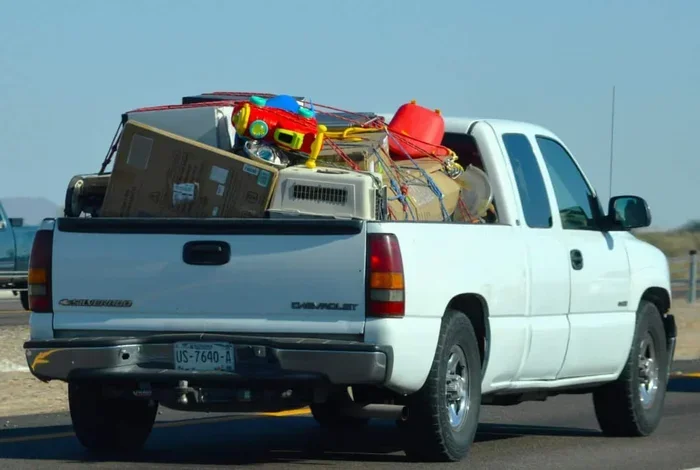
How Much Weight Can I Put in My Pickup Truck Safely
Knowing how much weight you can put in your pickup truck is essential for safety and performance. Every truck has a specific payload capacity that depends on its model, engine, and suspension setup. Exceeding this limit can damage your vehicle, void your warranty, and create serious road hazards. This guide covers everything from payload rating to gross vehicle weight rating so you can load your truck the right way every time.
Have you ever stood in your driveway, staring at a pile of lumber, furniture, or camping gear, and thought, “Can my truck actually handle all of this?” You are not alone. Many pickup truck owners wonder about the limits of their vehicles. The truth is that every truck has a specific weight limit. Going over that limit is not just a ticket waiting to happen. It is a genuine safety risk that can hurt you, your passengers, and other drivers on the road.
So how much weight can you really put in your pickup truck? The answer depends on several factors. These include your truck’s make and model, engine type, cab size, bed length, and even the trim level. In this guide, we will walk you through everything you need to know. You will learn what payload capacity means, how to find your truck’s limits, and how to load your truck safely every single time.
Key Takeaways
- Payload capacity varies by truck: Always check your owner’s manual or door jamb sticker for the exact number.
- GVWR is your safety ceiling: This number includes the truck’s weight plus everything inside and towing.
- Overloading damages your truck: It strains the engine, brakes, suspension, and tires.
- Distribute weight evenly: Proper load placement improves handling and safety.
- Tongue weight matters for towing: Keep it between 10% and 15% of your trailer weight.
- Check axle weight limits too: Individual axles have their own maximum weight ratings.
📑 Table of Contents
- What Does Payload Capacity Mean?
- How to Find Your Truck’s Weight Limit
- Understanding Gross Vehicle Weight Rating (GVWR)
- Payload Capacity by Truck Class
- How to Load Your Pickup Truck Safely
- Common Mistakes That Lead to Overloading
- Quick Tips for Safe Truck Loading
- What Happens If You Overload Your Pickup Truck?
- Expert Insights on Pickup Truck Weight Limits
- Key Takeaways
- Conclusion
What Does Payload Capacity Mean?
Before you start loading anything into your truck, you need to understand one key term. Payload capacity is the maximum weight your truck can carry in its cabin and bed combined. This number does not include the weight of the truck itself. It only refers to the stuff you add. That includes passengers, cargo, and any accessories you mount inside or on top of the truck.
Many people confuse payload capacity with towing capacity. They are not the same thing. Towing capacity refers to how much weight your truck can pull behind it using a trailer. Payload capacity is about what you put inside the truck itself. Both numbers matter, but they serve different purposes.
Why Payload Capacity Matters
Exceeding your truck’s payload capacity can lead to real problems. Here are some of the most common issues you will face:
- Brake damage: Extra weight increases stopping distance. Your brakes wear out faster and may fail under heavy loads.
- Suspension problems: Overloaded trucks sag at the rear. This affects ride quality and handling.
- Tire wear and blowouts: Tires rated for a specific weight can overheat and fail when overloaded.
- Engine strain: Your engine works harder to move excess weight, reducing fuel economy and longevity.
- Frame damage: Repeated overloading can warp or crack your truck frame over time.
Understanding your payload capacity helps you avoid all of these problems. It also keeps you legal. Most states have strict weight limits for trucks on public roads.
How to Find Your Truck’s Weight Limit
Every pickup truck comes with a specific weight rating. You need to know where to look for this information. There are several places you can check to find your truck’s exact limits.
Check the Door Jamb Sticker
The easiest way to find your truck’s weight limits is to look at the sticker on the driver’s side door jamb. This sticker, often called the vehicle certification label, lists important numbers. You will find the Gross Vehicle Weight Rating (GVWR) right there. This is the total maximum weight of your truck when fully loaded, including itself.
To calculate your payload capacity, you need one more number. That is the curb weight. Curb weight is how much your truck weighs when it is empty, with a full tank of gas and all standard fluids. Subtract curb weight from GVWR, and you get your payload capacity.
Read Your Owner’s Manual
Your truck’s owner manual is another great resource. Most manufacturers include a section on payload and towing limits. The manual will also explain any specific warnings about overloading. Some brands, like Ford, Chevrolet, and Ram, provide detailed charts in the manual or on their websites. You can look up your specific model year and trim to get exact numbers.
Use the Tonneau Cover as a Reference Point
If you have a tonneau cover or bed extender installed, keep in mind that these accessories add weight. They also take up space. Always factor in the weight of any truck bed accessories when calculating your total payload. A hard tonneau cover can weigh anywhere from 30 to 80 pounds depending on the material.
Understanding Gross Vehicle Weight Rating (GVWR)
The Gross Vehicle Weight Rating is one of the most important numbers you will ever see. It represents the absolute maximum weight your truck can safely operate at. This includes the weight of the truck itself, all passengers, all cargo, and any fluids.
Think of GVWR as the absolute ceiling. You should never exceed it. Here is how the math works in practice:
- Truck curb weight: 5,200 lbs
- GVWR: 7,000 lbs
- Payload capacity: 7,000 – 5,200 = 1,800 lbs
So in this example, you can safely carry 1,800 pounds of passengers and cargo. That is roughly equivalent to three adults and a full truck bed of supplies. But remember, every truck is different. A half-ton truck will have a different GVWR than a one-ton truck.
GVWR vs GAWR
You may also see the term Gross Axle Weight Rating (GAWR). This number refers to the maximum weight each axle can handle. Your front axle and rear axle each have their own GAWR. Even if your total weight is under the GVWR, you can still overload a single axle if the weight is not distributed properly.
For example, if you load all your heavy cargo in the front of the bed, you might exceed the front axle limit. This is why load distribution matters so much. We will cover this in more detail later.
Payload Capacity by Truck Class
Not all pickup trucks are created equal. Different classes of trucks have very different payload capacities. Here is a general breakdown to help you understand where your truck fits.
Half-Ton Trucks
Half-ton trucks are the most popular category. Models like the Ford F-150, Chevrolet Silverado 1500, and Ram 1500 fall into this class. Despite the name, these trucks can actually carry much more than 1,000 pounds. Modern half-ton trucks typically have payload capacities ranging from 1,500 to 2,300 pounds, depending on the configuration.
Factors that increase payload in a half-ton truck include:
- Heavy-duty engine options
- Longer bed configurations
- Two-door cab styles (more cab weight reduces payload)
- Heavy-duty suspension packages
Three-Quarter-Ton Trucks
Three-quarter-ton trucks like the Ford F-250, Chevrolet Silverado 2500, and Ram 2500 offer more hauling power. Their payload capacities typically range from 3,000 to 4,500 pounds. These trucks are better suited for heavier loads and often come with stronger frames and suspension systems.
One-Ton Trucks
One-ton trucks such as the Ford F-350, Chevrolet Silverado 3500, and Ram 3500 are built for serious hauling. Their payload capacities can exceed 6,000 pounds in some configurations. These trucks are commonly used in commercial applications and heavy-duty towing scenarios.
| Truck Class | Example Models | Typical Payload Range |
|---|---|---|
| Half-Ton | F-150, Silverado 1500, Ram 1500 | 1,500 – 2,300 lbs |
| Three-Quarter-Ton | F-250, Silverado 2500, Ram 2500 | 3,000 – 4,500 lbs |
| One-Ton | F-350, Silverado 3500, Ram 3500 | 4,500 – 6,500+ lbs |
Always verify the exact payload for your specific truck. These numbers can vary widely based on engine, cab type, bed length, and optional packages.
How to Load Your Pickup Truck Safely
Knowing your payload capacity is only half the battle. How you load your truck matters just as much. Improper loading can cause handling problems, reduced braking performance, and even loss of control.
Distribute Weight Evenly
The first rule of safe loading is to spread weight evenly across the truck. Place heavier items over the axle area, which is typically just behind the front seats. This keeps the front and rear axles balanced and helps maintain proper handling.
Avoid loading all the heavy stuff to one side. A lopsided load can cause your truck to pull to one side, especially at highway speeds. It also puts uneven stress on your tires and suspension components.
Secure Your Cargo
Loose cargo is a danger in any truck bed. A sudden stop or sharp turn can send items flying. Use ratchet straps, bungee cords, or cargo nets to secure everything in place. For loose items like gravel or sand, use a tonneau cover or truck cap to prevent spillage.
Do Not Overload the Rear
Putting too much weight in the back of your truck lifts the front end. This reduces steering control and visibility. It also decreases the effectiveness of your front brakes. If you need to carry a very heavy load, consider using a payload trailer or redistributing some weight into the cabin.
Account for Passengers
Do not forget to count passengers as part of your payload. The average adult weighs about 180 pounds. If you have four people in the truck, that is 720 pounds right there. Subtract that from your total payload capacity before loading cargo.
Common Mistakes That Lead to Overloading
Many truck owners accidentally overload their vehicles without realizing it. Here are the most common mistakes to avoid.
Ignoring the Weight of Accessories
Every accessory you add to your truck takes away from your available payload. A bull bar, running boards, extra toolboxes, and even a full tank of fuel all add weight. A full tank of diesel can weigh over 100 pounds. Make sure you account for these extras when calculating your total load.
Confusing Towing Capacity with Payload Capacity
This is one of the biggest mistakes truck owners make. Towing capacity and payload capacity are different numbers. If you are pulling a trailer, the trailer weight and tongue weight count against your payload. A 5,000-pound trailer with a 500-pound tongue weight means 500 pounds of that weight sits on your truck’s hitch. That counts toward your payload limit.
Guessing Instead of Measuring
Never guess how much your cargo weighs. Use a scale if possible, especially for heavy items. Many feed stores, lumber yards, and recycling centers have platform scales you can use for free. Knowing the exact weight of your cargo helps you stay within safe limits.
Forgetting About Tongue Weight
If you are towing, tongue weight is critical. The ideal tongue weight is between 10% and 15% of your total trailer weight. Too little tongue weight causes trailer sway. Too much tongue weight overloads your truck’s rear axle. Invest in a tongue weight scale to get this right.
Quick Tips for Safe Truck Loading
Here are some practical tips you can use every time you load up your truck:
- Weigh your truck at a truck scale before and after loading to confirm you are within limits.
- Place the heaviest items low and centered in the truck bed for the best stability.
- Use a payload box or bed organizer to keep smaller items from shifting during transit.
- Check your tire pressure before hauling heavy loads. Underinflated tires are more prone to blowouts.
- Adjust your driving style when carrying heavy loads. Increase following distance and brake earlier.
- Inspect your suspension regularly if you haul frequently. Worn shocks and springs reduce load capacity.
- Consider upgrading to heavy-duty springs or helper springs if you regularly carry near-maximum loads.
What Happens If You Overload Your Pickup Truck?
Overloading your truck is not worth the risk. Beyond the potential for mechanical damage, there are legal consequences to consider. Most states enforce weight limits on public roads, and exceeding them can result in fines and citations.
Insurance companies may also deny claims if they determine that an accident was caused by overloading. If your truck is involved in a collision while overloaded, you could be held liable for damages. That is a costly outcome that no one wants to face.
From a practical standpoint, overloaded trucks simply do not perform well. They take longer to stop. They handle poorly in emergency situations. They overheat more easily. The risks far outweigh any convenience you might gain from carrying extra weight.
If you find yourself regularly needing to carry more weight than your truck allows, it may be time to consider a heavier-duty truck or a separate trailer. Your safety and the longevity of your vehicle depend on respecting those weight limits.
Expert Insights on Pickup Truck Weight Limits
Automotive experts consistently emphasize the importance of understanding your truck’s specific weight limits. According to engineers at major truck manufacturers, many drivers overestimate what their half-ton truck can handle. The marketing term “half-ton” is misleading and does not reflect the actual payload capacity of modern trucks.
Experienced truck owners recommend always reading the certification label on your specific vehicle. No two trucks are exactly alike. Even the same model can have different payload ratings depending on the engine, drivetrain, and suspension package installed. Taking a few minutes to look up your truck’s exact specifications can save you from costly mistakes and dangerous situations on the road.
Key Takeaways
- Know your payload capacity: It is the total weight your truck can carry in passengers and cargo, not including the truck itself.
- Find your GVWR on the door jamb sticker: This is your truck’s absolute maximum operating weight.
- Calculate payload by subtracting curb weight from GVWR: This gives you your true carrying capacity.
- Different truck classes have different limits: Half-ton, three-quarter-ton, and one-ton trucks each carry different amounts.
- Load weight evenly and secure all cargo: Proper loading improves safety and handling significantly.
- Avoid common mistakes like confusing towing with payload: Both matter, but they are measured differently.
- When in doubt, weigh your truck: A quick visit to a truck scale removes all guesswork.
Conclusion
Understanding how much weight you can put in your pickup truck is one of the most important things you can do as a truck owner. It protects your vehicle, your passengers, and everyone else on the road. The key is to know your numbers. Check your GVWR, calculate your payload capacity, and never exceed those limits.
Loading your truck safely does not have to be complicated. With a little planning and the right information, you can haul confidently every time. Remember to account for passengers, accessories, and cargo weight. Distribute your load evenly, secure everything properly, and drive with extra caution when your truck is fully loaded.
Your truck was built to work hard. Respect its limits, and it will serve you well for years to come. Take the time to understand your truck’s weight capacity today. It is one of the best investments you can make in your safety and your vehicle’s longevity.
Frequently Asked Questions
What is the difference between payload capacity and towing capacity?
Payload capacity is the weight your truck can carry inside its cabin and bed combined. Towing capacity is the weight your truck can pull behind it using a trailer. They are separate numbers and both matter for safe operation.
Can I exceed my truck’s payload capacity in an emergency?
No, you should never exceed your truck’s payload capacity, even in an emergency. Overloading causes brake failure, handling problems, and tire blowouts. If you need to carry more weight than your truck allows, rent a larger vehicle or use a trailer instead.
How do I find my truck’s curb weight?
Your truck’s curb weight is listed in the owner’s manual or on the door jamb sticker. It represents the weight of the truck with a full tank of fuel and all standard fluids, but without any passengers or cargo.
Does a tonneau cover reduce my payload capacity?
A tonneau cover adds a small amount of weight to your truck bed, typically between 30 and 80 pounds. While this is minimal, you should factor it into your total payload calculation if you are already near your maximum capacity.
What happens if I get pulled over with an overloaded truck?
Depending on your state, you may receive a citation and a fine for overloading. In some cases, you may be required to offload excess weight before you can continue driving. Overloading can also void certain warranty coverage on affected components.
Do I need to weigh my truck every time I load it?
You do not need to weigh your truck every single time, but it is a good practice if you regularly haul near your maximum capacity. A quick visit to a truck scale gives you peace of mind and helps you avoid accidental overloading.





One Comment