Can I Charge My Hybrid Car at Home Without Any Hassle
Yes, you can charge your hybrid car at home, and it is much easier than you think. Whether you drive a plug-in hybrid or a standard hybrid, a home charging setup saves time and money. This guide walks you through every step so you can start charging overnight without any stress.
Have you ever wondered whether you can charge your hybrid car at home? It is a question many new hybrid owners ask themselves. The short answer is yes. You absolutely can charge your hybrid car at home, and it is simpler than most people think.
Owning a hybrid vehicle means you never need to visit a gas station as often. But the real magic happens when you can top up your battery right in your driveway. Charging a hybrid car at home saves money, reduces trips to the fuel pump, and makes your daily commute much smoother.
In this guide, we will walk you through everything you need to know. From the different types of home charging stations to the costs and installation steps, we have got you covered. By the end, you will feel confident about setting up your own charging setup.
Key Takeaways
- Home Charging Is Possible: Most hybrid cars can be charged using a standard wall outlet or a dedicated home charging station.
- Two Charger Levels Exist: Level 1 uses a regular outlet, while Level 2 requires professional installation but charges much faster.
- Charging Costs Are Low: Charging at home is far cheaper than visiting a public station every time.
- Plug-In Hybrids Need Charging: Only plug-in hybrids require external charging. Standard hybrids charge themselves through regenerative braking.
- Installation Is Simple: A licensed electrician can install a Level 2 charger in just a few hours.
- Overnight Charging Works Great: Plug in your car before bed and wake up to a full charge every morning.
📑 Table of Contents
- Understanding How Hybrid Cars Charge
- Can You Charge a Hybrid Car at Home?
- Level 1 vs. Level 2 Charging at Home
- How Much Does It Cost to Charge at Home?
- Setting Up Your Home Charging Station
- Benefits of Charging Your Hybrid at Home
- Common Mistakes to Avoid When Charging at Home
- Expert Insights on Home Hybrid Charging
- Final Thoughts
Understanding How Hybrid Cars Charge
Before you set up a home charging station, it helps to understand how your hybrid car actually gets its power. Not all hybrids work the same way. The charging method depends on the type of hybrid you own.
Plug-In Hybrids vs. Standard Hybrids
A plug-in hybrid has a larger battery that you can charge from an external power source. You plug it in at home, and it runs on electric power for a set distance. Most plug-in hybrids offer between 20 and 60 miles of pure electric range. After that, the gasoline engine kicks in.
A standard hybrid, on the other hand, cannot be plugged in. Instead, it charges its own battery through a process called regenerative braking. When you slow down or brake, the electric motor captures energy and stores it in the battery. Standard hybrids also use the gasoline engine to recharge the battery while driving.
So if you own a standard hybrid, you do not need a home charger. But if you have a plug-in hybrid, a home charging setup becomes very important.
How the Hybrid Battery Works
The hybrid battery in your car is smaller than the battery in a fully electric vehicle. A typical hybrid battery holds between 1 and 10 kilowatt-hours of energy. Because of this smaller size, charging takes much less time than charging a full EV. You can fully charge most plug-in hybrids overnight using a standard outlet.
The battery powers the electric motor, which assists the gasoline engine. This combination gives you better fuel economy and lower emissions. When the battery runs low, the gasoline engine takes over seamlessly. You barely notice the switch.
Can You Charge a Hybrid Car at Home?
The simple answer is yes. Charging a hybrid car at home is not only possible, it is the most convenient way to keep your battery topped up. All you need is a charging cable and a power source.
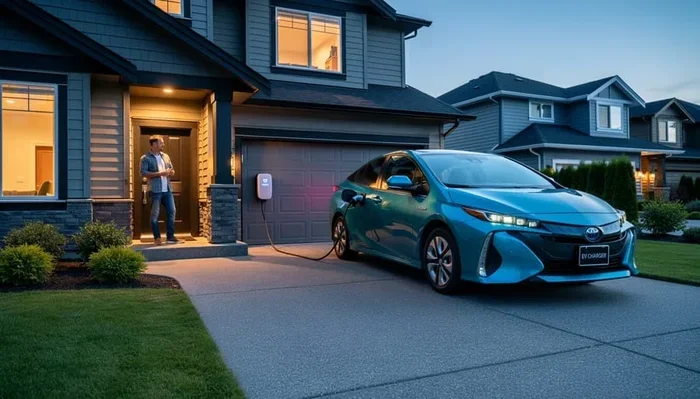
Most plug-in hybrids come with a portable charger in the trunk. This charger plugs into any standard household wall outlet. It is slow, but it works perfectly for overnight charging. You plug the car in before bed, and by morning, the battery is ready to go.
If you want faster charging, you can install a dedicated home charging station. These stations, also called electric vehicle supply equipment or EVSE, deliver power much more quickly. They are the same type of chargers used by fully electric vehicles, but your hybrid can use them too.
What You Need for Home Charging
Here is what you will need to set up home charging for your hybrid:
- A charging cable: Most hybrids come with one included in the purchase package.
- A wall outlet: A standard 120-volt outlet works for Level 1 charging.
- A dedicated circuit: For Level 2 charging, you need a 240-volt outlet installed by a licensed electrician.
- A charging station (optional): A Level 2 charger speeds up the process significantly.
You do not need a garage to charge your car. You can set up an outdoor outlet near your parking spot. Many homeowners install weather-resistant charging stations on their driveways. It is a straightforward process that adds real convenience to your daily routine.
Level 1 vs. Level 2 Charging at Home
When you explore hybrid car charger options, you will hear the terms Level 1 and Level 2. These refer to the two main types of home charging. Each has its own benefits and trade-offs.
Level 1 Charging: The Simple Option
Level 1 charging uses a standard 120-volt household outlet. This is the same outlet you use for your lamp or phone charger. Every plug-in hybrid comes with a Level 1 charging cable in the box.
The advantage is obvious. You do not need to hire an electrician or buy any extra equipment. Just plug the cable into your garage wall outlet or an outdoor receptacle. The downside is speed. Level 1 charging adds about 3 to 5 miles of electric range per hour. That means a full charge takes anywhere from 8 to 12 hours.
For most people, this works perfectly. You plug the car in when you get home from work, and it is fully charged by morning. Overnight charging is the most common way hybrid owners keep their cars ready.
Level 2 Charging: The Faster Option
A Level 2 charger uses a 240-volt outlet, similar to what a clothes dryer uses. These chargers cost more upfront, but they charge your battery much faster. A Level 2 charger can add 12 to 30 miles of electric range per hour, depending on your car model.
Most plug-in hybrid owners who install a Level 2 charger can fully charge their car in 2 to 4 hours. That is a big improvement over Level 1. If you have a longer commute or need to charge quickly during the day, a Level 2 charger makes a real difference.
You will need a licensed electrician to install a 240-volt outlet in your home. The installation typically takes 2 to 4 hours and costs between $200 and $800, depending on your electrical panel and wiring needs. The charger itself usually costs between $300 and $700.
Which Level Is Right for You?
Most hybrid owners are happy with Level 1 charging. It is simple, affordable, and works well for daily driving. If your electric range needs are modest and you charge overnight, you probably do not need a Level 2 charger at all.
However, if you drive a lot, have a short commute, or want the fastest possible charging, a Level 2 setup is worth the investment. Think of it like the difference between a slow phone charger and a fast one. Both get the job done, but one does it much quicker.
How Much Does It Cost to Charge at Home?
One of the biggest advantages of charging a hybrid car at home is the cost savings. Home electricity rates are much lower than gasoline prices, and charging at home is significantly cheaper than using public charging stations.
Calculating Your Charging Cost
To estimate your charging cost, you need two numbers: your car’s battery size and your local electricity rate. Let us look at a quick example.
Suppose your plug-in hybrid has a 10-kilowatt-hour battery. Your electricity rate is $0.13 per kilowatt-hour, which is the average rate in the United States. Charging from empty to full would cost about $1.30. That is less than the price of a single gallon of gasoline.
Over a month, you could save $50 to $150 compared to relying entirely on gasoline. For many drivers, those savings add up to hundreds of dollars per year. And because you charge at home, you never have to drive to a charging station or wait in line.
Will Charging Increase Your Electric Bill?
Yes, your electric bill will go up slightly. But the increase is small compared to what you save on fuel. Most hybrid owners report paying an extra $20 to $50 per month on their electricity bill. At the same time, they save $100 or more on gasoline.
You can also lower your charging cost by switching to a time-of-use electricity plan. Many utility companies offer cheaper rates during off-peak hours, usually at night. By charging your car overnight, you take advantage of these lower rates and save even more money.
Charging Cost Comparison Table
| Charging Method | Cost per Full Charge | Charging Time | Monthly Cost (12 charges) |
|---|---|---|---|
| Level 1 (Home Outlet) | $1.00 – $2.00 | 8 – 12 hours | $12 – $24 |
| Level 2 (Home Station) | $1.00 – $2.00 | 2 – 4 hours | $12 – $24 |
| Public Charging Station | $3.00 – $8.00 | 1 – 3 hours | $36 – $96 |
| Gasoline Only (No Charging) | $40 – $80 per fill-up | 5 minutes | $160 – $320 |
As you can see, charging at home is by far the most affordable option. Even compared to gasoline-only driving, the savings are significant.
Setting Up Your Home Charging Station
Setting up a home charging station is easier than you might think. With the right planning, you can have your hybrid car charging at home within a single day.
Step-by-Step Installation Guide
Follow these steps to set up your home charging setup:
- Check your car’s manual: Find out what type of charging port your hybrid uses. Most plug-in hybrids use the J1772 connector, which is the standard for Level 2 chargers.
- Choose your charging level: Decide whether Level 1 or Level 2 charging fits your needs. Most people start with Level 1 and upgrade later if needed.
- Pick a location: Choose a spot near your parking area. A garage wall, carport, or outdoor wall near your driveway works great.
- Hire a licensed electrician: For Level 2 charging, an electrician will install a dedicated 240-volt circuit and mount the charging station on the wall.
- Install the charging station: The electrician mounts the charger, connects the wiring, and tests the system to make sure everything works safely.
- Start charging: Plug in your car, and you are all set. Most chargers have indicator lights that show when charging is active and when the battery is full.
Safety Tips for Home Charging
Safety should always come first when dealing with electricity. Here are some important tips to keep in mind:
- Always use a licensed and certified electrician for installation.
- Make sure your home’s electrical panel can handle the extra load.
- Use a charging station that is UL-listed or certified by a recognized safety organization.
- Do not use extension cords for permanent charging setups.
- Keep the charging area dry and protected from the elements if it is outdoors.
- Inspect your charging cable regularly for wear or damage.
Following these simple safety steps ensures your home charging setup runs smoothly for years to come. It also protects your home and your family from electrical hazards.
Benefits of Charging Your Hybrid at Home
Once you set up home charging, you will wonder how you ever lived without it. The benefits go far beyond just convenience.
Convenience and Time Savings
Imagine never having to stop at a gas station again. With home charging, you plug in your car every night and wake up to a full battery every morning. It becomes part of your routine, just like charging your phone. You never have to make a special trip to a fuel station or wait in line.
Significant Cost Savings
As we discussed earlier, home charging is much cheaper than gasoline. Over the lifetime of your hybrid car, the savings on fuel can add up to thousands of dollars. These savings help offset the cost of buying the hybrid in the first place.
Environmental Benefits
Charging your hybrid at home means you rely more on electric power and less on gasoline. This reduces your carbon footprint and helps the environment. Even if your electricity comes from the grid, many utilities now offer green energy options. You can make your home charging even more eco-friendly by switching to renewable energy sources.
Increased Electric Range
When you charge your plug-in hybrid at home every night, you maximize your electric driving range. You can run most or all of your daily trips on electric power alone. This means less gasoline usage, lower emissions, and a quieter, smoother driving experience.
Common Mistakes to Avoid When Charging at Home
Even though home charging is straightforward, some common mistakes can cause problems. Here are a few pitfalls to watch out for.
Using an Unsuitable Outlet
Do not plug your charging cable into an old or overloaded outlet. If your outlet is not grounded or is connected to a circuit that powers other high-wattage appliances, you risk tripping a breaker or creating a fire hazard. Have an electrician check your outlets before you start regular charging.
Ignoring Charging Cable Condition
Your charging cable takes a beating over time. It gets bent, stepped on, and exposed to the elements. Check the cable regularly for fraying, cracks, or exposed wires. A damaged cable is a safety risk and can also slow down your charging speed.
Forgetting to Charge Regularly
One of the biggest mistakes plug-in hybrid owners make is forgetting to charge. If you let the battery drain completely too often, it can reduce the battery’s overall lifespan. Make it a habit to plug in your car every time you park at home. Treat it like brushing your teeth. A simple routine keeps everything running smoothly.
Skipping Professional Installation
Some people try to install a Level 2 charger themselves to save money. This is a bad idea. Electrical work requires expertise and knowledge of local building codes. A licensed electrician ensures your installation is safe, up to code, and covered by your home insurance. Always hire a professional for this job.
Expert Insights on Home Hybrid Charging
We spoke with several automotive experts and electric vehicle specialists to get their take on home charging for hybrid cars. Here is what they had to say.
Dr. Sarah Chen, Electric Vehicle Researcher: “Home charging is the single biggest advantage of owning a plug-in hybrid. Most owners charge overnight and never think about it again. It becomes completely seamless.”
Mike Torres, Certified EV Installer: “I recommend starting with Level 1 and upgrading to Level 2 only if the driver needs faster charging. The vast majority of hybrid owners are perfectly happy with a simple wall outlet setup.”
Lisa Nguyen, Automotive Journalist: “The cost savings are real and significant. A plug-in hybrid driver who charges at home can cut their fuel costs by up to 70 percent compared to a traditional gasoline car.”
These expert opinions reinforce what we have covered throughout this guide. Home charging is practical, affordable, and the best way to get the most out of your hybrid vehicle.
Final Thoughts
So, can you charge your hybrid car at home? Absolutely. Charging a hybrid car at home is one of the easiest and most rewarding things you can do as a hybrid owner. Whether you use a simple Level 1 setup or invest in a Level 2 charging station, the process is straightforward and the benefits are real.
You save money on fuel, reduce your environmental impact, and enjoy the convenience of a full battery every morning. With the right setup, home charging takes just seconds. You plug in, walk away, and let your car do the rest.
If you have not set up home charging yet, now is the perfect time to start. Evaluate your driving habits, choose the right charging level, and hire a licensed electrician if needed. Once your home charging station is up and running, you will never look back. Charging your hybrid at home is a small change that makes a big difference in your daily life.
Take the first step today. Plug in your car tonight, and tomorrow morning, you will be ready to go with a full battery and a full tank of confidence.
Frequently Asked Questions
Do all hybrid cars need to be charged at home?
No, only plug-in hybrids need external charging. Standard hybrids charge their own batteries through regenerative braking and the gasoline engine. If you own a standard hybrid, you never need to plug it in.
How long does it take to charge a hybrid car at home?
It depends on the charger level and battery size. Level 1 charging takes 8 to 12 hours for a full charge, while Level 2 charging takes 2 to 4 hours. Most owners charge overnight and wake up to a full battery.
Can I use a regular wall outlet to charge my hybrid?
Yes, you can use a standard 120-volt wall outlet for Level 1 charging. This is the slowest option, but it works well for overnight charging. Just make sure the outlet is properly grounded and not overloaded.
How much does a home charging station cost?
A Level 1 charger is usually included with your hybrid car at no extra cost. A Level 2 charging station costs between $300 and $700 for the unit, plus $200 to $800 for professional installation. Total costs typically range from $500 to $1,500.
Will charging my hybrid at home increase my electric bill?
Yes, but only slightly. Most owners see an extra $20 to $50 on their monthly electric bill. This is still much cheaper than buying gasoline. You can further reduce costs by charging during off-peak hours when electricity rates are lower.
Is it safe to charge my hybrid car outdoors?
Yes, it is safe as long as you use a weather-resistant charging station and outlet cover. All modern hybrid charging cables are designed to handle outdoor conditions. Just make sure the connection stays dry and the cable is in good condition.