How Many Car Payments Can You Miss Before Its Too Late
How many car payments can you miss before it is too late? The answer depends on your lender, your loan terms, and your financial situation. Missing even one payment can trigger late fees and negative credit marks. After 30 days of nonpayment, your credit score takes a serious hit. By 90 days, your auto lender may start the vehicle repossession process. Understanding your loan grace period and acting quickly can help you avoid long-term damage to your finances.
You might be wondering how many car payments can you miss before it is too late. The honest answer is that there is no magic number. Every loan agreement is different. Every auto lender has its own rules. And your personal financial situation plays a huge role too.
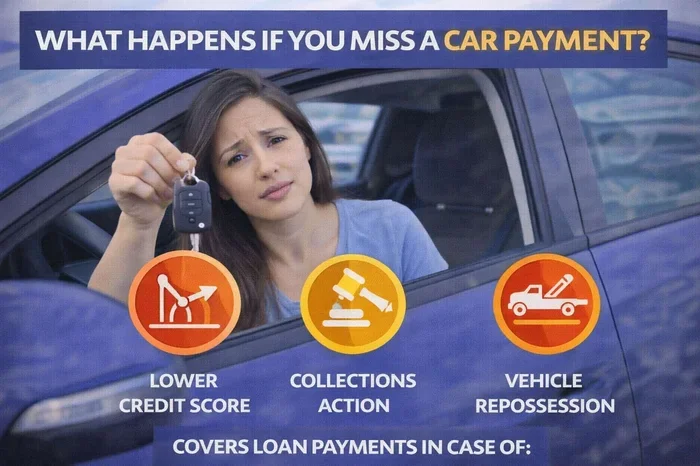
But here is what you need to know. Missing even one car payment can trigger serious consequences. A single missed payment can hurt your credit score. It can lead to late fees. And if you miss multiple payments, your vehicle could be at risk of repossession.
Understanding the car loan default process is essential. Whether you are facing a temporary hardship or dealing with an underwater car loan, knowing what to expect can save you thousands of dollars. This guide breaks down everything you need to know about missed payments, grace periods, and how to protect yourself.
We will walk you through the auto loan delinquency timeline. You will learn what happens when you miss a payment. You will discover your options for car payment deferment. And you will find out how to avoid the worst outcomes. Let us dive in.
Key Takeaways
- No magic number exists: There is no set number of missed payments before trouble starts. Every lender and loan is different.
- Grace periods matter: Most auto lenders offer a 10 to 15 day grace period before a payment is considered late.
- Credit damage starts fast: A single missed payment can lower your credit score by 60 to 110 points depending on your credit history.
- Repossession is a real risk: After 60 to 90 days of missed payments, your lender can begin the vehicle repossession process.
- Options exist to help you: Payment deferment, loan modification, and hardship programs can provide relief if you act quickly.
- Communication is key: Contacting your lender early gives you more options and shows good faith.
- Voluntary surrender is better than forced repossession: It may cause slightly less credit damage and reduce fees.
📑 Table of Contents
- How Many Car Payments Can You Miss?
- Understanding the Consequences of Missed Payments
- How Auto Lenders Handle Missed Payments
- How to Protect Yourself If You Fall Behind
- Comparison: Consequences at Different Stages of Missed Payments
- Quick Tips to Avoid Missing Car Payments
- Common Mistakes People Make When Behind on Payments
- What If You Cannot Catch Up?
- Conclusion
How Many Car Payments Can You Miss?
Many drivers find themselves behind on car payments at some point. Life happens. Jobs are lost. Medical bills pile up. Cars break down and repair costs add up fast. The question is not really “how many can you miss” but rather “what happens when you do miss.”
The truth is that most auto lenders do not give you a set number of missed payments before they take action. Instead, they follow a structured process. Each missed payment brings new consequences. The sooner you understand this process, the better prepared you are to respond.
What Happens When You Miss a Payment
When you miss a car payment, several things start to happen behind the scenes. Your lender tracks your payment status carefully. Here is a simple breakdown of what typically occurs.
- Day 1: Your payment is simply not received. No immediate penalty in most cases.
- Day 10 to 15: You enter the loan grace period. Most lenders give you 10 to 15 days to make your payment without penalty.
- Day 15 to 30: If the payment is still not made, your account is marked as late. A late car payment fee may be applied.
- Day 30: The missed payment is reported to the credit bureaus. Your credit score takes a hit.
- Day 60: Your account is now 60 days past due. The penalty gets worse. Your credit score drops further.
- Day 90: Your lender may consider your account in default. The vehicle repossession process can begin.
As you can see, the consequences build quickly. Each stage makes the next one more serious. This is why acting fast matters so much.
The Grace Period Explained
The loan grace period is your best friend when you are short on cash. Most auto lenders provide a grace period of 10 to 15 days after your due date. During this time, you can make your payment without it being reported as late.
However, not all lenders offer the same grace period. Some give as few as 5 days. Others extend up to 30 days. You need to check your specific loan agreement to know exactly what your grace period is.
Here is an important tip. Do not assume your payment is on time just because it is within the grace period. Always make your payment as early as possible. This protects your payment history and keeps your account in good standing.
Understanding the Consequences of Missed Payments
Missing car payments comes with real costs. These costs go beyond just the missed payment itself. They affect your finances, your credit, and even your ability to get around every day.
Late Fees and Penalties
Most lenders charge a late car payment fee when you miss your due date. This fee typically ranges from $25 to $50 for the first missed payment. If you miss another payment, the fee can increase. Some lenders charge a percentage of the missed payment amount instead of a flat fee.
These fees add up fast. If you miss three payments, you could owe hundreds of dollars in late fees alone. On top of that, you still owe the original missed payments. This creates a snowball effect that makes your debt harder to manage.
Credit Score Damage
Your credit score is one of the most important financial tools you have. It affects your ability to get loans, rent apartments, and sometimes even get a job. Missing a car payment can do real damage to your credit score.
Here is what you need to know about the credit score impact:
- One missed payment: Can lower a good credit score by 60 to 110 points. The drop depends on your starting credit score and your overall payment history.
- Two missed payments: The damage compounds. Your score drops further and stays lower for longer.
- Three or more missed payments: Your credit score can take a severe hit that takes years to recover from.
Every missed payment is also reported to your credit report. These negative credit marks stay on your report for up to seven years. That is a long time to deal with the consequences of a few missed payments.
Vehicle Repossession Risk
The most serious consequence of missing car payments is vehicle repossession. When you default on your auto loan, the lender has the legal right to take back your vehicle.
Here is how the vehicle repossession process typically works:
- Your account goes 60 to 90 days past due.
- The lender sends you a notice of default.
- If you do not catch up, the lender repossesses the vehicle.
- The vehicle is sold at auction.
- If the sale does not cover your remaining loan balance, you still owe the difference.
Many people do not realize that after repossession, they may still owe money. This is called a deficiency balance. The lender sells the car at auction, often for less than what you owe. You are then responsible for the remaining amount.
How Auto Lenders Handle Missed Payments
Every auto lender has its own approach to handling missed payments. Understanding how your lender works can help you navigate the situation more effectively.
The Delinquency Process Step by Step
The auto loan delinquency process follows a predictable pattern. Most lenders follow these general steps:
- Initial missed payment: Your account is flagged as late. You receive a notification from the lender.
- Second missed payment: Your account status changes to delinquent. You receive more aggressive communication, often by phone and mail.
- Third missed payment: Your loan is in serious delinquency. The lender may offer you options like car payment deferment or a hardship program.
- Default notice: The lender sends a formal default notice. This gives you a set period to bring your account current or face repossession.
- Repossession: If the account remains unpaid, the lender repossesses the vehicle.
The timeline varies by lender and state laws. Some lenders move faster than others. But the general pattern is the same across the industry.
What Your Lender Expects From You
Auto lenders do not want to repossess your vehicle. Repossession costs them money. They prefer to work with borrowers who communicate and try to find a solution.
Your lender expects you to:
- Make payments on time, every time.
- Contact them immediately if you cannot make a payment.
- Be honest about your financial situation.
- Explore available options before falling too far behind.
When you reach out early, you show good faith. This opens doors to solutions that may not be available once you are deeply behind. Lenders are much more willing to work with you during the early stages of a missed payment.
How to Protect Yourself If You Fall Behind
If you are already behind on payments, do not panic. You have options. The key is to act quickly and explore every avenue available to you.
Payment Deferment and Forbearance Options
Car payment deferment allows you to skip one or more payments temporarily. The missed payments are added to the end of your loan term instead of being forgiven. This gives you breathing room without triggering default.
Not all lenders offer deferment. And not all deferment options are the same. Some lenders allow you to skip a single payment. Others offer a more extended forbearance period. You need to contact your lender directly to ask about your options.
Here is a quick tip. Always ask about deferment before you miss a payment. Some lenders require you to request deferment before the payment is due. Once you are already late, your options may be more limited.
Loan Modification and Refinancing
Loan modification changes the terms of your existing loan to make payments more manageable. This could mean a lower interest rate, a longer loan term, or a reduced monthly payment.
Refinancing replaces your current loan with a new one, usually with better terms. This can lower your monthly payment and reduce the total interest you pay over the life of the loan.
Both options require you to have some equity in your vehicle and a reasonable credit score. If you are underwater on your car loan, refinancing may be more difficult. In that case, a loan modification may be your best path forward.
Hardship Programs and Relief Options
Many auto lenders offer hardship programs for borrowers facing temporary financial difficulties. These programs are designed to help you stay in your vehicle while you get back on your feet.
Hardship programs may include:
- Reduced monthly payments for a set period.
- Temporary interest rate reductions.
- Payment plans that spread missed payments over several months.
- Extended loan terms to lower your monthly payment.
To qualify, you typically need to prove financial hardship. This could be a job loss, medical emergency, or other unexpected expense. Each lender has its own eligibility requirements for hardship programs.
— Financial Counseling Expert
Comparison: Consequences at Different Stages of Missed Payments
Understanding how consequences escalate can help you prioritize getting current on your loan. Here is a comparison of what happens at different stages of missed payments.
| Stage | Missed Payments | Credit Impact | Financial Penalties | Risk Level |
|---|---|---|---|---|
| 1 | 1 payment | Minor drop (60-110 points) | Late fee ($25-$50) | Low |
| 2 | 2 payments | Moderate drop (100-150 points) | Multiple late fees | Medium |
| 3 | 3 payments | Severe drop (150+ points) | Fees + default notice | High |
| 4 | 4+ payments | Major long-term damage | Repossession risk | Very High |
As you can see from the table above, the consequences grow rapidly with each missed payment. The best time to take action is after the first missed payment. Waiting makes everything harder and more expensive.
Quick Tips to Avoid Missing Car Payments
Prevention is always better than cure. Here are some practical tips to help you stay on track with your car payments:
- Set up automatic payments: Auto-pay ensures you never miss a due date. You can choose to pay the minimum or the full amount.
- Build an emergency fund: Even a small savings buffer can cover one or two missed payments without serious consequences.
- Know your due date: Mark your payment due date on your calendar. Set reminders a few days before.
- Budget for your car payment: Treat your car payment as a fixed expense, just like rent or a mortgage.
- Communicate with your lender: If you sense trouble coming, reach out before you miss a payment.
- Review your loan regularly: Know your remaining balance, interest rate, and payoff date. Awareness prevents surprises.
These small habits can make a big difference over the life of your auto loan. Staying current on your payments protects your credit score, your vehicle, and your wallet.
Common Mistakes People Make When Behind on Payments
When people fall behind on car payments, they often make mistakes that make the situation worse. Here are the most common errors to avoid:
- Ignoring the problem: Hoping the issue will go away is one of the worst things you can do. The longer you wait, the fewer options you have.
- Not reading your loan agreement: Your loan contract spells out exactly what happens when you miss payments. Know your rights and responsibilities.
- Borrowing from high-interest sources: Payday loans and credit card cash advances can trap you in a deeper debt cycle.
- Skipping other bills to pay the car loan: This creates new problems. Focus on finding a sustainable solution instead.
- Waiting until the last minute to contact your lender: By the time you are 90 days past due, your options are very limited. Early action is critical.
- Not exploring all available options: Many borrowers do not know about deferment, modification, or hardship programs. These can be lifesavers.
Avoiding these mistakes puts you in a much stronger position. The goal is to stay ahead of the problem, not react after it has already caused damage.
What If You Cannot Catch Up?
Sometimes, despite your best efforts, catching up is not possible. In these situations, you have a few paths forward.
You can consider a voluntary surrender of the vehicle. This means you return the car to the lender willingly. While this still affects your credit score, it is generally better than a forced repossession. You avoid the cost of a tow and may negotiate a slightly better outcome on your remaining balance.
Another option is loan rehabilitation. This involves bringing your account current through a structured repayment plan. Once you complete the plan, the negative marks on your credit report may be updated to reflect that the account is now current.
In some cases, selling the vehicle yourself may be the best option. If you can sell the car for enough to pay off the loan, you avoid repossession and may even have money left over. This is especially helpful if you have an underwater car loan and the car is worth less than what you owe.
Conclusion
The answer to how many car payments can you miss is not a simple number. There is no universal threshold. Instead, every missed payment brings escalating consequences. From late fees to credit score damage to the risk of vehicle repossession, the stakes grow with each passing week.
The best approach is always prevention. Set up automatic payments, build an emergency fund, and know your grace period. But if you do fall behind, act quickly. Contact your lender, explore your options, and do not ignore the problem.
Remember, your auto lender has tools and programs designed to help you through tough times. Hardship programs, payment deferment, and loan modification can all provide relief. The key is reaching out before the situation becomes unmanageable.
Your car payment is more than just a monthly expense. It is a commitment that affects your credit, your mobility, and your financial future. Take it seriously, stay informed, and never be afraid to ask for help when you need it.
Frequently Asked Questions
Can I miss one car payment without consequences?
You can miss one payment within your loan grace period without it being reported as late. However, if the payment is not made within the grace period, you will likely face a late car payment fee and a negative mark on your credit report. Always check your specific loan agreement to understand your grace period.
How long does a missed car payment stay on my credit report?
A missed payment can remain on your credit report for up to seven years from the date it was reported. The impact on your credit score lessens over time, especially as you build a positive payment history. Making all future payments on time is the best way to recover from a missed payment.
What is the difference between delinquency and default on a car loan?
Delinquency means you are late on a payment but have not yet defaulted. Default is a more serious status that occurs when you have missed multiple payments and violated the terms of your loan agreement. Once in default, your lender can begin the vehicle repossession process.
Can I get a car loan deferment if I am already behind on payments?
Some lenders offer deferment even if you are already behind, but options are more limited once you are past due. It is always best to contact your lender before you miss a payment. Lenders are more willing to work with borrowers who reach out proactively rather than after multiple missed payments.
Will voluntary surrender hurt my credit score less than repossession?
Voluntary surrender and forced repossession both have a negative impact on your credit score. However, voluntary surrender is generally viewed slightly more favorably by lenders because it shows cooperation. The difference is usually small, and both will remain on your credit report for up to seven years.
How can I avoid an underwater car loan situation?
To avoid an underwater car loan, make a larger down payment, choose a shorter loan term, and avoid rolling negative equity from a previous loan into your new loan. Also, try to keep your total car expenses (payment, insurance, fuel) below 15% of your monthly take-home pay. This helps ensure you stay current and build equity in your vehicle over time.