How Many Cans of Freon Does a Car Take to Recharge
Most cars need 2 to 3 cans of Freon to fully recharge the AC system. The exact amount depends on your vehicle model, the type of refrigerant used, and whether there is a leak. Understanding the right charge amount helps you avoid overfilling or wasting money on extra cans.
Have you ever hopped into your car on a scorching summer day, turned on the air conditioning, and felt nothing but warm air blowing through the vents? It is a frustrating experience, and one of the most common causes is low refrigerant. Many car owners wonder how many cans of Freon does a car take to get the AC blowing cold again. The answer is not always the same for every vehicle, but it is simpler than you might think.
In this guide, we will walk you through everything you need to know about recharging your car AC. We will cover the exact amount of refrigerant your vehicle needs, the different types of Freon, and whether you can do it yourself at home. By the end, you will feel confident about tackling this common car maintenance task.
The term Freon has become a household name for car refrigerant, even though newer vehicles use different chemicals today. Understanding the basics of your car’s AC system and how much refrigerant it holds can save you time, money, and a trip to the mechanic. Let us dive right in.
Key Takeaways
- Standard Charge Amount: Most passenger vehicles require 2 to 3 cans of refrigerant for a full recharge.
- Refrigerant Type Matters: Older cars use R-134a, while newer models use R-1234yf, and each has different can sizes.
- Check for Leaks First: Adding refrigerant without fixing a leak wastes money and harms the environment.
- DIY Recharge Is Possible: With a recharge kit and basic steps, you can do it at home safely.
- Overcharging Is Dangerous: Too much Freon can damage the compressor and reduce cooling performance.
- Professional Help Helps: A mechanic can use manifold gauges to measure the exact amount needed.
📑 Table of Contents
- Understanding Your Car’s AC System
- How Many Cans of Freon Does a Car Take
- How to Check Your Current Refrigerant Level
- DIY AC Recharge: Step-by-Step Guide
- Common Mistakes to Avoid When Recharging
- When to See a Professional Mechanic
- Cost of Recharging Your Car AC
- Environmental Impact of Refrigerant Leaks
- Final Thoughts
Understanding Your Car’s AC System
Before we talk about how many cans of refrigerant you need, it helps to understand what the AC system does and how it works. Your car’s air conditioning is a sealed system that cycles refrigerant through several key components. Each part plays a role in turning warm cabin air into cool, comfortable air.
How the AC System Works
The AC system works in a continuous loop. The compressor pressurizes the refrigerant gas, sending it to the condenser. The condenser cools the gas and turns it into a liquid. Then, the liquid moves through the expansion valve and into the evaporator. As it evaporates, it absorbs heat from the air inside your car. A fan blows that cooled air through the vents and into the cabin.
The refrigerant is the lifeblood of this entire process. Without the right amount, the system cannot cool properly. That is why knowing the correct refrigerant charge matters so much.
Types of Refrigerant Used in Cars
Not all refrigerants are the same. The type your car uses depends on the model year and manufacturer. Here are the two main types you will encounter:
- R-134a: This is the most common refrigerant used in cars from the mid-1990s through the mid-2010s. It comes in standard 12-ounce cans and is widely available at auto parts stores.
- R-1234yf: This is the newer refrigerant used in most cars made after 2021. It is more environmentally friendly but also more expensive. It typically comes in 10.6-ounce cans.
Using the wrong type of refrigerant can damage your system. Always check your owner’s manual or look under the hood for a label that tells you which type your car uses.
How Many Cans of Freon Does a Car Take
This is the big question, and the answer depends on a few factors. Most passenger cars need between 2 and 3 cans of refrigerant for a full recharge. However, the exact number varies based on your vehicle size, the system capacity, and whether any refrigerant was lost due to a leak.
Average Can Requirements by Vehicle Type
Different vehicles hold different amounts of refrigerant. Here is a general breakdown of how many cans you might need:
- Compact Cars: Usually require 1.5 to 2 cans of R-134a (about 24 to 28 ounces total).
- Mid-Size Sedans: Typically need 2 to 2.5 cans (about 28 to 36 ounces).
- SUVs and Trucks: Often require 3 to 4 cans (about 36 to 48 ounces).
- Luxury Vehicles: May need 4 or more cans depending on the system size.
These numbers are estimates. The best way to know the exact amount for your vehicle is to check the service manual or look for a label under the hood. This label will list the system capacity in pounds or ounces of refrigerant.
Why the Amount Varies
Several factors influence how much refrigerant your car needs:
- System Size: Larger vehicles have bigger AC systems and need more refrigerant to fill the lines and components.
- Refrigerant Type: R-1234yf cans are smaller than R-134a cans, so you may need more cans even if the total weight is similar.
- Leak Losses: If your system has a slow leak, you might lose a significant amount of refrigerant over time. In that case, you may need extra cans to top off the system.
- Previous Repairs: If someone already added refrigerant but did not measure correctly, you could end up with too much or too little.
Can You Overcharge the System?
Yes, you absolutely can. Overfilling your AC system with too much refrigerant is just as bad as underfilling it. When there is too much refrigerant, the pressure inside the system rises. This can cause the compressor to work harder, leading to premature wear or even complete failure.
Overcharging also reduces the system’s ability to absorb heat. You might notice that the air coming from the vents is not as cold as it should be, even though the system is full. In worst-case scenarios, too much refrigerant can cause the compressor to lock up entirely.
This is why it is so important to know the exact amount your car needs before you start adding cans of refrigerant.
How to Check Your Current Refrigerant Level
Before you buy any cans of Freon, you should check what you currently have. This helps you avoid adding more than you need. There are a few simple ways to do this.
Using a Manifold Gauge Set
A manifold gauge set is the most accurate tool for checking AC pressure. It has two gauges: one for the high side and one for the low side of the system. You connect the hoses to the service ports on your car, and the gauges tell you the current pressure.
Here is how to read the gauges:
- Low Side Pressure: Should be between 25 and 45 PSI when the AC is on max cool and the engine is running at idle.
- High Side Pressure: Should be between 150 and 250 PSI under the same conditions.
If the pressures are significantly below these ranges, your system likely needs more refrigerant. If the pressures are normal but the air is still warm, the problem might be something else, like a faulty compressor or a clogged condenser.
Using an AC Recharge Kit with Built-In Gauge
Many DIY recharge kits come with a simple gauge built into the can. These are not as accurate as a proper manifold gauge set, but they give you a rough idea of the pressure. They also have a built-in mechanism that stops dispensing refrigerant when the pressure reaches a certain level, which helps prevent overcharging.
These kits are a great option for beginners who want to try a recharge at home without investing in expensive tools.
DIY AC Recharge: Step-by-Step Guide
If you are comfortable working on your car, you can recharge the AC system yourself. It is one of the easiest automotive maintenance tasks you can do. Here is a step-by-step guide to walk you through the process.
Step 1: Gather Your Tools and Supplies
You will need the following items before you start:
- A can or cans of the correct refrigerant for your vehicle (R-134a or R-1234yf).
- A recharge kit with a hose and gauge (most cans come with one built in).
- A thermometer to measure vent temperature.
- Safety glasses and gloves to protect from refrigerant contact.
Step 2: Start the Car and Turn on the AC
Turn the engine on and set the air conditioning to the maximum cold setting. Turn the fan speed to high. This ensures the compressor is running and the system is active. You want the AC compressor clutch to engage before you start adding refrigerant.
Step 3: Locate the Low-Side Service Port
Open the hood and look for the AC service ports. The low-side port is usually on the larger of the two lines near the compressor or the firewall. It will have a black or blue cap labeled “L” or “LOW.” Always add refrigerant to the low-side port, never the high-side port.
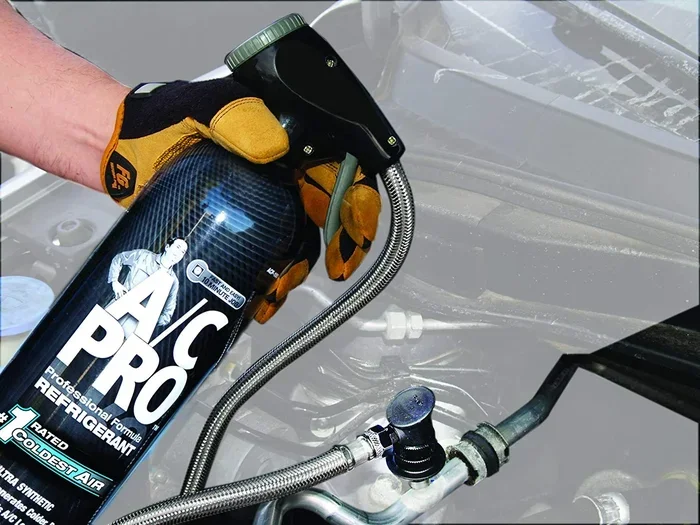
Step 4: Connect the Recharge Hose
Attach the recharge hose to the low-side port. Make sure it clicks into place securely. Then, turn the can of refrigerant upside down. This allows the liquid refrigerant to flow through the hose and into the system more efficiently.
Step 5: Add Refrigerant Slowly
Open the valve on the recharge hose to start adding refrigerant. Add it in short bursts and check the pressure gauge frequently. Stop when the pressure reaches the recommended range for your vehicle. Do not just keep adding refrigerant until the can is empty.
Step 6: Check the Temperature
Once you have added the refrigerant, let the AC run for a few minutes. Then, use a thermometer to measure the temperature at the center vent. The air should be noticeably cold, ideally between 40 and 50 degrees Fahrenheit. If it is still warm, you may need to add a little more refrigerant or check for other issues.
Step 7: Disconnect and Replace Caps
When you are done, turn off the valve on the recharge hose, then disconnect it from the port. Replace the caps on both service ports. Store any remaining refrigerant cans in a cool, dry place.
Common Mistakes to Avoid When Recharging
Recharging your AC system is relatively simple, but mistakes can happen. Here are some common errors to watch out for:
Adding Refrigerant Without Finding a Leak
If your system lost refrigerant, there is likely a leak somewhere. Simply topping off the refrigerant without fixing the leak means you will lose the charge again within days or weeks. This wastes money and releases refrigerant into the atmosphere, which is harmful to the environment.
Before you recharge, have a mechanic inspect the system for leaks. Common leak points include the compressor shaft seal, the condenser, and the hose connections.
Using the Wrong Type of Refrigerant
Mixing R-134a with R-1234yf is a bad idea. The two refrigerants are not compatible, and mixing them can damage the system. Always double-check which type your car uses before purchasing any refrigerant cans.
Overfilling the System
We mentioned this earlier, but it is worth repeating. More refrigerant is not better. Overcharging leads to poor cooling, increased pressure, and potential compressor damage. Always add refrigerant gradually and monitor the pressure.
Adding Refrigerant with the Engine Off
The AC compressor only operates when the engine is running and the AC is turned on. If you try to add refrigerant with the engine off, the system will not circulate the refrigerant properly, and your readings will be inaccurate.
Ignoring the Ambient Temperature
Refrigerant pressure changes with temperature. On a hot day, the pressures will be higher than on a cool day. Always check the recommended pressure ranges for the current outside temperature. Many recharge kits include a chart that shows the correct pressures based on the ambient temperature.
When to See a Professional Mechanic
While DIY recharging works for most situations, there are times when you should leave the job to a professional mechanic. Here are some signs that you need expert help:
- Frequent Refrigerant Loss: If you recharge the system and it goes low again within a few weeks, there is likely a significant leak that needs professional repair.
- Strange Noises: Grinding, squealing, or clicking noises from the AC compressor could indicate internal damage that refrigerant alone cannot fix.
- No Cold Air at All: If the AC blows warm air even after a full recharge, the compressor may be failed, or there could be a blockage in the system.
- Oil Leaks: Refrigerant leaks often come with oil residue around the AC components. This is a sign of a serious problem that needs immediate attention.
- You Do Not Have the Right Tools: If you do not have a manifold gauge set or feel unsure about the process, it is perfectly fine to take your car to a shop.
A professional mechanic has the tools and expertise to diagnose the root cause of AC problems and perform a proper repair. Many shops will even evacuate, leak-check, and recharge your system for a flat fee. This is often the best option if you are not comfortable doing it yourself.
Cost of Recharging Your Car AC
The cost of recharging your car AC depends on several factors. If you do it yourself, a can of refrigerant costs between 15 and 30 dollars. Most cars need 2 to 3 cans, so a DIY recharge typically runs 30 to 90 dollars total.
If you take your car to a shop, the cost is usually higher. A professional AC recharge service typically costs between 150 and 300 dollars. This includes the refrigerant, labor, and often a leak check. While it costs more, it also comes with a warranty on the work and the expertise of a trained technician.
Keep in mind that if there is a leak, the repair cost will be additional. Fixing a small leak in a hose or connection might cost 100 to 300 dollars. A failed compressor or a damaged condenser can cost several hundred dollars or more to replace.
Environmental Impact of Refrigerant Leaks
Refrigerant is not just a car fluid. It is a chemical that can harm the environment if it escapes into the atmosphere. Older refrigerants like R-12 (which was phased out years ago) were especially damaging to the ozone layer. Newer refrigerants like R-134a and R-1234yf are less harmful, but they still contribute to greenhouse gas emissions if released.
This is why it is important to handle refrigerant carefully. Never vent refrigerant into the air. If you are discharging old refrigerant during a repair, a licensed mechanic should capture and recycle it properly. Many auto parts stores also accept used refrigerant cans for safe disposal.
By taking care of your car’s AC system and addressing leaks promptly, you are not just keeping cool. You are also doing your part to protect the environment.
Final Thoughts
Knowing how many cans of Freon your car takes is the first step to a successful AC recharge. Most vehicles need 2 to 3 cans, but the exact number depends on your car’s size, the refrigerant type, and the condition of the system. Always check for leaks, use the correct refrigerant, and add the charge slowly and carefully.
Whether you choose to do it yourself or visit a mechanic, keeping your AC system properly charged means comfortable drives all summer long. A little knowledge and a few basic tools can go a long way toward keeping your car’s air conditioning running strong.
Take the time to understand your vehicle’s needs, follow the steps in this guide, and you will be cool and comfortable on even the hottest days. Your car’s AC system works hard for you, and a little maintenance goes a long way in return.
Frequently Asked Questions
How do I know if my car needs more Freon?
The most obvious sign is warm air coming from the vents when the AC is on. You may also notice that the AC compressor cycles on and off more frequently than usual. A simple pressure check with a gauge can confirm whether the refrigerant level is low.
Can I use any brand of refrigerant cans for my car?
You should use a reputable brand that matches the correct refrigerant type for your vehicle. R-134a cans work for most older cars, while R-1234yf cans are needed for newer models. Always check the label on the can before purchasing.
Is it safe to recharge the AC system myself?
Yes, recharging the AC system is one of the safest DIY car maintenance tasks. As long as you follow the instructions carefully and use the correct refrigerant, it is a straightforward process. Just wear safety glasses and gloves to protect yourself.
What happens if I put too much Freon in my car?
Overcharging the system raises the pressure inside the AC lines, which can strain the compressor. It also reduces the system’s cooling ability. If you think you have added too much, you should have a mechanic evacuate the excess refrigerant.
How long does a car AC recharge last?
A properly recharged system should hold the refrigerant for several years. If you find yourself needing to recharge frequently, there is likely a leak that needs to be repaired. A healthy system should not lose refrigerant over time.
Can I drive my car with low Freon?
You can drive with low refrigerant, but the AC will not cool properly. Driving without enough refrigerant for a long time can also cause the compressor to overheat and wear out prematurely. It is best to recharge the system as soon as you notice the cooling dropping.
=== CONCLUSION ===
Understanding how many cans of Freon your car needs is essential for keeping your AC system running smoothly. Most cars take 2 to 3 cans, but the exact amount depends on your vehicle and the type of refrigerant it uses. By following the steps in this guide, you can recharge your AC safely and effectively at home.
Remember to check for leaks, use the right refrigerant, and never overcharge the system. If you are unsure or uncomfortable with the process, a professional mechanic is always a great option. Taking care of your car’s air conditioning means comfortable drives and a longer-lasting system. Start your recharge today and enjoy the cool air all summer long.