How Can I Empty My Car Gas Tank Fast and Effectively
Knowing how to empty your car gas tank is a valuable skill for every car owner. Whether you need to drain fuel for maintenance, storage, or a fuel system repair, several reliable methods work fast and effectively. This guide covers siphoning, tank valve draining, running the engine dry, and disconnecting the fuel line, so you can pick the best approach for your situation.
Have you ever found yourself stuck with a car that has bad fuel, or maybe you need to store your vehicle for the winter and want to empty the tank completely? How can I empty my car gas tank is a question more people ask than you might think. Whether you are a DIY mechanic, a car owner prepping for long-term storage, or someone who accidentally filled up with the wrong fuel grade, draining your gas tank is a skill worth knowing.
The good news is that emptying a fuel tank is not as hard as it sounds. You do not need to be a professional mechanic to get the job done. With the right tools and a little patience, you can empty your gas tank safely and effectively at home. In this guide, we will walk you through every method, every safety tip, and every disposal step you need to know. Let us get started.
Key Takeaways
- Multiple methods exist: You can siphon fuel, use a drain plug, run the engine dry, or disconnect the fuel line to empty your tank.
- Safety comes first: Always work in a ventilated area, away from open flames, and wear protective gloves when handling gasoline.
- Disposal matters: Never pour old gasoline down drains or on the ground. Use approved disposal centers or fire departments.
- Siphoning is the fastest: A hand siphon pump or simple tubing can remove most fuel in under 30 minutes.
- Running the engine dry works for small amounts: This method is best when you just need to use up remaining fuel before a long storage period.
- Know your vehicle: Some cars have a drain plug on the tank, while others require fuel line disconnection. Check your owner’s manual first.
- Fuel quality degrades over time: Old gasoline can damage your engine. Emptying and replacing stale fuel keeps your car running smoothly.
📑 Table of Contents
- Why Would You Need to Empty Your Gas Tank?
- Method 1: Siphoning Fuel Out With a Hand Pump
- Method 2: Draining Through the Tank Drain Plug
- Method 3: Running the Engine Dry
- Method 4: Disconnecting the Fuel Line
- Safety Tips for Emptying Your Gas Tank
- Comparing the Four Methods
- Common Mistakes to Avoid
- Expert Insights on Fuel System Maintenance
- Key Takeaways
- Conclusion
Why Would You Need to Empty Your Gas Tank?
Before we dive into the how, let us talk about the why. Understanding your reason helps you choose the best method. There are several common situations where draining fuel makes sense.
Storing Your Vehicle for a Long Time
If you plan to store your car for months, old gasoline can cause serious problems. Fuel breaks down over time and forms gum and varnish that clog your fuel system. Draining the fuel tank completely prevents this buildup and keeps your engine in good shape when you are ready to drive again.
Wrong Fuel or Contaminated Gas
Putting diesel in a gasoline engine (or vice versa) happens more often than you would think. Even bad gas from a sketchy gas station can contain water or debris. In these cases, you need to remove the fuel entirely and replace it with fresh gasoline to avoid engine damage.
Fuel System Repairs and Maintenance
When you are replacing a fuel pump, cleaning injectors, or working on the fuel lines, having an empty gas tank makes the job much safer and easier. Fuel spills during repairs can create fire hazards, so draining the tank first is always a smart move.
Selling or Scrapping an Old Vehicle
If you are getting rid of a car, many buyers and scrapyards prefer a vehicle with an empty tank. It is safer to transport and often required by law. Knowing how to drain gas tank properly saves you time and potential issues during the sale.
Method 1: Siphoning Fuel Out With a Hand Pump
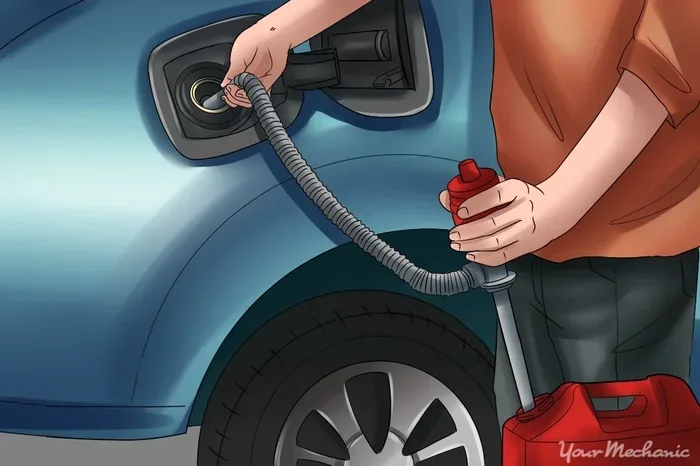
Siphoning is the most popular and fastest way to remove fuel from a gas tank. You do not need fancy equipment. A basic hand siphon pump and a few tubes get the job done in under 30 minutes.
What You Will Need
- A hand siphon pump (available at any auto parts store for under $20)
- Two lengths of fuel-rated tubing
- A gas-safe container or fuel can
- Rags or absorbent pads for any spills
- Safety gloves and eye protection
Step-by-Step Siphoning Process
- Park your car on a flat surface away from any open flames or sparks. Turn off the engine and let it cool completely.
- Remove the gas cap to break the vacuum seal on the tank. This allows air in and makes siphoning much easier.
- Insert the inlet tube of the siphon pump deep into the fuel tank. Push it down as far as it will go.
- Place the outlet tube into your empty fuel can, which should sit lower than the tank.
- Start the siphon by pumping the handle up and down several times. Once fuel starts flowing, it will continue on its own.
- Monitor the process and stop when the tank is empty or you have removed the amount of fuel you need.
- Cap both containers tightly and clean up any spills immediately.
Pro tip: If your siphon pump does not start easily, try gently sucking on the outlet tube to prime it. Once fuel reaches the tube, it will siphon on its own. Just be careful not to ingest any fuel.
Method 2: Draining Through the Tank Drain Plug
Many vehicles, especially trucks and SUVs, have a drain plug on the bottom of the gas tank. This is the easiest method if your car has one. No tools for siphoning needed.
How to Find and Use the Drain Plug
First, check your vehicle owner’s manual to see if a drain plug exists and where it is located. On most cars, you will find it underneath the tank near the rear axle. Here is how to use it:
- Lift the rear of your car with a jack and secure it on jack stands. Never work under a vehicle supported only by a jack.
- Place a drip pan directly under the drain plug.
- Wear safety gloves and use a wrench to slowly loosen the plug. Fuel will flow out quickly at first, so be ready.
- Let the tank drain completely. This can take 10 to 20 minutes depending on how much fuel is in the tank.
- Replace the plug tightly once draining is complete. Hand-tighten first, then snug with the wrench.
This method works great for draining a gas tank quickly and with minimal mess. However, not all vehicles have a drain plug, so check before you get started.
Method 3: Running the Engine Dry
Sometimes the simplest approach is the best one. If you only have a little fuel left and do not need to remove it all at once, running your car until it runs out of gas is a perfectly valid option.
When This Method Works Best
This method is ideal when:
- You have less than a quarter tank of fuel remaining
- You are preparing a car for short-term storage (a few weeks or months)
- You do not have access to siphoning equipment
- You simply want to use up fuel before switching to a different type
Steps to Run Your Engine Dry
- Drive the car until the fuel gauge hits empty and the low-fuel warning light comes on.
- Continue driving carefully until the engine starts sputtering and eventually stalls.
- Do not try to restart once the engine dies. Let the fuel system rest for a few minutes.
- Repeat the process the next day if any fuel remains. Most cars leave a small reserve that takes a second run to use up.
Keep in mind: Running your engine dry regularly is not great for the fuel pump. The pump relies on fuel for cooling, so doing this too often can shorten its lifespan. Use this method only when necessary.
Method 4: Disconnecting the Fuel Line
This method is more hands-on and works well when you are already doing fuel system repairs. By disconnecting the fuel line at the engine or at the filter, you can let gravity drain the tank.
What You Need for This Method
- A wrench set (size depends on your fuel line fittings)
- A fuel-safe container
- Rags and absorbent materials
- Safety glasses and gloves
Step-by-Step Instructions
- Relieve fuel system pressure first. You can do this by removing the fuel pump fuse and cranking the engine for a few seconds. This prevents a fuel spray when you disconnect the line.
- Locate the fuel line at the engine or at the fuel filter. Follow the line from the tank toward the front of the car.
- Place your container directly beneath the connection point.
- Disconnect the fuel line fitting carefully. Fuel will flow out, so keep the container steady.
- Allow the tank to drain completely. This may take 15 to 30 minutes.
- Reconnect the line securely once you have removed the fuel you need.
This method gives you the most control and is excellent for situations where you need to completely drain fuel tank for a repair. Just be very careful about fuel spills and always work in a well-ventilated area.
Safety Tips for Emptying Your Gas Tank
Working with gasoline demands respect. Fuel is highly flammable and can cause serious harm if handled carelessly. Here are the safety rules you must follow every single time you drain a tank.
Work in a Well-Ventilated Area
Always work outdoors or in a garage with the door wide open. Gasoline fumes are heavier than air and can accumulate in low spaces. Never work in an enclosed area without proper ventilation.
Keep Away from Flames and Sparks
Do not smoke anywhere near the work area. Turn off all electrical equipment. Do not use any tools that could create sparks. Gasoline vapors can ignite from the smallest spark.
Wear Protective Gear
Wear nitrile or chemical-resistant gloves to protect your skin. Safety glasses shield your eyes from splashes. Long sleeves provide an extra layer of protection against accidental contact.
Have Fire Extinguisher Nearby
Keep a Class B fire extinguisher within arm’s reach. In the unlikely event of a fuel spill catching fire, you want to be prepared to act fast.
Dispose of Old Gasoline Properly
Never dump old gasoline on the ground or pour it down a drain. It is illegal in most areas and extremely harmful to the environment. Instead, take it to a local hazardous waste facility, your fire department, or an auto parts store that accepts used fuel. Many communities host hazardous waste collection days where you can drop off old gasoline safely.
Quick Tips for Safe Fuel Handling
- Use only approved fuel containers that are labeled and sealed properly
- Ground your fuel can before pouring to prevent static sparks
- Clean up any spills immediately with rags and dispose of them properly
- Wash your hands thoroughly after handling gasoline
- Store fuel containers upright in a cool, shaded area away from living spaces
Comparing the Four Methods
Not sure which method is right for you? Here is a quick comparison to help you decide.
| Method | Best For | Time Required | Difficulty | Equipment Needed |
|---|---|---|---|---|
| Siphoning | Quick fuel removal, any vehicle | 15-30 min | Easy | Siphon pump, tubing, fuel can |
| Drain Plug | Vehicles with accessible plug | 10-20 min | Very Easy | Wrench, drip pan |
| Running Dry | Low fuel, short-term storage | 1-2 days | Very Easy | None |
| Fuel Line Disconnect | Fuel system repairs | 20-45 min | Moderate | Wrench set, container, rags |
As you can see, siphoning is the most versatile method and works for nearly every vehicle. The drain plug method is fastest but only works if your car has one. Running the engine dry requires no tools at all but takes the most time. Disconnecting the fuel line is best when you are already doing repairs underneath the car.
Common Mistakes to Avoid
Even experienced car owners make mistakes when draining a gas tank. Here are the errors to watch out for:
- Forgetting to relieve fuel pressure: This causes fuel to spray everywhere when you disconnect lines. Always remove the fuel pump fuse first.
- Using the wrong container: Never use a container that is not rated for fuel. Old milk jugs and non-rated plastic can degrade and leak.
- Ignoring local regulations: Fuel disposal laws vary by location. Check with your local waste authority before dumping old gas.
- Rushing the process: Fuel drains slowly through gravity. Trying to speed things up with heat or pressure is dangerous.
- Not checking for residual fuel: After draining, some fuel remains in the lines and engine. Run the engine briefly to use up what is left in the system.
Expert Insights on Fuel System Maintenance
According to automotive experts, keeping your fuel system clean is one of the best things you can do for your car’s longevity. Here are a few insights from seasoned mechanics.
Use fuel stabilizer for stored vehicles. If you cannot fully drain your tank, adding a fuel stabilizer to fresh gas prevents degradation for up to 12 months. This is especially helpful for motorcycles, lawnmowers, and seasonal equipment.
Replace your fuel filter regularly. A clogged fuel filter forces your fuel pump to work harder and can lead to premature failure. Most manufacturers recommend replacing the filter every 30,000 to 40,000 miles.
Buy fuel from reputable stations. Contaminated fuel is more common than people think. Stick with well-known gas stations and avoid filling up when you see a tanker truck refilling the station’s underground tanks.
Do not let your tank run completely empty too often. While running dry occasionally is fine, doing it regularly starves the fuel pump and can cause overheating and premature wear.
Key Takeaways
- Siphoning is the go-to method: It works for almost every vehicle, requires minimal tools, and takes under 30 minutes.
- Check for a drain plug first: If your car has one, this is the fastest and easiest way to drain gas tank without any special equipment.
- Running the engine dry works for small amounts: Great for low-fuel situations and short-term storage prep.
- Disconnecting the fuel line is best for repairs: This gives you full access when working on the fuel system.
- Safety is non-negotiable: Always work in ventilated areas, wear protective gear, and keep fire safety equipment nearby.
- Dispose of gasoline responsibly: Use approved disposal centers, fire departments, or hazardous waste facilities.
- Regular maintenance prevents problems: Use fuel stabilizer, replace filters on schedule, and buy quality fuel to keep your system healthy.
Conclusion
Learning how to empty your car gas tank is a practical skill that saves you time, money, and potential headaches. Whether you need to drain fuel for storage, repairs, or because you accidentally put in the wrong type of gas, the methods in this guide give you everything you need to get the job done safely and effectively.
Start by assessing your situation. If you need quick results, siphoning with a hand pump is your best bet. If your vehicle has a drain plug, that method wins for simplicity. For small amounts of remaining fuel, simply running the engine dry does the trick. And if you are already under the car doing repairs, disconnecting the fuel line makes perfect sense.
Always prioritize safety. Wear gloves, work in open areas, and keep fire extinguishers nearby. When you are done, dispose of the old fuel properly at an approved facility. Your car, your wallet, and the environment will all thank you.
Now that you know the ins and outs of emptying a gas tank, you are ready to handle whatever fuel-related challenge comes your way. Grab your tools, follow the steps in this guide, and you will have a drained fuel tank in no time. Happy wrenching!
Frequently Asked Questions
Can I use a regular garden hose to siphon gas from my tank?
No, you should never use a regular garden hose for siphoning fuel. Standard hoses may contain chemicals that can react with gasoline, and they are not rated for fuel use. Always use fuel-rated tubing and a proper siphon pump designed for gasoline transfer.
How long does gasoline last in a stored tank?
Gasoline typically starts to degrade within three to six months. Without a fuel stabilizer, old gas can cause starting problems, clogged injectors, and engine misfires. Adding stabilizer extends the shelf life to about 12 to 18 months.
Is it illegal to dump old gasoline on the ground?
Yes, in most places it is illegal and carries significant fines. Dumping gasoline contaminates soil and water sources and harms the environment. Always take old fuel to a hazardous waste collection center, fire department, or participating auto parts store for proper disposal.
Do I need to disconnect the battery before draining my gas tank?
It is a good safety practice to disconnect the negative battery terminal before working on any fuel system component. This reduces the risk of electrical sparks near gasoline vapors. While not always required for simple draining, it is a smart precaution to take.
Can I reuse gasoline that has been sitting in a storage container?
Gasoline that has been stored properly in a sealed, approved container for less than six months can often still be used. If it looks darker than fresh gas, smells sour, or has separated into layers, it has gone bad and should be disposed of properly. Mixing small amounts of old gas with fresh fuel at a ratio of no more than 10% old gas to 90% fresh gas is sometimes acceptable for non-critical engines.
What is the fastest way to completely drain a gas tank?
The fastest method is using a hand siphon pump with fuel-rated tubing. This can remove most of the fuel in 15 to 30 minutes. If your vehicle has a drain plug, that method is even faster, often taking only 10 to 20 minutes to fully empty the tank.