How Can I Find the Book Value of a Car for Free Online
Finding the book value of a car is easy when you know where to look. You can use free online tools like Kelley Blue Book, Edmunds, and NADA Guides to get instant, accurate pricing. This guide walks you through each step so you can determine your car’s true worth in minutes.
Finding the book value of a car is the first step whether you are buying, selling, or trading in a vehicle. The book value gives you a fair starting point. It reflects what a car is worth based on its age, mileage, condition, and equipment. Without this number, you might overpay or accept a low offer. The good news is you do not need to pay for an appraiser. You can find a reliable car valuation for free online in just a few minutes. This guide shows you exactly how to do it.
We will walk you through the best free tools, the details you need, and the common traps to avoid. You will learn the difference between trade-in value, private party price, and retail cost. By the end, you will feel confident walking into any negotiation. Let us break it down so you can get the most accurate used car pricing possible.
Key Takeaways
- Check multiple sources: Use Kelley Blue Book, Edmunds, and NADA to compare used car pricing and get a balanced view.
- Know your VIN: The vehicle identification number gives you a precise car valuation tailored to your exact model.
- Understand the three values: Trade-in, private party, and retail prices differ, and each serves a different purpose.
- Use a depreciation calculator: It helps you see how much your car loses over time and what it might be worth next year.
- Get a vehicle history report: Clean records boost your car’s fair market value and buyer confidence.
- Don’t skip the appraisal: A local dealer can refine the online estimate and spot hidden value.
📑 Table of Contents
What Is the Book Value of a Car?
The book value of a car is the estimated worth of a vehicle according to industry guides. Think of it as the standard price tag that dealers and lenders use. It is not a guess. It is based on real-world sales data, auction results, and dealer transactions. The number changes as the car ages or the market shifts.
There are three main types of book value you will encounter:
- Trade-in value: What a dealer will pay you for your car. This is the lowest number because the dealer needs to make a profit when they resell it.
- Private party value: The price a private seller should expect. It sits between trade-in and retail. Buyers save money, and sellers get more than a dealer offer.
- Retail value: What a dealer asks a buyer to pay. This includes the dealer’s profit margin, reconditioning costs, and overhead.
Understanding these three numbers helps you set realistic expectations. If you are trading in, you will focus on the trade-in value. If you are selling privately, the private party value is your target. The fair market value often lands somewhere in the middle of these three.
Why Book Value Matters
Knowing your car book value protects you from bad deals. When you buy, you avoid overpaying. When you sell, you avoid leaving money on the table. Lenders also use the book value to decide how much to loan you. If the car is worth less than the loan balance, you are underwater. A quick check can save you from that costly mistake.
Book value also helps with insurance. Many policies cover the actual cash value, which is closely tied to the book value. If your car is totaled, the insurer will pay out based on that number. You want that number to be accurate.
How It Is Calculated
Guides like Kelley Blue Book and Edmunds use large data sets. They look at millions of real transactions. They factor in the make, model, year, trim level, and optional equipment. Mileage and condition are big variables. A well-maintained car with low miles will score higher. The depreciation calculator in these tools shows how the value drops over time. Typically, a new car loses about 15% to 25% of its value in the first year. After five years, it may be worth 40% to 60% of the original price.
Top Free Online Tools to Find the Book Value of a Car
You do not need to spend a dime to get a solid vehicle valuation. Several reputable sites offer free tools. Each one has a slightly different approach, so using more than one gives you the best picture. Here are the top free resources you should check.
Kelley Blue Book (KBB)
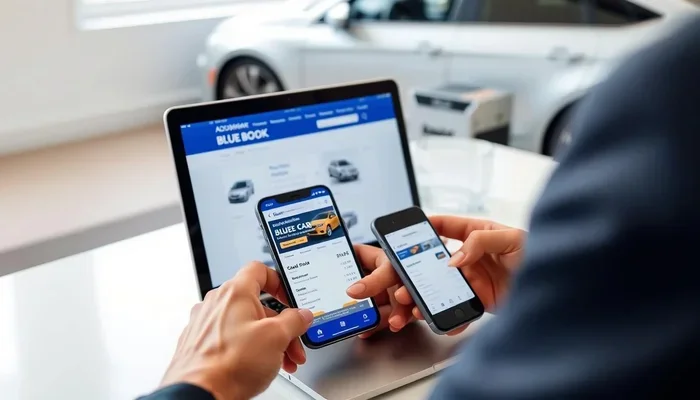
Kelley Blue Book is one of the most trusted names in auto pricing. Their free online tool lets you enter your car details and instantly see a range of values. You can compare trade-in, private party, and retail prices. KBB also breaks down the value by condition. You can select excellent, good, fair, or poor. This level of detail makes it a great starting point for any auto valuation.
KBB also offers a car worth calculator on its mobile app. You can check values on the go. The site includes a depreciation calculator that shows how the car’s value changes over time. This is helpful if you are planning to sell in a few years.
Edmunds
Edmunds provides a very detailed car valuation tool. Their free page gives you the fair market range based on real transactions in your area. Edmunds also factors in recent market trends. If demand for a certain model is high, the price may be above the national average. The site offers a True Market Value (TMV) estimate. This number reflects what real buyers are paying right now. It is a powerful way to see the current resale value of your car.
Edmunds also lets you compare the cost of ownership. You can see estimated fuel, insurance, and maintenance costs. This holistic view helps you understand the full picture of a car’s value.
NADA Guides
The NADA Guide is backed by the National Automobile Dealers Association. It is widely used by dealers and lenders. NADA focuses heavily on trade-in and loan values. If you are refinancing a car loan, the bank will likely pull a NADA value. The guide is especially strong for trucks and commercial vehicles. It also includes values for classic cars and boats. The NADA site is straightforward and fast to use.
Other Reliable Sources
A few other free tools can round out your research. The Black Book is popular among dealers for wholesale pricing. Cars.com offers a free vehicle appraisal tool. CarGurus shows real listings and price trends. You can also check local dealer websites to see what similar cars are listed for. This gives you a ground-level view of used car pricing in your specific market.
Step-by-Step: How to Get Your Book Value of a Car
Getting an accurate book value of a car is a simple process. Follow these steps to make sure your number is reliable.
Gather Your Vehicle Details
Before you open any tool, collect the key information. You will need the following:
- Make and model
- Year of production
- Trim level (such as LX, EX, or SE)
- Engine size and type
- Mileage
- Condition (excellent, good, fair, or poor)
- Any extra features like leather seats, sunroof, or navigation
The more details you have, the more precise your estimate will be. A car with a sunroof and leather seats is worth more than the base model. Even small options can shift the car worth by a few hundred dollars.
Enter the VIN for Accuracy
The VIN (vehicle identification number) is your car’s unique fingerprint. It tells you the exact factory options and build date. Entering the VIN into a valuation tool removes guesswork. The tool will pull the correct trim and engine details automatically. You can find the VIN on the driver’s side dashboard or on the door jamb sticker. A vehicle history report from Carfax or AutoCheck is also useful here. It shows any accidents, service records, and ownership history. Clean records boost the fair market value significantly.
Compare the Three Value Types
Once you have your numbers, compare the trade-in, private party, and retail values. Do not rely on just one. Here is a quick look at how they differ:
| Value Type | Who Uses It | Typical Range |
|---|---|---|
| Trade-in Value | Dealers buying your car | Lowest offer |
| Private Party Value | Selling to an individual | Middle range |
| Retail Value | Dealer asking price to buyers | Highest number |
If you are selling privately, aim for the private party value. If you are trading in, negotiate up from the trade-in number. A good rule of thumb is to split the difference between trade-in and private party. That gives you a fair starting point for negotiation.
Understanding Trade-In vs. Private Party vs. Retail Value
The three value types serve different purposes. Knowing which one applies to your situation is key to getting a fair deal.
Trade-In Value Explained
The trade-in value is what a dealer offers you on the spot. It is the wholesale price the dealer pays for your car. They then recondition it and sell it for retail. Because the dealer takes on the risk and cost of reconditioning, they offer you less. You can usually expect the trade-in value to be 10% to 20% below the private party price. However, it is the fastest and easiest way to put money toward a new car. Many buyers use trade-in as part of a larger purchase deal.
Private Party Value
The private party value is what another individual should pay for your car. You avoid the dealer markup. You also save the buyer money. This is the sweet spot for most sellers. You will need to handle the sale yourself, which takes a bit more effort. You must advertise the car, answer questions, and meet buyers. In return, you walk away with more cash. A clean vehicle history report and recent maintenance records help you justify the price.
Retail Value
The retail value is what a dealer asks a buyer to pay. It includes the dealer’s profit, reconditioning costs, and lot expenses. If you are buying a used car, you should expect to pay near the retail number. However, you can often negotiate down. Start with the private party value as your anchor and haggle from there. A well-prepared buyer can often save several hundred dollars.
Common Mistakes That Skew Your Car’s Book Value
Even with the best tools, you can still get an inaccurate car valuation. Avoid these common pitfalls to keep your numbers honest.
Ignoring Condition and Mileage
Mileage has a huge impact on value. A car with 150,000 miles will be worth less than one with 80,000 miles, even if they are the same year and model. Condition matters just as much. A car with a torn dashboard or scratched paint will score lower. Be honest when you select the condition. Overestimating your car’s condition leads to disappointment when you try to sell it. Use the depreciation calculator to see how mileage affects the numbers.
Overlooking Service History
Buyers and dealers love proof of regular maintenance. If you have oil change records and receipts for major repairs, your car is worth more. A full service history tells the buyer the car was cared for. Without it, the buyer assumes the worst. This can drop the resale value by hundreds or even thousands of dollars. Gather your records before you start the valuation process.
Using Outdated Guides
Car values change quickly. A guide from six months ago may not reflect current market conditions. Supply and demand shift with the seasons. For example, convertibles are worth more in spring and summer. Trucks may command higher prices in winter in colder regions. Always use the latest data from Kelley Blue Book, Edmunds, or NADA Guides. These sites update their numbers regularly.
Expert Tips to Maximize Your Car’s Value
A few smart moves can push your car book value higher. These tips come from seasoned dealers and appraisers.
Get a Professional Appraisal
Online tools give you a great baseline, but they cannot see your car in person. A local dealer or independent appraiser can inspect the vehicle and refine the estimate. They will notice things the online tool misses, like a fresh paint job or new tires. Many dealers offer free appraisals. You can also visit a certified appraiser for a formal report. This is especially useful for classic cars or luxury models where small details matter a lot.
Highlight Recent Maintenance
Before you list your car or go to a dealer, make it look its best. Get a fresh oil change. Rotate the tires. Fix any minor issues like a dead battery or worn wiper blades. A car appraisal often includes a physical inspection. A well-maintained car signals to the evaluator that the previous owner took good care of it. This can add value to the final number.
Time Your Sale Right
Market conditions affect used car pricing. Sell when demand is high for your car type. Convertibles sell faster in the summer. SUVs and trucks are popular in fall and winter. Check local listings to see what similar cars are going for. If you can wait a few weeks for a better market, you may get a higher offer. Patience is a powerful tool in the selling process.
Conclusion
Finding the book value of a car for free online is simple and empowering. You now know the best tools, the key details you need, and the common mistakes to avoid. Use Kelley Blue Book, Edmunds, and NADA Guides together to get a complete picture. Understand the difference between trade-in, private party, and retail values. Always enter your VIN and be honest about your car’s condition. With these steps, you can walk into any negotiation with confidence. You will know exactly what your car is worth. Take a few minutes today to check your vehicle valuation and make a smarter decision tomorrow.
Frequently Asked Questions
What is the most accurate way to find the book value of a car?
The most accurate method is to use several free online tools and compare the results. Enter your VIN into Kelley Blue Book, Edmunds, and NADA Guides. Then cross-check with local dealer listings and a vehicle history report. This gives you a well-rounded view of your car’s true market value.
Can I find the book value of a car for free?
Yes, all major guides like Kelley Blue Book, Edmunds, and NADA offer free online valuation tools. You just need to enter basic details about your car. There is no cost to get an instant estimate.
Does the VIN change the book value?
Yes, the VIN provides the exact factory options and trim level. A car with the right options can be worth more than the base model. Entering the VIN removes guesswork and gives you a more precise car valuation.
How often do book values change?
Book values are updated regularly, often weekly or monthly. Market demand, fuel prices, and new model releases can shift values quickly. Always check the latest data before making a buying or selling decision.
What is the difference between book value and trade-in value?
The book value is a general estimate of what the car is worth. The trade-in value is the specific amount a dealer will offer you. Trade-in value is usually lower because the dealer needs to profit when they resell the car.
Should I trust a free car valuation tool?
Free tools from reputable sources are highly reliable for a starting point. They use real transaction data and large data sets. For the most accurate number, combine the online estimate with a local dealer appraisal and a clean vehicle history report.