Why Wont My Airbag Light Go Off and How to Fix It
Your airbag light staying on means something is wrong with your car’s safety system. It could be a loose seat belt, a faulty crash sensor, or a problem with the SRS module. Ignoring this light puts you and your passengers at serious risk. This guide walks you through the most common causes, easy DIY fixes, and when to call a pro. You will learn how to diagnose the issue and get your airbag light off for good.
There are few things more unsettling than seeing a warning light on your dashboard that just won’t go away. Your airbag light is one of those warnings you cannot ignore. It sits there, glowing amber or red, and it tells you something is wrong with one of the most important safety systems in your vehicle.
The airbag system, also known as the supplemental restraint system or SRS, is designed to protect you during a collision. When the airbag warning light stays on, it means the system has detected a fault and may not deploy properly in a crash. That is a scary thought for any driver or passenger.
In this article, we will explore exactly why your airbag light won’t go off. We will cover the most common causes, show you how to diagnose the problem, and give you clear steps to fix it. Whether you are a DIY mechanic or just someone who wants to understand their car better, this guide has you covered. Let us get into it.
Key Takeaways
- Airbag light stays on: It signals a fault in your supplemental restraint system that needs attention.
- Common causes include: Loose seat belts, bad crash sensors, faulty clock springs, and blown fuses.
- An OBD2 scanner helps: It reads airbag diagnostic trouble codes fast and accurately.
- Some fixes are DIY-friendly: Reconnecting seat belts and checking fuses are simple steps anyone can do.
- Don’t ignore the light: A working airbag system saves lives in a crash.
- See a professional when needed: Complex SRS issues require expert tools and knowledge.
- Prevention matters: Regular maintenance keeps your airbag system running smoothly.
📑 Table of Contents
What Does the Airbag Light Actually Mean?
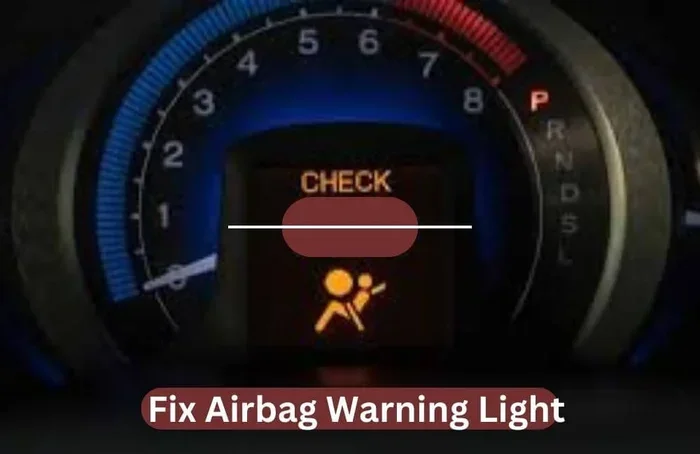
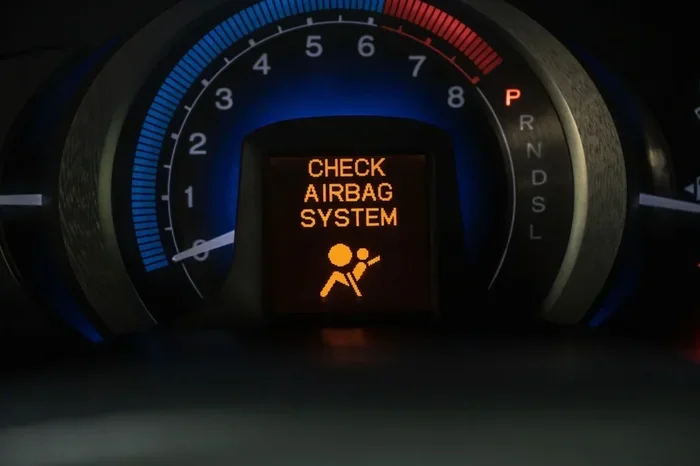
Before we dive into fixes, let us understand what the airbag light really tells you. The light looks like a person sitting in a seat with a circle in front of them. That circle represents the airbag module. When it illuminates, your car’s computer is sending a clear message: something in the airbag system needs attention.
Your vehicle has a dedicated airbag control unit, sometimes called the SRS module. This unit constantly monitors all the components of the airbag system. It checks sensors, wiring, connectors, and the crash sensors every time you turn the key. If it finds even a small issue, it triggers the airbag warning light on your dashboard.
How the Airbag System Works
Understanding the basics helps you understand why the light is on. Here is how the system works in simple terms:
- Crash sensors detect a sudden impact or deceleration.
- The control unit receives signals from these sensors and decides whether to deploy the airbags.
- Inflators rapidly fill the airbags with gas when a collision is detected.
- Seat belt pretensioners tighten your seat belts to keep you in place.
- The SRS module runs self-checks every time you start the car.
When any part of this chain fails, the control unit stores a diagnostic trouble code and turns on the airbag light. The system is essentially telling you it cannot guarantee your safety in a crash.
Why the Light Comes On During Startup
Here is something most drivers do not know. When you start your car, the airbag light should turn on for a few seconds and then go off. This is called a bulb check. It is completely normal. The system is running a quick self-test to make sure everything is working.
If the light stays on after the self-test, that is when you have a real problem. The SRS module has found a fault it cannot resolve on its own. At that point, you need to investigate further.
Common Reasons Why Your Airbag Light Won’t Turn Off
There are many reasons the airbag light might stay illuminated. Some are simple and easy to fix. Others require professional tools and expertise. Let us look at the most common culprits.
1. Loose or Faulty Seat Belt
This is the number one reason people see their airbag warning light come on. A seat belt that is not clicked in properly, or a belt that is frayed or stuck, can trigger the light. The seat belt sensor inside the buckle detects whether the belt is latched correctly.
Sometimes the issue is as simple as debris stuck in the buckle. Dirt, coins, or even small food particles can prevent the sensor from registering a proper connection. Give your seat belt buckle a quick clean and see if the light goes off.
2. A Bad Clock Spring
The clock spring is a spiral ribbon cable located under your steering wheel. It connects the steering wheel airbag to the electrical system. Over time, the clock spring can wear out or break.
When the clock spring fails, it interrupts the connection between the airbag and the control unit. This almost always triggers the airbag light. You might also notice other issues, like a horn that stops working or cruise control buttons that go dead.
3. Faulty Crash Sensors
Your car has crash sensors placed in strategic locations. These sensors detect sudden deceleration or impact. If one of these sensors becomes faulty or corroded, it sends incorrect data to the SRS module.
Crash sensors can be affected by moisture, especially in older vehicles. Rust or corrosion on the sensor connector can cause intermittent faults. The airbag light may come and go, making the problem harder to pin down.
4. Blown Airbag Fuse
Every system in your car has a fuse, and the airbag system is no exception. A blown fuse in the SRS circuit will cause the airbag warning light to stay on. This can happen due to a power surge or an electrical short.
Check your owner’s manual for the fuse box location and the specific fuse for the airbag system. A blown fuse is one of the easiest issues to fix. Simply replace it with a fuse of the same amperage.
5. Wiring or Connector Problems
Loose or damaged wiring is another frequent cause of the airbag light staying on. The connectors under your seats can become loose over time, especially if you regularly move your seats back and forth.
Rodents can also chew through wiring harnesses under your car. If you see signs of rodent damage or feel a loose connector, that could be the source of the problem. A damaged airbag connector prevents the control unit from communicating properly with the system.
6. Previous Accident or Airbag Deployment
If your car has been in an accident, even a minor one, the airbag system may have stored a code. After an airbag deployment, the crash sensors and control unit need to be reset. Simply replacing the airbag parts is not enough.
The SRS module must be reprogrammed or replaced. If this step is skipped, the airbag light will remain on indefinitely. This is a common mistake after minor fender benders.
7. Low Battery Voltage
Your airbag control unit needs a steady power supply. If your car battery is weak or dying, the voltage drop can cause the airbag warning light to illuminate. This often happens when the battery is old or has not been charged properly.
Have your battery tested at an auto parts store. Most stores will test it for free. If the battery is weak, a replacement might solve the airbag light problem entirely.
How to Diagnose the Airbag Light Problem
Once you know the common causes, the next step is figuring out exactly what is wrong with your vehicle. Diagnosing the problem correctly saves you time and money.
Using an OBD2 Scanner
The best way to diagnose an airbag light issue is with an OBD2 scanner. This tool plugs into the diagnostic port under your dashboard and reads the trouble codes stored in your car’s computer.
Not all OBD2 scanners can read airbag diagnostic trouble codes. You need one that supports the SRS system. Here are some popular options:
- Basic scanners: Affordable and read general codes, but may not support airbag codes.
- Mid-range scanners: Support SRS codes and offer live data monitoring.
- Professional-grade scanners: Used by mechanics, these provide the most detailed diagnostics.
Once you plug in the scanner, it will display a code. This code tells you which part of the airbag system has a fault. For example, a code starting with B0001 might indicate a problem with the driver’s side airbag circuit.
Manual Inspection Steps
Before you grab a scanner, you can do some basic checks yourself. Here is a quick checklist:
- Check that all seat belts are clicked in fully and retract properly.
- Look under your seats for any loose connectors or damaged wiring.
- Inspect the fuse box for a blown SRS fuse.
- Check your battery voltage with a multimeter.
- Look for any visible damage under the steering wheel column.
These simple steps can often reveal the problem without any special tools. Many drivers are surprised to find that a loose seat belt connector was the cause all along.
Step-by-Step Fixes for Airbag Light Issues
Now that you have diagnosed the problem, let us look at how to fix it. Some fixes are quick and easy. Others are more involved. Always remember to disconnect your battery before working on any part of the airbag system. Airbag components can deploy accidentally and cause serious injury.
Fix 1: Clean or Replace the Seat Belt Buckle
If the seat belt sensor is the issue, start by cleaning the buckle. Use a cotton swab dipped in rubbing alcohol to clean out any dirt or debris. Let it dry completely before reconnecting.
If cleaning does not work, the buckle may need to be replaced. Replacement buckles are relatively affordable and easy to install. Just make sure you match the part number to your vehicle model.
Fix 2: Replace a Blown Fuse
Locate the SRS fuse in your fuse box. Use your owner’s manual to find the exact location. Pull out the old fuse and compare it to a new one. Make sure the amperage rating matches exactly.
After replacing the fuse, turn the ignition on and see if the airbag light goes off. If it does, you are good to go. If it comes back on, the problem is deeper than a simple fuse.
Fix 3: Reset the SRS Module
Sometimes the SRS module needs a reset after a fault has been repaired. You can do this by disconnecting the battery for at least 15 minutes. This clears the stored codes and allows the system to run a fresh self-check.
After reconnecting the battery, start the car and watch the dashboard. If the airbag light comes on briefly and then goes off, the reset was successful. If it stays on, there is still an unresolved issue.
Fix 4: Replace the Clock Spring
A faulty clock spring requires more work. You will need to remove the steering wheel to access the clock spring. This is a job that requires care and patience.
Make sure you mark the position of the steering wheel before removing it. You will need to align it exactly the same way when you reinstall it. A new clock spring is not expensive, but the labor can be tricky if you are not used to working on steering components.
Fix 5: Repair or Replace Wiring
If you find damaged wiring or a loose connector, repair it carefully. Use electrical tape for minor damage, but replace any severely frayed or chewed wires entirely. A proper airbag connector repair ensures reliable communication between all system components.
Fix 6: Replace the Crash Sensor
A faulty crash sensor needs to be replaced. These sensors are usually located in the front of the vehicle or near the doors. Refer to your service manual for the exact location.
Replacing a crash sensor involves removing the old sensor, cleaning the mounting area, and installing the new one. After installation, use an OBD2 scanner to clear the codes and test drive the vehicle.
When Should You See a Professional Mechanic?
While some airbag light issues are DIY-friendly, others are best left to the professionals. You should see a mechanic if:
- The airbag warning light stays on after you have tried basic fixes.
- You are not comfortable working with the electrical system in your car.
- The OBD2 scanner shows codes related to the airbag control unit itself.
- Your vehicle has been in a recent accident and the airbag system needs professional reset.
- You notice multiple warning lights on your dashboard at the same time.
A professional mechanic has access to advanced diagnostic tools and factory-level software. They can pinpoint the exact issue quickly and safely. Trying to fix complex SRS problems without the right tools can lead to more damage or, worse, a non-functioning airbag when you need it most.
Also, keep in mind that a malfunctioning airbag system can affect your vehicle’s safety inspection. In many states, a car with the airbag light on will not pass inspection. Getting it fixed is not just about comfort, it is about safety and legality.
Preventing Airbag Light Problems
Prevention is always better than cure, and this is true for your airbag system too. A little regular maintenance can keep the airbag warning light off and your safety system working perfectly.
Simple Maintenance Tips
- Keep your seat belts clean: Wipe down the buckles and retractors regularly. Dirt and grime are the enemies of the seat belt sensor.
- Avoid moving your seats roughly: Slamming the seat forward can jar loose connectors under the seat. Move your seat gently.
- Check your battery regularly: A healthy battery keeps the SRS module powered properly. Replace old batteries before they fail.
- Watch for warning signs: If you notice any unusual sounds or behavior from your dashboard, get it checked early.
- Keep moisture out: Water damage is a leading cause of electrical faults. Dry out your car if it gets flooded or heavily wet.
These small habits add up over time. They help your airbag system stay in top shape and your airbag light stay off where it belongs.
Key Takeaways
- Airbag light stays on: It signals a fault in your supplemental restraint system that needs attention.
- Common causes include: Loose seat belts, bad crash sensors, faulty clock springs, and blown fuses.
- An OBD2 scanner helps: It reads airbag diagnostic trouble codes fast and accurately.
- Some fixes are DIY-friendly: Reconnecting seat belts and checking fuses are simple steps anyone can do.
- Don’t ignore the light: A working airbag system saves lives in a crash.
- See a professional when needed: Complex SRS issues require expert tools and knowledge.
- Prevention matters: Regular maintenance keeps your airbag system running smoothly.
Conclusion
Dealing with an airbag light that won’t go off can feel overwhelming, but it does not have to be. Now you know the most common reasons this happens, from a loose seat belt to a faulty clock spring or crash sensor. You also know how to diagnose the problem using an OBD2 scanner or simple manual checks.
Many of the fixes we covered are things you can do yourself at home with basic tools. Cleaning a seat belt buckle, replacing a fuse, or resetting the SRS module are straightforward tasks. When the problem is more complex, do not hesitate to take your car to a trusted mechanic. Your safety is worth the investment.
The airbag system is one of the most important safety features in your vehicle. It works silently in the background to protect you and your loved ones every time you drive. When the airbag light comes on, it is asking for your attention. Listen to it. Take action. Get the light off and the system working again. Your future self will thank you.
So the next time you see that glowing airbag warning light, do not panic. Use what you learned here. Diagnose the problem, try the fixes, and get back on the road with confidence. Safe driving starts with a well-maintained car.
Frequently Asked Questions
Can I drive my car with the airbag light on?
You can technically drive, but it is not safe. The airbag system may not deploy in a crash if there is a fault. The airbag warning light means your supplemental restraint system has a problem. Get it checked as soon as possible to protect yourself and your passengers.
How much does it cost to fix an airbag light?
The cost depends on the cause. A simple fuse replacement might cost under $20. Replacing a clock spring or crash sensor can range from $100 to $400. Professional SRS module repairs may cost more. Always get a quote from a trusted mechanic before committing to a repair.
Will disconnecting the battery reset the airbag light?
Disconnecting the battery for 15 to 30 minutes can clear temporary codes and reset the airbag light. However, if the underlying problem is not fixed, the light will come back on. Use this method only as a first step, not a permanent solution.
Can a loose seat belt cause the airbag light to come on?
Yes, absolutely. A seat belt that is not clicking in properly or a buckle with debris inside can trigger the airbag warning light. The seat belt sensor monitors whether the belt is latched correctly. Clean the buckle first and see if the light goes off.
How do I know if my airbag clock spring is bad?
Signs of a bad clock spring include the airbag light staying on, a horn that stops working, and cruise control buttons that go unresponsive. If you notice these symptoms together, the clock spring under your steering wheel is likely the culprit.
Is it safe to reset the airbag light myself?
Resetting the light after fixing the actual problem is safe. However, never clear the code without first repairing the fault. The airbag light exists to warn you of a real safety issue. Fix the problem first, then reset the system with an OBD2 scanner or by disconnecting the battery.