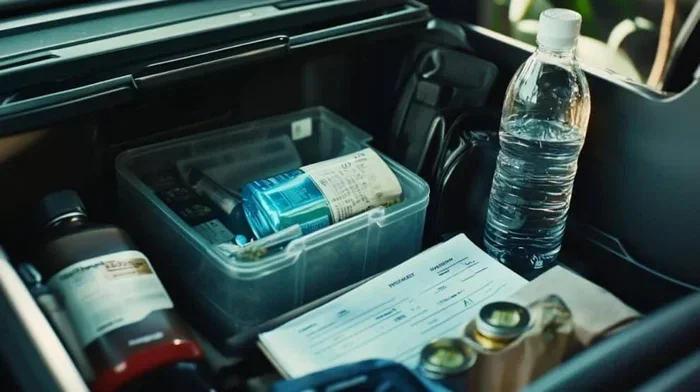
Can You Travel by Car With Medical Marijuana Safely
Traveling by car with medical marijuana is possible, but it comes with important legal rules you must follow. Each state has its own laws about cannabis possession, storage, and use in vehicles. Understanding these rules helps you stay safe, avoid fines, and protect your medical marijuana card rights during road trips.
You packed your bags, loaded up the car, and you are ready for a road trip. But there is one thing on your mind. Can you travel by car with medical marijuana? This is a question many patients ask, especially those who rely on cannabis for pain, anxiety, or other conditions. The answer is not as simple as yes or no. It depends on where you live, where you are going, and how you store your medication.
Traveling with medical cannabis in your vehicle involves understanding a web of state laws, federal regulations, and practical safety tips. This guide breaks it all down for you. You will learn about legal protections, proper storage methods, what to do during a traffic stop, and how to avoid common mistakes. By the end, you will feel confident and prepared for your next trip.
Key Takeaways
- Know Your State Laws: Medical marijuana rules vary widely from state to state, so always research before you drive.
- Storage Matters: Keep your cannabis products sealed and out of reach, ideally in a locked container in the trunk.
- Never Use While Driving: Consuming medical marijuana in a vehicle is illegal in nearly every state.
- Crossing State Lines Is Risky: Even if both states allow medical cannabis, federal law still applies on federal land and at borders.
- Carry Your Medical Card: Always have your medical marijuana card and prescription documentation with you when traveling.
- Know Your Rights During Traffic Stops: You have certain legal protections, but you must also comply with law enforcement requests.
- Prepare for Roadside Testing: Drug testing during traffic stops can complicate things, so understanding how testing works is essential.
📑 Table of Contents
- Understanding Medical Marijuana Laws for Vehicle Travel
- How to Properly Store Medical Marijuana in Your Vehicle
- What Happens During a Traffic Stop
- Traveling Across State Lines With Medical Marijuana
- Driving Safety and Medical Marijuana
- Common Mistakes When Traveling With Medical Marijuana
- Protecting Yourself Legally When Traveling With Medical Marijuana
- Frequently Asked Questions About Traveling With Medical Marijuana
- Conclusion
Understanding Medical Marijuana Laws for Vehicle Travel
Medical marijuana laws are not the same everywhere. What is legal in one state might be illegal in the next. This creates confusion for patients who need to travel by car with medical marijuana regularly. Let us break down the basics so you understand the landscape.
How State Laws Differ
Every state that has a medical marijuana program sets its own rules. Some states allow patients to carry up to a certain amount of cannabis flower. Others limit you to specific products like oils or edibles. The dosage limits also vary. For example, California allows patients to carry up to 8 grams of concentrated cannabis. Meanwhile, Florida limits medical marijuana flower to a 70-day supply.
Here are some key differences you should know:
- Reciprocity: Some states honor out-of-state medical marijuana cards. Others do not. Check before crossing state lines.
- Quantity Limits: Each state sets its own maximum amount you can possess legally.
- Product Types: Some states allow all forms of cannabis. Others restrict you to non-smokable products.
- Use in Vehicles: No state allows you to consume cannabis while driving or riding as a passenger in most cases.
What the Federal Law Says
Here is the tricky part. Cannabis is still classified as a Schedule I substance under federal law. This means it is illegal at the federal level, even in states where medical marijuana is legal. The federal government generally does not prioritize prosecuting individual patients. But the law still exists, and it matters in certain situations.
For instance, if you drive through a federal park or cross a state border on federal land, federal law applies. This is why understanding both state and federal rules is so important when you travel by car with medical marijuana.
Quick Tips: Know Before You Go
- Check the medical marijuana laws of your destination state before your trip.
- Verify whether your home state’s medical card is recognized where you are going.
- Keep a copy of your medical marijuana card and a recent prescription in your glove box.
- Download the latest state-by-state cannabis law guide for reference.
How to Properly Store Medical Marijuana in Your Vehicle
Proper storage is one of the most important parts of traveling by car with medical marijuana safely. How you store your cannabis can mean the difference between a smooth trip and a legal headache. Let us look at the best practices.
Use a Sealed, Odor-Proof Container
Always keep your cannabis products in a sealed container. This prevents the smell from spreading throughout your car. An odor-proof bag or container also signals to law enforcement that you are being responsible. It shows you are not trying to openly display your medication.
Keep It Out of Reach
Never leave your medical marijuana in the glove box or in your cup holder. These spots are easily accessible while driving. Instead, place your sealed container in the trunk or a locked storage area. This keeps it away from both the driver and any passengers.
Separate Products and Documentation
Keep your cannabis products separate from your medical documentation in some cases. Store your medical marijuana card in your wallet or the glove box. Store the actual products in the trunk. This separation can help if you are ever stopped and searched.
What About Passengers?
If you have passengers, the rules get even more specific. In many states, passengers cannot consume cannabis in a vehicle. Some states also restrict where passengers can store their own medical marijuana. Always check the rules for every state you pass through.
| Storage Method | Recommended? | Why? |
|---|---|---|
| Trunk in sealed container | Yes | Keeps products out of reach and reduces odor |
| Locked console or box | Yes | Secure and not easily accessible while driving |
| Glove box | No | Too accessible; could be seen as intent to use |
| Back seat within reach | No | Still accessible to driver; risky during stops |
| Open bag or loose | No | Illegal in most states; invites legal trouble |
What Happens During a Traffic Stop
Getting pulled over is stressful enough without the added concern of having medical marijuana in your car. Knowing your rights and what to do can make a huge difference.
Your Rights During a Traffic Stop
When a police officer pulls you over, you have certain rights. You must provide your driver’s license, registration, and proof of insurance. You do not have to answer questions about your medical marijuana unless you are under arrest. However, you also should not lie to an officer.
If you have a valid medical marijuana card, you can calmly inform the officer. You might say something like, “I have a valid medical marijuana card and my medication is stored in the trunk in a sealed container.” This shows cooperation and transparency.
Roadside Drug Testing
Some states use roadside drug testing for suspected impaired driving. These tests can include saliva swabs or field sobriety tests. If you are a legal medical marijuana patient, you might still test positive for THC. This does not automatically mean you are impaired, but it can lead to further questioning.
Here is what you should know about roadside testing:
- Saliva Tests: These detect recent use, not necessarily impairment.
- Blood Tests: More accurate for measuring active THC levels.
- Urine Tests: Can detect cannabis days or weeks after use.
- Field Sobriety Tests: These assess impairment, not just drug presence.
Always be respectful and cooperative during any testing. Arguing or refusing can escalate the situation.
Common Mistakes to Avoid During Traffic Stops
- Reaching for your cannabis products before the officer asks.
- Volunteering information you do not need to share.
- Lying about whether you have medical marijuana.
- Refusing a lawful search without understanding your rights.
- Getting aggressive or confrontational with the officer.
Expert Insight
“The most important thing during a traffic stop is to remain calm and respectful. If you have a medical marijuana card, present it calmly. Do not make sudden movements toward your products. Cooperate fully, and address any legal concerns later with an attorney if needed.” — Cannabis Law Specialist
Traveling Across State Lines With Medical Marijuana
One of the biggest challenges for medical marijuana patients is crossing state lines. You might live in a state with strong protections and drive to a neighboring state for a vacation. But the rules change the moment you cross into a different jurisdiction.
Reciprocity Agreements
Some states have reciprocity agreements. This means they honor medical marijuana cards from other states. States like Arizona, Maine, and Michigan have been known to accept out-of-state cards in certain situations. However, each state sets its own rules about how many products a visiting patient can possess.
Here are some things to keep in mind:
- Not all states with medical marijuana programs have reciprocity.
- Even states with reciprocity may limit the amount you can carry.
- Some states require you to register as a visiting patient before you arrive.
- Reciprocity rules can change quickly with new legislation.
What If Your Destination State Does Not Accept Medical Marijuana?
If you are traveling to a state where medical marijuana is not legal, you are taking a risk. Even if your home state allows it, possessing cannabis in a non-legal state is illegal. You could face criminal charges, fines, or even jail time.
This is a serious risk that every patient should understand before hitting the road. Never assume that your home state’s protections follow you across the border.
Border Crossings and Federal Land
Border crossings present another layer of complexity. TSA agents operate under federal law, and cannabis is illegal federally. Even if you are traveling between two legal states, crossing into federal airspace or federal land can create problems.
Similarly, if you drive through a national park or federal reservation, federal law applies. This means your medical marijuana card may not protect you in these areas.
Driving Safety and Medical Marijuana
Safety should always come first when you travel by car with medical marijuana. This includes both your personal safety and the safety of others on the road.
Never Consume Cannabis While Driving
This should go without saying, but it needs to be said. Consuming medical marijuana while driving is illegal in every state. Even if you are a registered patient, using cannabis behind the wheel can lead to DUI charges. These charges carry serious penalties, including fines, license suspension, and even jail time.
Here are some important points to remember:
- Do not smoke or vape cannabis while driving.
- Do not consume edibles before or during driving.
- Wait until you have reached your destination and are parked safely.
- Even pulling over at a rest area does not make consumption legal in most cases.
How Long Does Cannabis Affect Driving?
The effects of cannabis vary from person to person. Factors like dosage, tolerance, and the type of product all play a role. Generally, THC can impair your driving for several hours after use. Edibles take longer to kick in and last longer, so plan accordingly.
If you use medical marijuana for pain management or other reasons, consider these safety tips:
- Use your medication before you start driving, not while on the road.
- Wait at least 4 to 6 hours after consuming edibles before driving.
- Wait at least 2 to 3 hours after smoking before driving.
- If you feel any effects at all, do not get behind the wheel.
- Plan your dosage around your travel schedule to avoid impairment.
Common Mistakes When Traveling With Medical Marijuana
Even well-meaning patients can make mistakes when traveling by car with medical marijuana. Knowing these common errors can help you avoid them.
Mistake 1: Not Researching Destination Laws
The most common mistake is assuming that laws are the same everywhere. They are not. A state that allows medical marijuana might have different rules about quantity, product types, or patient registration. Always do your homework before you travel.
Mistake 2: Poor Storage
Leaving your cannabis in an open bag or in the passenger seat is a bad idea. It can lead to charges of possession in a vehicle or even possession with intent to distribute. Always use proper storage containers and keep products out of reach.
Mistake 3: Forgetting Your Medical Card
Many patients forget to bring their medical marijuana card on a trip. Without it, you look like any other person carrying cannabis illegally. Always carry your card and any supporting documentation when you travel.
Mistake 4: Mixing Up Medical and Recreational Rules
Even in states with both medical and recreational programs, the rules differ. Medical patients may have higher possession limits or access to products that recreational users cannot buy. Do not assume the rules for recreational users apply to you.
Mistake 5: Ignoring DUI Laws
DUI laws apply to cannabis just as they do to alcohol. You can be charged with a DUI even if your blood alcohol level is zero. Understanding how your state defines cannabis-impaired driving is essential for staying safe and legal.
Quick Tips: Avoid These Common Mistakes
- Research the laws of every state you will pass through.
- Use a sealed, odor-proof container for all cannabis products.
- Keep your medical marijuana card on your person at all times.
- Never consume cannabis while the vehicle is in motion.
- Know the difference between medical and recreational rules in each state.
- Understand your state’s DUI limits for cannabis.
Protecting Yourself Legally When Traveling With Medical Marijuana
Protecting yourself legally starts with preparation. The more you know, the safer your trip will be. Here are some strategies to keep in mind.
Consult a Cannabis Attorney Before Your Trip
If you are planning a long road trip or traveling to a new state, consider consulting a cannabis attorney. They can give you specific advice based on your situation. This is especially helpful if you are crossing multiple state lines or traveling through areas where cannabis laws are unclear.
Keep Records of Your Prescription
Keep copies of your medical marijuana recommendation or prescription. This includes the date, your condition, the prescribing doctor, and the approved dosage. These records can help prove that your cannabis use is legal and medically necessary.
Know What to Do If You Are Arrested
Despite your best efforts, you could still face a situation where you are arrested. Knowing your rights can make a big difference. You have the right to remain silent. You have the right to an attorney. Use these rights if you are ever in this situation.
Do not try to talk your way out of an arrest. Be polite, state that you have a medical marijuana card, and ask to speak with your attorney.
Travel Insurance and Medical Marijuana
Some travel insurance policies do not cover incidents involving illegal substances. If you are traveling by car with medical marijuana, check your insurance policy. You want to make sure you are covered in case of an accident or unexpected legal issue.
Frequently Asked Questions About Traveling With Medical Marijuana
Can I drive after using medical marijuana?
No, you should not drive after using medical marijuana. THC impairs your reaction time, coordination, and judgment. Wait several hours after use before getting behind the wheel. The exact waiting time depends on the product type and your personal tolerance. When in doubt, do not drive.
Will my medical marijuana card protect me in another state?
Not always. Some states honor out-of-state medical marijuana cards through reciprocity agreements. Others do not recognize any out-of-state cards. You must research the laws of your destination state before you travel. Never assume your card gives you full legal protection everywhere.
How much medical marijuana can I legally carry in my car?
The legal amount varies by state. Some states allow up to 2.5 ounces of flower, while others limit you to a 70-day supply. Check the specific laws of the state you are in or traveling through. Carrying more than the legal limit can result in serious charges.
What should I do if I get pulled over with medical marijuana in my car?
Stay calm and be respectful. Provide your license, registration, and insurance. If the officer asks about the cannabis, calmly inform them that you have a valid medical marijuana card. Do not make sudden movements toward your products. Let the officer take the lead in any search or investigation.
Can law enforcement search my car if they smell cannabis?
In many states, the smell of cannabis gives officers probable cause to search your vehicle. This is true even if you have a medical marijuana card. To protect yourself, always store your products in a sealed, odor-proof container. A strong container reduces the chance of the smell giving officers a reason to search.
Is it legal to transport medical marijuana through airport security?
No. TSA operates under federal law, and cannabis is illegal at the federal level. Even if you are traveling to a state where medical marijuana is legal, airport security can confiscate your products. For car travel, you do not face this issue, but be aware of the distinction between air and ground transportation.
Conclusion
Traveling by car with medical marijuana is something thousands of patients do every day. It is entirely possible to do so safely and legally. But it requires preparation, knowledge, and respect for the law. You need to understand the rules in your home state and every state you plan to visit. You need to store your products properly. And you need to know your rights during a traffic stop.
The most important takeaway is this: knowledge is your best protection. When you understand the laws, follow the storage guidelines, and drive safely, you can travel with confidence. Your medical marijuana card gives you certain rights, but those rights come with responsibilities.
Always carry your documentation. Never consume cannabis while driving. Research every state you will pass through. And if you are ever unsure about a specific situation, consult a legal professional. With the right preparation, you can enjoy the freedom of the open road while staying safe and legal.
Take what you have learned from this guide and apply it to your next trip. Safe travels and stay informed.