Iowa Window Tint Law Guide Everything You Should Know
The Iowa window tint law sets specific rules for how dark or reflective your car windows can be. This guide covers legal tint percentages, exemptions, fines, and compliance tips for every vehicle type. Knowing the rules helps you avoid tickets and keep your ride legal on Iowa roads.
If you drive a car in Iowa, you have probably thought about adding window tint. Maybe you want to stay cooler during hot summer days. Maybe you like the sleek look it gives your vehicle. Or maybe you just want more privacy while driving. Whatever your reason, there is one thing you need to know before you tint your windows. The Iowa window tint law has specific rules you must follow.
These rules cover how dark your tint can be, which windows you can tint, and what happens if you break the law. Ignorance is not an excuse when it comes to window tinting regulations. A ticket for illegal tint can cost you money and time. This guide breaks down everything you need to know about the Iowa window tint law in simple, clear terms. We will walk you through every rule so you can make informed decisions.
We will look at legal tint darkness levels, windshield rules, exemptions, fines, and practical tips for choosing compliant film. By the end, you will know exactly what is allowed and what is not. Let us dive into the details and make sure your vehicle stays within the law.
Key Takeaways
- Legal tint limits vary by window: Front side windows must allow more than 70% of light, while rear windows have more flexibility.
- Windshield tint is restricted: You can only apply a non-reflective strip at the top of the windshield above the AS-1 line.
- Medical exemptions exist: Iowa allows special exemptions for drivers with documented medical needs for darker tint.
- Fines for illegal tint can be costly: Violations may result in fines between 100 and 500 dollars and required removal of non-compliant film.
- Factory tint has different rules: Original equipment tint is measured differently than aftermarket window film applied later.
- Tint darkness is measured by VLT: Visible Light Transmission percentage determines whether your tint is legal.
- Compliance saves money and time: Staying within legal limits avoids tickets, inspections, and hassle on Iowa roads.
📑 Table of Contents
- What Is the Iowa Window Tint Law?
- Legal Tint Darkness Levels for Each Window
- Tinting Rules for Windshields and Front Side Windows
- Medical and Special Exemptions
- Tint Enforcement, Fines, and Penalties
- Tips for Choosing Compliant Window Tint
- Common Mistakes People Make with Window Tint
- Frequently Asked Questions
- Conclusion
What Is the Iowa Window Tint Law?
The Iowa window tint law is a set of state regulations that control how much tint you can put on your vehicle windows. These rules are part of the broader vehicle equipment codes in Iowa. They exist to ensure driver safety and clear visibility on the road at all times.
The law measures tint darkness using something called Visible Light Transmission, or VLT. VLT tells you how much light passes through your window film. The lower the VLT percentage, the darker the tint. For example, a 50% VLT film lets in half the outside light, while a 5% VLT film is very dark and almost opaque. Understanding VLT is the foundation of knowing whether your tint is legal.
Iowa applies different rules to different windows on your vehicle. The front side windows have stricter limits than the rear windows. The windshield also has its own specific rules. Understanding these differences is the first step to staying compliant with state vehicle regulations. Every car owner should know these basics before visiting a tint shop.
Why Do These Rules Exist?
Window tint laws exist for important safety reasons. Dark tints can reduce a driver’s ability to see at night or in bad weather conditions. They can also make it harder for police officers to see inside your vehicle during a traffic stop. The rules balance personal preference with public safety on Iowa roads.
Another reason is consistency across the state. When all drivers follow the same tint darkness rules, it creates predictability on the road. Everyone knows what to expect from other drivers, and enforcement becomes fairer for everyone. The Iowa window tint law aims to protect all road users. Following these rules is not just about avoiding fines. It is about keeping yourself and others safe every time you drive.
Legal Tint Darkness Levels for Each Window
This is the most important part of the Iowa window tint law. Each window on your vehicle has its own legal limit. Here is a clear breakdown of what is allowed for different window positions.
Front Side Windows
For sedans and most passenger vehicles, the front side windows must allow more than 70% of outside light to pass through. This means your VLT must be above 70%. In practical terms, you can use a very light tint or a subtle shade. But you cannot go dark on the front doors.
This rule applies to both the driver and passenger front windows. The idea is to keep the driver’s view clear, especially during nighttime driving. If you want a darker look for your car, you will need to focus on the rear windows instead. Many car owners find that a light tint on the front still looks great while keeping them fully compliant with car window film laws.
Rear Side Windows
The rear side windows have more flexibility under Iowa tint law. For sedans, there is no specific VLT minimum for the back side windows. You can apply darker tint to these windows without breaking the law. This is great news if you want more privacy or heat protection in the back seat.
However, if your vehicle is a van or SUV, the rules may differ slightly based on the vehicle classification. Always check the specific category your vehicle falls under. When in doubt, consult a local tint shop that knows the Iowa window tint law well. They can test your current tint and advise you on what additions or changes are legal.
Rear Window
The rear window also has no specific VLT minimum for most passenger vehicles. You can tint it as dark as you like. Many car owners use this freedom to add a full rear tint for style and comfort during long drives.
One thing to keep in mind is the dual side mirror requirement. If your rear window is heavily tinted, Iowa law requires you to have both side mirrors. This ensures you still have good rear visibility even with a dark rear window. It is a simple trade-off that keeps the roads safer for everyone.
Tinting Rules for Windshields and Front Side Windows
The windshield gets the most restrictive treatment under the Iowa window tint law. This is because the windshield is your primary view of the road ahead. Any obstruction can create a serious safety hazard for you and other drivers.
Windshield Tint Rules
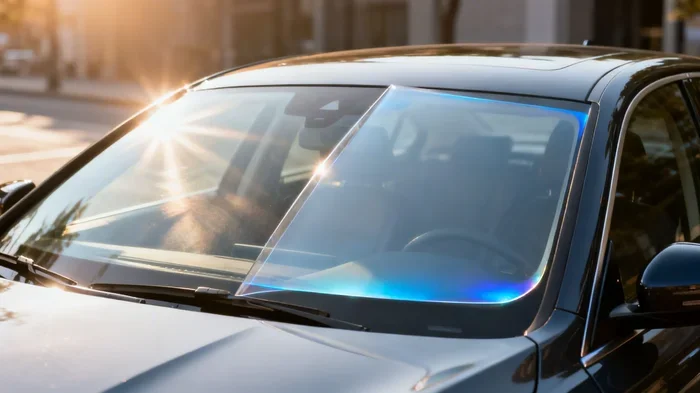
You cannot tint the main area of your windshield. The only exception is a non-reflective strip at the very top. This strip must be above the manufacturer’s AS-1 line, which is usually the top five to six inches of the windshield. This rule is consistent across most states with window tinting codes.
The tint strip on the windshield must not be more than 70% reflective. It also cannot be red, amber, or blue. These color restrictions exist because certain tint colors can distort how you see traffic lights and road signs. Clear or neutral tint colors are the safest choice for your windshield strip.
If you are thinking about a windshield tint strip, make sure your installer knows the exact rules. A good tint shop will measure the AS-1 line and apply the film correctly. This keeps you safe and ensures you stay within the legal limits for windshield tint rules in Iowa.
Front Side Window Reflectivity
Tint reflectivity matters too under the Iowa window tint law. The law limits how reflective your front side window film can be. The film must not be more than 70% reflective. This prevents tinted windows from acting like mirrors and blinding other drivers on the road.
Reflective tints can look cool and sleek. But they also create significant glare issues. In bright sunlight or at night, highly reflective windows can blind oncoming traffic and pedestrians. The 70% reflectivity limit keeps everyone safer on Iowa roads. Always ask your installer about the reflectivity rating before you commit to a specific film.
Medical and Special Exemptions
Not everyone can tolerate normal window tint levels. Some people have medical conditions that make them extremely sensitive to sunlight. The Iowa window tint law does provide exemptions for these situations. Understanding these exemptions can help you get the tint you need while staying legal.
Who Qualifies for a Medical Exemption?
You may qualify for a medical exemption if you have a condition that makes you sensitive to light. Conditions like lupus, eczema, porphyria, or certain photosensitivity disorders can qualify for an exemption. Even some medications that increase sun sensitivity may qualify.
The exemption allows for darker tint than what is normally legal under state regulations. However, you must carry the exemption certificate in your vehicle at all times. Without it, you could still receive a ticket for illegal tint even if you have a medical need. Keep the certificate in your glove box where it is easy to access.
How to Apply for an Exemption
Getting a medical exemption is not complicated, but it does take some steps. First, visit your doctor and ask for a written statement explaining your condition and why darker tint is necessary for your health.
Next, submit the statement to your local Iowa Department of Transportation office. They will review your application and issue an exemption certificate if approved. The process is straightforward but can take some time. So plan ahead and do not wait until you need tint right away. Keep this certificate with you every time you drive.
Tint Enforcement, Fines, and Penalties
What happens if you get caught with illegal tint in Iowa? The Iowa window tint law is enforced by local police and during vehicle inspections across the state. Here is what you need to know about penalties and enforcement.
Common Fines and Penalties
A tint violation in Iowa can result in a fine. The exact amount varies by county and the severity of the violation. In most cases, fines range from around 100 to 500 dollars. Some areas may charge more for repeat offenses or particularly dark tint that poses a safety risk.
Besides the fine, you will likely be told to remove the illegal tint within a certain timeframe. If you do not comply, the fine can increase. In some cases, your vehicle may not pass inspection until the tint is removed or replaced with compliant film. This can be costly and time-consuming.
How Police Check Tint
Police officers use tint meters to measure the VLT of your windows during traffic stops. These devices are accurate and can quickly determine if your tint is within legal limits. If your tint fails the test, you will receive a citation on the spot.
It is worth noting that officers often check tint during routine stops. You do not need to be pulled over for another reason. If your windows look noticeably dark, an officer may take a closer look with a tint meter. Stay aware of your tint status to avoid surprises. Regular checks can help you stay within the legal tint darkness levels at all times.
Tips for Choosing Compliant Window Tint
Now that you know the rules, how do you choose the right tint for your vehicle? Here are practical tips to help you stay compliant and get the best results from your aftermarket window film.
Work with a Reputable Tint Shop
A professional tint shop will know the Iowa window tint law inside and out. They can recommend films that meet legal requirements while still giving you the look and performance you want. Ask about VLT percentages before you commit to any film.
Good shops will also provide a warranty on their installation work. This protects you if the film bubbles, peels, or fades over time. Always get a written warranty and keep it with your other vehicle documents. A warranty gives you peace of mind and shows the shop stands behind their work.
Ask About VLT Before Installation
Before any film goes on your windows, ask the installer for the VLT rating. They should be able to tell you exactly how much light the film will allow through. Compare this number to the legal limits we discussed earlier in this guide.
If you are unsure about the numbers, ask the installer to show you the documentation. Reputable shops keep records of the films they sell and install. This way, you have proof of compliance if you ever get stopped by police. Documentation can save you from unnecessary fines and headaches.
Consider Factory Tint vs. Aftermarket Film
Many newer vehicles come with factory tint from the manufacturer. Factory tint is different from aftermarket film applied later. The Iowa window tint law treats them differently in some cases. Factory tint is usually measured at the time of manufacture and may have different VLT standards than aftermarket products.
If you are buying a used car with existing tint, check the VLT before adding more film. Layering tint can push your windows below the legal limit quickly. Always measure the current tint first. This simple step can save you from an illegal tint violation and the associated fines.
Think About Heat Rejection and UV Protection
One of the biggest reasons people tint their windows is for heat and UV protection. Good window film can block a significant amount of solar heat and harmful ultraviolet rays. This keeps your car cooler and protects your skin during long drives in the Iowa sun.
Look for films that offer high heat rejection without going too dark. Many modern films are designed to be clear or very light while still blocking heat effectively. This lets you stay compliant with the Iowa window tint law while enjoying real benefits like a cooler cabin and less glare.
UV protection is another major advantage of quality window film. Prolonged sun exposure can cause skin damage and fade your car’s interior over time. Quality tint film can block up to 99% of UV rays. This is a smart investment for your health and your vehicle’s longevity. You get comfort and protection without breaking any laws.
Common Mistakes People Make with Window Tint
Even well-meaning car owners can run into trouble with window tinting if they are not careful. Here are some common mistakes to avoid when tinting your vehicle in Iowa.
Assuming All Tint Is the Same
Not all window film is created equal. Some films are much darker than others, even if they look similar at first glance in a shop. Always check the VLT rating before purchasing any film. Do not rely on how the tint looks in the store display window. The numbers on the label tell the real story about your tint legality.
Forgetting About Rear View Mirrors
If you tint your rear window heavily, remember the dual side mirror requirement. Many people forget this rule and end up with an unexpected citation. Plan ahead and make sure your mirrors provide adequate visibility after tinting your rear window. Good visibility is essential for safe driving.
Ignoring Local County Rules
While Iowa has state-level tint laws, some counties may have additional enforcement policies or local ordinances. Always check with your local authorities or a trusted tint shop for any county-specific rules that may apply. What is legal in one county might have different enforcement in another.
Frequently Asked Questions
Can I tint my front windshield in Iowa?
You can only apply a non-reflective strip at the top of the windshield, above the AS-1 line. The main windshield area must remain untinted for safety and visibility reasons. This rule is strictly enforced across the state.
What is the legal tint darkness for front side windows in Iowa?
Front side windows on passenger vehicles must allow more than 70% of light to pass through. This means the VLT must be above 70%. Darker tint on front windows is not legal and can result in a citation.
Are there any exemptions for darker tint in Iowa?
Yes, Iowa offers medical exemptions for people with documented light sensitivity conditions. You will need a physician’s statement and must carry the exemption certificate in your vehicle at all times when driving.
How much is a tint ticket in Iowa?
Fines for illegal window tint in Iowa typically range from 100 to 500 dollars, depending on the county and severity of the violation. You may also be required to remove the illegal tint to resolve the issue.
Can I tint my rear windows as dark as I want?
For most passenger vehicles, there is no specific VLT minimum for rear side windows or the rear window. However, if your rear window is heavily tinted, you must have dual side mirrors for proper visibility.
Does factory tint count toward the legal limits?
Factory tint is measured differently than aftermarket film. Original equipment tint from the manufacturer may have different VLT standards. If you add aftermarket tint, measure the combined VLT to ensure full compliance with Iowa regulations.
Conclusion
The Iowa window tint law is straightforward once you understand the basics. Front side windows must stay above 70% VLT, while rear windows offer more flexibility for darker tint. The windshield can only have a thin non-reflective strip at the top. Medical exemptions are available for those who need them due to health conditions.
Following these rules keeps you safe and saves you money. No one wants to deal with tint tickets or the hassle of forced removal of their film. A little knowledge goes a long way toward staying compliant with state vehicle regulations and avoiding unnecessary fines.
Whether you are tinting for comfort, style, or UV protection, do your research first. Work with a trusted professional who knows the Iowa window tint law well. Choose the right film with the proper VLT rating, get the right installation, and enjoy your tinted windows with complete peace of mind. Stay legal, stay safe, and enjoy every drive in your properly tinted vehicle.