How Do They Measure Window Tint Quality and Performance
Window tint is measured using several key metrics, including visible light transmission (VLT), heat rejection rates, and UV protection levels. Understanding these measurements helps you choose the right tint for your car, home, or office. This guide breaks down exactly how professionals test and rate window tint performance.
Have you ever wondered how professionals determine the quality of window tint? Maybe you are shopping for a new tint and saw terms like VLT, heat rejection, and UV protection. These numbers matter a lot. They tell you exactly what you are getting. How do they measure window tint is a question many car owners and homeowners ask. The answer involves science, specialized tools, and clear standards.
Window tint measurement is not guesswork. It follows strict testing methods that give accurate results every time. Whether you want better heat control, privacy, or UV protection, understanding these measurements helps you make the best choice. In this guide, we will walk you through every major measurement method. You will learn what the numbers mean and why they matter for your daily comfort.
The process is simpler than you might think. Once you understand the basics, reading tint spec sheets becomes easy. You will know exactly what to look for. Let us dive into the world of window tint measurements and give you the knowledge you need.
Key Takeaways
- VLT percentage is the primary way tint darkness is measured: It tells you how much light passes through the film.
- Heat rejection is measured using solar energy tests: Higher rejection means a cooler interior.
- UV protection ratings show how well tint blocks harmful rays: Quality tints block 99% or more of UV radiation.
- Different tint materials perform differently: Ceramic, carbon, and metalized tints each have unique measurement profiles.
- Legal tint limits vary by location: Knowing your local laws helps you stay compliant while getting the performance you want.
- Professional testing uses specialized tools like spectrophotometers: These devices give precise, reliable measurements.
📑 Table of Contents
- What Is Window Tint and Why Does Measurement Matter?
- How Visible Light Transmission (VLT) Works
- Heat Rejection and Solar Energy Measurements
- UV Protection and Optical Clarity
- Different Tint Types and How They Are Measured
- How Window Tint Is Legally Measured and Tested
- Key Factors That Affect Window Tint Measurement Accuracy
- Conclusion
What Is Window Tint and Why Does Measurement Matter?
Window tint is a thin film applied to glass surfaces. People use it on cars, homes, and office buildings. The film comes in different shades and materials. Each type offers unique benefits. Some tints focus on heat reduction. Others prioritize privacy or UV protection.
Measuring window tint quality matters for several reasons. First, it helps you compare products fairly. Second, it ensures you get what you pay for. Third, it keeps you safe and legal. Without proper measurements, you would be guessing about performance. That is never a good idea when you are investing in tint.
What Makes a Good Window Tint?
A high-quality tint film balances several factors. It should reject heat effectively. It should block harmful UV rays. It should maintain clear visibility. And it should last for years without bubbling or peeling. Professionals measure each of these qualities using specific tools and standards.
When you walk into a shop, they will often show you a spec sheet. This sheet lists all the key measurements. Once you understand what those numbers mean, you can confidently pick the right tint. Let us break down the most important measurements next.
How Visible Light Transmission (VLT) Works
The most common way to measure window tint is through Visible Light Transmission, or VLT. How do they measure window tint darkness? They use VLT percentage. This number tells you how much visible light passes through the tinted glass. A lower VLT means a darker tint. A higher VLT means a lighter tint.
For example, a tint with 5% VLT lets through only 5% of visible light. That is very dark. A tint with 70% VLT lets through 70% of light. That is barely tinted at all. Most car owners choose something in between, depending on their needs and local laws.
How VLT Is Measured
Professionals use a device called a spectrophotometer to measure VLT. This tool shines light through the film and measures what comes out the other side. It calculates the exact percentage of visible light that passes through. The result is precise and reliable.
Here is a simple breakdown of VLT ranges:
- 5% to 20% VLT: Very dark tint. Often called “limo tint.” Great for privacy and glare reduction.
- 20% to 35% VLT: Medium tint. Popular for cars. Offers good balance of style and visibility.
- 35% to 50% VLT: Light tint. Subtle look. Still provides some heat and UV benefits.
- 50% to 70% VLT: Very light tint. Minimal darkening. Mainly used for UV and heat protection.
Why VLT Matters for Your Tint Choice
VLT affects more than just appearance. It impacts how much light enters your vehicle or building. Darker tints reduce glare, which helps with eye strain during long drives. Lighter tints keep more natural light, which many people prefer for homes and offices.
Quick Tip: Always check your local window tint laws before choosing a VLT level. Different states and countries have different legal limits for front and rear windows.
VLT Comparison Chart
| VLT Range | Darkness Level | Best For | Visibility |
|---|---|---|---|
| 5-20% | Very Dark | Privacy, glare reduction | Low (daylight only) |
| 20-35% | Medium | Car tinting, style | Moderate |
| 35-50% | Light | Subtle tint, UV block | Good |
| 50-70% | Very Light | Heat rejection, UV | Excellent |
Common Mistake: Many people pick the darkest tint they can find. But if you drive at night often, a very dark tint can make visibility dangerous. Always consider your daily driving conditions when choosing VLT.
Heat Rejection and Solar Energy Measurements
One of the biggest reasons people tint their windows is to block heat. How do they measure window tint heat rejection? The process involves testing how much solar energy the film reflects or absorbs. This measurement is critical for comfort, especially in hot climates.
When sunlight hits your window, it carries energy in several forms. There is visible light, infrared radiation, and ultraviolet rays. A good tint film blocks or reflects a large portion of this energy. The result is a cooler interior and less strain on your air conditioning system.
Total Solar Energy Rejected (TSER)
TSER is one of the most important heat-related measurements. It tells you the percentage of total solar energy that the tint rejects. A higher TSER means better heat blocking. For example, a film with 65% TSER rejects 65% of the sun’s total energy. That is a significant difference in interior temperature.
Here are some real-world examples of TSER performance:
- Basic dyed film: Around 30-40% TSER. Provides minimal heat reduction.
- Metalized film: Around 45-55% TSER. Noticeably cooler interior.
- Carbon film: Around 50-60% TSER. Good balance of performance and aesthetics.
- Ceramic film: Around 60-80% TSER. Top-tier heat rejection without signal interference.
Solar Heat Gain Coefficient (SHGC)
SHGC is another key measurement, especially for home and office window tint. It measures how much solar heat enters through the glass. A lower SHGC is better. It means less heat gets inside, keeping your space cooler and reducing energy costs.
Expert Insight: According to energy efficiency experts, upgrading to a ceramic tint with a low SHGC can reduce cooling costs by up to 30% during peak summer months. That is a meaningful savings over time.
Infrared Rejection Rates
Infrared radiation is the main culprit behind that uncomfortable heat you feel in a hot car. How do they measure window tint infrared blocking ability? They test the film’s infrared rejection rate. High-quality ceramic and carbon tints block up to 97% of infrared rays. This is what creates that noticeable cooling effect.
Quick Tip: When comparing tints, always ask about infrared rejection specifically. Not all tints are equal in this area. Some cheap films block visible light but let infrared heat right through.
UV Protection and Optical Clarity
UV protection is a major reason to invest in window tint. The sun emits harmful ultraviolet rays that can damage your skin and fade your interior. Measuring how well a tint blocks UV radiation is essential for evaluating its quality.
How UV Protection Is Measured
Professionals measure UV rejection using the same spectrophotometer used for VLT. The device scans the film across different wavelengths of light. It identifies how much UV radiation (both UVA and UVB) is blocked. Premium window tint films block 99% or more of UV rays.
This is a huge benefit. To put it in perspective, sitting in a car with UV-blocking tint is similar to wearing sunscreen. It protects your skin during long commutes and road trips. Over time, it also preserves your dashboard, seats, and trim from fading and cracking.
Optical Clarity and Distortion
Measurement is not just about blocking things. It is also about how clearly you can see through the tint. Optical clarity measures the level of distortion a film causes. High-quality tints maintain excellent clarity. You can see through them as clearly as regular glass.
Some lower-quality tints create a warped or mirrored effect. This can be distracting and even dangerous while driving. That is why optical clarity testing is a standard part of window tint measurement procedures.
- High clarity tint: Minimal distortion. Safe for all driving conditions.
- Medium clarity tint: Slight color shift. Acceptable for most uses.
- Low clarity tint: Noticeable distortion. Not recommended for front windows.
Common Mistake: Never judge tint quality by color alone. A dark tint can still have poor optical clarity. Always ask the installer about clarity ratings and look at a sample before committing.
Different Tint Types and How They Are Measured
Not all window tint films are created equal. Different materials have different properties. Each type requires specific measurement approaches to evaluate performance accurately. Let us look at the most common tint types and how they are tested.
Dyed Tint Film
Dyed tint is the most basic and affordable option. It uses layers of dye to absorb heat and reduce light transmission. How do they measure window tint quality for dyed films? They test VLT, heat absorption, and fade resistance. Dyed tints typically have lower TSER and may fade over time. They are a good budget option but not the best for long-term performance.
Metalized Tint Film
Metalized tint contains tiny metallic particles. These particles reflect heat and add strength to the film. Measurement for metalized tint focuses on reflectivity, heat rejection, and durability. One downside is that metalized films can interfere with cell phone signals and GPS. Professionals measure signal interference using radio frequency testing equipment.
Carbon Tint Film
Carbon tint is a popular mid-range option. It does not contain metal, so it does not cause signal interference. Carbon films are measured for their VLT, TSER, and infrared rejection. They offer a matte finish that many people find attractive. Carbon tint also resists fading better than dyed alternatives.
Ceramic Tint Film
Ceramic tint is the premium option. It uses nano-ceramic particles to block heat without affecting signal quality. It is measured across all major performance categories. Ceramic tints consistently rank highest in TSER, UV rejection, and optical clarity. They are also the most durable, maintaining performance for many years.
Tint Type Comparison
| Tint Type | Typical TSER | UV Block | Signal Interference | Durability | Price Range |
|---|---|---|---|---|---|
| Dyed | 30-40% | Good | None | Low | Budget |
| Metalized | 45-55% | Very Good | Yes | Medium | Mid-Range |
| Carbon | 50-60% | Excellent | None | High | Mid-Range |
| Ceramic | 60-80% | 99%+ | None | Very High | Premium |
Expert Insight: The measurement approach for each tint type varies slightly. Ceramic films require more precise spectrophotometer readings because their nano-particles interact with light differently than metal or dye particles. Always ask your installer which measurement standards they use for the specific tint they offer.
How Window Tint Is Legally Measured and Tested
Every state and country has laws governing how dark window tint can be. These laws are based on VLT measurements. Understanding how tint is legally measured helps you stay compliant and avoid fines.
The Testing Process
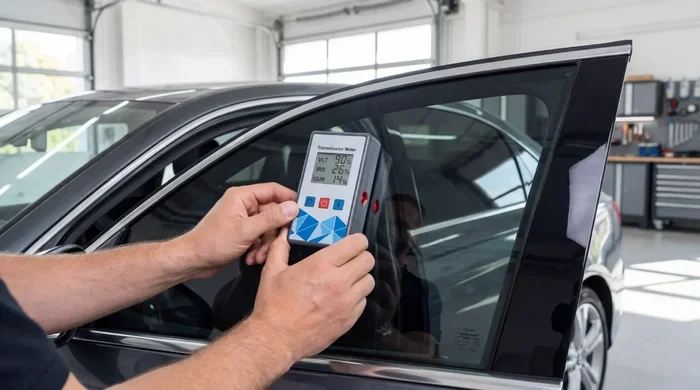
When you get your car inspected or tint checked, officials use a tint meter. This handheld device measures the VLT of each window. It works by shining a specific light through the glass and calculating the transmission percentage. The reading is instant and very accurate.
Here is how the legal testing process typically works:
- The officer places the tint meter against the window.
- The device sends a beam of light through the glass.
- The sensor on the other side measures how much light passes through.
- The device displays the VLT percentage instantly.
- If the reading is below the legal limit, the tint is considered non-compliant.
Common Legal Limits by Region
Legal tint limits vary widely. In the United States, for example, most states allow 70% VLT on the front windshield and front side windows. Rear windows can often be darker. Some states have no restrictions on rear tint darkness. Always research your local regulations before tinting your windows.
Quick Tip: If you are buying a used car with existing tint, ask for a tint certificate. This document proves the VLT was measured and meets legal requirements. It can save you from headaches during inspections.
How Manufacturers Test Tint Before Selling
Before any tint film reaches the market, it goes through rigorous testing. Manufacturers use laboratory-grade spectrophotometers to measure every performance metric. They test VLT, UV rejection, infrared rejection, and TSER. Only films that meet strict quality standards are approved for sale.
Reputable brands also conduct real-world durability tests. They expose the film to extreme heat, cold, and UV exposure for extended periods. This ensures the tint maintains its performance over time. When you buy from a trusted brand, you can trust the measurements on the spec sheet.
Key Factors That Affect Window Tint Measurement Accuracy
Not all measurements are created equal. Several factors can influence how accurately window tint is measured. Understanding these factors helps you make informed decisions and avoid being misled by inaccurate readings.
The Quality of the Measurement Device
The device used matters a lot. Cheap tint meters may give inaccurate readings. Professional-grade spectrophotometers are calibrated regularly and provide precise results. If you are ever unsure about a measurement, ask if the device was recently calibrated.
Environmental Conditions During Testing
Temperature and humidity can affect some tint measurements. For example, heat rejection tests are more accurate when conducted in controlled environments. A quality manufacturer tests their films under standard conditions to ensure consistent results.
Film Age and Condition
Over time, tint film can degrade. This affects its measurement performance. An older film may have lower UV rejection or reduced heat blocking. That is why it is important to have your tint inspected periodically, especially if it is more than five years old.
Common Mistake: Do not assume that because a tint was measured at installation, it will perform the same years later. Environmental exposure gradually affects film performance. Regular check-ups help you catch any degradation early.
How to Verify Your Tint Measurements
If you want to double-check your tint performance, there are a few things you can do. Many auto shops offer free tint testing. They use professional-grade meters to measure VLT and heat rejection. You can also request a copy of the film’s spec sheet from the manufacturer. This document lists all tested measurements and gives you a benchmark for comparison.
Expert Insight: The best way to ensure accurate measurements is to work with certified tint installers. These professionals use calibrated equipment and follow industry-standard testing procedures. It gives you peace of mind that your tint performs as advertised.
Conclusion
Understanding how do they measure window tint empowers you as a consumer. You no longer have to rely on marketing claims alone. You can read spec sheets, compare products, and choose with confidence. The key measurements are VLT for darkness, TSER for heat rejection, UV rejection for protection, and optical clarity for visibility.
Each tint type offers a different measurement profile. Dyed films are affordable but less durable. Metalized films reject heat well but may interfere with signals. Carbon films strike a nice balance. Ceramic films deliver the best overall performance across every measurement category.
When you are ready to tint your windows, use the knowledge from this guide. Ask the right questions. Request the right measurements. And choose a tint that fits your needs, your budget, and the law. The right tint does more than look good. It improves comfort, protects your health, and adds value to your vehicle or property.
Take action today. Research your local tint laws, compare measurement data from different brands, and invest in a quality tint that will serve you well for years to come. Your future self will thank you for it.
Frequently Asked Questions
What does VLT mean in window tint?
VLT stands for Visible Light Transmission. It measures the percentage of visible light that passes through the tint film. A lower VLT means a darker tint, while a higher VLT means a lighter tint. This is the primary measurement used to determine tint darkness and legality.
How is heat rejection measured for window tint?
Heat rejection is measured using Total Solar Energy Rejected (TSER) and Solar Heat Gain Coefficient (SHGC). Professionals use spectrophotometers and controlled testing environments to determine how much solar energy the tint blocks. Higher rejection percentages mean better heat control.
Can I measure window tint performance myself?
You can get a basic VLT reading using a handheld tint meter. These devices are affordable and widely available. However, for comprehensive performance data like TSER and UV rejection, professional-grade testing equipment is needed. Most tint shops offer free testing for their customers.
What is the best window tint type based on measurements?
Ceramic tint consistently ranks highest across all measurement categories. It offers the best heat rejection, UV protection, and optical clarity without signal interference. However, it is also the most expensive option. Carbon tint is an excellent mid-range alternative with strong performance metrics.
Are there legal limits for window tint darkness?
Yes, every state and country has legal VLT limits for vehicle windows. These limits vary by window position and location. Front side windows typically must have a higher VLT than rear windows. Always check your local regulations before tinting your windows.
How often should window tint be re-measured or inspected?
It is a good idea to have your tint inspected every two to three years. Over time, tint films can degrade, affecting their performance measurements. Regular inspections help you catch fading, bubbling, or reduced UV rejection before they become major problems.