How Long Does It Take to Charge a BMW i4 Completely
Charging a BMW i4 completely takes anywhere from 7.5 hours on a home Level 2 charger to about 31 minutes on a DC fast charger. The time depends on your charger type, battery level, and temperature. This guide covers every charging scenario so you can plan your trips and daily routine with confidence.
Owning a BMW i4 is an exciting experience. This sleek electric sedan combines luxury, performance, and zero emissions in one impressive package. But let’s be honest. One question keeps popping up among new and potential i4 owners. How long does it take to charge a BMW i4 completely?
The answer isn’t as simple as a single number. Charging time varies based on several factors. Your charger type plays a big role. So does your battery’s starting charge level. Even the outside temperature can make a difference. In this guide, we break down every charging scenario. You’ll learn exactly what to expect at home, at work, and on the road.
Whether you just bought a BMW i4 or you’re considering making the switch, this article has you covered. We’ll walk through the numbers, share practical tips, and help you understand the full picture of BMW i4 charging. Let’s dive in.
Key Takeaways
- Home Charging: A Level 2 charger fully charges the BMW i4 in roughly 7.5 to 10 hours overnight.
- DC Fast Charging: You can add about 100 miles of range in just 31 minutes at a DC fast charger.
- Battery Size Matters: The BMW i4 eDrive40 has a 70.7 kWh battery, while the i4 M50 carries an 80.7 kWh pack.
- Temperature Affects Speed: Cold weather slows charging significantly, especially at fast chargers.
- Warranty Coverage: BMW’s warranty may cover charging system repairs, but labor costs depend on your specific plan.
📑 Table of Contents
- Understanding the BMW i4 Battery and Charging Basics
- How Long Does It Take to Charge a BMW i4 at Home
- How Long Does It Take to Charge a BMW i4 on the Road
- Factors That Affect BMW i4 Charging Time
- BMW i4 Charging Costs and Savings
- BMW i4 Charging Tips and Best Practices
- Common BMW i4 Charging Mistakes to Avoid
- BMW i4 Charging vs. Other Electric Vehicles
- Final Thoughts
Understanding the BMW i4 Battery and Charging Basics
Before we talk about charging times, it helps to understand what you’re working with. The BMW i4 comes in two main variants. The i4 eDrive40 and the i4 M50. Each has a different battery capacity, and that directly affects charging time.
Battery Capacity by Model
The BMW i4 eDrive40 uses a 70.7 kWh battery pack. The i4 M50 steps up to an 80.7 kWh battery. Both packs are lithium-ion, which is the standard for modern electric vehicles. The larger battery in the M50 means more range. It also means slightly longer charging times. But the difference is smaller than you might think.
BMW rates the eDrive40 at about 301 miles of range. The M50 delivers around 270 miles. These numbers come from the EPA and represent real-world driving conditions. Your actual range will vary based on driving style, speed, and weather.
What Does “Fully Charged” Mean?
BMW batteries are designed to stop charging at 100%. However, many owners prefer to charge to only 80 or 90 percent for daily use. This practice helps preserve battery health over time. Charging to 100% every day can slightly reduce battery lifespan. So when we say “fully charged” in this article, we mean 100%. But you might not always want to go all the way.
How Long Does It Take to Charge a BMW i4 at Home
Home charging is the most convenient way to power up your BMW i4. You plug in when you arrive, and you wake up to a full battery every morning. But the speed of home charging depends entirely on the equipment you use.
Level 1 Charging: The Slowest Option
Level 1 charging uses a standard 120-volt household outlet. This is the plug you already have in your garage or driveway. It’s the slowest option by far. A Level 1 charger adds about 3 to 5 miles of range per hour. That means going from empty to full on a BMW i4 eDrive40 could take over 60 hours. For the M50, it takes even longer.
Level 1 charging works in emergencies. It’s fine if you only drive a few miles each day. But for most BMW i4 owners, Level 1 simply isn’t practical for daily use.
Level 2 Charging: The Sweet Spot for Home
Level 2 charging uses a 240-volt outlet, similar to what your dryer or oven uses. This is the setup most BMW i4 owners choose. A Level 2 home charger adds about 25 to 30 miles of range per hour. That means a full charge from empty takes roughly 7.5 to 10 hours.
Most people plug in their i4 when they get home from work. By morning, the battery is full and ready to go. This routine works beautifully for daily commuting and errands. A Level 2 charger costs between $500 and $1,500 for the equipment. Installation by a licensed electrician typically adds another $500 to $1,500. But the convenience is well worth it.
Wallbox Charging: The BMW-Approved Solution
BMW offers its own Wallbox charger designed specifically for the i4. This wall-mounted unit supports Level 2 charging and connects to the BMW Charging App. The app lets you schedule charges during off-peak electricity hours. This can save you money on your energy bill. The Wallbox also features a cable management system that keeps your garage tidy.
If you’re interested in the BMW Wallbox, you can find pricing and availability through your local BMW dealer. Some dealers offer installation packages that bundle the charger and setup into one price.
How Long Does It Take to Charge a BMW i4 on the Road
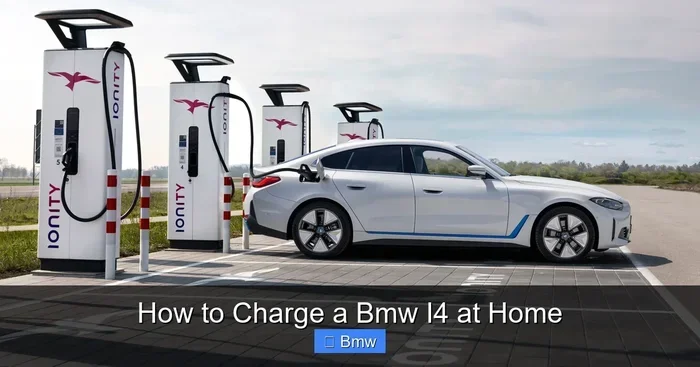
Road trips and longer journeys require public charging. The good news is that the BMW i4 supports DC fast charging. This technology delivers power much faster than home chargers. You can add significant range in a short amount of time.
DC Fast Charging Speeds
The BMW i4 supports DC fast charging up to 205 kW on compatible chargers. In real-world conditions, you can expect charging speeds between 130 kW and 180 kW. Under ideal conditions, the i4 can charge from 10% to 80% in about 31 minutes.
Here’s a breakdown of what to expect at a DC fast charger:
- 10% to 20%: About 7 to 8 minutes
- 10% to 50%: About 17 to 20 minutes
- 10% to 80%: About 31 minutes
- 10% to 100%: About 40 to 45 minutes
Notice that the last 20% charges much slower. BMW intentionally slows down charging above 80% to protect the battery. So if you’re in a hurry, stopping at 80% is often the smartest move.
Finding DC Fast Chargers
The BMW i4 uses the CCS (Combined Charging System) standard. This is the most common fast-charging connector in North America. You can use apps like PlugShare, ChargePoint, or the BMW Navigation system to locate nearby chargers. BMW’s navigation system even plans charging stops for long trips automatically.
Popular DC fast charging networks include Electrify America, Tesla Superchargers (with an adapter), and EVgo. Charging costs vary by network and location. Some charge by the minute, while others charge per kilowatt-hour. Expect to pay between $0.25 and $0.45 per kWh at most public fast chargers.
Factors That Affect BMW i4 Charging Time
Several factors influence how quickly your BMW i4 charges. Understanding these helps you plan better and avoid frustration.
Battery Temperature
Temperature has a big impact on charging speed. In cold weather, the battery is less efficient. The car may need to warm up the battery before accepting a fast charge. This pre-conditioning step adds time. On very cold days, your fast charging speed could drop by 20 to 30 percent.
BMW addresses this with a thermal management system. The system preheats the battery when you plug in at a fast charger. You can use the BMW app to start pre-conditioning before you arrive. This ensures the battery is ready to accept power at full speed.
State of Charge
Charging speed isn’t constant throughout the session. The fastest charging happens between 10% and 50%. After that, the speed gradually decreases. By the time you reach 80%, the charger is running at about half its peak speed. This is by design. BMW slows down charging to protect battery longevity.
Charger Condition and Compatibility
Not all chargers deliver the same power. A charger rated at 150 kW might only deliver 130 kW if the battery is cold. Older chargers may not support the i4’s maximum 205 kW capability. Newer ultra-fast chargers with 350 kW capability will still limit the i4 to its maximum 205 kW input.
Driving Habits and Regenerative Braking
Your driving habits affect how much charge you need. Aggressive driving drains the battery faster. But regenerative braking helps recover energy when you slow down. The BMW i4 has strong regenerative braking that can add several miles of range on downhill drives. This means you might need less charging time overall.
BMW i4 Charging Costs and Savings
Charging your BMW i4 at home is significantly cheaper than filling up a gas car. Let’s look at the numbers.
Assuming an electricity rate of $0.14 per kWh and a full charge requiring 70.7 kWh for the eDrive40, a complete charge costs about $9.90. For the M50 with its 80.7 kWh battery, it costs around $11.30. Compare that to filling a similar-sized gas sedan, which might cost $50 to $70 per tank. The savings add up fast over time.
If you have solar panels at home, your charging costs drop even further. Some BMW i4 owners report spending less than $1 per day on charging. That’s remarkable compared to the $150 to $200 per month the average driver spends on gas.
Workplace and Public Charging Costs
Many employers now offer free workplace charging. This is a huge benefit for EV owners. If your workplace charges by the kWh, expect rates similar to or slightly higher than home rates. Public fast chargers tend to be the most expensive option. But they’re still cheaper than gas on a per-mile basis.
If you frequently use public fast chargers, the costs can add up. A full charge from 10% to 100% at a public fast charger might cost $20 to $30. That’s still less than a gas fill-up, but it’s worth factoring into your budget.
BMW i4 Charging Tips and Best Practices
A few smart habits can improve your charging experience and protect your battery.
Charge Regularly, Not Just When Empty
Lithium-ion batteries prefer partial charge cycles. Charging your i4 every night or every other night keeps the battery healthy. It also means you always start the day with a full battery. Don’t wait until the battery drops below 10% regularly. Deep discharges can stress the battery over time.
Use Scheduled Charging
Most home chargers and the BMW app let you schedule charges during off-peak hours. Electricity rates are often lower at night. Scheduling your charge for 10 PM to 6 AM can save you money. Check with your utility company for time-of-use rate details.
Keep the Charging Port Clean
Dirt and debris can interfere with the charging connection. Wipe the charging port regularly with a dry cloth. If you notice any corrosion or damage, have a dealer inspect it. A clean connection ensures optimal charging speed and safety.
Monitor Battery Health Over Time
All batteries degrade slightly over time. BMW i4 batteries are designed to retain at least 70% capacity after 8 years or 100,000 miles. To maximize battery health, avoid charging to 100% every single day if you don’t need the full range. Charging to 90% for daily use is a great habit.
Know When to Visit a Dealer
If you notice your charging speed dropping significantly or error messages appearing, it’s time to see a professional. Do dealers charge a diagnostic fee? Many do, but BMW dealerships sometimes waive this fee for warranty-related issues. If your i4 is still under warranty, it’s worth checking before paying out of pocket. BMW’s warranty coverage for electrical components is comprehensive, but labor costs may or may not be included depending on your specific plan.
For warranty questions specific to your situation, always check with your dealer. Some extended warranties cover charging system repairs fully, while others have limitations. Understanding your coverage before you need it saves time and money.
Common BMW i4 Charging Mistakes to Avoid
Even the best EV owners make charging mistakes sometimes. Here are a few to watch out for.
- Using Level 1 for daily charging: It’s too slow for regular use and will leave you with insufficient range.
- Always charging to 100%: This accelerates battery degradation over time. Charge to 80 or 90% for daily driving.
- Ignoring pre-conditioning: In cold weather, always pre-heat the battery before fast charging. It saves significant time.
- Charging immediately after fast driving: Let the battery cool down for 10 to 15 minutes before plugging in. Hot batteries charge more slowly.
- Using incompatible chargers: Always use CCS-compatible chargers for the BMW i4. Using the wrong connector can damage the charging port.
Avoiding these simple mistakes keeps your BMW i4 running at peak performance for years to come.
BMW i4 Charging vs. Other Electric Vehicles
How does the BMW i4 stack up against other popular EVs? Here’s a quick comparison of charging times at DC fast chargers.
- BMW i4 (10% to 80%): About 31 minutes at 205 kW
- Tesla Model 3 (10% to 80%): About 25 minutes at 250 kW
- Mercedes EQE (10% to 80%): About 32 minutes at 200 kW
- Audi e-tron GT (10% to 80%): About 23 minutes at 270 kW
The BMW i4 sits in the middle of the pack. It’s not the fastest, but it’s far from the slowest. Most drivers will find the 31-minute fast charge time more than adequate for road trips. A quick coffee break and your battery is back to 80%.
Final Thoughts
So, how long does it take to charge a BMW i4 completely? The answer depends on where and how you charge. At home on a Level 2 charger, expect 7.5 to 10 hours for a full charge. At a DC fast charger on the road, you can go from empty to 80% in about 31 minutes. Both options are practical and fit naturally into most people’s routines.
The BMW i4 offers flexibility and convenience. You can charge slowly overnight at home or top up quickly during a road trip. Understanding your charging options helps you get the most out of your electric BMW. With the right habits and a little planning, owning and charging a BMW i4 is a seamless experience.
Take advantage of home charging for your daily routine. Use fast chargers for longer trips. And always keep an eye on your battery health. Your BMW i4 is built to deliver an excellent driving experience for many years. Proper charging habits are the key to making the most of it.
If you have questions about warranty coverage for your charging system, check with your BMW dealer. Understanding what’s covered can give you peace of mind and save you money. Enjoy the drive and happy charging.
Frequently Asked Questions
Can I charge my BMW i4 using a regular household outlet?
Yes, you can use a standard 120-volt outlet with Level 1 charging. However, this is the slowest option and adds only 3 to 5 miles of range per hour. It’s best for emergencies or occasional use, not daily charging.
How much does it cost to fully charge a BMW i4 at home?
At an average electricity rate of $0.14 per kWh, a full charge for the BMW i4 eDrive40 costs about $9.90. The M50 costs around $11.30. This is significantly less than filling a gas tank.
Should I charge my BMW i4 to 100% every day?
No, charging to 100% daily can reduce battery lifespan over time. For daily driving, charging to 80 or 90% is recommended. Reserve 100% charges for long trips when you need the full range.
Can I use any DC fast charger with my BMW i4?
The BMW i4 uses the CCS (Combined Charging System) standard. Most public DC fast chargers in North America support CCS. Some networks like Tesla require an adapter for non-Tesla vehicles.
Does cold weather affect BMW i4 charging speed?
Yes, cold weather can reduce charging speed by 20 to 30 percent. BMW’s thermal management system preheats the battery before fast charging, but it still takes longer in freezing temperatures.
Is BMW i4 charging covered under warranty?
BMW’s basic warranty covers the battery and charging system for 4 years or 50,000 miles. The high-voltage battery has an 8-year or 100,000-mile warranty. Labor coverage depends on your specific warranty terms, so always check with your dealer for details.