How Haval Ensures Safety Through Advanced Engineering
Haval prioritizes safety through a multi-layered approach that combines active and passive engineering technologies. The brand invests heavily in structural design, driver assistance systems, and rigorous crash testing to earn top safety ratings. Understanding how Haval ensures safety helps buyers make confident, informed decisions about their next vehicle purchase.
When you buy a car, safety should be at the top of your list. How Haval ensures safety is a question that many buyers ask, and the answer is impressive. Haval, a leading SUV brand, has built its reputation on combining bold design with serious engineering focused on protecting every person inside the vehicle. From the frame to the software, Haval leaves no stone unturned when it comes to keeping drivers and passengers safe.
In this article, we will break down the specific ways Haval integrates safety into its vehicles. You will learn about the structural designs, the smart technology systems, and the real-world testing that goes into every model. Whether you are shopping for a family SUV or a daily commuter, understanding these safety features will help you feel more confident on the road.
Key Takeaways
- Advanced Body Structure: Haval uses high-strength steel and safety cage designs to absorb impact and protect occupants.
- Active Safety Tech: Features like automatic emergency braking and lane keeping assist help prevent accidents before they happen.
- Passive Safety Systems: Multi-airbag setups and reinforced door beams provide critical protection during collisions.
- Rigorous Testing: Every Haval model undergoes extensive crash testing and real-world simulation before hitting the market.
- Driver-Focused Design: Ergonomics and visibility are engineered to reduce driver fatigue and improve awareness on the road.
- Continuous Innovation: Haval regularly updates its safety features based on the latest research and crash data.
📑 Table of Contents
The Foundation of Haval Safety Design
Every great safety story starts with the basics. Haval begins with the body structure of the vehicle. The engineers use high-strength steel and advanced materials to create a frame that can absorb force during a crash. This is not just about making the car strong. It is about directing energy away from the people inside.
Safety Cage Construction
Haval vehicles use what is called a safety cage design. Think of it like a protective shell around the passenger area. The pillars, roof rails, and floor channels are all reinforced to create a rigid structure. In a collision, this cage holds its shape and gives occupants the best chance of walking away unharmed.
The front and rear sections of the car are designed to crumple in a controlled way. This absorbs kinetic energy and reduces the force that reaches the cabin. It is a simple but brilliant concept that has saved countless lives across the automotive industry.
Material Choices and Weight Distribution
Haval does not just use any steel. The brand uses ultra-high-strength steel in critical areas like the B-pillars and door sills. These are the parts of the car that take the most impact in a side collision. By placing the strongest materials exactly where they are needed, Haval keeps the vehicle safe without adding unnecessary weight.
Good weight distribution also plays a role in safety. A well-balanced vehicle handles better and is easier to control in emergency situations. Haval engineers pay close attention to where mass is placed, which helps with stability during sharp turns and sudden maneuvers.
Sometimes, a vehicle issue can affect safety in unexpected ways. For instance, if your heat shield becomes loose, it can lead to undercarriage damage over time. Learning how to tighten a loose heat shield is a simple maintenance step that helps keep your vehicle in top condition and prevents long-term damage that could compromise safety.
Active Safety Technology in Haval Vehicles
Active safety is all about preventing accidents before they happen. Haval has invested heavily in technology that helps the driver stay aware and in control. These systems work quietly in the background, watching the road and stepping in when needed.
Automatic Emergency Braking
One of the standout features in modern Haval models is automatic emergency braking. This system uses sensors and cameras to monitor the road ahead. If it detects an imminent collision and the driver does not react, the system applies the brakes automatically. This can significantly reduce the severity of a crash or even prevent it entirely.
The technology works at various speeds, making it useful in both city traffic and highway driving. It is especially helpful in situations where a pedestrian suddenly steps into the road or the car ahead brakes unexpectedly.
Lane Keeping Assist and Blind Spot Monitoring
Lane keeping assist helps you stay in your lane by providing gentle steering corrections when the system detects unintentional drifting. This is particularly useful on long highway drives when fatigue can set in. The system alerts you first, and if you do not respond, it makes a small adjustment to guide you back to the center of the lane.
Blind spot monitoring uses sensors on the side mirrors to detect vehicles in your blind spots. A warning light or sound alerts you when it is not safe to change lanes. Together, these systems create a layered safety net that covers many common accident scenarios.
Driver Attention Monitoring
Haval also incorporates driver attention monitoring in some of its newer models. This system tracks steering patterns and eye movement to detect signs of drowsiness or distraction. If the system senses that the driver is not paying attention, it issues a warning and may even suggest a break. This feature is a game-changer for long road trips and late-night drives.
Maintaining your vehicle is also a form of active safety. For example, if you need to access the fuel system, knowing how to properly open the gas cap on a cylinder prevents damage to the fuel system and ensures everything runs safely and efficiently.
Passive Safety Features That Protect You
While active safety tries to prevent crashes, passive safety focuses on protecting you when a collision is unavoidable. Haval equips its vehicles with a range of passive features designed to minimize injury during an impact.
Multi-Airbag Systems
Haval vehicles come with multiple airbags positioned throughout the cabin. Front, side, and curtain airbags work together to cushion occupants from different angles of impact. The front airbags deploy to protect the head and chest in a head-on collision, while side airbags protect the torso in a side impact.
Curtain airbags deploy from the roof and cover the windows. This is especially important in rollover scenarios, where the risk of ejection is high. Haval designs its airbag deployment to be precise, activating with the right force and timing to maximize protection without causing additional injury.
Reinforced Door Structures
The doors are often the first point of contact in a side collision. Haval reinforces door beams with high-tensile steel to prevent intrusion into the cabin. These reinforced structures help maintain the survival space inside the vehicle, giving occupants room to breathe even after a serious impact.
Some models also feature door impact beams that absorb energy and distribute it across the entire door panel. This reduces the force that reaches the occupants and lowers the risk of injury.
In an emergency situation, you might need quick access to the trunk for safety equipment or to help someone trapped inside. Knowing how to open the boot from the outside can be a valuable skill that could save a life during a roadside emergency.
Seatbelt Pre-Tensioners and Load Limiters
Haval goes beyond standard seatbelts by incorporating pre-tensioners and load limiters. Pre-tensioners tighten the belt instantly during a crash, removing slack and securing the occupant in place. Load limiters then allow a small amount of give in the belt to reduce the force on the chest and shoulders.
This two-stage approach provides a balance between holding the occupant firmly and preventing injury from the belt itself. It is a subtle but important detail that shows how Haval thinks about every aspect of safety.
Crash Test Performance and Ratings
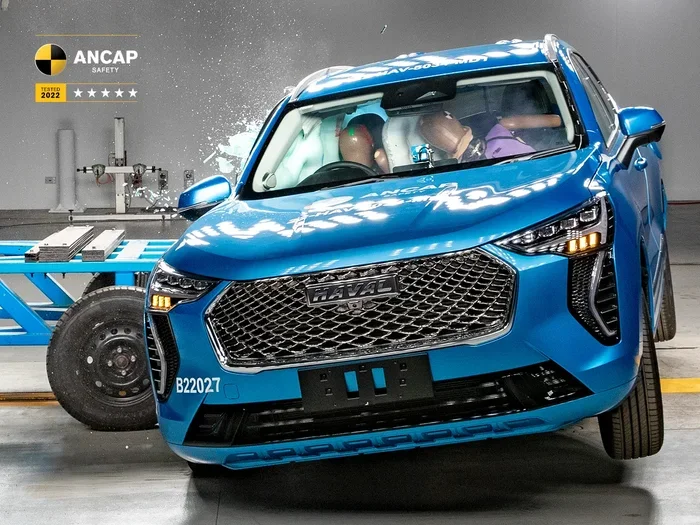
Crash testing is the ultimate measure of a vehicle’s safety. Haval takes this process seriously and subjects every model to rigorous evaluation. The results speak for themselves, with many Haval vehicles earning top marks in international safety assessments.
Testing Standards and Protocols
Haval vehicles are tested against multiple standards, including frontal impact, side impact, and pole tests. Each test simulates a different real-world collision scenario. Engineers analyze how the car deforms, how the safety systems activate, and how much force reaches the occupant compartment.
The brand also tests for pedestrian safety, evaluating how the front of the vehicle interacts with a pedestrian during a collision. This holistic approach shows that Haval cares about safety not just for its occupants, but for everyone on the road.
Real-World Performance
Crash test ratings are important, but real-world performance matters just as much. Haval collects data from actual accidents and uses it to improve future designs. This feedback loop ensures that the brand continuously learns and adapts its safety engineering to address the most common crash scenarios on today’s roads.
Proper vehicle alignment also plays a role in safety and handling. If you ever notice your car pulling to one side, it might be a sign that your camber is off. Understanding how to know if camber is out of alignment can help you catch alignment issues early and maintain safe driving conditions.
How Haval Engineers Test Their Vehicles
Testing does not stop at the crash test track. Haval engineers use a combination of computer simulations, physical prototypes, and real-world driving tests to validate every safety feature. This multi-layered approach ensures that the technology works as intended under a wide range of conditions.
Computer Simulations and Virtual Testing
Before a single physical prototype is built, engineers run thousands of virtual crash simulations. These computer models allow them to test different designs and materials without the cost and time of building physical cars. Each simulation provides detailed data on how the structure responds to various forces and angles of impact.
Virtual testing also helps engineers optimize airbag deployment timing and seatbelt behavior. By fine-tuning these parameters in a virtual environment, Haval can achieve better real-world results when the physical tests begin.
Real-World Driving and Durability Tests
Haval puts its vehicles through extreme real-world testing to ensure durability and safety. Cars are driven in harsh climates, on rough terrain, and through challenging driving conditions. These tests reveal issues that simulations cannot always predict, such as how materials behave after years of exposure to extreme heat or cold.
The brand also conducts fleet testing, where vehicles are driven by real people in everyday situations. This provides valuable data on how safety systems perform in normal driving, not just controlled test environments.
Even something as simple as starting your car correctly matters for overall vehicle health. If you ever find yourself in a situation where the key fob is not working, knowing how to start a keyless car without a key can help you get to safety without unnecessary stress or delay.
Continuous Improvement and Customer Feedback
Haval does not stop improving once a car is sold. The brand monitors customer feedback and crash data from the field to identify areas for improvement. This ongoing commitment to learning and evolving is what sets Haval apart in the competitive SUV market.
Why Haval Safety Matters for Every Driver
Safety is not just a feature. It is a philosophy that Haval builds into every vehicle from the ground up. The brand understands that families trust their cars to protect the people they love most. That responsibility drives every engineering decision, from the choice of steel to the calibration of a sensor.
When you choose a Haval, you are choosing a vehicle that has been designed and tested with your safety as the top priority. The combination of advanced active systems, robust passive protection, and rigorous testing standards creates a driving experience that is both enjoyable and secure.
Good safety also means good maintenance. Keeping your vehicle in proper working order ensures that all the safety systems function as intended. Regular check-ups, timely repairs, and understanding basic maintenance tasks all contribute to a safer driving experience for you and your family.
The road can be unpredictable. Other drivers make mistakes, weather changes suddenly, and unexpected obstacles appear. Haval’s safety engineering is designed to give you confidence in those unpredictable moments. The technology works to protect you when you need it most, whether that means preventing a collision or cushioning the impact when one occurs.
In the end, how Haval ensures safety comes down to a comprehensive approach that leaves nothing to chance. From the first sketch on a designer’s pad to the final crash test result, every step is guided by a commitment to protecting lives. That is the kind of engineering that deserves your attention and trust.
Frequently Asked Questions
What makes Haval vehicles safe compared to other brands?
Haval uses high-strength steel safety cage construction, multi-airbag systems, and a full suite of active safety technologies like automatic emergency braking and lane keeping assist. The brand also subjects every model to extensive crash testing and real-world durability evaluations, which helps ensure that the safety features perform reliably when it matters most.
Does Haval offer automatic emergency braking on all models?
Automatic emergency braking is available on most modern Haval models, though availability may vary by trim level. Higher trims typically include this feature as standard, while it may be optional or part of a safety package on base models. Always check the specific model specifications before purchasing.
How does Haval’s safety cage design work in a crash?
The safety cage uses reinforced high-strength steel in the pillars, roof rails, and floor channels to create a rigid protective structure around the passenger compartment. During a collision, the front and rear sections absorb and distribute impact energy, while the cage itself maintains its shape to protect the occupants inside.
Are Haval’s crash test results reliable and trustworthy?
Yes. Haval vehicles undergo testing that follows international standards and protocols, including frontal impact, side impact, and pole tests. The brand also uses real-world crash data to continuously refine its designs, making the safety performance both credible and backed by evidence.
What should I do if my Haval’s safety warning light comes on?
If a safety warning light appears on your dashboard, do not ignore it. Pull over safely and check your owner’s manual for guidance on that specific warning. Many safety systems, such as lane keeping assist or automatic braking, will not function properly if there is a sensor or software issue. Visit a certified service center as soon as possible.
How often should I have my Haval’s safety systems checked?
You should have your safety systems inspected during every regular service appointment, typically every 10,000 to 15,000 miles. Sensors, cameras, and radar modules can become misaligned or dirty, which may reduce their effectiveness. Keeping up with scheduled maintenance ensures all safety features work as intended.
=== CONCLUSION ===
How Haval ensures safety is a story of thoughtful engineering, cutting-edge technology, and a relentless commitment to protecting every person on the road. From the safety cage construction and high-strength steel to the active safety systems that help prevent accidents, Haval covers every angle. The brand does not rely on a single feature or technology. Instead, it builds safety into every layer of the vehicle.
Whether you are interested in the passive protection of multi-airbag systems, the active assistance of lane keeping and automatic braking, or the rigorous testing that validates every design, Haval delivers. The result is a vehicle that gives you confidence every time you turn the key.
Take the time to explore the safety features of Haval models that interest you. Ask questions, read reviews, and test drive vehicles to feel the difference for yourself. Your safety and the safety of your loved ones are worth every bit of effort. Choose a brand that takes safety seriously, and drive with confidence knowing you are well protected.