How Big Is the Gas Tank on a Nissan Rogue Revealed
The Nissan Rogue gas tank holds approximately 14.5 gallons in the standard model, giving you a solid driving range of around 400 miles on a single fill. The Rogue Hybrid uses a smaller 14.0-gallon tank but compensates with excellent fuel economy. Whether you are commuting or road tripping, knowing your fuel tank capacity helps you budget and plan like a pro.
This is a comprehensive guide about How Big Is the Gas Tank on a Nissan Rogue?.
Key Takeaways
- Standard Tank Size: The Nissan Rogue carries about 14.5 gallons of fuel in its gas tank.
- Rogue Hybrid Difference: The hybrid version uses a 14.0-gallon tank but delivers better miles per gallon.
- Driving Range: A full tank can take you roughly 400 miles depending on driving habits and conditions.
- Fill-Up Cost: At average gas prices, filling up the Rogue costs around $45 to $55 per tank.
- Fuel Efficiency: The Rogue averages about 26 to 33 MPG combined, making it efficient for its class.
- Internal Link Resource: For general tank size questions across vehicles, check out How Many Gallons Is My Car Tank for more insights.
[FEATURED_IMAGE_PLACEHOLDER]
The Nissan Rogue is one of the most popular compact SUVs on the road today. Families love it for its spacious interior, smooth ride, and reliable performance. But one question comes up again and again among owners and shoppers alike. How big is the gas tank on a Nissan Rogue?
Knowing your fuel tank size matters more than most people think. It affects your driving range, your fill-up costs, and even your road trip planning. If you have just bought a Rogue or are considering one, understanding the fuel capacity gives you a real advantage. This guide covers everything you need to know about the Nissan Rogue gas tank. We will look at exact gallon numbers, driving range, fuel economy, and much more. Let us dive right in.
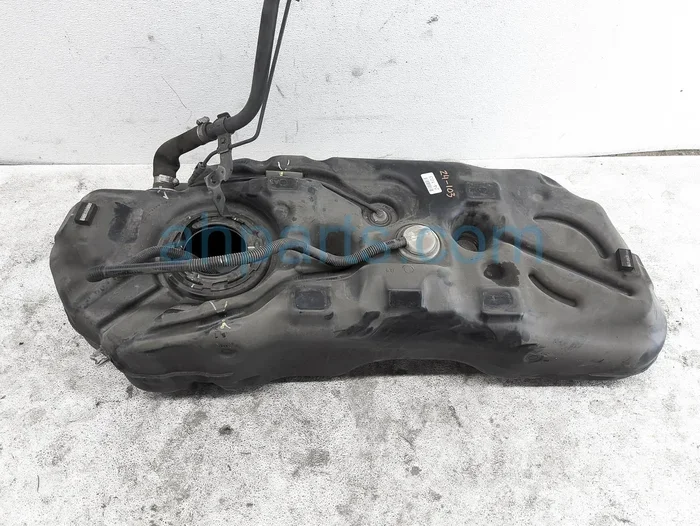
The standard Nissan Rogue comes with a 14.5-gallon fuel tank. This is a solid size for a compact SUV. It gives you enough fuel to cover long distances without stopping too often. The tank is designed to fit neatly under the rear cargo area, keeping the center of gravity low and balanced.
The Nissan Rogue Hybrid takes a slightly different approach. Its fuel tank holds 14.0 gallons. That is half a gallon less than the standard model. But do not let that small difference fool you. The hybrid system makes up for it with outstanding fuel economy. You actually get more miles out of each gallon compared to the gas-only version.
Both models use a tank-in-tank construction design. This means the fuel tank is built as part of the vehicle structure. It helps with safety and reduces the chance of fuel leaks. The tank is also equipped with a rollover valve and a pressure control system. These features keep things safe and meet modern emissions standards.
Fuel Capacity and Driving Range Explained
Understanding fuel capacity goes beyond just the number of gallons. What really matters is how far you can go on a full tank. The Nissan Rogue driving range depends on several factors. These include your driving style, road conditions, and the model you choose.
With the standard Rogue and its 14.5-gallon tank, you can expect around 400 miles of range. This assumes an average combined MPG of about 28. The Rogue Hybrid with its 14.0-gallon tank can actually push closer to 450 miles. That is because it gets around 32 to 33 MPG combined.
Now, if you are curious about how this compares to other vehicles, you might want to check out how many gallons it takes to fill up a car for a broader perspective on fuel tank sizes across different models.
What Affects Your Driving Range?
Several things can change how far you go on a full tank. Here are the main factors:
- Driving Speed: Highway driving at steady speeds gives better range than city stop-and-go traffic.
- Terrain: Flat roads are easier on fuel than hilly or mountainous routes.
- Climate: Extreme cold or hot weather can reduce fuel efficiency.
- Payload: Carrying heavy loads or towing uses more fuel.
- Tire Pressure: Underinflated tires create more rolling resistance and waste fuel.
- AC Usage: Running the air conditioning heavily increases fuel consumption.
Keeping these factors in mind helps you get the most out of every tank. A little awareness goes a long way toward saving money at the pump.
Nissan Rogue Fuel Economy and MPG Ratings
Fuel economy is where the Rogue really shines. The standard gas-powered Rogue delivers an EPA-estimated 26 MPG in the city and 33 MPG on the highway. Combined, you are looking at around 29 MPG. That is very competitive for a compact SUV.
The Rogue Hybrid steps things up significantly. It earns an estimated 33 MPG combined. The city rating is around 30 MPG, and the highway rating hits 36 MPG. This makes the hybrid version one of the most efficient SUVs in its segment.
For comparison, here is a quick look at the fuel economy differences:
- Rogue Standard (2024): 26 city / 33 highway / 29 combined MPG
- Rogue Hybrid (2024): 30 city / 36 highway / 33 combined MPG
- Rogue e-POWER (2024): 34 city / 37 highway / 35 combined MPGe
The e-POWER version is technically an electric vehicle that uses a gas engine as a generator. It does not plug in but delivers remarkable efficiency. If you want to explore more about how different vehicles handle their fuel systems, you can read about how long gas can sit in a car before going bad to understand fuel storage and longevity.
Real-World MPG vs. EPA Ratings
Keep in mind that EPA ratings are estimates. Your real-world results may vary. Many Rogue owners report getting slightly different numbers depending on their driving habits. Aggressive acceleration and hard braking will lower your MPG. Smooth, steady driving tends to maximize fuel economy.
Using cruise control on the highway helps maintain a constant speed. This simple habit can improve your range by several miles. Also, keeping up with regular maintenance like oil changes and air filter replacements keeps the engine running efficiently.
How Much Does It Cost to Fill Up a Nissan Rogue?
Now let us talk money. Filling up your Rogue is something you will do regularly. The cost depends on the current price of gasoline and the size of your tank. With a 14.5-gallon tank, a full fill-up costs around $45 to $55 at average US gas prices. The hybrid model with its 14.0-gallon tank costs slightly less to fill.
Here is a simple breakdown of fill-up costs based on gas price:
- At $3.00 per gallon: Standard Rogue costs about $43.50 to fill
- At $3.50 per gallon: Standard Rogue costs about $50.75 to fill
- At $4.00 per gallon: Standard Rogue costs about $58.00 to fill
- Hybrid (14.0 gallons) at $3.50: About $49.00 to fill
Compared to larger SUVs, the Rogue is quite affordable to fuel. Its compact tank size keeps costs manageable. If you are wondering how this compares to other vehicles, you might find it helpful to check out how far past empty a car can go for more insights on maximizing your remaining fuel.
Tips to Reduce Fuel Costs
Saving money on gas is easier than you think. Here are some practical tips that Rogue owners swear by:
- Keep your tires properly inflated. This alone can improve MPG by up to 3%.
- Remove unnecessary weight from the trunk. Extra cargo makes the engine work harder.
- Use the recommended grade of fuel. The Rogue runs fine on regular unleaded.
- Avoid excessive idling. Turn off the engine if you are parked for more than a minute.
- Plan your trips efficiently. Combining errands into one trip saves fuel and time.
- Use cruise control on highways. It maintains a steady speed and reduces fuel waste.
Small changes add up over time. You might be surprised at how much you save in a month just by adjusting a few habits.
Where Is the Gas Tank Located on a Nissan Rogue?
The fuel tank on the Nissan Rogue is located underneath the rear cargo area. It sits between the rear axle and the back of the vehicle. This placement is common in most modern SUVs and sedans. It helps distribute weight evenly and protects the tank in a collision.
You access the fuel tank through the rear bumper on the driver’s side. The fuel door releases either from inside the cabin or by pressing the door panel. On some model years, there is a small lever near the driver’s seat. On others, you simply press the fuel door to pop it open.
The fuel filler neck accepts standard unleaded gasoline. The Rogue does not require premium fuel. Using regular unleaded is perfectly fine and saves you money. Always check your owner’s manual for the recommended fuel type. The manual also lists the exact tank capacity for your specific model year.
Gas Cap and Fuel System Details
The Rogue uses a capless fuel filler system on most recent models. This means there is no traditional screw-on gas cap. Instead, the fuel door itself acts as the seal. This design is more convenient and reduces the chance of losing a cap.
If you are having trouble opening the fuel door, it could be a simple fix. Check if the fuel door release is working properly. Sometimes the cable that connects the interior release to the door can become loose or frayed. A quick visit to a mechanic can solve this issue in no time.
Comparing the Nissan Rogue Gas Tank to Competitors
How does the Rogue’s fuel tank stack up against similar SUVs? Let us take a look at some popular competitors in the compact SUV segment.
Rogue vs. Toyota RAV4
The Toyota RAV4 has a 15.9-gallon fuel tank. That is over a gallon larger than the standard Rogue. However, the RAV4 Hybrid uses a 14.0-gallon tank, which is the same as the Rogue Hybrid. The RAV4 gets slightly better MPG in some configurations, but the Rogue holds its own in overall range.
Rogue vs. Honda CR-V
The Honda CR-V offers a 15.3-gallon tank. That gives it a slightly longer range than the standard Rogue. The CR-V Hybrid uses a 14.0-gallon tank. Both the CR-V and the Rogue are excellent choices. The difference in tank size is small enough that it rarely influences buying decisions.
Rogue vs. Ford Escape
The Ford Escape comes with a 15.0-gallon tank. It is a bit larger than the Rogue’s 14.5 gallons. The Escape Hybrid also uses a 14.0-gallon tank, matching the Rogue Hybrid. Fuel economy is comparable across these models, so you really cannot go wrong with any of them.
Overall, the Nissan Rogue’s tank size is right in line with the competition. It is not the largest, but it is more than enough for daily driving and road trips. You can also check out how much an SUV costs if you are comparing prices alongside fuel capacity.
Common Questions About the Nissan Rogue Gas Tank
Owners and shoppers often have specific questions about the Rogue’s fuel system. Here are some of the most common ones answered clearly.
Can I increase the gas tank size on my Nissan Rogue?
Not really. The tank is built into the vehicle’s structure. Aftermarket tank upgrades are not practical or safe for the Rogue. It is best to work with the factory tank size and focus on improving fuel economy instead.
Does the Nissan Rogue have a fuel gauge warning light?
Yes. When your fuel level drops low, a warning light appears on the dashboard. It is usually a gas pump icon. You should still have some reserve fuel left, but it is best to refuel as soon as possible to avoid running out.
Is the Nissan Rogue gas tank covered under warranty?
The fuel tank is generally covered under the vehicle’s basic and corrosion warranties. Check your specific warranty terms for details. Most Nissan warranties cover manufacturing defects in the fuel system components.
Can I use a fuel additive to increase my range?
Fuel additives are not necessary for the Nissan Rogue. The engine is designed to run on regular unleaded fuel. Most additives do not significantly improve range and may even void your warranty if they cause issues.
How often should I check my fuel tank for leaks?
You should inspect the fuel system during regular maintenance visits. Look for any unusual smells, wet spots near the rear bumper, or drops in fuel level without explanation. Catching a leak early prevents bigger problems down the road.
Does the Rogue Hybrid have a different fuel tank than the standard model?
Yes, the hybrid version has a slightly smaller tank at 14.0 gallons compared to 14.5 gallons. However, the hybrid powertrain makes up for this with significantly better fuel economy. You end up with a similar or even better driving range.
Final Thoughts on the Nissan Rogue Gas Tank
The Nissan Rogue gas tank size is perfectly suited for most drivers. The 14.5-gallon standard tank and 14.0-gallon hybrid tank both offer excellent range and practicality. You get around 400 to 450 miles on a full tank, which covers most weekly driving needs with ease.
Fuel economy is another strong point. The Rogue delivers competitive MPG numbers that keep your running costs low. Whether you choose the gas model or the hybrid, you are getting a vehicle that is efficient, reliable, and well-designed.
Knowing your fuel tank capacity helps you plan better. You can estimate fill-up costs, plan road trip stops, and avoid the stress of running low. The Nissan Rogue makes all of this simple and straightforward. It is a vehicle that works hard for you every single day.
So the next time someone asks you about the Rogue’s gas tank, you will have the answer ready. You will know the exact size, the driving range, the fuel economy, and how it compares to the competition. That kind of knowledge makes you a smarter driver and a smarter buyer.
Take care of your Rogue, keep up with maintenance, and enjoy every mile. The tank may be compact, but the value it delivers is anything but small.
Frequently Asked Questions
What is How Big Is the Gas Tank on a Nissan Rogue??
How Big Is the Gas Tank on a Nissan Rogue? is an important topic with many practical applications.