Car Wheel Bearing Price How Much Does Replacement Cost
The car wheel bearing price for replacement typically ranges from $300 to $1,200 per wheel, depending on your vehicle type, bearing quality, and labor rates. Understanding what drives the cost — from OEM parts to aftermarket options — helps you make informed decisions and avoid overpaying. This guide breaks down every cost factor so you know exactly what to expect before visiting a mechanic.
Nobody wants to hear their mechanic say the words “wheel bearing replacement.” But when that moment comes, the big question is always the same: how much is this going to cost?
The car wheel bearing price is not a one-size-fits-all number. It depends on your vehicle, the type of bearing you choose, and whether you go to a dealership or an independent shop. Some people pay $300. Others pay over $1,000. Understanding why that range exists puts you in a much better position.
In this guide, we will walk through every cost factor in detail. You will learn what drives the price, how to spot warning signs early, and how to choose the right bearing for your car. By the end, you will feel confident walking into a repair shop and knowing whether you are getting a fair deal.
The wheel bearing price is shaped by several key factors. Let us break them down one by one so nothing catches you off guard.
Key Takeaways
- Average Cost Range: Expect to pay between $300 and $1,200 per wheel for a full wheel bearing replacement, including parts and labor.
- Vehicle Type Matters: Luxury and performance vehicles cost significantly more than economy cars for wheel bearing repair.
- OEM vs Aftermarket: OEM bearings offer reliability but cost more; aftermarket options can save you 30-50% without sacrificing quality.
- DIY Can Save Hundreds: Replacing a wheel bearing yourself cuts out labor costs entirely if you have basic tools.
- Early Detection Saves Money: Catching wheel bearing symptoms early prevents damage to other components and reduces overall repair bills.
- Hidden Costs Exist: Always ask about hub assembly replacement, tire alignment, and related part inspections when getting a quote.
- Regular Maintenance Helps: Proper wheel bearing care extends lifespan and delays the need for expensive replacement.
📑 Table of Contents
- What Is a Car Wheel Bearing and Why Does It Matter?
- Car Wheel Bearing Price Breakdown by Vehicle Type
- Signs Your Wheel Bearing Needs Replacement
- OEM vs Aftermarket Wheel Bearings: Which Should You Choose?
- How Much Does It Cost to Replace a Wheel Bearing at a Shop vs DIY?
- Common Mistakes That Increase Wheel Bearing Replacement Cost
- How to Extend the Life of Your Wheel Bearings and Avoid Costly Repairs
- Conclusion
What Is a Car Wheel Bearing and Why Does It Matter?
A car wheel bearing is a small but critical component tucked inside each wheel. It allows the wheel to spin smoothly with minimal friction. Think of it as the hidden hero that keeps your ride quiet, stable, and safe.
Every time you drive, the wheel bearing endures tremendous stress. It supports the entire weight of the vehicle while spinning at high speeds. Over time, this wear and tear takes a toll. Grease breaks down, seals wear out, and metal starts to grind against metal.
How Long Do Wheel Bearings Last?
Most wheel bearings last between 85,000 and 150,000 miles. However, this varies based on driving conditions, road quality, and maintenance habits. If you frequently drive on rough roads or through deep water, your bearings may wear out faster.
Here are a few factors that affect wheel bearing life expectancy:
- Driving conditions: Potholes, gravel roads, and water crossings accelerate wear.
- Vehicle weight: Heavier vehicles put more stress on each bearing.
- Seal quality: A damaged seal lets water and dirt enter, causing premature failure.
- Installation quality: Improper installation during a previous repair can shorten bearing life.
Knowing how long your bearings should last helps you plan for replacement before a sudden failure leaves you stranded. A wheel bearing failure while driving is not just inconvenient — it is dangerous.
Car Wheel Bearing Price Breakdown by Vehicle Type
The single biggest factor in the car wheel bearing price is your vehicle. A bearing for a compact sedan costs very differently from one for a full-size truck or a luxury SUV. Let us look at the numbers.
Economy and Compact Cars
For vehicles like the Honda Civic, Toyota Corolla, or Ford Focus, the wheel bearing replacement cost typically falls between $300 and $500 per wheel. These cars use smaller, simpler bearings that are widely available. Parts are affordable, and labor time is relatively short.
Mid-Size Sedans and SUVs
For vehicles like the Toyota Camry, Honda Accord, or Ford Explorer, expect to pay $400 to $700 per wheel. The bearings are larger, and some models use a hub assembly bearing that combines the bearing with the hub and sensor. This integrated design costs more but is easier to install.
Luxury and Performance Vehicles
If you drive a BMW, Mercedes-Benz, Audi, or similar luxury brand, the car wheel bearing price jumps significantly. Replacement costs can range from $600 to over $1,200 per wheel. These vehicles use precision-engineered bearings, and parts are more expensive. Dealership labor rates also tend to be higher.
Trucks and Heavy-Duty Vehicles
Pickup trucks like the Ford F-150 or Chevrolet Silverado fall in the $400 to $800 range per wheel. Heavy-duty applications demand more robust bearings, and the larger wheel size adds to the cost.
Cost Comparison Table by Vehicle Type
| Vehicle Type | Parts Cost | Labor Cost | Total Per Wheel |
|---|---|---|---|
| Economy/Compact | $80 – $150 | $100 – $200 | $300 – $500 |
| Mid-Size Sedan/SUV | $100 – $200 | $150 – $300 | $400 – $700 |
| Luxury/Performance | $200 – $500 | $250 – $500 | $600 – $1,200 |
| Truck/Heavy-Duty | $150 – $300 | $150 – $350 | $400 – $800 |
These are national averages. Your actual wheel bearing replacement cost may vary based on your location, the specific repair shop, and whether additional repairs are needed.
Signs Your Wheel Bearing Needs Replacement
Catching a worn wheel bearing early can save you from a more expensive repair down the road. A damaged bearing does not just affect your wallet — it affects your safety. Here are the most common wheel bearing symptoms to watch for.
Humming or Growling Noise
The most telltale sign is a rhythmic humming sound that gets louder as you speed up. It often changes when you turn. If the noise gets louder when you turn left, the right bearing may be worn — and vice versa. This wheel bearing noise is caused by the worn rollers or balls inside the bearing assembly.
Clicking or Snapping Sound
A clicking sound that gets faster when you turn is another red flag. This usually indicates a damaged outer race or a loose bearing. Do not ignore this sound. It will only get worse over time.
Vibration in the Steering Wheel
Excessive vibration, especially at highway speeds, can point to a failing wheel bearing. The vibration may feel like the car is “wandering” or pulling to one side. This is not just uncomfortable — it compromises your control of the vehicle.
Uneven Tire Wear
A worn bearing allows the wheel to wobble slightly. This wobble causes uneven tire wear patterns. If you notice your tires are wearing down faster on one side, a wheel bearing diagnosis is a smart next step.
ABS Warning Light
Some vehicles have a wheel speed sensor built into the bearing hub. When the bearing fails, it can trigger the ABS light on your dashboard. If this light comes on, get the car checked immediately.
Quick Tip: If you notice any of these symptoms, avoid driving long distances. A completely failed bearing can cause the wheel to seize, leading to a loss of vehicle control. Pull over safely and get a professional inspection.
OEM vs Aftermarket Wheel Bearings: Which Should You Choose?
When you get a quote for wheel bearing repair, one of the biggest decisions is whether to go with OEM (Original Equipment Manufacturer) parts or aftermarket alternatives. Both options have pros and cons.
What Is an OEM Wheel Bearing?
An OEM wheel bearing is made by the same manufacturer that supplied the part for your vehicle when it was built. It matches the exact specifications and quality standards of the original part. For luxury and performance vehicles, OEM bearings are almost always the recommended choice.
The main advantage of OEM parts is reliability. They are designed specifically for your vehicle and come with a manufacturer warranty. The downside is cost. OEM bearings can cost 40 to 60 percent more than aftermarket options.
What Is an Aftermarket Wheel Bearing?
An aftermarket wheel bearing is made by a third-party manufacturer. Brands like Timken, SKF, and NTN produce high-quality aftermarket bearings that meet or exceed OEM specifications. For most everyday vehicles, a quality aftermarket bearing is a perfectly smart choice.
Aftermarket bearings can save you a significant amount of money. A sealed wheel bearing from a reputable aftermarket brand often costs half of what the OEM version costs.
Which One Should You Pick?
Here is a simple way to decide:
- Choose OEM if you drive a luxury vehicle, your car is still under warranty, or you plan to keep the car for many years.
- Choose aftermarket if you drive a standard vehicle, want to save money, and are comfortable with a trusted brand like Timken or SKF.
Whatever you choose, make sure the bearing is sealed and designed for your specific vehicle model. Using the wrong bearing can lead to premature failure and a repeat visit to the shop.
How Much Does It Cost to Replace a Wheel Bearing at a Shop vs DIY?
One of the biggest variables in the car wheel bearing price is labor. A mechanic charges for the time it takes to remove the old bearing and install the new one. If you do it yourself, you eliminate that cost entirely.
Shop Replacement Cost
At a repair shop, labor for a wheel bearing replacement typically runs between $100 and $300 per wheel. The total cost includes the bearing part, any necessary hardware, and the mechanic’s time. For a front-wheel bearing on a mid-size sedan, you might pay around $450 total at a shop.
DIY Replacement Cost
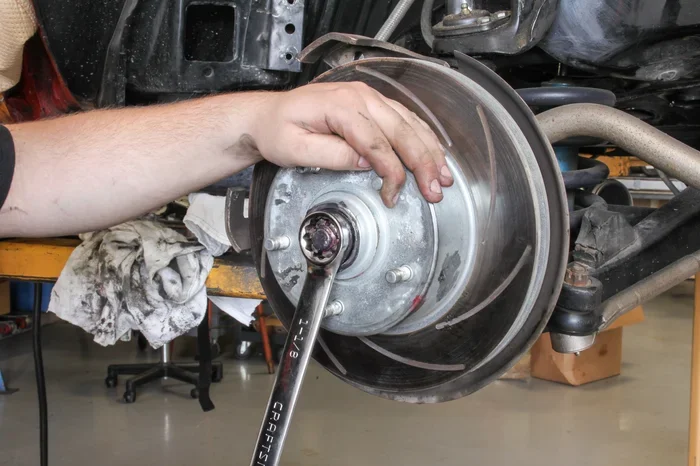
If you are handy with tools, replacing a wheel bearing yourself can cost as little as $80 to $200 — just the price of the part. You will need a socket set, a bearing press or hub puller, and a torque wrench. The job takes about one to two hours for a single wheel.
Here are some tips for a successful DIY replacement:
- Watch tutorial videos specific to your vehicle model before starting.
- Clean all mating surfaces thoroughly before installing the new bearing.
- Use a torque wrench to tighten bolts to the manufacturer’s specifications.
- Replace the hub seal if it shows any signs of wear or leakage.
- Check the ABS sensor while you are in there, especially if your vehicle has a integrated sensor.
When DIY Is Not the Right Choice
Some vehicles make bearing replacement extremely difficult. Rear-wheel bearings on certain models require pressing the bearing out of the hub, which needs a hydraulic press. If you do not have the right tools, it is worth paying for professional service. Also, if the bearing is seized and the entire hub assembly needs replacement, a mechanic is the better option.
Common Mistakes That Increase Wheel Bearing Replacement Cost
There are several mistakes car owners make that drive up the wheel bearing replacement cost. Avoiding these pitfalls can save you hundreds of dollars.
Ignoring Early Warning Signs
The most expensive mistake is waiting too long. A worn bearing does not fix itself. The longer you drive on it, the more damage it causes to the hub, CV axle, and even the tire. What starts as a $400 repair can turn into a $1,200 repair if you ignore the noise.
Choosing the Cheapest Bearing Available
It is tempting to grab the least expensive bearing at the auto parts store. But cheap, unbranded bearings often fail within 20,000 miles. You will end up paying double when you have to replace it again. Spending a little more on a quality ball bearing wheel or sealed unit pays off in the long run.
Not Checking the Hub Assembly
On many modern vehicles, the bearing is part of a sealed hub assembly. When the bearing fails, the entire hub must be replaced — not just the bearing alone. Some shops will quote you for a bearing replacement but then discover the hub is also damaged and needs to be swapped out. Always ask if the hub assembly is included in the quote.
Skipping the Tire Alignment
After a wheel bearing replacement, a tire alignment is often recommended — and sometimes required. Skipping this step can lead to uneven tire wear, which means buying new tires sooner. A wheel alignment costs $75 to $150 but can save you $400 or more in premature tire replacement.
Getting Quotes from Only One Shop
Labor rates vary widely between repair shops. A dealership might charge $150 per hour, while an independent mechanic charges $80. Always get at least two or three quotes before committing. This simple step can reduce your total bearing assembly cost by $100 or more.
Expert Insight: Ask the mechanic whether the quoted price includes the wheel speed sensor, ABS ring, and any bolts or hardware. Some shops quote a low price for the bearing alone and then add charges for these items at checkout.
How to Extend the Life of Your Wheel Bearings and Avoid Costly Repairs
Prevention is always cheaper than repair. While wheel bearings do wear out over time, good maintenance habits can significantly extend their lifespan and delay the need for a costly wheel bearing replacement.
Keep Your Bearings Clean and Lubricated
Water and dirt are the biggest enemies of wheel bearings. If you drive through deep water or muddy conditions, rinse your wheels and brake components regularly. Clean bearings stay lubricated longer and resist corrosion better.
Avoid Overloading Your Vehicle
Carrying heavy loads puts extra stress on every component, including the bearings. If your vehicle has a weight capacity rating, respect it. Overloading accelerates bearing wear and can lead to premature failure.
Check Wheel Bearings During Routine Maintenance
Ask your mechanic to inspect the wheel bearings during every oil change or tire rotation. Catching a slight wobble or early noise gives you time to plan for a repair instead of dealing with an emergency. A wheel bearing diagnosis during routine service is one of the best investments you can make.
Drive Smoothly
Aggressive driving — hard cornering, sudden braking, and speeding over potholes — puts extra strain on wheel bearings. Smooth driving not only saves your bearings but also improves fuel economy and tire life.
Replace Damaged Seals Immediately
The seal around the bearing keeps grease in and contaminants out. If you notice grease leaking around the wheel hub, get the seal replaced right away. A failed seal means water and dirt enter the bearing, causing rapid wear and eventual failure.
Quick Tip: When you buy new tires, have the mechanic check the wheel bearings at the same time. This is a great opportunity to catch any issues early, and it costs very little extra.
Conclusion
The car wheel bearing price for replacement is a cost every car owner should understand. Whether you drive a budget compact or a luxury SUV, knowing what to expect helps you make smart decisions. The typical range of $300 to $1,200 per wheel covers most vehicles, but the final number depends on your car type, the bearing quality you choose, and where you get the work done.
Remember that early detection is your best friend. If you hear a humming noise, feel unusual vibration, or notice uneven tire wear, get the bearings checked right away. A small repair today prevents a big expense tomorrow.
Choose quality parts, whether OEM or a trusted aftermarket brand. Avoid common mistakes like ignoring warning signs or skipping the tire alignment. And if you are comfortable working on your own car, a DIY replacement can save you a significant amount of money.
Your wheel bearings work hard every single day. Taking care of them means a safer ride, a smoother drive, and fewer surprises at the repair shop. Keep your bearings healthy, and they will keep you rolling for miles to come.
Frequently Asked Questions
What is the average car wheel bearing price for replacement?
The average car wheel bearing price for replacement ranges from $300 to $1,200 per wheel, depending on your vehicle type, the bearing quality, and labor costs. Economy cars tend to fall on the lower end, while luxury vehicles cost more.
Can I drive with a bad wheel bearing?
You should not drive with a bad wheel bearing for long distances. A severely worn bearing can cause the wheel to seize, leading to a loss of control. If you suspect a problem, get the car inspected and repaired as soon as possible.
How long does a wheel bearing replacement take?
A professional mechanic typically takes one to two hours per wheel. DIY replacement may take a bit longer, especially if you are new to the process. The exact time depends on the vehicle model and the type of bearing system.
Is it better to replace wheel bearings in pairs?
Yes, it is often recommended to replace bearings on both sides of the same axle at the same time. This ensures balanced performance and saves you from paying for a second labor job later. It is especially true if one bearing has already failed.
What causes wheel bearings to fail early?
Common causes include water intrusion, driving on rough roads, overloading the vehicle, and improper installation. A damaged seal is one of the leading causes because it allows contaminants to enter the bearing and break down the lubricant.
Does insurance cover wheel bearing replacement?
Standard car insurance does not cover wheel bearing replacement since it is considered normal wear and tear. However, if the damage resulted from an accident or road hazard, your collision or comprehensive coverage may apply. Check with your insurance provider for specific details.