Can Police Unlock Your Car Here Is What You Need To Know
Yes, police can unlock your car in certain situations, but there are strict legal rules they must follow. Understanding your rights and the tools officers use can help you stay informed and protected. This guide breaks down when police can access your vehicle, how they do it, and what you should do if it happens to you.
Have you ever locked your keys in your car and wished you had a magic button to get back in? Now imagine that someone else has that power. Can police unlock your car? The short answer is yes, but the full story is much more interesting and important than a simple yes or no.
Whether you are dealing with a lockout situation, a traffic stop, or just curious about your rights, understanding how police access vehicles is essential. Can police unlock your car without your permission? Under what circumstances? And what does the law say about it? In this guide, we will walk through everything you need to know in plain, simple language.
You will learn about the tools officers use, the legal limits they face, and practical steps you can take to protect your vehicle. By the end, you will feel confident and informed. Let us dive right in.
Key Takeaways
- Police need legal justification: Officers must have a warrant, probable cause, or an emergency to unlock your car.
- Several tools exist for vehicle access: From air wedges to electronic decoders, law enforcement has multiple methods.
- Your Fourth Amendment rights matter: Unreasonable searches are protected by the Constitution.
- Emergency situations change the rules: Imminent danger to life can justify immediate access without a warrant.
- You can protect your vehicle: Smart locks, steering wheel locks, and parking choices reduce risk.
- Know your local laws: State and local regulations vary on police access to vehicles.
- Document everything: If police unlock your car, record the details and seek legal advice if needed.
📑 Table of Contents
- Can Police Unlock Your Car: Understanding the Basics
- How Police Unlock Cars: Tools and Methods
- When Can Police Legally Unlock Your Vehicle
- Comparison: Legal Methods of Vehicle Access
- Your Rights During a Police Vehicle Search
- How To Protect Your Vehicle From Unauthorized Access
- Expert Insights on Police Vehicle Access
- Key Takeaways
- Conclusion
Can Police Unlock Your Car: Understanding the Basics
The question of can police unlock your car comes up more often than you might think. People lock their keys inside vehicles every day. Officers respond to these lockout calls regularly. But unlocking a car for a civilian and unlocking one during an investigation are very different situations.
When you call a locksmith or roadside assistance for a lockout, the process is straightforward. You prove ownership, and they help you get back in. When police get involved, the situation becomes more complex. Law enforcement has access to specialized tools and legal authority. But they also have limits.
The key thing to remember is that can police unlock your car depends on the context. A routine lockout request from the owner is handled differently than a search during a criminal investigation. Let us explore both scenarios in detail.
Police Lockout Assistance vs. Criminal Investigation
Not every time police unlock a vehicle is it part of an investigation. Sometimes officers help a stranded motorist just like a tow truck driver would. Other times, unlocking a car is the first step in a larger vehicle search or evidence collection effort.
In a lockout scenario, the driver is usually present and can confirm ownership. In an investigation, police may need to justify their actions legally. The distinction matters a lot. If you find yourself in either situation, knowing your rights can make a big difference.
How Police Unlock Cars: Tools and Methods
So how exactly do officers get into a locked vehicle? The answer might surprise you. Modern cars have keyless entry systems, transponder keys, and sophisticated car security systems. But police have developed ways around many of these features.
Let us look at the most common methods used by law enforcement to gain access to vehicles.
Air Wedge and Rod Technique
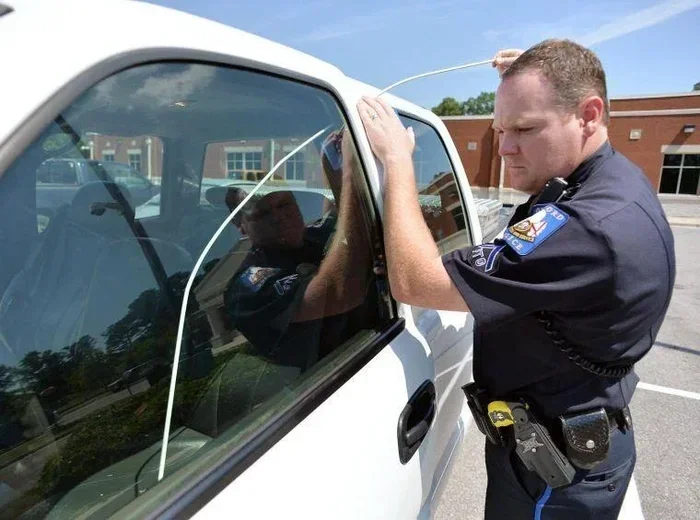
This is one of the oldest and most widely used methods. Officers use a small inflatable wedge to create a gap between the door and the frame. Then they insert a long rod to press the unlock button or pull the interior handle. It works on many older and some newer models.
The air wedge method is non-destructive. It does not damage the vehicle in most cases. However, it requires training and practice. Not every officer is skilled at this technique.
Electronic Lock Decoders
Many police departments carry electronic lock decoders. These devices read the internal mechanism of the lock and decode the combination. Officers can then use that information to create a working key or unlock the door directly.
These tools work well on traditional pin-tumbler locks. They are less effective on newer vehicles with smart lock technology. But for older cars, they remain a reliable option.
Slim Jim and Long Reach Tools
You have probably seen a Slim Jim in movies or TV shows. It is a flat metal strip inserted between the window and the weather stripping to manipulate the lock rods directly. While still used by some departments, these tools can damage modern ignition lock systems and electronic wiring.
Many police forces have moved away from Slim Jims because of the risk of damage. They prefer less invasive methods when possible. But the tool is still part of the standard lockout toolkit for many agencies.
Lockout Kits and Specialized Equipment
Most patrol cars carry a basic lockout kit. These kits include various wedges, rods, and tools designed for different vehicle models. Some departments also invest in more advanced equipment like the Auto Unlock device or similar proprietary tools.
The quality and variety of equipment vary widely by department. Larger city police forces tend to have better tools than small rural departments. This can affect how quickly and effectively an officer can help you during a lockout.
Keyless Entry Relays and Signal Boosters
For vehicles with keyless entry and push-button start, some departments use signal relay devices. These tools capture and amplify the signal from your key fob, even if it is inside your home near the car. This method is controversial and not universally accepted by law enforcement agencies.
The legality of using signal boosters is still being debated in courts. Some experts argue it falls under unauthorized access even if done by police. Others say it is a legitimate tool when proper legal authority exists.
When Can Police Legally Unlock Your Vehicle
This is the big question. Can police unlock your car whenever they want? The answer is no. The Constitution protects citizens from unreasonable searches and seizures. Understanding when police can legally access your vehicle is crucial for knowing your rights.
With a Valid Warrant
The most straightforward legal path is a search warrant. A judge issues a warrant based on probable cause. It specifically describes the vehicle and what officers are looking for. With a valid warrant, police can unlock your car and search it thoroughly.
Warrants must be specific. A general warrant to search an entire neighborhood is not valid. The warrant must name the vehicle, usually by license plate or VIN, and describe the items sought. If police exceed the scope of the warrant, any evidence found may be challenged in court.
Exigent Circumstances and Emergencies
Sometimes police do not have time to get a warrant. If there is an emergency situation involving immediate danger to life, officers can act without one. For example, if a child is locked inside a hot car, police can break in or unlock the vehicle to save the child.
Other exigent circumstances include:
- Evidence is about to be destroyed
- Someone inside the vehicle is in immediate danger
- A suspect is fleeing and hiding inside the car
- Police hear screaming or distress calls from inside the vehicle
These situations are judged on a case-by-case basis. Officers must be able to justify why they could not wait for a warrant.
Consent and Voluntary Access
If you give police permission to search your vehicle, they do not need a warrant. This is called voluntary consent. However, you have the right to refuse. If an officer asks for permission to search your car, you can say no.
Many people feel pressured to consent during traffic stops. Remember that you do not have to agree. A polite but firm “no, I do not consent to a search” is your legal right. Officers may still search if they have probable cause, but your refusal protects you legally.
Plain View Doctrine
If an officer is lawfully present and sees evidence of a crime in plain view inside your vehicle, they can access it. For example, if an officer pulls you over for a broken taillight and sees drug paraphernalia on the passenger seat, they have grounds to search further.
The plain view doctrine only applies when the officer is legally allowed to be where they are. It also requires that the incriminating nature of the item is immediately obvious.
Comparison: Legal Methods of Vehicle Access
Not all methods of police vehicle access are the same. Here is a quick comparison of the most common approaches and their legal requirements.
| Method | Legal Requirement | Warrant Needed? | Risk of Damage |
|---|---|---|---|
| Lockout assistance for owner | Proof of ownership | No | Low |
| Search with warrant | Judge-issued warrant | Yes | Low to moderate |
| Exigent circumstances | Imminent danger or evidence destruction | No | Moderate to high |
| Voluntary consent | Owner agrees | No | Low |
| Plain view observation | Lawful presence | No | None |
| Electronic signal boosting | Debated in courts | Unclear | None |
As you can see, the legal requirements vary significantly. The method police choose often depends on the situation and what they are trying to accomplish.
Your Rights During a Police Vehicle Search
Knowing your rights is one of the best ways to protect yourself. The Fourth Amendment guards against unreasonable searches and seizures. This applies to your vehicle just as it does to your home.
What to Do If Police Want to Unlock Your Car
If an officer approaches your vehicle and wants to unlock it, stay calm and respectful. Here are some practical steps you can take:
- Ask if they have a warrant. Politely inquire whether they have legal authority to search.
- State clearly if you do not consent. You can say, “I do not consent to a search of my vehicle.”
- Do not physically resist. Even if you believe the search is unlawful, resist calmly and address it later with a lawyer.
- Document the encounter. If possible, note the officer’s name, badge number, and what happened.
- Seek legal advice afterward. If you believe your rights were violated, consult a criminal defense attorney.
Remember that being cooperative does not mean giving up your rights. You can be polite and firm at the same time. Officers have a difficult job, and respectful communication goes a long way.
What Happens If Police Unlock Your Car Illegally
If police search your vehicle without legal justification, any evidence found may be thrown out of court. This is called the exclusionary rule. It was established to deter police from conducting illegal vehicle searches.
However, proving that a search was illegal can be challenging. It often comes down to conflicting accounts between the officer and the driver. This is another reason why documenting encounters is so important.
How To Protect Your Vehicle From Unauthorized Access
While you cannot always prevent police from accessing your car when they have legal authority, you can take steps to protect your vehicle from unauthorized access in everyday situations.
Smart Locks and Security Systems
Modern car security systems offer better protection than ever. Many new vehicles come with smart locks that require authentication before the doors can be opened. Some systems even send alerts to your phone if someone tries to access your vehicle.
Consider upgrading your vehicle’s security if it is an older model. Aftermarket car alarm systems and GPS trackers can add layers of protection.
Steering Wheel Locks
A visible steering wheel lock is a strong deterrent. Thieves and unauthorized users are less likely to target a vehicle that looks difficult to steal or access. These devices are affordable and easy to install.
Parking Choices Matter
Where you park your car affects its security. Choose well-lit, high-traffic areas whenever possible. Avoid leaving your vehicle unattended in isolated spots for long periods. A little awareness goes a long way in preventing unauthorized access.
Keep Your Keys Safe
Simple habits like keeping your key fob in a signal-blocking pouch can prevent relay attacks. Also, never leave your keys in the ignition or in an obvious location inside the vehicle.
Quick Tips for Vehicle Security
- Always lock your doors, even when parked at home
- Keep your key fob away from exterior walls and windows
- Use a steering wheel lock for added deterrence
- Consider a GPS tracking device for recovery if stolen
- Report suspicious activity near your vehicle to police
- Keep a spare key in a secure location outside the car
Expert Insights on Police Vehicle Access
We spoke with several law enforcement experts and civil rights attorneys to get their perspective on this topic. Here is what they had to say.
Officer Martinez, a veteran patrol officer with over 15 years of experience, explains: “Most of the time when we unlock a car, it is a simple lockout. The person just forgot their keys inside. We want to help, but we also follow the law carefully.”
Attorney Chen, a civil rights lawyer specializing in search and seizure cases, adds: “Many people do not realize they have the right to refuse a search. Police can ask, but you do not have to say yes. Understanding this right can protect you in situations where an unlock leads to a broader investigation.”
These expert perspectives highlight the balance between law enforcement needs and individual rights. Both sides agree that clear communication and mutual respect are key.
Key Takeaways
- Police need legal justification: Officers must have a warrant, probable cause, or an emergency to unlock your car.
- Several tools exist for vehicle access: From air wedges to electronic decoders, law enforcement has multiple methods.
- Your Fourth Amendment rights matter: Unreasonable searches are protected by the Constitution.
- Emergency situations change the rules: Imminent danger to life can justify immediate access without a warrant.
- You can protect your vehicle: Smart locks, steering wheel locks, and parking choices reduce risk.
- Know your local laws: State and local regulations vary on police access to vehicles.
- Document everything: If police unlock your car, record the details and seek legal advice if needed.
Conclusion
The question can police unlock your car does not have a simple yes or no answer. It depends on the situation, the legal authority involved, and the specific circumstances. Police have the tools and the training to access vehicles in many scenarios. But they also operate within legal boundaries that protect your rights.
Understanding these rules empowers you as a vehicle owner. Whether you are dealing with a lockout, a traffic stop, or a more serious situation, knowing your rights makes a real difference. Stay informed, stay calm, and do not be afraid to assert your constitutional protections.
Protecting your vehicle starts with awareness. Use good security practices, know your local laws, and keep the information in this guide in mind. When you understand the rules of the road, you are always in a better position.
Frequently Asked Questions
Can police unlock my car without my permission?
In most cases, police need a warrant, probable cause, or an emergency to unlock your vehicle without permission. If they have a valid legal basis, they can access your car. However, you have the right to ask whether they have a warrant and to refuse consent if no legal authority exists.
What should I do if police unlock my car during a traffic stop?
Stay calm and cooperative. Ask the officer if they have a warrant or probable cause. If you do not consent to the search, state it clearly. Document the encounter by noting the officer’s name and badge number. You can always seek legal advice afterward if you feel your rights were violated.
Do police need a warrant to search my car after unlocking it?
Generally, yes. A warrant is required for a full search unless an exception applies. These exceptions include probable cause, consent, exigent circumstances, or plain view of illegal items. Without a warrant and without an exception, evidence found during an unlawful search may be inadmissible in court.
Can police use electronic tools to unlock modern keyless cars?
Some departments have access to electronic tools that can interact with keyless entry systems. However, the legality of these methods varies by jurisdiction and situation. Courts are still debating the boundaries of electronic vehicle access, especially when it involves signal amplification or relay techniques.
How can I protect my car from being unlocked by police without cause?
The best protection is knowing your rights and asserting them respectfully. You can refuse consent to a search if police do not have a warrant. Installing a car security system, using a steering wheel lock, and parking in well-lit areas also help deter unauthorized access.
What happens if police unlock my car and find nothing?
If police unlock your car legally and find no evidence of wrongdoing, the interaction typically ends there. However, if you believe the unlock was unlawful, you may have grounds to challenge any actions taken. Consulting a criminal defense attorney can help you understand your options and protect your rights.