Where Is the RCTA Sensor Located and How to Find It
The RCTA sensor is typically located on the rear bumper of your vehicle, hidden behind the bumper cover. Knowing where the RCTA sensor is located helps you troubleshoot warning lights, clean the sensor properly, and avoid accidental damage during car washes or parking. This guide shows you how to find the RCTA sensor on popular car brands and what to do if it malfunctions.
You are backing out of a parking spot. Your car beeps loudly, warning you about traffic approaching from the side. This is your RCTA system doing its job. But have you ever wondered where the RCTA sensor is actually located? Many car owners know their vehicle has this helpful safety feature. Yet they have no idea where the sensor sits or how to find it when something goes wrong.
Understanding the RCTA sensor location matters more than most people realize. When the sensor gets dirty, damaged, or covered in snow, your car may give false warnings. Or worse, it might stop working entirely. If you know where the RCTA sensor is located, you can clean it, inspect it, and even replace it yourself in many cases.
This guide covers everything you need to know. We will show you exactly where the RCTA sensor sits on different vehicles. You will learn how to find it, what problems to watch for, and how to keep it working well. Whether you drive a Toyota, Honda, Ford, or another popular brand, this article has you covered.
Key Takeaways
- RCTA sensors live on the rear bumper: They are almost always tucked behind the rear bumper cover, usually near the corners.
- Location varies by car brand: Toyota, Honda, Ford, and other brands place the RCTA sensor in slightly different spots on the rear bumper.
- You can find the sensor yourself: With basic tools and a flashlight, you can locate and inspect your RCTA sensor at home.
- Common problems include dirt and damage: Dirt, snow, or bumper damage can cause RCTA sensor warnings and false alerts.
- Replacement costs vary: A single RCTA sensor replacement typically costs between $100 and $400, depending on your vehicle.
- Regular cleaning prevents issues: Keeping the sensor area clean reduces false warnings and keeps your blind spot monitoring working properly.
📑 Table of Contents
- What Is an RCTA Sensor and Why Does It Matter?
- Where Is the RCTA Sensor Located on Different Vehicles
- How to Physically Find the RCTA Sensor on Your Car
- Common RCTA Sensor Problems and Warning Signs
- RCTA Sensor vs. Other Car Safety Sensors
- How to Maintain and Protect Your RCTA Sensor
- RCTA Sensor Replacement: What You Need to Know
- Key Takeaways
- Conclusion
What Is an RCTA Sensor and Why Does It Matter?
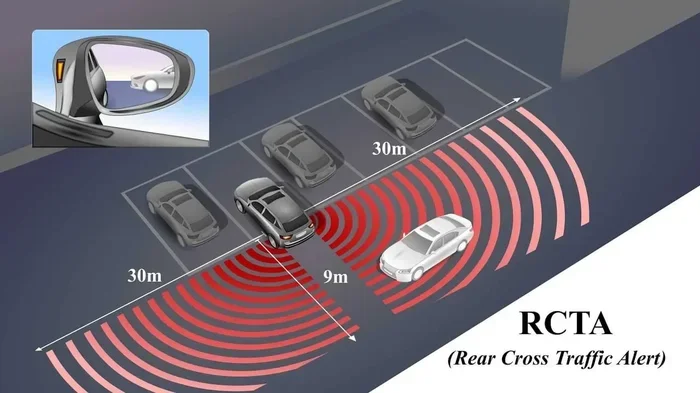
RCTA stands for Rear Cross-Traffic Alert. This safety system helps drivers when they are backing up. It uses sensors to detect vehicles, pedestrians, or objects approaching from the sides while you reverse. The system is especially useful in parking lots, driveways, and tight spaces.
The RCTA sensor works closely with your car’s blind spot monitoring system. Together, these features make reversing much safer. They give you extra time to react to approaching traffic. Many modern cars come with RCTA as standard or optional equipment. It is one of the most appreciated driver assistance features available today.
How the RCTA Sensor Works
The RCTA sensor uses radar technology. It sends out signals that bounce off nearby objects. When the sensor detects movement from the sides while you are in reverse, it triggers an alert. You may hear a beep, see a warning on your dashboard, or even feel a vibration in the steering wheel.
Most RCTA systems activate automatically when you shift into reverse. They deactivate once you move forward again. The sensor range is usually about 70 to 80 feet on each side. This gives you a wide field of detection. The radar waves work well in low-light conditions, which makes the system reliable at night or in poor weather.
Why Knowing the Sensor Location Helps You
When your RCTA light comes on and stays on, it can be stressful. You might wonder if the system is broken or if there is a real danger. Often, the problem is simple. The sensor might be covered in dirt, mud, or snow. Without knowing where the RCTA sensor is located, you cannot clean it properly.
Also, after a minor bumper accident, the sensor could be knocked out of alignment. If you know the exact RCTA sensor location, you can check it right away. Early detection of damage can save you from expensive repairs later. It also keeps your safety systems working when you need them most.
Where Is the RCTA Sensor Located on Different Vehicles
The RCTA sensor location is not the same on every car. However, most vehicles place the sensor on or inside the rear bumper. The exact spot depends on your car’s make, model, and year. Let us look at the most common placements.
General RCTA Sensor Placement
In the vast majority of vehicles, you will find the RCTA sensor on the rear bumper. It is usually hidden behind the plastic bumper cover. The sensor sits near the left and right corners of the bumper. Some cars have one sensor per side, while others have two sensors on each side for wider coverage.
The sensor is typically mounted at bumper height, about 12 to 18 inches from the ground. This position gives the radar the best angle to detect cross-traffic. The bumper cover hides the sensor from view, which protects it from minor impacts and debris.
RCTA Sensor Location by Car Brand
Different car brands place the RCTA sensor in slightly different spots. Here is a closer look at common placements across popular brands.
Toyota and Lexus: On most Toyota and Lexus models, the RCTA sensor is embedded in the rear bumper near the tail lights. The sensor sits behind the bumper cover on both sides. Toyota often combines the RCTA sensor with the blind spot monitor sensor in the same bumper area.
Honda and Acura: Honda vehicles typically place the RCTA sensor on the rear bumper, close to the rear quarter panel. The sensor is usually centered between the bumper edge and the tail light. Honda uses a similar radar-based system for cross-traffic detection.
Ford and Lincoln: Ford places the RCTA sensor on the rear bumper as well. The sensor is often located near the lower part of the bumper, below the tail lights. Ford’s BLIS (Blind Spot Information System) and RCTA share sensor components in many models.
Chevrolet and GMC: General Motors vehicles often locate the RCTA sensor on the rear bumper near the corner. The sensor may be integrated with the rear parking assist system. GM uses both ultrasonic and radar sensors depending on the model year.
Nissan and Infiniti: Nissan typically mounts the RCTA sensor in the rear bumper, aligned with the rear camera system. The sensor placement is usually symmetric on both sides of the bumper.
| Car Brand | Typical RCTA Sensor Location | Sensor Type |
|---|---|---|
| Toyota / Lexus | Rear bumper, near tail lights | Radar |
| Honda / Acura | Rear bumper, near quarter panel | Radar |
| Ford / Lincoln | Rear bumper, lower near tail lights | Radar |
| Chevrolet / GMC | Rear bumper, near corners | Radar or Ultrasonic |
| Nissan / Infiniti | Rear bumper, near rear camera | Radar |
How to Find the Exact RCTA Sensor Location for Your Car
If you want to find the RCTA sensor on your specific vehicle, start with your owner’s manual. The manual will have a diagram showing the sensor placement. You can also search online for your car model and year plus the phrase RCTA sensor location. Many forums and YouTube videos show the exact spot for popular vehicles.
Another great resource is your dealership. A service advisor can pull up the sensor diagram for your VIN number. This gives you the most accurate RCTA sensor location for your exact trim level and model year. Some dealerships will even show you the location on the actual vehicle.
How to Physically Find the RCTA Sensor on Your Car
Now that you know the general area, let us walk through how to actually locate the sensor on your car. You do not need special tools for this. Just a flashlight and a few minutes of your time.
Step-by-Step Guide to Locating the Sensor
Follow these steps to find the RCTA sensor on your vehicle:
- Park on a flat surface and turn off the engine. Make sure the car is cool before you start working.
- Open the rear trunk or liftgate to access the rear bumper area more easily.
- Get down to bumper level on both the left and right sides of the car.
- Use your flashlight to look at the inside of the rear bumper cover. Shine the light along the edges, especially near the corners and tail lights.
- Look for small circular or rectangular openings. These are the sensor housings. They are usually about 1 to 2 inches in diameter. They may have a small rubber cover or a chrome ring around them.
- Check for labels or markings. Some sensors have a small sticker or embossed mark indicating they are part of the blind spot or RCTA system.
- Repeat on the other side. Most vehicles have sensors on both the left and right rear bumpers.
What the Sensor Looks Like
The RCTA sensor housing is usually small and flush with the bumper surface. It may look like a small circle or a thin rectangle. The sensor itself is hidden inside the bumper cover. You will not see the actual radar element. You will only see the outer housing or opening.
Do not confuse the RCTA sensor with the parking sensor. Parking sensors are usually more numerous and may be scattered across the bumper. The RCTA sensor is typically fewer in number and located higher up on the bumper, closer to the body of the car. If you are unsure, check your owner’s manual for a diagram.
Common Areas to Check
Here are the most common spots where you will find the RCTA sensor on most vehicles:
- Near the rear tail lights: This is the most common location across all brands.
- Along the lower bumper edge: Some models place the sensor lower, near the exhaust or diffuser area.
- Inside the bumper reflector area: The sensor may be hidden behind the reflector strip on the bumper.
- Near the rear license plate: A few models mount the sensor close to the license plate area.
- Behind the rear bumper panel: In some cases, you may need to remove the bumper cover to see the sensor clearly.
Common RCTA Sensor Problems and Warning Signs
Even when the RCTA sensor is in the right place, it can develop problems over time. Knowing the warning signs helps you catch issues early. This keeps your safety systems working properly.
Warning Lights on the Dashboard
The most obvious sign of an RCTA sensor problem is a warning light on your dashboard. This light may look like a car with arrows pointing outward from the rear. It may also say “RCTA” or “Blind Spot Not Available.” When this light stays on, the sensor system has detected a fault.
Common reasons for the RCTA warning light include:
- Dirty or covered sensor: Mud, snow, ice, or bug splatter can block the sensor signal.
- Sensor damage: A minor bumper impact can knock the sensor out of alignment.
- Wiring issue: The wiring harness connecting the sensor to the car’s computer may be frayed or disconnected.
- Electrical problem: A blown fuse or faulty module can disable the entire RCTA system.
- Aftermarket modifications: Adding a tow hitch or bumper guard without proper sensor integration can interfere with the system.
False Alerts or No Alerts at All
If your RCTA system beeps randomly when there is no traffic nearby, the sensor may be malfunctioning. On the other hand, if the system does not beep when cross-traffic is approaching, it may be completely blocked or broken. Both situations are dangerous and need attention.
False alerts often happen when the sensor is dirty. A layer of mud or snow can scatter the radar signal. This causes the system to detect objects that are not really there. Cleaning the sensor area usually fixes this problem quickly.
When to Seek Professional Help
Some RCTA sensor issues need a professional diagnosis. If you have cleaned the sensor and the warning light still stays on, take your car to a mechanic or dealership. They have diagnostic tools that can read the exact error code from the sensor system. This tells you whether the sensor itself needs replacement or if the problem is elsewhere in the system.
RCTA Sensor vs. Other Car Safety Sensors
Your car may have several different sensor systems working together. Understanding the differences helps you troubleshoot problems more effectively. Let us compare the RCTA sensor with other common safety sensors.
RCTA Sensor vs. Parking Sensors
Parking sensors use ultrasonic technology. They are usually mounted in the front and rear bumpers. They detect objects directly in front of or behind the car. The RCTA sensor uses radar and detects moving objects approaching from the sides while you are in reverse. The two systems work together but serve different purposes.
RCTA Sensor vs. Backup Camera Sensors
The backup camera gives you a visual view behind the car. It does not use radar or detect approaching traffic from the sides. The RCTA sensor adds an audible and visual warning for cross-traffic. Together, they give you a much safer reversing experience.
RCTA Sensor vs. Blind Spot Monitoring Sensor
The blind spot monitoring sensor is often the same physical unit as the RCTA sensor. Many car manufacturers use a shared sensor platform for both systems. The blind spot sensor works when you are driving forward. The RCTA sensor activates when you are in reverse. The same hardware handles both functions in most vehicles.
How to Maintain and Protect Your RCTA Sensor
Taking care of your RCTA sensor keeps it working reliably for years. Simple maintenance steps can prevent most common problems. Here is what you should do.
Regular Cleaning
Clean the rear bumper area regularly, especially in winter or after off-road driving. Use a soft cloth and mild soap to wipe the sensor housing. Avoid high-pressure washers directly at the sensor opening. The force of the water can push debris into the sensor housing and cause damage.
Quick tip: After a car wash, check that the sensor area is dry and free of water spots or soap residue. This keeps the radar signal clear and unobstructed.
Avoid Bumper Damage
The RCTA sensor sits behind the rear bumper cover. A hard impact can crack the bumper cover and shift the sensor out of position. When parking, try to avoid scraping the rear bumper against curbs or poles. If you do get a bumper dent, have a technician check the sensor alignment.
Sensor Calibration After Repairs
If you have had rear bumper repair work done, the RCTA sensor may need recalibration. Even a slight shift in position can affect the sensor’s detection range. Many dealerships and body shops offer sensor calibration services. This ensures the RCTA system works correctly after any bumper work.
Protecting the Sensor in Winter
Winter weather is tough on car sensors. Snow and ice can completely cover the RCTA sensor. Before driving, clear snow from the rear bumper area. Use a soft brush or snow broom. Avoid using sharp tools that could scratch the sensor housing. A thin layer of ice over the sensor can block the radar signal and trigger the warning light.
RCTA Sensor Replacement: What You Need to Know
Sometimes the RCTA sensor gets damaged beyond repair. In that case, you will need a replacement. Knowing the process helps you make informed decisions about repairs.
How Much Does It Cost to Replace an RCTA Sensor?
The cost of replacing an RCTA sensor varies by vehicle. For most cars, a single sensor costs between $50 and $200 for the part. Labor costs add another $50 to $200, depending on how accessible the sensor is. In total, you might pay $100 to $400 for one sensor replacement. If both sides need replacement, the cost doubles.
Luxury vehicles and European cars often cost more. The sensor part alone can exceed $300 for some models. Always get a quote from your dealership or a trusted repair shop before committing to the work.
Can You Replace the Sensor Yourself?
Some car owners can replace the RCTA sensor themselves. The job usually involves removing the rear bumper cover, disconnecting the old sensor, and installing the new one. You will need basic hand tools and some patience. However, the job requires care. If the sensor is not aligned correctly, the RCTA system may not work properly.
If you are not comfortable doing this work, it is best to leave it to a professional. A technician can also recalibrate the sensor after installation. This ensures the system meets factory specifications.
Where to Buy a Replacement RCTA Sensor
You can buy replacement RCTA sensors from several sources. Your dealership sells OEM (original equipment manufacturer) sensors. These are the exact same part that came with your car. Aftermarket sensors are also available from online retailers and auto parts stores. They are usually cheaper but may vary in quality. Always check reviews and compatibility before purchasing.
Key Takeaways
- RCTA sensors live on the rear bumper: They are almost always tucked behind the rear bumper cover, usually near the corners.
- Location varies by car brand: Toyota, Honda, Ford, and other brands place the RCTA sensor in slightly different spots on the rear bumper.
- You can find the sensor yourself: With basic tools and a flashlight, you can locate and inspect your RCTA sensor at home.
- Common problems include dirt and damage: Dirt, snow, or bumper damage can cause RCTA sensor warnings and false alerts.
- Replacement costs vary: A single RCTA sensor replacement typically costs between $100 and $400, depending on your vehicle.
- Regular cleaning prevents issues: Keeping the sensor area clean reduces false warnings and keeps your blind spot monitoring working properly.
Conclusion
Now you know exactly where the RCTA sensor is located and how to find it on your vehicle. The RCTA sensor is a hidden but vital safety feature. It sits on the rear bumper, usually near the tail lights, and works hard to keep you safe when reversing. Understanding its location gives you the power to maintain it, troubleshoot problems, and even handle basic repairs yourself.
Keep your RCTA sensor clean and protected. Check it regularly for dirt, damage, or snow buildup. When the warning light comes on, do not ignore it. A quick inspection of the sensor area can often solve the problem in minutes. If the issue is more serious, a professional can diagnose and fix it quickly.
Your car’s safety systems work best when you take care of them. The RCTA sensor is no exception. Give it the attention it deserves, and it will keep watching your back every time you shift into reverse.
Question 1: Can I drive my car if the RCTA sensor warning light is on?
Yes, you can still drive your car with the RCTA warning light on. The light means the rear cross-traffic alert system is disabled. Your other safety features, like brakes and airbags, continue to work normally. However, you will not get the cross-traffic alert when reversing. It is best to have the sensor checked and repaired as soon as possible.
Question 2: How often should I clean my RCTA sensor?
You should clean the RCTA sensor area at least once a month. Clean it more often if you drive in muddy, snowy, or dusty conditions. A quick wipe with a soft cloth during your regular car wash routine is usually enough. Keeping the sensor clear prevents false alerts and keeps the system working reliably.
Question 3: Does an aftermarket tow hitch affect the RCTA sensor?
Yes, an aftermarket tow hitch can interfere with the RCTA sensor if it is installed near the sensor location. The hitch or its wiring can block or disrupt the radar signal. Always check with your hitch installer about sensor placement. Some aftermarket hitches come with sensor bypass brackets to avoid this problem.
Question 4: Can I replace just one RCTA sensor if only one side is broken?
Yes, you can replace a single RCTA sensor. You do not need to replace both sides unless both sensors are damaged. However, if you replace one sensor, the system may need recalibration. This ensures both sensors work together properly. A dealership or qualified repair shop can handle the calibration for you.
Question 5: Why does my RCTA system work sometimes but not others?
Intermittent RCTA system failure is often caused by a loose connection or moisture inside the sensor housing. Temperature changes can make the problem worse. If the system works sometimes and fails at other times, have a technician inspect the wiring and sensor housing. A simple reconnection or seal replacement often fixes the issue.
Question 6: Is the RCTA sensor the same as the rear parking sensor?
No, the RCTA sensor and the rear parking sensor are different. The rear parking sensor uses ultrasonic waves to detect stationary objects behind the car. The RCTA sensor uses radar to detect moving vehicles approaching from the sides while you are in reverse. Some cars combine both systems, but the sensors and technology are not the same.
Frequently Asked Questions
What is Where Is the RCTA Sensor Located?
Where Is the RCTA Sensor Located is an important topic with many practical applications.