California Window Tint Law Explained Everything You Need
The California Window Tint Law sets strict rules on how dark and reflective your car windows can be. Understanding these rules helps you avoid costly fines and keeps your vehicle road-legal. This guide breaks down every window’s legal limit, medical exemptions, and the best tint films for California drivers.
This is a comprehensive guide about California Window Tint Law Explained.
Key Takeaways
- Front side windows must allow over 70% of light in for most passenger vehicles in California.
- The windshield tint strip is limited to the top 4 inches and must be non-reflective.
- Rear windows and rear side windows have no darkness restriction for most vehicles.
- Medical exemptions are available through the California DMV for those with specific health needs.
- Reflective or mirror-like tint is illegal on both front and rear side windows.
- Sticker certification is required on the driver’s side door jamb after legal tinting.
- Tint tickets can cost $25 to $100+ depending on the violation severity.
[FEATURED_IMAGE_PLACEHOLDER]
Driving in California means dealing with plenty of sunshine. Whether you are commuting through Los Angeles or cruising down Highway 1, the sun can make your car feel like a sauna. That is why so many car owners turn to car window tinting. But before you tint those windows, you need to understand the California Window Tint Law. Getting it wrong can lead to a pricey ticket or even having your tint removed.
This guide covers everything you need to know. We will walk through the legal limits, medical exemptions, tint film types, and common mistakes. By the end, you will feel confident about staying compliant and choosing the right tint for your ride. Let us dive in.
What Are California Window Tint Laws?
The California Window Tint Law is part of the California Vehicle Code. These rules control how dark or reflective your car windows can be. The main goal is safety. Tinted windows can reduce visibility for the driver and for other drivers on the road. California sets clear limits to balance comfort and safety.
The law looks at two main factors. The first is tint darkness, which measures how much light passes through your window. The second is reflectivity, which checks if your tint acts like a mirror. Each window on your car has its own legal limit. Let us break this down window by window.
Understanding Visible Light Transmission (VLT)
You will hear the term Visible Light Transmission or VLT a lot when researching tint darkness. VLT measures the percentage of light that passes through your window film. A higher VLT means more light gets in. A lower VLT means a darker tint. For example, a 70% VLT film lets 70% of light through and blocks 30%. California uses VLT percentages to set its legal limits.
Why Do These Laws Exist?
California enforces these rules for a few key reasons. First, driver safety matters. Dark tints can make it hard to see at night or in tunnels. Second, law enforcement officers need to see inside your vehicle during traffic stops. Third, too much reflectivity can blind other drivers in sunlight. These are all valid concerns that the California DMV and lawmakers keep in mind when setting tint limits.
Legal Tint Limits by Window
Here is where it gets specific. The legal tint limit varies depending on which window you are talking about. Below is a clear breakdown of what is allowed and what is not.
Windshield Tint Rules
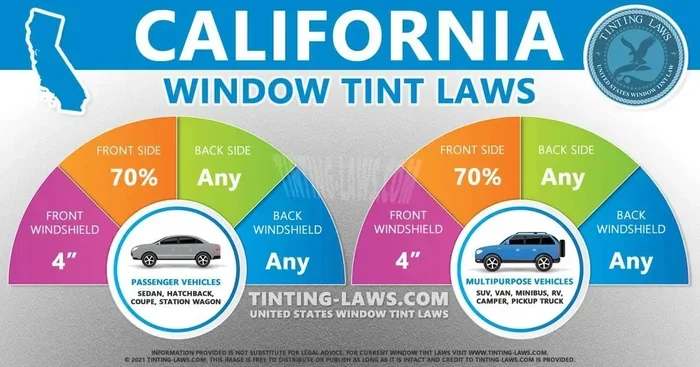
The front windshield has the strictest rules in California. You are only allowed to tint the top 4 inches of the windshield. This strip must be non-reflective. Any tint below that 4-inch line on the windshield is illegal. This rule ensures the driver has a clear view of the road ahead at all times.
Front Side Window Rules
For most passenger vehicles, the front side windows must allow more than 70% of light to pass through. This means your tint percentage on the front doors cannot be too dark. In practical terms, this usually limits you to a very light tint or a clear UV-protection film. Many drivers choose ceramic tint for this purpose because it blocks heat without darkening the glass too much.
Rear Side Windows and Rear Window Rules
Good news for backseat passengers. The rear side windows and the rear window have no darkness restriction in California. You can go as dark as you want on these windows. This applies to sedans, SUVs, and trucks alike. However, if your rear windows are tinted, you must have dual side mirrors to compensate for reduced rear visibility.
Quick Reference: California Tint Limit Table
| Window | Legal VLT Limit | Reflectivity Allowed |
|---|---|---|
| Front Windshield | Top 4 inches only, non-reflective | No reflectivity allowed |
| Front Side Windows | Must be over 70% VLT | No reflective or mirror tint |
| Rear Side Windows | No limit on darkness | No reflective or mirror tint |
| Rear Window | No limit on darkness | No reflective or mirror tint |
Tint Color Restrictions
California does not allow certain tint colors. Red, amber, and blue tint films are all illegal. The law focuses on neutral tones like gray, charcoal, gold, and green. These colors are commonly used in ceramic tint and carbon tint films. Always check with your tint installer to make sure the film color you choose is compliant.
Medical Exemptions and Special Permits
Not everyone can tolerate normal amounts of sunlight. Some people have medical conditions that make them very sensitive to UV rays. The good news is California offers a medical exemption for window tinting. This allows darker tint on windows that would normally be restricted.
Who Qualifies for a Medical Exemption?
Conditions like lupus, severe sun allergies, and certain skin disorders may qualify. Photosensitivity and melanoma recovery are also covered under this exemption. You will need a signed letter from a licensed physician explaining your condition and why darker tint is medically necessary.
How to Apply for a Medical Exemption
The process is handled through the California DMV. You will need to submit a completed Application for Exemption from Front Side Window Tint Law (Form VLT-100). Include your physician’s letter with your application. If approved, you will receive a special exemption certificate. Keep this certificate in your vehicle at all times. During a traffic stop, you can show this to prove your tint is legal despite being darker than the standard limit.
Important Notes on Exemptions
Even with a medical exemption, there are still limits. The exemption allows darker tint on front side windows but does not permit reflective or mirror-like films. The windshield tint strip rule still applies. Always carry your exemption certificate with your vehicle registration. Law enforcement officers may not be familiar with the exemption, so having it on hand prevents confusion.
Types of Tint Films and Their Benefits
Not all tint film products are created equal. Understanding your options helps you pick the right one for your needs and budget. Here are the most common types available.
Dyed Tint Film
Dyed tint is the most affordable option. It uses a layer of dye to absorb heat and reduce glare. However, dyed films tend to fade over time. They also offer less heat rejection compared to more advanced options. If you are on a tight budget, dyed tint can work for a short-term solution.
Metalized Tint Film
Metalized tint contains tiny metallic particles that reflect heat away from your car. It is more durable than dyed film and offers better heat rejection. The downside is that metalized tint can interfere with cell phone signals and GPS. It also has a shiny appearance that some people find unattractive.
Carbon Tint Film
Carbon tint is a popular middle-ground option. It does not contain metal, so it will not interfere with electronic signals. Carbon films offer excellent heat rejection and a matte finish that many drivers love. They also resist fading better than dyed films. This makes carbon a solid choice for daily drivers.
Ceramic Tint Film
Ceramic tint is the premium option. It uses nano-ceramic particles to block heat without affecting visibility or signal reception. Ceramic films offer the highest level of heat rejection available. They also provide excellent UV protection. While ceramic tint costs more upfront, its performance and durability make it worth the investment for many California drivers.
Which Tint Film Is Best for California?
For most people, carbon or ceramic tint strikes the best balance. They meet the 70% VLT requirement for front side windows while still blocking significant heat. Ceramic tint is especially popular because it provides maximum comfort without crossing legal boundaries. Ask your tint shop about films that are specifically designed to meet California’s legal tint limit.
Common Mistakes That Lead to Tint Tickets
Even well-meaning car owners run into trouble with tint enforcement. Knowing the common mistakes can save you time and money. Here are the top errors people make when tinting their windows in California.
Tinting the Windshield Below the 4-Inch Line
This is the most common violation. Some tint shops apply film across the entire windshield because the customer asked for it. This is illegal in California. Always remind your installer that only the top 4 inches of the windshield can be tinted. A tint ticket for windshield violations is one of the most frequently issued.
Choosing Tint That Is Too Dark for Front Windows
Some drivers want a dark, sporty look. But going below 70% VLT on front side windows is a violation. Even if the tint looks fine to you, a police officer can measure it with a tint meter. If it fails the test, you will receive a citation. Stick to the legal limit to avoid this.
Skipping the Certification Sticker
California law requires a tint certification sticker on the driver’s side door jamb. This sticker proves your tint meets legal standards. Many tint shops forget to apply it. Without the sticker, you may be treated as non-compliant during a traffic stop. Always double-check that your installer placed this sticker before you leave the shop.
Using Reflective or Mirror-Like Tint
Mirror tint looks cool in movies, but it is illegal on all windows in California. Reflective tint can blind other drivers and obstruct law enforcement visibility. Even if the darkness level is within limits, reflective film will get you a tint violation. Choose a non-reflective film for full compliance.
Not Having a Medical Exemption Certificate on Hand
If you have a medical exemption, keep the certificate in your vehicle. Some officers may not recognize a darker tint as legal without documentation. Having the certificate ready prevents unnecessary delays and arguments during traffic stops.
How to Stay Compliant and Avoid Fines
Staying on the right side of the law is straightforward when you follow a few simple steps. Here is a practical checklist for every California driver who wants to tint their windows the right way.
Step 1: Know Your Vehicle Type
The rules differ slightly for sedans, SUVs, and vans. Passenger vehicles have different limits than commercial vehicles. Check the specific rules for your vehicle type before choosing a tint film. The California DMV website has a helpful guide for different vehicle categories.
Step 2: Choose a Reputable Tint Shop
A professional tint installer will know the law inside and out. They will recommend films that meet the 70% VLT requirement for front windows. They will also ensure the windshield tint strip is limited to 4 inches. A good shop will apply the certification sticker and provide you with a warranty on the film.
Step 3: Get Your Tint Measured After Installation
After your tint is applied, ask the shop to measure the VLT of each window. This gives you a record that your tint is compliant. Some shops will provide a written statement confirming the tint percentage. Keep this with your vehicle documents.
Step 4: Keep All Documentation in Your Vehicle
If you have a medical exemption, keep the certificate in your glove box. If your tint shop provided a compliance statement, keep that too. Having documentation ready shows officers that you took the time to follow the law. This can prevent misunderstandings and unnecessary fines.
Step 5: Stay Updated on Law Changes
Laws can change over time. The California Vehicle Code is updated periodically. Check for any recent changes to tint enforcement rules. Following industry news and visiting the DMV website regularly keeps you informed. A quick search for “California window tint law update” a few times a year can save you from surprises.
Quick Tips for Tint Success
- Always choose a non-reflective film for all windows.
- Ask your tint shop about films that are pre-certified for California compliance.
- Do not let friends talk you into going darker than the legal limit.
- Keep your certification sticker visible on the driver’s side door jamb.
- Invest in ceramic or carbon tint for the best balance of comfort and legality.
- If you get a tint ticket, pay it promptly or contest it with your documentation.
- Remember that rear windows have no darkness limit, so you have more freedom there.
What Happens If You Get a Tint Ticket in California?
Getting caught with illegal tint film can result in a fine. The cost of a tint ticket in California typically ranges from $25 to $100 or more. The exact fine depends on the violation and the county where you were stopped. In some cases, you may be given a “fix it” ticket. This means you have time to remove or adjust the tint before paying the fine.
If you ignore the ticket, the fine can increase. Repeated violations may also affect your vehicle registration. In extreme cases, your tint could be required to be removed entirely. To avoid all of this, simply follow the rules outlined in the California Window Tint Law. It is much easier to stay compliant than to deal with the consequences.
Expert Insights on California Tinting
We spoke with several automotive professionals about tint enforcement in California. Most agreed that the 70% VLT rule for front windows is the number one area where drivers get tripped up. “Many people do not realize that even a slight tint on the front doors can put them over the legal limit,” said one veteran tint installer. “The best advice is to measure before you commit.”
Another expert highlighted the importance of the certification sticker. “I see cars every day without the sticker, and it causes unnecessary trouble for the driver,” he explained. “It takes five seconds for the installer to apply it. Do not skip this step.”
On the topic of ceramic tint, experts agree it is the best choice for California drivers. “The heat rejection is unmatched, and it keeps you within the legal VLT range,” one specialist noted. “For the sunny conditions we deal with here, ceramic tint is worth every penny.”
Key Takeaways
- The California Window Tint Law sets clear limits on tint darkness and reflectivity for every window on your vehicle.
- Front side windows must allow over 70% VLT, while the windshield can only be tinted in the top 4 inches.
- Rear windows and rear side windows have no darkness restriction, but dual mirrors are required.
- Medical exemptions are available through the California DMV for those with qualifying health conditions.
- Ceramic and carbon tint films offer the best combination of heat rejection and legal compliance.
- Always ensure your tint shop applies the certification sticker and provides documentation of compliance.
- Staying informed about the law and following it carefully will save you from costly tint tickets and removal orders.
Conclusion
The California Window Tint Law may seem complex at first glance, but it becomes simple once you understand the basics. Know your legal limits for each window. Choose the right tint film for your needs. Get your certification sticker and keep your medical exemption certificate if applicable. These steps protect you from fines and keep your vehicle road-legal.
Whether you want a light tint for UV protection or a darker look for the rear windows, California gives you options. The key is to stay informed and work with a reputable tint installer who understands the law. When in doubt, measure your VLT and double-check against the legal limits. A little effort goes a long way in keeping you safe, comfortable, and ticket-free on California roads.
Take the time to learn the rules before you tint. Your wallet and your driving record will thank you. Enjoy the comfort and style of a properly tinted vehicle while staying fully compliant with the California Window Tint Law. That is the best way to get the most out of your car window tinting experience.
Is ceramic tint worth the extra cost in California?
Yes, ceramic tint is worth the investment for most California drivers. It provides superior heat rejection and UV protection without crossing the 70% VLT limit on front windows. The added comfort during hot California summers makes it a smart long-term choice.
Can I tint my back windows darker if I have a sedan?
Absolutely. California law places no darkness restriction on rear side windows and rear windows for most passenger vehicles. You can go as dark as you want on those windows. Just make sure you have dual side mirrors if your rear window is heavily tinted.
What happens if my tint installer forgets the certification sticker?
You can be pulled over and cited for missing documentation. The sticker proves your tint meets legal standards. Ask your installer to apply it before you leave the shop. If they forget, contact them and have them apply it as soon as possible.
Can I use a medical exemption for reflective tint?
No. Even with a medical exemption, reflective or mirror-like tint is not allowed on any window in California. The exemption only allows darker tint on front side windows. All other rules, including reflectivity restrictions, still apply.
How often do California tint laws change?
The core tint laws have remained relatively stable over the years. However, it is a good practice to check the California DMV website annually for any updates. Following a trusted automotive blog or forum can also keep you informed about any changes to the law.
What is the fine for a first-time tint violation in California?
A first-time tint violation typically results in a fine between $25 and $100, depending on the county. You may also receive a “fix it” ticket that gives you time to correct the issue. Paying the fine promptly and resolving the violation quickly is the best approach.
Frequently Asked Questions
What is California Window Tint Law Explained?
California Window Tint Law Explained is an important topic with many practical applications.