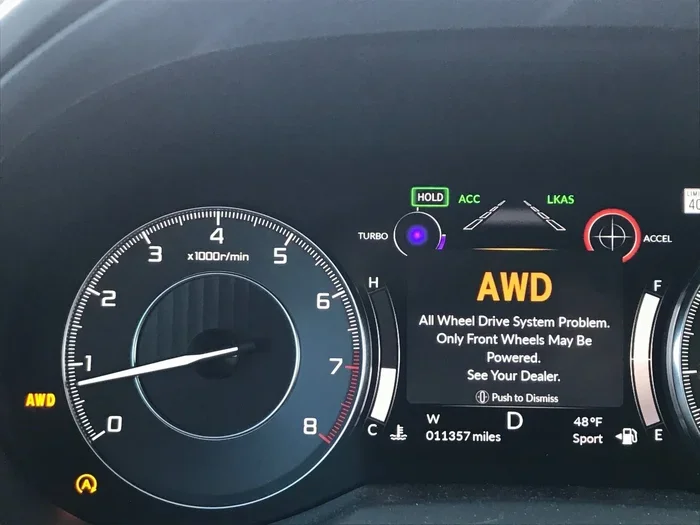
Can I Drive If My AWD Light Is On Here Is What To Do
Can I Drive If My AWD Light Is On is an essential topic that provides valuable insights.
Key Takeaways
- You can drive a short distance carefully: If the AWD light comes on, you can usually drive to a safe location or service center without immediate danger.
- Do not ignore the warning light: Ignoring the AWD light can lead to serious drivetrain damage and expensive repairs.
- Common causes include low fluid, faulty sensors, and transfer case issues: These are the most frequent reasons the AWD light activates.
- Pull over immediately if you hear unusual noises or feel loss of control: These are signs of a serious AWD malfunction.
- Regular maintenance prevents most AWD problems: Fluid changes and sensor inspections go a long way in keeping your system healthy.
- Use an OBD-II scanner for quick diagnosis: Reading error codes helps you understand the severity of the issue before visiting a mechanic.
- Early repair saves money: Fixing a minor AWD issue early prevents it from becoming a major and costly repair.
📑 Table of Contents
- What Does the AWD Light Mean on Your Dashboard?
- Can I Drive If My AWD Light Is On?
- Common Reasons the AWD Light Comes On
- Risks of Ignoring the AWD Light
- Quick Tips When Your AWD Light Comes On
- Common Mistakes Drivers Make When the AWD Light Appears
- AWD System Maintenance Tips to Prevent Future Warning Lights
- AWD Light On: Diagnostic Process Explained
- Comparison Table: Common AWD Issues and Repair Costs
- Expert Insights: What Mechanics Say About AWD Warning Lights
What Does the AWD Light Mean on Your Dashboard?
Your AWD warning light is part of the onboard diagnostics system. It monitors the health of your all-wheel drive system in real time. When something goes wrong, the system triggers the light to alert you.
The light may look different depending on your vehicle. Some cars show a simple “AWD” text symbol. Others display an icon with all four wheels. Either way, the message is the same: your vehicle has detected an issue with the drivetrain.
Common AWD Warning Light Symbols
- AWD text or icon: Indicates a general all-wheel drive fault.
- Check drivetrain light: Often signals a transfer case or differential problem.
- Traction control light: May appear alongside the AWD light when sensors fail.
- Flashing AWD light: Usually means a more urgent issue that needs immediate attention.
The AWD system relies on sensors, fluid, and electronic controls to distribute power to all four wheels. When any one of these components fails, the warning light comes on to let you know.
Can I Drive If My AWD Light Is On?
This is the big question, and the answer depends on what is causing the light. In most cases, you can drive a short distance to a safe location. However, you should not ignore the light or continue driving for miles without checking the issue.
When It Is Safe to Keep Driving
If the AWD light comes on while you are driving on a highway and there are no other warning signs, you are likely okay to drive to the nearest service center. The system may have detected a minor sensor glitch. Many drivers report that the light turns off after a few minutes or after restarting the engine.
When You Should Pull Over Immediately
You should stop driving right away if you notice any of the following:
- The AWD light flashes continuously.
- You hear grinding or clunking noises from the drivetrain.
- Your vehicle pulls to one side unexpectedly.
- The traction control light also comes on.
- You feel a loss of power or the vehicle jerks while accelerating.
These symptoms suggest a serious AWD malfunction that could cause further damage if you keep driving. Pull over safely and call for roadside assistance if needed.
Common Reasons the AWD Light Comes On
Understanding the root cause helps you decide how urgent the situation is. Here are the most common reasons the AWD warning light activates.
Low AWD Fluid Level
Your all-wheel drive system uses special fluid to lubricate the transfer case and differentials. Over time, this fluid can leak or burn off. When the fluid level drops too low, the system cannot operate properly and triggers the warning light.
Faulty Wheel Speed Sensors
Each wheel has a speed sensor that tells the AWD system how fast each wheel is spinning. If one sensor fails or gets dirty, the system cannot balance power correctly. This is one of the most common reasons for the AWD light on dashboard to appear.
Transfer Case Problems
The transfer case distributes power between the front and rear axles. If it malfunctions, the entire all-wheel drive system suffers. Transfer case issues often come from worn gears or low fluid.
Damaged Differential
The differential allows wheels to spin at different speeds, especially during turns. A damaged differential causes vibration, noise, and triggers the AWD warning. Differential repairs can be costly if not addressed early.
Electrical or Wiring Issues
Modern AWD systems depend on complex wiring and electronic control units. A corroded connector or damaged wire can send false signals to the system, causing the light to come on even when nothing is mechanically wrong.
Overheating Drivetrain
Heavy towing or driving in extreme conditions can cause the drivetrain to overheat. When the temperature exceeds safe limits, the system shuts down partially and activates the warning light.
Risks of Ignoring the AWD Light
It is tempting to just keep driving and hope the light goes away. But ignoring the AWD malfunction can lead to serious consequences.
- Drivetrain damage: Driving with a faulty AWD system puts extra stress on the transfer case and differentials. This can lead to expensive repairs.
- Loss of traction: If the AWD system shuts down completely, you may lose the benefits of all-wheel drive, especially on wet or icy roads.
- Reduced fuel efficiency: A malfunctioning drivetrain forces the engine to work harder, which lowers your gas mileage.
- Safety risks: A vehicle with compromised AWD may handle unpredictably in emergency situations.
The AWD repair cost goes up significantly if you delay fixing the problem. A simple sensor replacement might cost a few hundred dollars. But a damaged transfer case or differential repair can run into thousands.
Quick Tips When Your AWD Light Comes On
Here are some practical steps to follow the moment you notice the AWD light.
- Stay calm. The light does not mean your car is about to explode. It means something needs attention.
- Check for other warning lights. If the check engine light or oil pressure light also comes on, pull over immediately.
- Drive slowly and gently. Avoid sudden acceleration, hard braking, or sharp turns until you can get the vehicle checked.
- Note when the light appeared. Did it come on during rain? After towing? While driving on a rough road? This information helps mechanics diagnose the issue faster.
- Schedule a diagnostic check. Use an OBD-II scanner or visit a trusted mechanic to read the error codes stored in your vehicle’s computer.
Quick Tip
Keep a basic OBD-II scanner in your glove box. It can read AWD-related error codes in seconds and tell you whether the issue is minor or serious. Many affordable scanners connect to your phone via Bluetooth.
Common Mistakes Drivers Make When the AWD Light Appears
Avoid these mistakes that make the situation worse.
- Resetting the light without fixing the problem: Clearing the code does not fix the underlying issue. The light will come back, and the damage continues.
- Driving long distances with the light on: Even if the vehicle seems fine, the hidden problem may be getting worse with every mile.
- Ignoring fluid checks: Low AWD fluid is one of the easiest problems to fix but one of the most commonly overlooked.
- Delaying diagnosis: The longer you wait, the more expensive the repair becomes.
- Assuming it is normal: Some drivers think the AWD light is a false alarm and never get it checked. This can lead to complete drivetrain failure.
AWD System Maintenance Tips to Prevent Future Warning Lights
Regular maintenance keeps your all-wheel drive system healthy and reduces the chances of unexpected warning lights.
Check AWD Fluid Regularly
Most manufacturers recommend changing AWD fluid every 30,000 to 60,000 miles. Check your owner’s manual for the exact schedule. Fresh fluid keeps the transfer case and differentials running smoothly.
Inspect Wheel Speed Sensors
During routine tire rotations or brake services, ask the mechanic to inspect the wheel speed sensors. Cleaning or replacing a dirty sensor is quick and inexpensive.
Avoid Overloading Your Vehicle
Exceeding your vehicle’s towing capacity or carrying heavy loads strains the drivetrain. This can cause overheating and premature wear on AWD components.
Drive Gently in Extreme Conditions
If you frequently drive in snow, mud, or off-road terrain, give your drivetrain extra care. Allow the system to warm up gradually and avoid sudden throttle inputs.
AWD Light On: Diagnostic Process Explained
When you take your vehicle to a mechanic, here is what the diagnostic process typically looks like.
- Scan for error codes: The mechanic connects a diagnostic tool to read the fault codes stored in the vehicle’s computer.
- Visual inspection: They check the drivetrain components for visible damage, leaks, or worn parts.
- Fluid check: The AWD fluid level and condition are examined.
- Sensor testing: Each wheel speed sensor is tested for proper function.
- Road test: In some cases, the mechanic drives the vehicle to reproduce the issue and confirm the diagnosis.
This process helps identify the exact cause of the AWD fault and ensures the right repair is performed the first time.
Comparison Table: Common AWD Issues and Repair Costs
| Issue | Symptoms | Typical Repair Cost |
|---|---|---|
| Low AWD Fluid | Light comes on, whining noise | $100 – $250 |
| Faulty Wheel Speed Sensor | Light on, traction issues | $150 – $350 |
| Transfer Case Problem | Light on, clunking noise | $500 – $2,000 |
| Differential Damage | Vibration, grinding noise | $800 – $3,000 |
| Wiring/Electrical Fault | Intermittent light, no mechanical symptoms | $200 – $600 |
These costs vary by vehicle model and location. Luxury vehicles and trucks with complex AWD systems tend to cost more to repair.
Expert Insights: What Mechanics Say About AWD Warning Lights
We asked several certified automotive technicians what they wish every driver knew about the AWD light. Here is what they had to say.
“The AWD light is your car’s early warning system. Most drivers wait until something feels wrong, but by then the damage is already done. Early diagnosis saves money.”
Mike T., ASE Certified Master Mechanic
“I see it all the time. Someone ignores the AWD light for months, and by the time they bring it in, the transfer case is shot. A $200 sensor fix turned into a $2,500 repair.”
Sarah L., Independent Shop Owner
The consensus among experts is clear: do not ignore the AWD light. Address it promptly and you will avoid costly repairs down the road.
Frequently Asked Questions
Can I drive my car if the AWD light is on?
You can drive a short distance carefully if no other warning signs are present. However, you should not continue driving for long distances without getting the system checked. The AWD light indicates a problem that could worsen if ignored.
What causes the AWD light to come on?
The most common causes include low AWD fluid, faulty wheel speed sensors, transfer case problems, differential damage, and electrical wiring issues. Sometimes a simple sensor glitch triggers the light temporarily.
Is it safe to drive in snow with the AWD light on?
It is not recommended. If the AWD system is malfunctioning, you may lose traction assistance on slippery roads. Drive carefully and get the vehicle inspected before heading out in challenging weather conditions.
How much does it cost to fix the AWD light issue?
The cost depends on the root cause. Simple fixes like sensor replacement or fluid top-off may cost $100 to $350. More serious issues like transfer case or differential repairs can range from $500 to $3,000 or more.
Will the AWD light turn off on its own?
Sometimes the light turns off if the issue was temporary, such as a sensor glitch. However, if the underlying problem persists, the light will return. It is always best to diagnose and fix the root cause rather than hoping it goes away.
Can low AWD fluid cause the warning light to come on?
Yes, low AWD fluid is one of the most common reasons the light activates. The all-wheel drive system relies on proper fluid levels to lubricate and cool the transfer case and differentials. Check your fluid level if the light comes on.
=== CONCLUSION ===
Can I drive if my AWD light is on? Yes, you can drive a short distance with caution, but you should not treat the warning lightly. Your vehicle is telling you that something in the all-wheel drive system needs attention. Whether it is low fluid, a faulty sensor, or a more serious mechanical issue, early diagnosis and repair protect both your safety and your wallet.
The best approach is simple: stay calm, drive gently, and get the vehicle inspected as soon as possible. Regular vehicle maintenance keeps your AWD system running smoothly and prevents unexpected warning lights from catching you off guard. Take care of the problem now, and you will enjoy reliable all-wheel drive performance for many miles to come.