8 Channel Car Amplifier Tips to Supercharge Your Ride
An 8 channel car amplifier transforms your vehicle’s audio system into a concert-worthy experience. This guide covers everything from choosing the right amp to installation tips and sound-tuning tricks. You will learn how to get the most power, clarity, and performance from your 8 channel amplifier setup.
You love your car. You drive it every day. But something feels off with the sound system. The factory stereo just does not cut it anymore. Music sounds flat. Bass is weak. Voices get muddy at higher volumes.
This is where an 8 channel car amplifier changes everything. It pushes power to every speaker in your vehicle. It brings clarity to vocals. It adds deep, rich bass. It turns a basic audio setup into a true listening experience.
Whether you are a casual listener or a car audio enthusiast, this guide has you covered. We will walk you through everything you need to know. From choosing the right amp to installation tips and sound tuning. By the end, you will know exactly how to supercharge your ride with an 8 channel amplifier.
Let us dive in.
Key Takeaways
- More Channels, More Control: An 8 channel car amplifier lets you power all speakers and subwoofers independently for a balanced sound.
- Match Power to Speakers: Always check RMS ratings to avoid blowing your speakers or underperforming.
- Proper Installation Matters: Correct wiring, grounding, and placement make a huge difference in sound quality.
- Bridging Opens New Options: You can bridge channels to power a single subwoofer with more punch.
- Avoid Common Mistakes: Skipping fuse checks, poor grounding, and mismatched impedance cause most problems.
- Sound Tuning Is Key: Use built-in crossovers and EQ settings to fine-tune your audio experience.
📑 Table of Contents
- What Is an 8 Channel Car Amplifier and Why Do You Need One?
- How to Choose the Right 8 Channel Amplifier for Your Car
- Installation Tips for Your 8 Channel Car Amplifier
- Getting the Best Sound from Your 8 Channel Car Amplifier
- Common Mistakes to Avoid with 8 Channel Amplifiers
- Top Benefits of Upgrading to an 8 Channel Car Amplifier
- How to Maintain Your 8 Channel Amplifier for Long-Lasting Performance
- Conclusion
What Is an 8 Channel Car Amplifier and Why Do You Need One?
An 8 channel amplifier is a device that boosts the audio signal from your head unit or factory stereo. It takes that weak signal and makes it stronger. Then it sends that power to up to eight speakers at once.
Most factory car stereos come with small, weak built-in amplifiers. They power four speakers at best. The sound is often distorted at higher volumes. You lose detail in the highs. The bass disappears entirely.
An external amplifier solves all of this. It gives each speaker its own dedicated power channel. This means every speaker gets clean, distortion-free sound. The result is a much more balanced and immersive audio experience.
How Does an 8 Channel Amp Work?
Think of your car’s audio system like a plumbing system. The head unit is the faucet. It produces a small signal. The amplifier is the pump. It increases the signal strength. The speakers are the pipes. They turn that electrical signal into sound.
An 8 channel amplifier has eight separate output channels. Each channel can be assigned to a different speaker. You can power two front door speakers, two rear door speakers, two tweeters, and two mid-range speakers. Or you can bridge some channels to power a subwoofer with more force.
This flexibility is what makes an 8 channel car amplifier so popular. You are not stuck with a one-size-fits-all setup. You can customize every aspect of your car’s sound.
Who Benefits Most from an 8 Channel Amplifier?
Several types of car owners benefit from adding an 8 channel amp to their system:
- Families who love road trips: Everyone in the car gets great sound, front and back.
- Music enthusiasts: You hear every instrument, every vocal detail, every beat.
- Car audio hobbyists: You want full control over your sound system components.
- Commuters: Even your daily drive feels more enjoyable with better audio quality.
If any of these sound like you, an 8 channel amplifier is a smart investment. It brings your car’s audio to a whole new level.
How to Choose the Right 8 Channel Amplifier for Your Car
Not all amplifiers are created equal. There are many options on the market. Choosing the right one can feel overwhelming. But it does not have to be.
Here are the key factors to consider when shopping for an 8 channel car amplifier.
Power Output and RMS Ratings
Power is measured in watts. But not all watts are the same. You need to look at RMS power, which stands for Root Mean Square. RMS power tells you the continuous power an amplifier can deliver without distortion.
Peak power is the maximum burst of power. It looks impressive on paper. But RMS power is what actually matters for everyday listening.
To choose the right amplifier, match the RMS rating to your speakers. If your speakers handle 50 watts RMS each, and you have eight speakers, you need at least 400 watts RMS total. This ensures your speakers get enough power without being overwhelmed.
Signal-to-Noise Ratio
The signal-to-noise ratio, or SNR, measures how clean the audio signal is. A higher SNR means less background noise and static. Look for an amplifier with an SNR of 100 dB or higher.
This is one of the most overlooked specs when buying an amplifier. A high SNR makes a noticeable difference in sound clarity. You hear the music, not the hiss.
Amplifier Class: A, AB, or D?
Amplifiers come in different classes. Each class has its own strengths:
- Class A: Offers excellent sound quality but runs hot and uses more power.
- Class AB: A good balance of sound quality and efficiency. Very popular for car audio.
- Class D: Highly efficient and runs cooler. Great for longer drives and compact installations.
For most car audio setups, Class AB or Class D amplifiers are the best choice. Class AB gives you rich, warm sound. Class D gives you efficiency and compact size.
Size and Fit
Not every amplifier fits every car. Measure your available space under the dash or in the trunk. Some amplifiers are compact and fit easily behind the seat. Others are larger and need more room.
Make sure to check the dimensions before you buy. A tight fit can cause overheating issues. Give your amplifier some breathing room.
Features and Connectivity
Modern amplifiers come with useful features. Look for built-in crossovers, bass boost controls, and remote turn-on wires. Some models even include Bluetooth or DSP processing.
These features make installation easier and sound tuning more precise. They add real value to your audio system.
| Feature | Why It Matters |
|---|---|
| Built-in Crossovers | Filters frequencies to protect speakers and improve clarity |
| Bass Boost | Enhances low-end frequencies for deeper bass |
| Remote Turn-On Wire | Automatically powers the amp when the car starts |
| DSP Processing | Adjusts sound timing and equalization for better imaging |
| High-Level Inputs | Allows easy connection to factory stereos without a harness |
Installation Tips for Your 8 Channel Car Amplifier
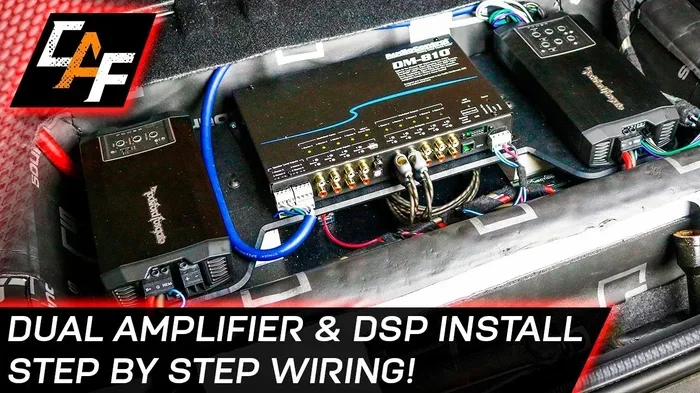
Installing an amplifier might seem intimidating. But with the right approach, it is very doable. Many car owners install their own amplifiers. You can too, with a little patience and the right tools.
Step-by-Step Installation Guide
Follow these steps for a smooth installation process:
- Choose your mounting location. Find a spot near the battery and away from heat sources. The trunk or under a seat works well.
- Run the power wire. Use a thick gauge wire (usually 4AWG or 8AWG) from the battery to the amplifier. Keep it away from exhaust pipes and moving parts.
- Install the fuse. Place a fuse within 18 inches of the battery. This protects your amplifier and wiring from short circuits.
- Ground the amplifier. Connect the ground wire to a clean, bare metal point on the car chassis. Sand off any paint for a solid connection.
- Connect the remote turn-on wire. This wire tells the amplifier to turn on when you start the car.
- Run the RCA cables. These carry the audio signal from your head unit to the amplifier. Keep them away from power wires to avoid interference.
- Connect speaker wires. Run wires from the amplifier to each speaker. Make sure positive and negative connections are correct.
- Test the system. Turn on the car and the amplifier. Play music at low volume first. Check all channels for sound and any unusual noise.
Quick Tips for a Clean Installation
- Use zip ties to organize wires neatly. This prevents rattles and keeps things looking clean.
- Use rubber grommets when running wires through holes. This protects the wires from chafing.
- Label your wires before you disconnect anything from the factory system.
- Double-check all connections before powering on. A loose wire can cause damage.
Common Installation Mistakes to Avoid
Even experienced installers make mistakes. Here are some common ones to watch out for:
- Using too thin of wire: Thin wires cause voltage drop and reduce amplifier performance.
- Skipping the fuse: No fuse means risk of fire or damage to your electrical system.
- Poor grounding: A bad ground causes buzzing, humming, and poor sound quality.
- Running signal and power wires together: This creates electromagnetic interference and static noise.
- Overlooking impedance matching: Mismatched impedance can damage your amplifier or speakers.
Avoid these mistakes, and your installation will go smoothly. Your 8 channel car amplifier will perform at its best from day one.
Getting the Best Sound from Your 8 Channel Car Amplifier
Installation is only half the battle. Tuning your amplifier is what brings the magic. A properly tuned amplifier makes your music come alive.
Understanding Crossovers
A crossover splits audio frequencies between different speakers. Tweeters handle high frequencies. Mid-range speakers handle mid frequencies. Subwoofers handle low frequencies.
Your amplifier’s built-in crossover lets you set the exact frequency split. This ensures each speaker only plays the frequencies it is designed for. The result is cleaner, more accurate sound.
For example, set your tweeters to receive frequencies above 3,000 Hz. Set your subwoofer to receive frequencies below 150 Hz. Leave your mid-range speakers in the middle range.
Setting the Gain Correctly
The gain control on your amplifier sets the input sensitivity. Setting it too high causes distortion and can damage speakers. Setting it too low wastes amplifier potential.
Here is how to set the gain properly:
- Turn the gain all the way down.
- Set your head unit volume to about 75%.
- Play music you know well at a moderate volume.
- Slowly increase the gain until you hear slight distortion.
- Back the gain down just slightly until distortion disappears.
This method ensures you are getting the most power without clipping or distortion.
Using Bass Boost and EQ
Most amplifiers include bass boost controls. These enhance low-frequency output for deeper bass. Use bass boost sparingly. Too much bass boost distorts the sound and strains your subwoofer.
If your amplifier has an EQ section, use it to fine-tune your sound. Boost certain frequencies to match your music preferences. Cut frequencies that cause muddiness or harshness.
Expert Insight: Why Sound Tuning Makes All the Difference
Many people buy a great amplifier but never tune it. They wonder why the sound does not improve much. The truth is, a properly tuned amplifier sounds dramatically better than a factory system.
Take the time to adjust your crossovers, gain, and EQ. You will hear the difference immediately. It is like going from standard definition to high definition in your ears.
Common Mistakes to Avoid with 8 Channel Amplifiers
Even the best amplifier can cause problems if you make mistakes. Here are some common pitfalls and how to avoid them.
Mismatching Amplifier and Speaker Power
One of the biggest mistakes is buying an amplifier that does not match your speakers. If your amplifier is too powerful, it can blow your speakers at high volumes. If it is too weak, you will not get the full benefit of your speakers.
Always check the RMS power rating of your speakers. Then choose an amplifier that delivers power within that range. A slight mismatch in either direction is okay. But staying close to the rated power is the safest approach.
Ignoring Impedance Requirements
Impedance is measured in ohms. Each speaker has an impedance rating, usually 2, 4, or 8 ohms. Your amplifier is designed to work with specific impedance loads.
If you wire speakers in a way that changes the total impedance, it can overload the amplifier. Check your amplifier manual for the recommended impedance per channel. Make sure your speaker wiring matches those requirements.
Neglecting Regular Maintenance
Your amplifier needs care just like any other car component. Check the connections periodically. Clean any dust or debris from the amplifier’s vents. Make sure the grounding connection remains tight and corrosion-free.
Simple maintenance keeps your amplifier performing well for years. It also prevents common issues like buzzing, overheating, or sudden power loss.
Top Benefits of Upgrading to an 8 Channel Car Amplifier
Still not sure if an 8 channel amplifier is worth it? Here are the top benefits that make it a game-changer for any car audio system.
1. Full Vehicle Audio Coverage
With eight channels, you can power every speaker in your car independently. Front and rear. Left and right. Every seat in the vehicle gets the same high-quality audio experience.
This is especially great for families or anyone who regularly carries passengers. Everyone enjoys the music, not just the person in the driver’s seat.
2. Improved Sound Clarity and Detail
Factory stereos compress audio to save space and cost. An external amplifier restores that lost detail. You hear subtle nuances in vocals, instruments, and background sounds that you never noticed before.
Music sounds more three-dimensional. Instruments separate from each other. Vocals become crisp and clear. This level of detail is what separates a good sound system from a great one.
3. More Power for Louder, Cleaner Volume
An 8 channel amplifier gives you plenty of headroom. You can turn up the volume without distortion. The sound stays clean and controlled even at high volumes.
This is perfect for long road trips, road trips with friends, or simply enjoying your favorite music during your commute.
4. Better Speaker Longevity
When speakers get clean, consistent power from a dedicated amplifier, they last longer. Factory stereos often push irregular power that stresses speakers over time.
An amplifier delivers steady, controlled power. This reduces wear and tear on your speakers. Your audio investment pays off for years to come.
5. Versatility for Future Upgrades
An 8 channel amplifier gives you room to grow. You can add more speakers, a subwoofer, or upgrade components without replacing the amplifier.
This makes it a smart long-term investment for anyone serious about car audio. Start with a basic setup and expand over time.
How to Maintain Your 8 Channel Amplifier for Long-Lasting Performance
Your amplifier is a significant investment. Proper maintenance keeps it running strong for years.
Regular Inspection
Every few months, inspect your amplifier and all connections. Look for loose wires, corrosion, or frayed insulation. Tighten any connections that feel loose.
Check the amplifier’s ventilation. Make sure nothing is blocking airflow around the unit. Overheating is one of the most common causes of amplifier failure.
Keep It Clean
Dust and debris can build up on and around your amplifier. Use a soft brush or compressed air to gently clean the vents and exterior. Avoid using liquids or harsh chemicals.
Protect Against Moisture
Moisture is the enemy of electronics. If you live in a rainy or humid climate, make sure your amplifier is mounted in a dry area. Use protective covers if needed.
Taking care of your amplifier pays off. You enjoy great sound for many years without costly repairs or replacements.
Conclusion
An 8 channel car amplifier is one of the best upgrades you can make to your vehicle. It brings power, clarity, and versatility to your car’s audio system. Whether you are driving across town or across the country, great music makes every trip better.
Choose the right amplifier for your setup. Install it correctly. Tune it to get the best sound. Avoid common mistakes. Maintain it regularly.
Follow these tips and your car will sound better than ever. You will wonder how you ever drove without it. Your ears will thank you every time you start the engine.
Now it is your turn. What are you waiting for? Take your car audio to the next level with an 8 channel car amplifier today.
Frequently Asked Questions
What does an 8 channel amplifier power?
An 8 channel amplifier can power up to eight speakers independently. You can use it for front and rear door speakers, tweeters, mid-range speakers, and even a subwoofer. The flexibility lets you customize your entire car audio system.
How much power does an 8 channel amplifier need?
Power depends on your speakers. Check the RMS rating of each speaker and add them together. For example, if each of eight speakers handles 50 watts RMS, you need at least 400 watts RMS total from your amplifier. Always match the amplifier power to your speakers.
Can I bridge channels on an 8 channel amplifier?
Yes, many 8 channel amplifiers allow you to bridge channels. Bridging combines two channels into one with more power. This is useful for powering a single subwoofer with extra punch. Check your amplifier manual for bridging instructions.
Is it hard to install an 8 channel amplifier?
Installation is manageable for most car owners with basic mechanical skills. You need to run power wires, ground wires, RCA cables, and speaker wires. If you are not comfortable with electrical work, a professional installer can help. Many shops offer affordable installation services.
What is the best placement for an 8 channel amplifier?
The trunk is the most common location. It keeps the amplifier away from heat and passenger areas. Under a seat also works if space allows. The key is to mount it securely, ensure proper ventilation, and keep wires organized and protected.
How do I prevent my 8 channel amplifier from overheating?
Make sure the amplifier has enough airflow around it. Do not mount it in a sealed or enclosed space. Keep it away from heat sources like exhaust pipes. Also, match the amplifier power to your speakers to avoid overworking the unit.