What Does 3500 Mean on a Truck and Why It Really Matters
So what does 3500 mean on a truck? It refers to the truck’s weight class and payload rating within its model lineup. The number 3500 signals a heavy-duty truck built for serious towing and hauling. Understanding this designation helps you pick the right truck for your needs and avoid overloading.
Have you ever stood in a dealership or scrolled through truck listings and wondered, what does 3500 mean on a truck? You see numbers like 1500, 2500, and 3500 slapped on different models, and it can feel confusing. The good news is that this number system is actually pretty straightforward once you break it down.
The number 3500 tells you a lot about a truck’s capabilities. It tells you how much weight the truck can safely carry. It tells you how much it can tow. And it tells you what kind of work the truck was built to do. In this article, we will walk through everything you need to know about the 3500 designation. We will cover what it means, how it compares to other ratings, and why it really matters when you are shopping for your next truck.
Whether you are a contractor hauling tools to a job site or a family pulling a fifth-wheel camper across the country, understanding the 3500 label helps you make a smarter buying decision. Let us dive in.
Key Takeaways
- The 3500 designation means a heavy-duty truck: It sits above 1500 and 2500 in the truck rating system and offers the highest payload and towing capacity.
- GVWR is the key metric: Gross Vehicle Weight Rating defines the maximum safe weight your truck can carry, including cargo and passengers.
- 3500 trucks come in many models: From the Ford F-350 to the Ram 3500 and Chevy Silverado 3500, each offers unique features for heavy-duty work.
- Not everyone needs a 3500: If you tow small trailers or carry light loads, a 2500 or even a 1500 may be a better fit.
- Diesel engines are common in 3500 trucks: They provide the torque and fuel efficiency needed for heavy towing and hauling tasks.
- Axle ratio and suspension matter: These components work with the 3500 rating to handle heavy loads safely and efficiently.
- Know your payload before you buy: Check the truck’s payload capacity and towing specs to match them to your real-world needs.
📑 Table of Contents
What Does 3500 Mean on a Truck? The Simple Answer
Understanding Truck Numbering Systems
Truck manufacturers use a numbering system to classify their vehicles by capability. The numbers 1500, 2500, and 3500 represent different weight classes within a truck lineup. The higher the number, the more the truck can handle.
So what does 3500 mean on a truck in simple terms? It means the truck belongs to the highest weight class in its model range. A 3500 truck has a higher Gross Vehicle Weight Rating (GVWR) than a 2500 or 1500 version of the same model. GVWR is the maximum total weight the truck can safely be, including the vehicle itself, passengers, cargo, and any trailer weight.
Think of it like this. A 1500 truck is like a light backpack. A 2500 truck is like a medium backpack. A 3500 truck is like a heavy-duty backpack built for long hikes with heavy gear. The number tells you the capacity at a glance.
The 3500 designation also signals that the truck has stronger components. These include heavier-duty suspension, stronger axles, larger brakes, and more robust frames. All of these parts work together to handle the extra weight safely.
The Difference Between 3500, 2500, and 1500 Trucks
Half-Ton vs Three-Quarter-Ton vs One-Ton
You may hear people refer to trucks using old-school terms like half-ton, three-quarter-ton, and one-ton. These terms come from the truck’s payload capacity in hundreds of pounds. Here is how they break down:
- 1500 trucks are called half-ton trucks. They are great for everyday driving, light hauling, and occasional towing.
- 2500 trucks are called three-quarter-ton trucks. They offer more power and capacity than 1500 models.
- 3500 trucks are called one-ton trucks. They are built for the heaviest towing and hauling jobs.
These labels are not perfectly accurate today. Modern 1500 trucks can carry much more than 500 pounds. But the naming convention stuck around because it is easy to remember and compare.
When you ask what does 3500 mean on a truck, the answer is that it is the one-ton, heavy-duty option in a truck family. It sits at the top of the payload and towing ladder for that brand and model.
Key Differences at a Glance
Here is a quick comparison of the three main truck classes to help you see the differences clearly:
- 1500 (Half-Ton): Best for daily driving, commuting, and light loads. Towing capacity typically ranges from 5,000 to 13,000 pounds depending on the engine and configuration.
- 2500 (Three-Quarter-Ton): Great for towing travel trailers, boats, and mid-sized equipment. Towing capacity usually ranges from 14,000 to 19,000 pounds.
- 3500 (One-Ton): Built for serious work. Towing capacity can reach 35,000 pounds or more with the right setup. Payload capacity is also the highest in the lineup.
The jump from 2500 to 3500 is significant. It is not just a small upgrade. It is a major step up in capability that changes what you can do with the truck.
Towing and Payload: What the 3500 Rating Actually Covers
Gross Vehicle Weight Rating Explained
Now let us talk numbers. When you see what does 3500 mean on a truck, the real magic happens in the towing and payload specs. These two numbers matter most to most truck buyers.
Towing capacity is how much weight the truck can pull behind it on a trailer. A 3500 truck can typically tow far more than a 2500 or 1500. For example, the Ford F-350 Super Duty can tow up to 37,000 pounds when properly equipped. The Ram 3500 can tow up to 37,100 pounds. The Chevy Silverado 3500 can tow up to 36,000 pounds.
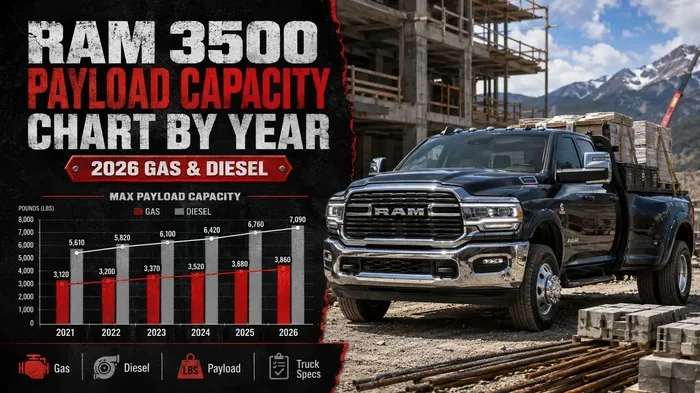
Payload capacity is how much weight the truck can carry in its bed and cabin combined. This includes passengers, gear, tools, and anything else inside the truck. A 3500 truck often has a payload capacity of over 4,000 pounds, sometimes reaching close to 7,000 pounds depending on the configuration.
Both numbers come from the truck’s GVWR. The manufacturer calculates the GVWR based on the strength of the frame, suspension, brakes, tires, and engine. The 3500 trucks are built with beefier versions of all these parts.
Why the Axle Ratio Matters
One thing that often gets overlooked is the axle ratio. The axle ratio affects how much torque reaches the wheels and how the truck performs when towing heavy loads. A higher axle ratio, like 4.10 or 4.56, gives the truck more pulling power. This is common in 3500 trucks designed for heavy towing.
A lower axle ratio, like 3.31 or 3.42, is better for fuel economy during everyday driving. When shopping for a 3500 truck, pay attention to the axle ratio. It makes a real difference in how the truck handles its workload.
Common Trucks With the 3500 Designation
Popular Models and Their Specs
Almost every major truck manufacturer offers a 3500 model. Here are some of the most popular ones you will find on the road and at dealerships:
- Ford F-350 Super Duty: One of the most popular heavy-duty trucks in America. It comes with powerful gas and diesel engine options. The diesel engine is a favorite among contractors and serious towers.
- Ram 3500: Known for its smooth ride and comfortable cabin, even in the heavy-duty class. The Ram 3500 offers strong towing numbers and a user-friendly interior.
- Chevrolet Silverado 3500: A solid choice with strong towing and payload capacity. The Silverado 3500 also offers a diesel engine option for those who need serious torque.
- GMC Sierra 3500: Very similar to the Silverado 3500 but with a slightly more premium feel. Great for buyers who want heavy-duty capability with extra comfort features.
- Toyota Tundra 3500 (in some markets): Toyota has expanded the Tundra lineup to include heavier-duty configurations in certain regions, offering reliability with strong towing power.
Each of these trucks carries the 3500 badge for a reason. They are all built to handle the toughest jobs and the heaviest loads. The differences come down to engine options, interior quality, towing features, and price.
What Makes a 3500 Truck Different Under the Hood
Beyond the badge, 3500 trucks have several physical differences that set them apart. Here are some of the key features:
- Stronger frame: The frame is thicker and more rigid to handle heavy loads without bending or flexing.
- Heavy-duty suspension: The suspension system includes larger springs, stronger shock absorbers, and sometimes helper springs or air bags.
- Larger brakes: Bigger brakes are needed to stop a loaded truck safely. 3500 trucks come with upgraded brake systems.
- Taller tires: Many 3500 trucks use larger diameter tires that provide more stability and load-carrying ability.
- Diesel engine options: While not all 3500 trucks come with diesel, most offer it as an option. Diesel engines deliver more torque at lower RPMs, which is ideal for towing heavy loads.
All of these features work together to make the 3500 truck a capable workhorse. They are not just cosmetic upgrades. They are engineering choices that directly affect performance and safety.
Who Really Needs a 3500 Truck?
Work, Hauling, and Everyday Use
Here is a question worth asking yourself: do you really need a 3500 truck? The answer depends on what you plan to do with it. Let us look at some common scenarios where a 3500 makes sense.
Contractors and tradespeople often need a 3500 truck. They carry heavy tools, equipment, and materials to job sites all day. The high payload capacity means they can load up everything they need without worrying about exceeding the truck’s limits. A plumber, electrician, or HVAC technician who tows a heavy trailer full of equipment will appreciate the 3500’s strength.
Farmers and ranchers also benefit from the 3500 designation. They need to haul feed, equipment, and livestock. The diesel engine options in many 3500 trucks provide the torque and durability needed for these demanding tasks.
RV owners who tow large fifth-wheel or gooseneck trailers often choose a 3500 truck. These trailers can weigh 15,000 pounds or more. A 3500 truck has the towing capacity and stability to handle them safely on the highway.
Everyday drivers who just commute to work and occasionally haul a few bags of mulch probably do not need a 3500. A 1500 or 2500 truck would be a better fit for those needs. A 3500 truck is more expensive to buy, costs more to fuel, and can be harder to park and maneuver in tight spaces.
Matching the Truck to Your Needs
The key to buying the right truck is matching its capabilities to your actual use. Here are some quick tips:
- Make a list of what you haul: Write down the heaviest loads you expect to carry or tow. Include the weight of the trailer, cargo, and passengers.
- Check the payload and towing numbers: Look at the truck’s official specs. Make sure the 3500’s capacity exceeds your needs with some safety margin.
- Consider fuel costs: 3500 trucks, especially those with diesel engines, use more fuel than lighter-duty models. Factor this into your long-term budget.
- Test drive before buying: A 3500 truck feels different from a 1500. Test drive both if possible to see which one feels right for you.
When you understand what does 3500 mean on a truck in real-world terms, you can make a confident choice that fits your lifestyle and budget.
Quick Tips and Common Mistakes
Mistakes to Avoid When Choosing a 3500 Truck
Buying a 3500 truck is a big decision. Here are some common mistakes to avoid:
- Buying more truck than you need: This is the most common mistake. A 3500 truck costs more upfront and costs more to operate every month. If a 2500 meets your needs, save your money.
- Ignoring the payload number: Many people focus only on towing capacity and forget about payload. But payload matters just as much, especially if you carry heavy cargo in the truck bed and cabin.
- Skipping the diesel option: If you plan to tow heavy loads regularly, the diesel engine in a 3500 truck is often worth the extra cost. It provides more torque and better fuel economy under heavy loads.
- Not checking the axle ratio: The axle ratio affects towing performance and fuel economy. Make sure the truck you buy has the right axle ratio for your needs.
- Forgetting about insurance costs: Heavier trucks can cost more to insure. Get a quote before you buy so there are no surprises.
Quick Tips for Getting the Most Out of Your 3500 Truck
- Always stay under the GVWR: Overloading a truck is dangerous and can damage the frame, suspension, and brakes.
- Install a tonneau cover or bed liner: These accessories protect the truck bed and improve fuel economy slightly.
- Use the right hitch: A 3500 truck can handle weight-distribution hitches and gooseneck setups. Make sure your hitch matches your trailer type.
- Keep up with maintenance: Heavy-duty trucks need regular maintenance to perform their best. Stay on top of oil changes, brake inspections, and tire rotations.
Why the 3500 Number Really Matters
At the end of the day, the number 3500 on a truck is more than just a label. It is a promise from the manufacturer about what the truck can handle. It tells you that the truck was engineered, tested, and built to carry heavy loads and tow big trailers safely.
When you understand what does 3500 mean on a truck, you gain confidence in your purchase. You know exactly what you are getting. You can plan your loads, choose the right engine and configuration, and avoid costly mistakes.
The 3500 designation also affects resale value. Heavy-duty trucks in good condition tend to hold their value well, especially in rural areas and among tradespeople who rely on them for work. If you buy a 3500 truck and take care of it, you will likely get a strong return when it is time to sell or trade in.
Whether you are a first-time truck buyer or you have owned trucks for years, taking the time to understand the 3500 label pays off. It helps you choose the right truck, use it safely, and get the most value for your investment.
So the next time you see a truck with a 3500 badge on it, you will know exactly what that means. It means strength, capability, and a machine built for serious work. And now you have the knowledge to decide if a 3500 truck is the right choice for you.
Frequently Asked Questions
What does the 3500 mean on a truck?
The 3500 designation indicates that the truck belongs to the highest weight class in its model lineup. It means the truck has a higher Gross Vehicle Weight Rating, stronger suspension, and greater towing and payload capacity compared to 1500 and 2500 versions of the same model.
Is a 3500 truck the same as a one-ton truck?
Yes, the 3500 truck is commonly referred to as a one-ton truck. This term comes from the old payload rating system where the number indicated how many tons the truck could carry. Today, the 3500 badge represents the heavy-duty option in most truck families.
Can a 3500 truck tow a large fifth-wheel trailer?
Absolutely. 3500 trucks are designed for heavy towing and can handle large fifth-wheel and gooseneck trailers. Most 3500 models can tow between 30,000 and 37,000 pounds depending on the engine, axle ratio, and configuration. Always check the specific towing specs for the model you are considering.
Do I need a 3500 truck for everyday driving?
Probably not. If you mainly commute, run errands, and occasionally haul light loads, a 1500 or 2500 truck will serve you better. A 3500 truck is best suited for heavy-duty work, serious towing, and hauling large or heavy cargo on a regular basis.
What is the difference between a 2500 and a 3500 truck?
The main differences are in towing capacity, payload capacity, and the strength of components like the frame, suspension, and brakes. A 3500 truck is built heavier and can handle more weight than a 2500. The 3500 also typically offers diesel engine options and higher axle ratios for maximum towing power.
Are 3500 trucks more expensive than 2500 trucks?
Yes, 3500 trucks generally cost more than their 2500 counterparts. The price difference can range from a few thousand dollars to over ten thousand dollars depending on the brand and configuration. The higher cost reflects the stronger components, heavier-duty engineering, and increased capability of the 3500 model.
=== CONCLUSION ===
So what does 3500 mean on a truck? It is the mark of a heavy-duty machine built for serious work and heavy towing. The 3500 designation tells you that the truck has the highest payload and towing capacity in its model lineup. It signals stronger frames, heavier suspension, larger brakes, and often diesel engine options that make it a powerhouse on the road and job site.
Understanding the 3500 label helps you make a smarter buying decision. You can match the truck’s capabilities to your real needs and avoid paying for more truck than you actually require. Whether you are a contractor, an RV enthusiast, or a farmer, the 3500 truck offers the strength and reliability you need to get the job done right.
Take the time to study the specs, test drive the models, and choose the configuration that fits your lifestyle. When you do, you will not just buy a truck. You will buy the right tool for the work ahead. And that is what really matters when you are shopping for a 3500 truck.