Virginia Window Tint Law Explained for All Drivers
The Virginia window tint law sets clear rules for how dark and reflective your car windows can be. Understanding these rules helps you avoid fines, pass inspections, and keep your ride comfortable. This guide covers every window, legal limits, exemptions, and tips for choosing the right tint.
Driving a car with tinted windows feels great. You get less sun glare, a cooler interior, and more privacy. But in Virginia, there are strict rules about how dark your tint can be. The Virginia window tint law sets limits on every window of your vehicle. If you go too dark, you risk a ticket, a fine, or even a failed inspection.
This guide breaks down everything you need to know. We cover the legal limits for each window, medical exemptions, fines, and tips for choosing the right car window film. Whether you drive a sedan, SUV, or van, this article has you covered. Let us help you stay on the right side of the law while keeping your ride comfortable.
Key Takeaways
- Front side windows must allow more than 50% of light in for sedans and most vehicles.
- Rear windows can be darker on sedans, but SUVs and vans have different rules.
- A medical exemption allows darker tint for those with a doctor’s note.
- Windshield tint is only legal on the top strip above the AS-1 line.
- Tint violations can cost $100 or more in fines and lead to inspection failure.
- Ceramic and non-metallic tints are safer choices that reduce heat without breaking rules.
- Keep your tint exemption certificate in the car if you have a medical exemption.
📑 Table of Contents
- What Is the Virginia Window Tint Law and Why Does It Matter?
- Legal Tint Limits for Each Vehicle Window
- Medical Exemptions and Special Tint Exceptions
- Tint Violations, Fines, and What to Expect
- Tips for Choosing Legal and High-Quality Tint
- How to Stay Compliant and Keep Your Windows Tinted Right
- Conclusion
What Is the Virginia Window Tint Law and Why Does It Matter?
The Virginia window tint law is a set of rules that governs how much light can pass through your vehicle’s windows. These rules are written in the Code of Virginia. They apply to all passenger cars, SUVs, vans, and trucks registered in the state.
The key measurement is visible light transmission, or VLT. VLT tells you what percentage of outside light gets through the glass and tint. A higher VLT means a lighter tint. A lower VLT means a darker tint. Virginia law sets specific VLT limits for each window position.
Why does this matter so much? First, tint that is too dark can reduce visibility for the driver. This makes it harder to see other cars, pedestrians, and road signs at night or in bad weather. Second, law enforcement officers need to see inside your vehicle during traffic stops. Too-dark tint can create safety concerns for police and drivers alike.
Virginia tint violation fines can range from $100 to $250 for a first offense. Repeat violations can cost even more. Beyond fines, an illegal tint can cause your vehicle to fail its annual safety inspection. That means you cannot register your car until the problem is fixed. For all these reasons, knowing the law before you tint your windows is a smart move.
Understanding VLT and Tint Darkness
Visible light transmission is the most important term in the Virginia window tint law. It is measured as a percentage. For example, a VLT of 50% means half the outside light passes through the window. A VLT of 5% means only a tiny sliver of light gets through.
Virginia law uses VLT limits to define what is legal. The state does not allow unlimited darkness on any window. Each window position has its own limit. These limits differ depending on whether you drive a sedan or a larger vehicle like an SUV or van.
Here is a quick look at the basic idea. The front side windows must let in a lot of light. The rear windows can usually be darker. The windshield has its own special rule. We will go through each one in detail below.
Legal Tint Limits for Each Vehicle Window
Virginia law treats different windows differently. The front side windows have the strictest rules. The rear windows are more flexible, especially on larger vehicles. Let us walk through the legal limits for each window position.
Front Side Windows: The Strictest Limit
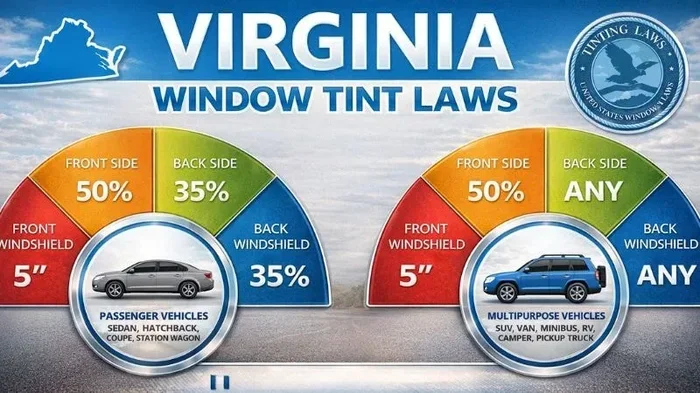
For sedans and most passenger vehicles, the front side windows must allow at least 50% of visible light to pass through. This means your tint cannot block more than half the light. This rule applies to both the driver’s side and passenger’s side windows.
The reason is simple. The front side windows are the driver’s main view of the road. Virginia wants to make sure drivers can see clearly in all conditions. If your front side windows are tinted too dark, you may not pass a safety inspection.
Quick Tip: Before you buy any aftermarket tint, ask the installer for the VLT percentage. A good installer will know the exact number and can help you choose a shade that stays legal.
Rear Side Windows and Rear Window
The rules for rear windows are more relaxed on sedans. On a sedan, the rear side windows and the rear window can be tinted to any darkness. There is no minimum VLT requirement for these windows.
However, if your rear windows are tinted, Virginia law requires dual side mirrors. This is because darker rear windows can limit your view of the sides and rear. The mirrors help compensate for the reduced visibility.
For SUVs and vans, the rules are similar. The rear side windows and rear window can be tinted as dark as you want. Dual mirrors are still required if the rear visibility is blocked.
Windshield Tint Rules
The windshield tint rules in Virginia are very specific. You cannot tint the entire windshield. The law only allows a strip of tint at the top of the windshield. This strip must be above the AS-1 line, which is the line printed or etched on most windshields by the manufacturer.
This strip cannot extend more than five inches down from the top of the windshield. It also cannot be more than 35% reflective. The purpose is to reduce sun glare without blocking the driver’s main view of the road ahead.
Common Mistake: Many people think a full windshield tint is legal because it looks cool. It is not legal in Virginia. Putting a full-width tint on your windshield will likely result in a tint ticket and a failed inspection.
Comparison: Tint Limits by Vehicle Type
| Window Position | Sedan Legal Limit | SUV / Van Legal Limit |
|---|---|---|
| Front Side Windows | 50% VLT or more | 50% VLT or more |
| Rear Side Windows | Any darkness allowed | Any darkness allowed |
| Rear Window | Any darkness allowed | Any darkness allowed |
| Windshield | Top 5 inches only, max 35% reflective | Top 5 inches only, max 35% reflective |
Expert Insight: According to the Virginia State Police, tint darkness is checked during annual safety inspections. Officers use a VLT meter to measure how much light passes through each window. If your tint is too dark, you will be told to remove or replace it before your inspection can pass.
Medical Exemptions and Special Tint Exceptions
Not everyone can tolerate standard tint levels. Some people have medical conditions that make them very sensitive to sunlight. The Virginia window tint law does allow for exceptions in these cases. This is called a medical exemption.
Who Qualifies for a Medical Exemption?
You may qualify for a tint exemption if you have a diagnosed medical condition that requires limited sun exposure. Common conditions that qualify include:
- Lupus or other autoimmune disorders that worsen with sun exposure
- Severe sun allergies or photosensitivity
- Skin cancer or a history of skin cancer treatment
- Albinism or other conditions that cause extreme light sensitivity
- Certain eye conditions that make bright light painful or dangerous
How to Get a Medical Exemption
Getting a medical exemption is a step-by-step process. You cannot just decide on your own that you need darker tint. Here is how it works:
- Visit your doctor. A licensed physician must examine you and confirm that your condition requires limited sunlight exposure.
- Get a written statement. Your doctor must provide a detailed letter explaining your condition and why darker tint is medically necessary.
- Apply to the DMV. Submit the doctor’s letter to the Virginia DMV along with a completed exemption application form.
- Receive your exemption certificate. If approved, you will receive a certificate that must be kept in the vehicle at all times.
The exemption allows for darker tint on the front side windows, which normally must stay above 50% VLT. However, even with an exemption, the tint must still be within certain limits set by the DMV. The exemption does not give you unlimited freedom to tint as dark as you want.
Important: Always carry your tint exemption certificate in your vehicle. If you are pulled over, showing this certificate proves that your tint is legal despite being darker than the standard limit.
Other Special Cases
There are a few other situations where tint rules may differ. For example, some vehicles come from the factory with tinted windows. Factory tint is measured differently than aftermarket tint. However, the same VLT limits still apply. If your factory tint plus any additional aftermarket tint drops below the legal limit, you can still get a ticket.
Also, some law enforcement vehicles and emergency vehicles are exempt from standard tint rules. These exemptions are specific to official use and do not apply to civilian vehicles.
Tint Violations, Fines, and What to Expect
Getting caught with illegal tint in Virginia is not a minor issue. The penalties can add up quickly. Here is what you need to know about tint tickets and violations.
Common Penalties for Illegal Tint
If a law enforcement officer stops you and finds your tint is too dark, you will likely receive a citation. The penalties include:
- Fine: A first offense can cost between $100 and $250. The exact amount depends on the jurisdiction and how dark the tint is.
- Inspection failure: Your vehicle will not pass its annual safety inspection. This means you cannot register the car legally.
- Fix-it ticket: In some cases, you may be given a deadline to remove or adjust the tint. If you do not fix it, the fine increases.
- Repeat offenses: Multiple violations can lead to higher fines and potential court appearances.
How Officers Check Tint Darkness
Virginia law enforcement uses a device called a VLT meter. This handheld tool measures the percentage of light that passes through a window. Officers can check your tint during a traffic stop or at a safety inspection station.
The VLT meter is very accurate. There is no guessing involved. If your tint reads below the legal limit for that window, you will be cited. This is why it is so important to know the law and choose your tint carefully before installation.
Common Mistakes That Lead to Tint Tickets
Many drivers get tint tickets because of simple mistakes. Here are the most common ones:
- Buying tint online without checking VLT: Online sellers do not always list the exact VLT percentage. You may think you are buying a legal tint, but it could be too dark.
- Tinting front windows too dark: This is the number one reason people get cited. The front side window limit of 50% VLT is strict and easy to accidentally violate.
- Tinting the full windshield: Some installers offer full windshield tint packages. This is illegal in Virginia. Only the top five inches are allowed.
- Adding tint over factory tint: If your car already has some factory tint, adding aftermarket tint can push the combined VLT below the legal limit.
- Ignoring the medical exemption process: Some people with valid medical conditions tint their windows darker without getting the exemption certificate. This leaves them vulnerable to fines.
Quick Tip: Before you get any tint installed, ask the shop to show you the VLT of the film they plan to use. A reputable installer will be happy to provide this information and help you stay legal.
Tips for Choosing Legal and High-Quality Tint
Tinting your windows can be a great investment. It reduces heat, blocks UV rays, and cuts down on sun glare. But you want to make sure you choose a tint that is both legal and high quality. Here are some practical tips to help you make the best choice.
Pick the Right Type of Tint Film
Not all tint films are the same. There are several types available on the market. Each has its own benefits and drawbacks.
- Dyed tint: This is the most affordable option. It absorbs heat and reduces glare. However, it can fade over time and may not block as much heat as other options.
- Metalized tint: This film contains tiny metallic particles that reflect heat. It is durable and effective. But it can interfere with cell phone signals and GPS.
- Carbon tint: Carbon film offers excellent heat rejection without the signal interference of metalized tint. It also has a matte finish that looks great.
- Ceramic tint: This is the top-tier option. Ceramic tint blocks the most heat and UV rays. It does not fade, does not interfere with signals, and is completely non-conductive. It is also more expensive than other options.
For most drivers in Virginia, ceramic tint or carbon tint is the best choice. These options offer strong heat rejection, which is especially helpful during hot Virginia summers. They also tend to be more durable and maintain their clarity over time.
Work with a Reputable Installer
The installer you choose matters just as much as the film you pick. A good installer will:
- Know the Virginia window tint law and help you choose a legal VLT
- Measure your windows accurately before cutting the film
- Apply the tint without bubbles, peeling, or wrinkles
- Provide a warranty on both the film and the installation
- Give you documentation of the VLT percentage for your records
Before you commit, ask for references or read online reviews. A cheap install job can lead to bubbling, peeling, and poor visibility. That means you will have to pay again to fix it. Investing in a quality installer saves money and headaches in the long run.
Consider Your Climate and Driving Habits
Virginia has hot, humid summers and mild winters. If you spend a lot of time driving, especially during the summer months, you want a tint that blocks maximum heat and UV rays. Heat rejection is a key benefit of quality tint. It keeps your car cooler and protects your skin from harmful sun exposure.
On the other hand, if you drive mostly during the day and park in shaded areas, a lighter tint may be enough. Think about your daily routine and what you need most from your tint. Then choose a film that meets those needs while staying within the legal limits.
Keep Records of Your Tint Installation
After your tint is installed, keep all the paperwork. This includes the receipt, the warranty, and documentation of the VLT percentage. If you ever get stopped by the Virginia State Police or need to prove your tint is legal during an inspection, having these records on hand can save you time and trouble.
Key Takeaway: Good tinting is about more than just looks. Choose a film that is legal, durable, and right for your driving needs. A quality installation from a trusted shop will serve you well for years.
How to Stay Compliant and Keep Your Windows Tinted Right
Once your tint is installed, your job is not done. You need to make sure it stays legal and in good condition over time. Here are some simple steps to stay compliant with the Virginia window tint law year after year.
Know Your VLT Numbers
Ask your installer for the exact VLT of each window after the tint is applied. Write these numbers down and keep them in your glove box. If you ever get stopped, you can quickly show the officer that your tint is within the legal range.
Inspect Your Tint Regularly
Over time, tint can bubble, peel, or fade. This can change the VLT of your windows. If your tint starts to deteriorate, it may no longer be legal. Check your windows every few months for signs of wear. If you notice bubbling or peeling, have it repaired or replaced promptly.
Do Not Add Tint Over Existing Tint Without Checking
If you already have tint on your windows and want to add another layer, be careful. Two layers of tint can reduce the VLT below the legal limit. Always check the combined VLT before adding another film. When in doubt, consult a professional installer.
Stay Updated on Law Changes
Laws can change. Virginia may update its tint regulations from time to time. Stay informed by checking the Virginia DMV website or asking your installer about any recent changes. Being proactive helps you avoid surprises.
Expert Insight: Many tint shops stay up to date on the latest Virginia laws. A good shop will inform you of any changes and help you adjust your tint if needed. Building a relationship with a trusted local installer is one of the best things you can do.
Conclusion
The Virginia window tint law is clear and straightforward once you understand the basics. The front side windows must stay above 50% VLT. The rear windows can be darker. The windshield can only have a small strip of tint at the top. Medical exemptions are available for those who need them. And violations can lead to fines, inspection failures, and extra costs.
By choosing the right tint film, working with a reputable installer, and keeping your records in order, you can enjoy all the benefits of tinted windows without any legal trouble. The key is to know the rules, follow them, and make informed choices.
Take the time to research your options before you tint your windows. Ask questions, check VLT percentages, and make sure your installer knows the Virginia window tint law. A little effort upfront saves you from headaches, fines, and wasted money down the road. Drive safe, stay compliant, and enjoy the comfort of properly tinted windows.
Frequently Asked Questions
What is the legal tint limit for front side windows in Virginia?
In Virginia, the front side windows on sedans and most passenger vehicles must allow at least 50% of visible light to pass through. This means the tint cannot block more than half the light. This rule applies to both the driver’s and passenger’s side front windows.
Can I tint my rear windows as dark as I want in Virginia?
Yes, Virginia law allows any darkness on the rear side windows and rear window for both sedans and SUVs. However, if your rear windows are tinted, you must have dual side mirrors to ensure safe visibility behind the vehicle.
Is it legal to tint the entire windshield in Virginia?
No, it is not legal to tint the entire windshield. Virginia only allows a strip of tint at the top of the windshield, above the AS-1 line. This strip cannot extend more than five inches down from the top and must be no more than 35% reflective.
How do I get a medical exemption for darker tint in Virginia?
To get a medical exemption, you need a written statement from a licensed physician explaining your condition and why darker tint is medically necessary. Submit this letter along with a completed application to the Virginia DMV. If approved, you will receive an exemption certificate to keep in your vehicle.
What happens if I get a tint ticket in Virginia?
A tint ticket in Virginia can result in a fine of $100 to $250 for a first offense. Your vehicle may also fail its annual safety inspection until the tint is brought into compliance. Repeat violations can lead to higher fines and potential court appearances.
What type of tint is best for Virginia’s climate?
Ceramic tint and carbon tint are excellent choices for Virginia’s hot summers. They offer strong heat rejection and UV protection without interfering with electronic signals. These options are also durable and maintain their appearance over time, making them a smart investment for any driver.