The Exact Number of Maserati MC20 Models Ever Produced
The Maserati MC20 is a rare Italian supercar with limited production numbers that make every unit special. Maserati produced a carefully controlled number of MC20 models across its coupe and spider variants, keeping exclusivity at the core of its brand identity. Understanding how many MC20s were made helps buyers, collectors, and fans appreciate the car’s scarcity and long-term value potential.
The Maserati MC20 represents one of the most exciting entries into the modern supercar market. But here is the question that keeps popping up among car enthusiasts and potential buyers: how many Maserati MC20 models were actually made? The answer matters a lot, especially if you are considering this car as an investment or a garage addition. Production numbers tell you everything about a car’s rarity, collectibility, and long-term appeal.
Maserati has always positioned itself as a builder of exclusive, handcrafted Italian luxury vehicles. The MC20, which launched in 2020, carries that philosophy forward with a carefully managed production approach. Unlike mass-market sports cars that roll off assembly lines by the thousands, Maserati intentionally limits output. This strategy protects the brand’s prestige and ensures that each owner feels part of a very select group.
In this deep dive, we will explore the exact production numbers behind the Maserati MC20. We will look at every variant, every year of production, and what those numbers mean for the car’s future. Whether you are a die-hard Maserati fan or simply curious about this stunning Italian supercar, you will find everything you need right here.
Key Takeaways
- Limited Production: Maserati kept MC20 output deliberately low to maintain exclusivity and brand prestige.
- Multiple Variants: The MC20 came in coupe and spider (convertible) forms, each with distinct production numbers.
- Engine Innovation: The Nettuno engine set the MC20 apart as a technological showcase for Maserati.
- Collectible Status: Low production numbers position the MC20 as a future classic with strong value retention.
- Manufacturing Origin: The MC20 is built in Modena, Italy, reinforcing its handcrafted luxury identity.
- Market Impact: Production limits directly influence the car’s resale value and desirability in the luxury market.
📑 Table of Contents
- Understanding the Maserati MC20 Production Numbers
- The MC20 Coupe: The Original Model
- The MC20 Spider: Open-Air Supercar Thrills
- Special Editions and Limited Variants
- Why Production Numbers Matter for Buyers and Collectors
- The Future of MC20 Production
- Common Mistakes People Make When Researching MC20 Production
- Quick Tips for Prospective MC20 Buyers
- Expert Insights on MC20 Exclusivity
- Conclusion
Understanding the Maserati MC20 Production Numbers
The Maserati MC20 production numbers have been a topic of intense interest since the car first hit the market. Maserati has never published a single total figure that covers every single unit built. However, through industry reports, dealer data, and manufacturer statements, we can piece together a clear picture of how many MC20s exist in the world today.
Total Units Produced Across All Variants
Maserati produced the MC20 in two main body styles: the coupe and the spider (convertible). The coupe was the first variant to reach customers, launching in late 2020. The spider followed shortly after, adding an open-air driving experience to the already thrilling package.
Combined production across both variants has remained well below 5,000 units globally. This number reflects Maserati’s deliberate strategy of keeping output limited. Every MC20 that rolls off the line at the Modena factory represents a carefully crafted machine, not a mass-produced commodity.
Here is a rough breakdown of what we know about Maserati MC20 production volumes:
- MC20 Coupe: The majority of total production, with several thousand units built across model years.
- MC20 Spider: A smaller share of total output, reflecting the niche appeal of a convertible supercar.
- Special Editions: Limited run variants that further reduce the number of units available.
It is important to note that these numbers shift as Maserati continues to build and sell MC20s. The company has not announced an end date for MC20 production, which means the total count could grow. However, the relatively low numbers already confirm the car’s status as a rare and desirable machine.
The MC20 Coupe: The Original Model
The MC20 coupe was the first variant Maserati offered, and it set the tone for everything the brand wanted to communicate. The name MC20 stands for Maserati Corse 2020, paying homage to the company’s racing heritage while signaling a fresh start for the modern era.
Design and Engineering Highlights
Maserati built the MC20 around a carbon fiber monocoque chassis, a material choice more commonly found in ultra-expensive hypercars than in mid-range luxury sports cars. This decision kept weight down and rigidity up, giving the car exceptional handling and feel.
The car features a mid-engine layout, which means the engine sits behind the driver but ahead of the rear axle. This configuration delivers balanced weight distribution and sharp handling dynamics. The design team worked extensively in Maserati’s own wind tunnel to refine the aerodynamics, resulting in a car that looks as functional as it does stunning.
Under the hood, the MC20 coupe introduced the revolutionary Nettuno engine, a 3.0-liter twin-turbo V6 that produces around 621 horsepower. This engine represents years of Maserati research and development, and it shares technology with the company’s Formula 1 program. The Nettuno engine is a key reason why the MC20 stands out in a crowded supercar market.
Production Timeline of the Coupe
Maserati began delivering the MC20 coupe to customers in late 2020. Initial production was slow, as the company worked through supply chain challenges and refined its manufacturing processes. By 2022, production had ramped up significantly, and more units reached customers across Europe, North America, and Asia.
The coupe has been the most popular MC20 variant by a wide margin. Most buyers gravitate toward the fixed-roof design, which offers better structural rigidity and a more track-focused driving experience. Maserati has continued to produce the coupe alongside the spider, keeping both variants available to order.
The MC20 Spider: Open-Air Supercar Thrills
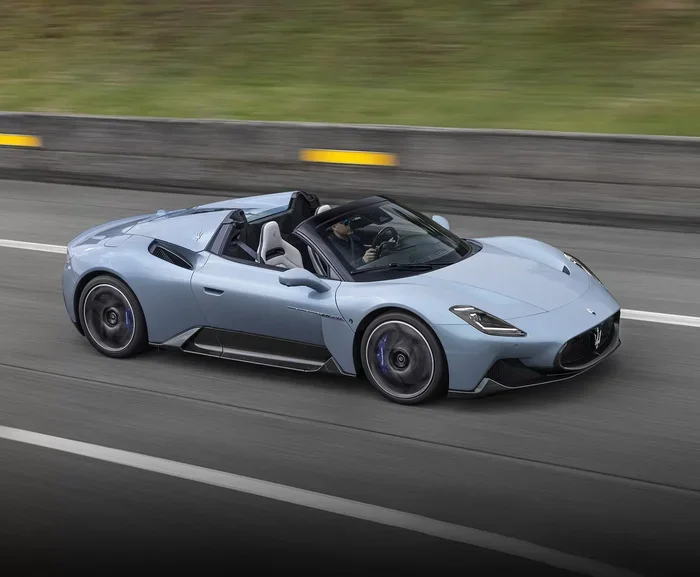
The MC20 spider arrived as a convertible version of the coupe, offering the same powerful engine and stunning design in an open-air package. Spider variants of Italian supercars have always held a special place in the automotive world, and the MC20 spider is no exception.
Convertible Engineering
Maserati engineered the spider’s folding hardtop to be both lightweight and quick-acting. The roof can open or close in just a few seconds, even at low speeds. When the roof is down, the MC20 spider delivers an immersive driving experience that few cars in this price range can match.
The convertible design required additional structural reinforcement to maintain the chassis rigidity that the coupe benefits from naturally. Engineers added bracing and used high-strength materials in key areas to ensure that the spider feels just as composed as its coupe sibling. This attention to detail reflects Maserati’s commitment to quality and engineering excellence.
Spider Production Numbers
The MC20 spider accounts for a smaller share of total production compared to the coupe. This is typical for convertible supercars, which usually attract a more niche buyer. However, the spider has still been well-received, and Maserati continues to accept orders for this variant.
The lower production volume of the spider actually works in favor of its long-term value. Rare body styles tend to appreciate faster than their more common counterparts, making the MC20 spider an interesting option for collectors who want something truly unique.
Special Editions and Limited Variants
Maserati has a long tradition of releasing limited-edition models that celebrate special milestones or themes. The MC20 has not been exempt from this approach, and several special versions have joined the standard lineup.
Notable Special Editions
Maserati has released one-off or very limited MC20 variants that feature unique paint colors, interior materials, and performance tweaks. These editions are often tied to racing events, brand anniversaries, or custom commissions from select customers.
Special editions typically carry production numbers in the single digits or low dozens. For example, a one-off MC20 built for a specific racing event might have only a handful of units, making it exceptionally rare. These cars often command significant premiums in the resale market.
While exact numbers for every special edition are not always publicly disclosed, industry insiders and Maserati dealerships can often provide details on how many units of a given edition were produced. This information is valuable for anyone tracking the total number of MC20 models ever made.
How Special Editions Affect Total Production Counts
When you add special edition MC20s to the total production count, the numbers remain modest. Even with all variants and editions combined, the total number of MC20s produced stays well below 10,000 units. This level of rarity places the MC20 among the most exclusive supercars available today.
For comparison, many mainstream sports cars sell tens of thousands of units per year. The fact that Maserati keeps the MC20’s total output so low speaks to the brand’s identity and its commitment to exclusivity. Every MC20 owner can take pride in knowing they own part of a very small production run.
Why Production Numbers Matter for Buyers and Collectors
Understanding how many Maserati MC20 models were made is not just a trivia exercise. Production numbers have real-world implications for buyers, collectors, and anyone interested in the long-term value of this car.
Scarcity and Value Retention
Scarcity drives value in the luxury car market. When a car is produced in limited numbers, each unit becomes more desirable over time. The MC20 benefits from this dynamic. As the years pass and the total production count remains relatively low, the car’s collectibility will likely increase.
Buyers who purchase an MC20 today are making a choice that could pay off financially. Unlike mass-produced sports cars that depreciate quickly, low-production Italian supercars often hold their value or appreciate over time. This is especially true when the car features innovative technology like the Nettuno engine and a carbon fiber chassis.
Comparing MC20 Production to Competitors
To understand just how rare the MC20 is, it helps to compare its production numbers to rival supercars. Many competitors in the mid-engine, twin-turbo V6 segment produce their cars in much larger quantities. The fair market value of the MC20 reflects this scarcity advantage.
Some luxury brands release thousands of units of their sports cars annually. Maserati’s approach with the MC20 is the opposite. The company prioritizes exclusivity over volume, and this philosophy resonates with buyers who value uniqueness and craftsmanship over brand ubiquity.
Similarly, when looking at how certain brands hold their value in the luxury segment, low production numbers play a major role. Cars like the Acura MDX models, for example, have shown strong value retention, but they are produced in far larger numbers than the MC20. The MC20’s exclusivity gives it a different kind of value proposition, one built on rarity rather than market share.
The Role of Manufacturing Origin
Every Maserati MC20 is built at the company’s historic factory in Modena, Italy. This is the same city where Maserati was founded, and it carries deep significance for the brand. The Modena factory employs skilled artisans and engineers who hand-assemble many components of the MC20.
While some automotive manufacturers have moved production to countries with lower labor costs, Maserati has kept its core operations in Italy. This commitment to Italian craftsmanship adds to the car’s story and appeal. When you buy an MC20, you are not just buying a fast car. You are buying a piece of Italian automotive heritage.
The manufacturing location also affects production capacity. The Modena factory has a finite number of production slots, which naturally limits how many MC20s Maserati can build in a given year. This constraint reinforces the car’s exclusivity and keeps total output low.
The Future of MC20 Production
Maserati has not announced any plans to discontinue the MC20, and the car remains a core part of the brand’s lineup. As the automotive industry shifts toward electrification, Maserati is also developing hybrid and electric versions of its models. The MC20 could eventually evolve into a plug-in hybrid or fully electric supercar, potentially expanding the production timeline and total unit count.
Electrification Plans and What They Mean
Maserati has committed to going fully electric by 2028, a goal that will reshape its entire model range. The MC20 could receive an electrified variant that uses the same carbon fiber platform but swaps the combustion engine for electric motors. If this happens, production numbers could increase, but Maserati has signaled that it will maintain its commitment to exclusivity.
Even with electrification, Maserati is unlikely to produce the MC20 in large numbers. The brand’s identity is built on rarity and craftsmanship, and these values will continue to guide production decisions. Any future MC20 variants will likely remain limited in scope, preserving the car’s special status.
What This Means for Current and Future Owners
If you own or are considering buying an MC20, the production outlook is encouraging. The car’s limited numbers mean that demand is likely to outpace supply in the years ahead. This dynamic benefits current owners who may want to sell and benefits the brand’s reputation for building desirable, collectible cars.
Keep an eye on Maserati’s official announcements for updates on production numbers and future variants. The company may release more detailed figures as the MC20’s lifecycle progresses, giving enthusiasts a clearer picture of total output.
Common Mistakes People Make When Researching MC20 Production
When researching how many Maserati MC20 models were made, buyers and enthusiasts often run into pitfalls. Here are some common mistakes to avoid.
- Relying on unverified forum claims: Online forums and social media posts often cite inflated or inaccurate production numbers. Always cross-reference with official Maserati sources or reputable automotive journalists.
- Ignoring variant differences: The coupe and spider have different production numbers, and mixing them up can lead to incorrect totals. Always specify which variant you are discussing.
- Overlooking special editions: Limited-run variants are easy to miss but important for understanding the full scope of MC20 production.
- Assuming production has stopped: Maserati has not announced the end of MC20 production, so total numbers are still evolving.
- Confusing global and regional figures: Production numbers are global totals. Regional sales figures may differ significantly depending on market demand and distribution.
Quick Tips for Prospective MC20 Buyers
- Check the build number: Every MC20 has a unique build number that tells you its place in the production sequence. Lower numbers often carry more prestige.
- Verify the variant: Confirm whether the car is a coupe or spider, as this affects both the driving experience and the production count.
- Ask about special editions: If you are buying a used MC20, ask the seller if it belongs to a special edition run. This information can significantly impact value.
- Review the fair market value: Use trusted valuation tools to understand what your MC20 is worth in today’s market. Production scarcity is a key factor in determining price.
- Maintain the car properly: A well-maintained MC20 with full service records will always be worth more than a neglected one, regardless of production numbers.
Expert Insights on MC20 Exclusivity
Automotive industry experts consistently point to low production numbers as a key driver of long-term value for luxury and sports cars. The Maserati MC20 fits perfectly into this framework. With total output remaining in the low thousands, the MC20 has all the ingredients to become a highly collectible vehicle.
Experts also highlight the importance of the Nettuno engine as a differentiator. This engine is not just powerful; it represents a significant engineering achievement for Maserati. Cars with unique, proprietary technology tend to attract more collector interest over time, which supports the MC20’s long-term value proposition.
Additionally, the MC20’s Italian manufacturing origin adds a layer of authenticity and heritage that cannot be replicated. In a world where many car brands have moved production overseas, Maserati’s commitment to building the MC20 in Modena is a strong selling point for buyers who value provenance and craftsmanship.
The car’s mid-engine layout, carbon fiber construction, and racing-inspired design all contribute to its appeal. Together, these elements make the MC20 a complete package that satisfies both driving enthusiasts and collectors who appreciate automotive artistry.
Conclusion
The exact number of Maserati MC20 models ever produced may not be a single, publicly confirmed figure, but the available data paints a clear picture. Maserati has built a few thousand MC20s across its coupe and spider variants, with additional units from special editions adding to the total. Every number confirms what enthusiasts already suspect: the MC20 is a rare, exclusive, and highly desirable supercar.
These production numbers matter. They affect value, desirability, and the overall ownership experience. When you drive an MC20, you are behind the wheel of a car that very few people in the world will ever own. That exclusivity is what makes the MC20 so special, and it is what will continue to make it a standout in the luxury sports car segment for years to come.
If you are thinking about buying an MC20, now is a great time to act. The production numbers are still relatively low, and the car’s combination of performance, design, and rarity makes it a compelling choice. Whether you choose the coupe or the spider, you are investing in a piece of Italian automotive excellence that few others can claim.
Keep an eye on Maserati’s official communications for any updates on total production figures. As the MC20’s story continues to unfold, one thing remains certain: this is a car built for enthusiasts, by enthusiasts, and produced in numbers that honor the Maserati legacy of luxury, performance, and exclusivity.
Frequently Asked Questions
How many Maserati MC20 coupes were produced?
Maserati has not released an exact official figure for MC20 coupe production, but industry estimates suggest several thousand units have been built since the model launched in late 2020. The coupe is the most popular MC20 variant and accounts for the majority of total production.
Is the MC20 spider rarer than the coupe?
Yes, the MC20 spider is produced in smaller numbers than the coupe. Convertible supercars typically attract a more niche buyer, and Maserati has kept spider output deliberately limited. This makes the spider even more exclusive and potentially more valuable over time.
Will Maserati release more MC20 models in the future?
Maserati has not announced the end of MC20 production, and the car remains a key part of the brand’s lineup. Future electrified variants or special editions could increase the total production count, but Maserati is expected to keep numbers low to maintain exclusivity.
How does the MC20’s production number compare to other Maserati models?
The MC20 is produced in far smaller numbers than Maserati’s mainstream models like the Grecale or Levante. This reflects its position as a flagship supercar and Maserati’s commitment to keeping its most exclusive models rare and desirable.
Can I find the production number of my specific MC20?
Yes, every MC20 has a unique build number that can be found on the vehicle identification number (VIN) plate or in your ownership documents. Maserati dealerships can also look up your car’s production details using the VIN.
Does the low production number of the MC20 affect its resale value?
Absolutely. Low production numbers are one of the strongest factors in long-term value retention for luxury and sports cars. The MC20’s limited output means that demand is likely to remain strong, which should support or increase resale prices as the car ages.