How Does a Truck Hood Latch Work and Why It Matters
The truck hood latch is a simple but vital mechanism that keeps your hood secure while driving and lets you open it safely for engine access. Understanding how it works helps you spot problems early and avoid costly repairs. This guide breaks down every part of the hood latch system in plain, easy-to-follow language.
Every time you pop the hood of your truck, a small but mighty mechanism springs into action. The truck hood latch is the unsung hero that keeps your hood locked tight during drives and lets you access the engine when you need it. Without a working latch, your hood could fly open on the highway, causing a dangerous situation.
In this guide, we will walk you through exactly how a truck hood latch works. We will cover the different types, common problems, and easy maintenance tips. Whether you are a DIY mechanic or just curious about your truck, this article has you covered.
Let us start with the basics and build up from there. By the end, you will know more about your hood latch than most truck owners ever do.
Key Takeaways
- Primary and secondary latches work together: The main latch holds the hood shut, while the safety latch prevents it from flying open while driving.
- Several types exist: From traditional lever latches to hood latch cables and electronic systems, each design serves the same core purpose.
- Regular maintenance matters: Lubrication, inspection, and timely replacement keep your hood latch functioning reliably for years.
- Common problems are easy to spot: Sticking, jamming, and misalignment are frequent issues that most truck owners can diagnose at home.
- Safety is the top priority: A faulty hood latch can be dangerous at highway speeds, making timely repairs essential.
- Replacement is straightforward: Most hood latch repairs and replacements are affordable and doable with basic tools.
📑 Table of Contents
- What Is a Truck Hood Latch?
- How Does a Truck Hood Latch Work?
- Types of Truck Hood Latches
- Common Truck Hood Latch Problems
- How to Maintain Your Truck Hood Latch
- How to Replace a Truck Hood Latch
- Comparison: Common Truck Hood Latch Types
- Quick Tips for Hood Latch Care
- Expert Insights on Hood Latch Longevity
- Key Takeaways
- Conclusion
What Is a Truck Hood Latch?
A truck hood latch is the device that holds your truck’s hood closed. It is part of a larger system that includes the hood release handle, the latch mechanism itself, and often a secondary safety latch. Together, these parts ensure your hood stays shut while driving and opens smoothly when you need to check the engine.
The hood latch connects to the hood hinges on both sides of the truck. When you pull the release handle inside the cabin, a cable activates the latch, releasing the hood so you can lift it. It is a simple design, but it plays a big role in truck safety and function.
Why the Hood Latch Matters
You might wonder why such a small part deserves attention. Here is the truth: a broken or worn-out hood latch can cause serious problems. A hood that opens unexpectedly at highway speeds is extremely dangerous. It can block your view, damage the windshield, or cause an accident.
Beyond safety, a working latch makes engine maintenance easy. You need to open the hood regularly for oil checks, coolant top-ups, and battery inspections. If the latch fails, these simple tasks become frustrating or impossible.
How Does a Truck Hood Latch Work?
The truck hood latch mechanism is easier to understand than you might think. It relies on a few basic parts working together in a smooth sequence. Let us break down each component and explain how they all connect.
The Hood Release Handle
Everything starts with the hood release handle inside your truck’s cabin. This handle is usually located on the driver’s side, near the floor or under the dashboard. When you pull it, you are tugging on a cable that runs from the handle to the latch under the hood.
This cable is called the hood release cable. It is a thin metal cable wrapped in a protective sheath. When you pull the handle, the cable pulls on a lever inside the latch assembly. This lever releases the latch, allowing the hood to pop up slightly.
The Latch Assembly
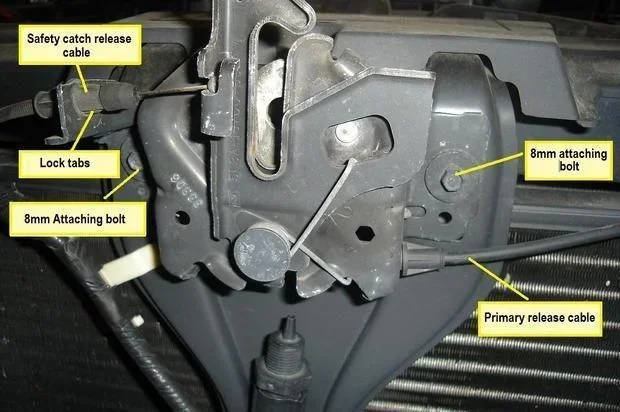
The latch assembly is the heart of the system. It sits at the front center of the truck, right where the two halves of the hood meet. The assembly includes several key parts:
- The latch body: This is the main housing that holds all the internal parts together.
- The hook or pawl: This is the curved piece that grabs onto the hood’s striker plate to keep it locked.
- The spring: A small coil spring keeps the hook in the locked position until you pull the release cable.
- The cable lever: This receives the pull from the hood release cable and pivots to release the hook.
When the latch is locked, the hook sits snugly against the striker plate on the hood. The spring holds everything in place. When you pull the release handle, the cable lever moves, the spring compresses, and the hook releases from the striker plate.
The Secondary or Safety Latch
Most trucks have a second latch, often called the safety latch or secondary latch. This is the small lever or clip you feel when you lift the hood after pulling the release handle. You need to slide or lift this safety latch to fully open the hood.
The safety latch serves an important purpose. It prevents the hood from accidentally opening if the primary latch gets bumped or jostled while driving. Many trucks also have a hood prop rod or hydraulic strut that holds the hood up once it is fully open.
Types of Truck Hood Latches
Not all truck hood latches are the same. Different trucks use different systems depending on the make, model, and year. Here are the most common types you will encounter.
Traditional Lever Latch
The traditional lever latch is the most common type found on older trucks and many modern models. It uses a simple lever mechanism that you release by pulling the cable. This type is reliable, easy to repair, and widely available.
If your truck has a hood that pops up with a satisfying click when you pull the handle, you likely have a lever latch. These latches are also the easiest to replace if they wear out.
Hood Latch Cable System
A hood latch cable system connects the release handle to the latch using a Bowden cable. This is the same basic design found in bicycle brake cables. The cable runs from the cabin handle through the firewall to the latch assembly under the hood.
Cable systems are simple and effective. However, the cable can stretch, fray, or corrode over time. If your hood feels loose when you pull the handle or does not open smoothly, the cable might need adjustment or replacement.
Electronic or Push-Button Hood Latches
Some newer trucks come with electronic hood latch systems. Instead of a cable and lever, these systems use an electric motor or solenoid to release the latch. You typically press a button on the dashboard or key fob to unlock the hood.
Electronic latches are convenient and modern. They also tend to be more expensive to repair. If the motor or sensor fails, you may need a professional to fix it. However, they add a sleek, modern touch to the truck’s design.
Subwoofer-Style or Hidden Latches
Some trucks, especially those with a sporty or customized look, use hidden latches. These latches do not have a visible release handle. Instead, you might need to press a specific spot on the grille or use a key to unlock the hood.
These designs look great but can be tricky to work on. If you own a truck with a hidden latch, make sure you know exactly how to open it before you need emergency engine access.
Common Truck Hood Latch Problems
Like any mechanical part, a truck hood latch can develop problems over time. Here are the most common issues truck owners face, along with what causes them.
Sticking or Jamming Hood Latch
A sticky latch is one of the most frequent complaints. You pull the release handle, but the hood does not open, or it opens slowly and with effort. This usually happens because of rust, dirt, or old lubricant building up inside the latch mechanism.
Cold weather can make this problem worse. Moisture inside the latch freezes, causing the parts to seize up. Regular cleaning and lubrication can prevent this issue from developing.
Loose or Frayed Hood Release Cable
Over time, the hood release cable can stretch or fray. When this happens, you might notice the handle feels loose or the latch does not engage fully. A loose cable means the hook may not grab the striker plate tightly, leaving the hood vulnerable to opening unexpectedly.
If you notice slack in the cable or a change in how the handle feels, it is time to inspect the cable. Replacing a frayed cable is a simple and affordable fix.
Misaligned Hood Latch
A misaligned latch happens when the hood and the latch body do not line up properly. This can occur after a minor accident, from normal wear and tear, or if the hood hinges sag over time.
Signs of misalignment include the hood not closing flush, the latch not catching properly, or the hood feeling uneven when closed. Adjusting the latch position or realigning the hinges usually fixes this problem.
Broken Hood Latch Spring
The small spring inside the latch assembly can break or weaken over time. When the spring fails, the hook may not stay locked in place. This can cause the hood to pop open while driving, which is extremely dangerous.
If you notice the hood latch does not feel snug or the hood feels like it could open easily, check the spring. Replacing the spring or the entire latch assembly is a straightforward repair.
Rust and Corrosion
Trucks spend a lot of time outdoors, and the hood latch is exposed to rain, snow, road salt, and other harsh conditions. Over time, rust and corrosion can build up on the latch, the cable, and the striker plate.
Rust can cause the latch to stick, the cable to seize, or the striker plate to wear out. Washing the undercarriage of your truck regularly and applying a rust inhibitor can help extend the life of the latch system.
How to Maintain Your Truck Hood Latch
Good maintenance keeps your hood latch working smoothly for years. You do not need to be a mechanic to take care of this simple system. A little attention goes a long way.
Regular Lubrication
Lubricate the latch mechanism at least twice a year. Use a silicone-based lubricant or white lithium grease. Spray the lubricant into the latch body, the cable housing, and the striker plate. Work the hood open and closed a few times to spread the lubricant evenly.
Avoid using WD-40 as a long-term lubricant. It works well as a cleaner but tends to dry out quickly, leaving the parts unprotected.
Inspect the Cable and Connections
Every few months, check the hood release cable for signs of wear. Look for fraying, kinking, or rust along the cable. Also check the connections at both ends the handle and the latch. Tighten any loose fittings and replace the cable if you see damage.
Clean the Striker Plate and Hook
Wipe down the striker plate on the hood and the hook on the latch with a damp cloth. Remove any dirt, grease, or debris. A clean contact surface ensures the latch grabs properly and stays secure.
Check the Hood Hinges
The hood hinges support the entire weight of the hood and affect how the latch engages. If the hinges are loose or worn, the hood may not sit correctly on the latch. Tighten hinge bolts regularly and replace any hinges that show signs of bending or damage.
Test the Safety Latch
Make sure the secondary or safety latch works properly every time you open the hood. Slide or lift it to confirm it moves freely. If it feels stiff or stuck, apply some lubricant and work it back and forth until it moves smoothly.
How to Replace a Truck Hood Latch
Replacing a truck hood latch is one of the easier repairs you can do at home. You do not need expensive tools or advanced mechanical skills. Here is a quick overview of the process.
Tools You Will Need
- Socket set and wrenches
- Screwdrivers (Phillips and flathead)
- New hood latch assembly
- Lubricant (silicone spray or white lithium grease)
- Safety gloves and glasses
Step-by-Step Replacement
- Open the hood: Use the release handle and safety latch to fully open the hood. Prop it up securely with the prop rod or hood strut.
- Locate the latch: The latch assembly sits at the front center of the hood, right where the two halves meet. You will see bolts holding it in place.
- Disconnect the cable: Unhook the hood release cable from the cable lever on the latch. Note the position and orientation of the cable for reassembly.
- Remove the old latch: Unbolt the old latch assembly from the hood or the radiator support. Carefully set it aside.
- Install the new latch: Position the new latch in place and bolt it securely. Reconnect the release cable to the cable lever.
- Test the latch: Close the hood and pull the release handle. The latch should engage and release smoothly. Check that the safety latch also works properly.
- Lubricate the new latch: Apply a thin layer of lubricant to all moving parts on the new latch for smooth operation and long life.
When to Call a Professional
Most hood latch replacements go smoothly for DIYers. However, if the latch is hard to access or if you notice other issues like damaged hood hinges or a bent radiator support, it is wise to consult a professional. A mechanic can also help if the electronic latch system in your truck needs specialized diagnostic tools.
Comparison: Common Truck Hood Latch Types
| Feature | Lever Latch | Cable System | Electronic Latch |
|---|---|---|---|
| Ease of Repair | Very easy | Easy | Moderate to difficult |
| Cost | Low | Low to moderate | Moderate to high |
| Durability | High | Moderate | High (but electronics can fail) |
| Common On | Older and standard trucks | Most modern trucks | Newer and luxury trucks |
| Maintenance Needs | Low | Moderate (cable inspection) | Low (but sensor checks) |
Quick Tips for Hood Latch Care
- Lubricate the latch and cable every six months to prevent sticking and rust.
- Check the hood release cable tension regularly. A loose cable is an early warning sign.
- Always close the hood fully until you hear the latch engage with an audible click.
- Keep the striker plate and hook clean and free of debris for a secure lock.
- Inspect the safety latch every time you open the hood to ensure it moves freely.
- Replace worn cables and springs immediately to avoid unexpected hood release while driving.
- Use a rust inhibitor spray on the latch components if you live in a coastal or snowy area.
Expert Insights on Hood Latch Longevity
Experienced mechanics agree that most hood latch problems come from neglect, not design flaws. A truck hood latch should last the lifetime of the vehicle with basic care. The most common cause of failure is a lack of lubrication and exposure to moisture.
One mechanic shared a simple rule of thumb: “If you take care of your hood latch, it will take care of you. A few minutes of maintenance twice a year saves hundreds of dollars in repairs and prevents dangerous roadside situations.”
Another expert pointed out that modern trucks with electronic latches require extra attention to the electrical connections. Corroded connectors or a weak battery can interfere with the electronic release system, causing frustrating failures that mimic mechanical problems.
Key Takeaways
- The primary and secondary latches work together: The main latch holds the hood shut, while the safety latch prevents it from flying open while driving.
- Several types exist: From traditional lever latches to hood latch cables and electronic systems, each design serves the same core purpose.
- Regular maintenance matters: Lubrication, inspection, and timely replacement keep your hood latch functioning reliably for years.
- Common problems are easy to spot: Sticking, jamming, and misalignment are frequent issues that most truck owners can diagnose at home.
- Safety is the top priority: A faulty hood latch can be dangerous at highway speeds, making timely repairs essential.
- Replacement is straightforward: Most hood latch repairs and replacements are affordable and doable with basic tools.
Conclusion
The truck hood latch is one of those parts you probably never think about until something goes wrong. But as we have seen, it is a critical component that affects both your safety and your ability to maintain the truck. A simple latch system keeps your hood secure at highway speeds and gives you easy access to the engine when you need it.
Understanding how the latch works, recognizing common problems, and following a basic maintenance routine can save you time, money, and stress. Whether your truck uses a traditional lever latch, a cable system, or an electronic setup, the care principles remain the same. Keep it clean, keep it lubricated, and replace worn parts promptly.
Take a few minutes today to check your hood latch. Pull the release handle, inspect the cable, and make sure the safety latch moves freely. This small act of maintenance can make a big difference in keeping your truck safe and running smoothly for miles to come.
Frequently Asked Questions
What happens if my truck hood latch breaks while driving?
A broken hood latch can cause the hood to fly open unexpectedly, which is extremely dangerous. It can obstruct your view through the windshield and cause loss of vehicle control. If you notice any signs of a failing latch, such as a loose handle or a hood that does not close tightly, get it repaired immediately.
How much does it cost to replace a truck hood latch?
The cost of a hood latch replacement typically ranges from $30 to $150 for the part itself. If you take it to a mechanic, labor costs can add $50 to $100. Overall, most truck owners can expect to pay between $80 and $250 for a complete replacement, including parts and labor.
Can I drive my truck with a broken hood latch?
You should avoid driving with a broken hood latch if possible. Without a secure latch, the hood could open at highway speeds, creating a serious safety hazard. If you must drive a short distance, have someone ride in the passenger seat and hold the hood down, but this is not a safe long-term solution.
How often should I lubricate my truck hood latch?
Most experts recommend lubricating the hood latch mechanism at least twice a year, or every 6,000 miles. If you live in a harsh climate with lots of rain, snow, or road salt, you may need to lubricate more frequently. Regular lubrication prevents sticking, rust, and premature wear.
What is the difference between a hood latch and a hood catch?
The terms are often used interchangeably, but there is a subtle difference. The hood latch is the full assembly that includes the release mechanism and the locking hook. The hood catch usually refers to the specific point where the hood hooks onto the latch body. In everyday conversation, most people use the terms to mean the same thing.
Are electronic hood latches better than traditional ones?
Electronic hood latches offer convenience and a modern feel, but they are not necessarily better. They have more components that can fail, such as motors, sensors, and wiring. Traditional lever and cable latches are simpler, more durable, and easier to repair. The best choice depends on your needs, budget, and how often you access the engine compartment.