Can You Use Dish Soap to Wash Your Car Without Damage
Can you use dish soap to wash your car without damage? The short answer is yes, but only in a pinch. Most dish soaps are too harsh for your vehicle’s paint and clear coat, stripping away wax and leaving the surface vulnerable. While a quick emergency wash won’t ruin your car, regular use can cause long-term paint damage and dullness. This guide covers exactly why dish soap is risky, when it’s acceptable, and what car wash soap alternatives you should use instead.
You have a dirty car and no car wash soap on hand. The kitchen sink is right there. You grab the dish soap, squirt a generous amount onto the sponge, and start scrubbing. It feels satisfying. The suds are thick. The grime is coming off fast. But then a question pops into your head: can you use dish soap to wash your car without damage?
This is a question car owners ask all the time. Maybe you are on a road trip. Maybe you just moved into a new place and forgot to restock your car wash soap. Or maybe you are simply trying to save a few dollars. Whatever the reason, the answer is more nuanced than a simple yes or no. Using dish soap on your vehicle is not the end of the world, but it is not ideal either. In this article, we will break down exactly what happens when you wash your car with dish soap, when it is okay, when it is not, and what you should use instead.
Key Takeaways
- Dish soap strips protective wax: It cuts through grease effectively, but it does the same to your car’s wax layer and clear coat.
- Occasional use is low risk: A single emergency wash won’t destroy your vehicle, but making it a habit will cause visible damage over time.
- pH balance matters: Car wash soaps are formulated to be pH-neutral, while dish soaps are alkaline and too strong for automotive paint.
- Better alternatives exist: Dedicated automotive soap, DIY mixtures, and car detailing products are safer and more effective.
- Proper washing technique helps: Using a soft wash mitt, rinsing thoroughly, and drying with a microfiber towel prevents scratches and soap residue.
- Wax and sealant restore protection: After any harsh wash, reapplying wax finish or sealant brings your vehicle exterior back to life.
📑 Table of Contents
Why People Reach for Dish Soap When Washing Their Car
Let us start with the obvious. Dish soap is everywhere. It sits on your kitchen counter. It sits in the guest bathroom. It is cheap, effective, and cuts through grease like a hot knife through butter. When your car is covered in mud, road grime, or bird droppings, the instinct to grab whatever cleaning product is nearby is strong.
The Convenience Factor
There is no shame in this. Most people do not have a dedicated bucket of automotive soap sitting in their garage at all times. Life gets busy. You wash your car on a Saturday morning, and by Sunday evening, the bucket of soapy water is empty. The nearest store might be closed. The dish soap under the sink seems like the logical backup.
Another reason is cost. A bottle of dish soap costs a couple of dollars and lasts a long time. A quality car wash soap can cost five to ten dollars, and you might need more than one bottle for a thorough wash. For budget-conscious car owners, the math seems to favor dish soap. But there is a hidden cost we will get into shortly.
What Is Actually in Dish Soap?
To understand why dish soap can be problematic for your car, you need to know what is in it. Dish soap is designed to do one job brilliantly: cut through grease and food residue on your dishes. It contains powerful surfactants and degreasers that break down oily buildup on plates, pots, and pans.
These same ingredients work on the grime on your car. That is the good news. The bad news is that they also strip away protective layers. Your car’s paint has a clear coat that shields it from UV rays, bird droppings, tree sap, and environmental contaminants. Dish soap does not distinguish between kitchen grease and your car’s wax layer. It removes both.
Can You Use Dish Soap to Wash Your Car Without Damage?
The honest answer depends on how often you do it and how well you take care of your car afterward. A single wash with dish soap when you are in a bind will not cause catastrophic paint damage. But repeated use will wear down your wax finish and leave the vehicle exterior exposed and vulnerable.
The Short Answer
Can you use dish soap to wash your car without damage? Yes, if you treat it as an absolute last resort. No, if you plan to make it a regular part of your car care routine. The key is understanding the difference between an emergency wash and habitual washing.
Think of it this way. Eating a burger once a week is fine. Eating a burger every single day will affect your health over time. Dish soap on your car works the same way. One or two times a year, you will be just fine. Every weekend, you will start to see problems.
What Dish Soap Does to Your Car’s Paint
Dish soap is formulated to be a strong cleaner. That is its entire purpose. When you wash your car with it, the surfactants penetrate the clear coat and lift away contaminants. But they also lift away the wax, sealant, or ceramic coating that protects your paint.
Over time, this leads to several visible issues. The paint starts to look dull and faded. Water spots become more noticeable because there is no protective layer to repel water. The vehicle exterior loses its glossy shine and starts to feel rough to the touch. In extreme cases, prolonged use of harsh cleaners can even cause paint damage such as micro-scratches and oxidation.
Another issue is soap residue. Dish soap tends to leave a filmy residue that is harder to rinse off than automotive soap. If you do not rinse thoroughly, this residue can dry on the surface and create streaks or a cloudy appearance. It can also attract dirt faster, meaning your car gets dirty again sooner.
The Science Behind Car Soap vs. Dish Soap
Now that we know dish soap is not ideal, let us look at what makes car wash soap different. Understanding the science behind both products helps you make smarter decisions about how to care for your car.
pH Levels Matter
One of the biggest differences between dish soap and automotive soap is the pH level. pH measures how acidic or alkaline a substance is. A value of 7 is neutral. Below 7 is acidic. Above 7 is alkaline.
Most dish soaps are alkaline, with a pH between 7 and 10. Some are even higher. This alkalinity is what makes them so effective at cutting grease. But it is also what makes them harsh on car paint. Automotive soap, on the other hand, is typically pH-neutral, usually around 7. This means it cleans effectively without stripping away protective layers.
A gentle car wash product maintains the integrity of your wax and sealant while still removing dirt and grime. This is the fundamental difference. One cleans aggressively. The other cleans carefully. When you are washing your car, you want the careful approach.
Understanding Your Car’s Clear Coat
Modern cars come with a clear coat layer that sits on top of the base paint. This clear coat is essentially a transparent shield. It provides depth, gloss, and protection against environmental damage.
The clear coat is sensitive. It can be damaged by harsh chemicals, abrasive materials, and improper cleaning products. Dish soap, with its strong degreasing agents, can slowly erode this layer. Over months and years of repeated washing, the clear coat becomes thinner and less effective. You might not notice it at first, but the cumulative effect is real.
Think of the clear coat like sunscreen on your skin. One day without sunscreen will not give you a sunburn. But skipping it every day for years will cause serious damage. The same logic applies to your car’s paint and the cleaning products you use.
How Surfactants Work Differently
Surfactants are the active cleaning agents in both dish soap and car wash soap. They work by reducing the surface tension of water, allowing it to penetrate and lift away dirt. However, not all surfactants are created equal.
Dish soap uses strong surfactants designed to tackle baked-on food grease. These surfactants are too aggressive for automotive paint. Car wash soap uses milder surfactants that are effective at removing road dirt, bug splatter, and bird droppings without damaging the paint or wax. The difference is in the formulation, and it matters more than most people realize.
When Dish Soap Might Be Okay (And When It Is Not)
Not every situation calls for a bottle of dedicated car wash soap. Some scenarios make using dish soap a reasonable choice. Others are a definite no. Let us break down when each applies.
Emergency Situations Where Dish Soap Is Acceptable
Sometimes you just need to get your car clean right now. Here are a few situations where using dish soap is perfectly fine:
- You are on a road trip and your car is caked in mud or road salt.
- A bird dropped on your car overnight and you need to remove it before it etches the paint.
- You have a rental car and no access to automotive products.
- You are washing your car for a charity event or quick fundraiser and need to work fast.
- You are washing a work truck or daily driver that already has no wax or sealant left.
In these situations, using dish soap is a practical choice. Just make sure you rinse thoroughly and reapply wax or sealant as soon as possible afterward.
Long-Term Damage Risks of Regular Use
Now let us talk about what happens when dish soap becomes your go-to car cleaning solution. The risks add up quickly:
- Wax removal: Every wash strips more wax. After just a few washes, your protective layer is gone.
- Dull paint: Without wax protection, the paint loses its depth and shine. It starts to look washed out.
- Increased oxidation: Exposed paint is more susceptible to UV damage and oxidation, leading to chalky, faded areas.
- Water spotting: Without a proper protective layer, water minerals etch into the paint more easily.
- Swirling and scratching: Dish soap does not lubricate the surface as well as automotive soap, increasing the risk of micro-scratches when you wipe with a cloth or sponge.
If you have been using dish soap regularly, do not panic. You can fix the damage. A good wax finish or ceramic coating will restore protection. The key is switching to a proper car wash soap going forward and being consistent with your car detailing routine.
Better Alternatives to Dish Soap for Car Washing
The good news is that there are plenty of alternatives that are safer, more effective, and still affordable. You do not need to spend a fortune to wash your car the right way.
Dedicated Car Wash Soaps
Investing in a quality car wash soap is the single best thing you can do for your vehicle. These products are specifically formulated for automotive use. They are pH-neutral, safe for wax and sealant, and designed to lift dirt without scratching the paint.
Popular options include Meguiar’s Gold Class, Chemical Guys Mr. Pink, and Adam’s Car Wash Shampoo. A single bottle typically costs between 10 and 20 dollars and can last for 10 to 20 washes. That works out to less than a dollar per wash, which is cheaper than a single car wash at most drive-through locations.
DIY Car Wash Solutions
If you prefer a budget-friendly approach, you can make your own car wash soap at home. Here are a few simple recipes:
- Baby shampoo and water: Mix a quarter cup of baby shampoo with one gallon of water. Baby shampoo is gentle, pH-neutral, and safe for automotive paint.
- Castile soap and water: A few drops of pure castile soap in a bucket of water makes an excellent gentle car wash solution.
- Washing soda solution: One tablespoon of washing soda per gallon of water works well for heavy dirt, but use it sparingly and rinse well.
These DIY solutions are much safer than dish soap and cost pennies per wash. They are perfect for people who want to keep their vehicle exterior clean without risking paint damage.
Quick Tips for a Perfect Hand Wash
No matter which car wash soap you choose, how you wash matters just as much as what you use. Here are some car cleaning tips that make a huge difference:
- Use the two-bucket method. One bucket with soapy water and one with clean rinse water. This prevents you from dragging dirt back across the paint.
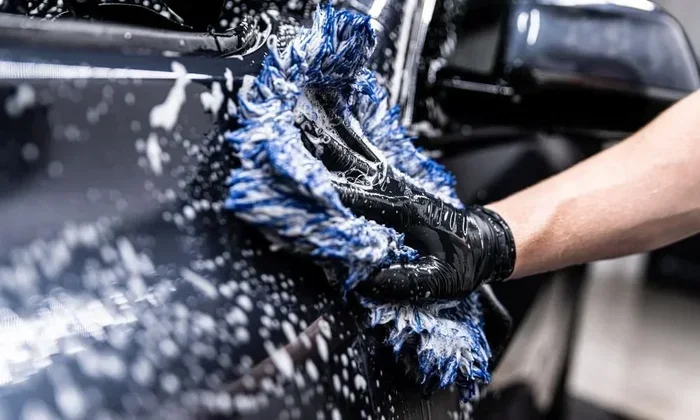
- Use a soft wash mitt made of microfiber or lambswool. Avoid sponges with rough surfaces.
- Wash in the shade. Direct sunlight causes soap and water to dry too quickly, leaving streaks and spots.
- Wash from top to bottom. The lower panels are the dirtiest, and washing them last prevents you from dragging that grime up over the cleaner panels.
- Rinse thoroughly before you start so that loose dirt is removed and you do not grind it into the paint.
- Dry with a clean microfiber towel to prevent water spots and give the surface a streak-free finish.
How to Wash Your Car the Right Way
Now that you know what products to use, let us walk through the proper car care routine step by step. Following a consistent process ensures you get the best results every time.
Step-by-Step Car Washing Guide
- Rinse the vehicle: Start with a full rinse to remove loose dirt, leaves, and debris. Pay special attention to the wheel wells and lower panels.
- Prepare your buckets: Fill one bucket with soapy water and one with clean rinse water. Add your automotive soap according to the label instructions.
- Wash the roof first: Work from top to bottom. The roof is usually the cleanest area and you want to avoid dragging dirt onto cleaner sections.
- Use your wash mitt: Dip it in the soapy bucket, wash a section, then rinse the mitt in the clean water bucket before dipping again.
- Move to the lower panels: The sides, front, and rear lower sections collect the most grime. Wash these carefully.
- Rinse the entire vehicle: Make sure all soap is removed. Soap residue can leave streaks and attract dirt.
- Dry the car: Use a plush microfiber towel and pat dry. Do not rub aggressively, as this can cause swirl marks.
- Apply wax or sealant: After washing, apply a fresh layer of wax finish or sealant to restore protection.
Expert Insights on Maintaining Paint Protection
Professional car detailing experts always emphasize one rule: never wash your car with a product that is not designed for automotive use. The paint on your car is an investment. Whether you drive a brand-new sedan or a classic truck, maintaining the finish preserves both the look and the resale value.
Washing your car every two weeks is a solid baseline for most drivers. If you live in an area with salt, heavy pollution, or frequent bird activity, you may need to wash more often. The key is using the right products and techniques every single time. Skipping proper soap even once can start to erode your protection, especially in harsh climates.
Quick Tips for a Perfect Wash
- Pre-rinse with a hose or pressure washer to remove loose debris before you touch the paint.
- Keep your wash mitt clean. Swap it to the rinse bucket frequently.
- Use a separate mitt for the wheels and lower panels, where brake dust and road grime are heaviest.
- Never use dish soap as your primary car wash soap. Reserve it for emergencies only.
- Reapply wax every three to four months to maintain a strong protective barrier.
- Store your washing supplies in a shaded area so they last longer and stay effective.
Conclusion
So, can you use dish soap to wash your car without damage? The answer is clear now. You can, but only occasionally and only when you do not have access to a proper car wash soap. Regular use of dish soap will strip your wax, dull your paint, and leave your vehicle exterior unprotected against the elements.
The best approach is simple. Keep a bottle of dedicated automotive soap on hand. Wash your car with the right products and proper technique. Rinse thoroughly, dry with a microfiber towel, and reapply wax regularly. This car care routine takes a little extra effort, but it pays off in a shinier, healthier, and better-protected vehicle.
Your car is one of the biggest investments you will ever make. Treating it with the right cleaning products is one of the easiest ways to protect that investment. Skip the dish soap, grab a proper car wash soap, and give your car the care it deserves. Your paint will thank you for years to come.
Frequently Asked Questions
Will using dish soap once ruin my car’s paint?
No, a single use will not cause serious harm. However, it will strip some wax and protective layers. If you use dish soap as a one-time emergency solution, simply reapply wax or sealant at your earliest opportunity to restore protection.
How often is too often to wash your car with dish soap?
Even once a month is too frequent. Dish soap should only be used in genuine emergencies. If you find yourself washing your car more than twice a year with dish soap, it is time to invest in a proper automotive soap and keep it stocked at home.
Can I use dish soap to wash my car if it has a ceramic coating?
No. Ceramic coatings are especially sensitive to harsh chemicals. Dish soap will degrade the coating over time, reducing its effectiveness and lifespan. Always use a pH-neutral car wash soap that is specifically safe for ceramic coatings.
What is the best homemade alternative to dish soap for car washing?
A mixture of baby shampoo and water is one of the safest and most effective DIY options. A few drops of pure castile soap in a bucket of water also works well. Both are gentle on paint and will not strip away wax or sealant.
Does rinsing my car with just water help if I accidentally used dish soap?
Rinsing helps remove some soap residue, but it does not undo the stripping effect on your wax and clear coat. If you have already washed with dish soap, the best next step is to dry the car and apply a fresh layer of wax or sealant to restore protection.
Is it okay to wash your car with hand soap or body wash?
Hand soap and body wash are generally milder than dish soap, but they are still not formulated for automotive use. They may contain moisturizers, fragrances, or other additives that leave residue on the paint. Dedicated car wash soap remains the best and safest choice for washing your car.