What Do I Do If My Trunk Wont Open And How To Fix It
Learn exactly what to do when your trunk won’t open. This guide covers the most common reasons a trunk gets stuck, from a dead key fob to a broken trunk latch cable. You will find simple step-by-step fixes, prevention tips, and advice on when to call a professional mechanic.
There is nothing more frustrating than standing by your car with a trunk that just will not open. Maybe you are loading groceries. Maybe you are heading out on a road trip. Whatever the reason, a stuck trunk can throw a serious wrench into your day. The good news is that most trunk problems have simple solutions you can try right at home.
This guide will walk you through everything you need to know about a trunk that won’t open. We will cover the most common causes, easy fixes you can do yourself, and when it is time to call in a professional. Whether your trunk is stuck closed or stuck open, you will find practical advice here.
Let us get into it. By the end of this article, you will know exactly what to do when your trunk won’t open and how to keep it from happening again.
Key Takeaways
- Dead key fob or battery: A weak or dead key fob battery is the most common reason a trunk won’t open.
- Broken trunk release cable: The cable connecting the trunk handle to the latch can stretch or snap over time.
- Stuck trunk latch mechanism: Dirt, rust, or ice can freeze or jam the trunk latch in place.
- Emergency trunk release: Most cars have a manual trunk release lever inside the vehicle for emergencies.
- Preventive maintenance: Regular lubrication and inspection can prevent most trunk problems before they start.
- Know when to call a pro: Some trunk issues require a professional mechanic, especially electrical or actuator problems.
📑 Table of Contents
- Why Your Trunk Won’t Open: Common Causes
- How To Diagnose the Problem
- Step-by-Step Fixes for a Stuck Trunk
- Comparison: Common Trunk Problems and Solutions
- When To Call a Professional Mechanic
- Preventing Trunk Problems in the Future
- Common Mistakes People Make With a Stuck Trunk
- Expert Insight: What Mechanics Wish You Knew
- Key Takeaways
- Conclusion
Why Your Trunk Won’t Open: Common Causes
A trunk that refuses to open can happen for many reasons. Some are simple fixes. Others need a bit more attention. Let us look at the most common culprits behind a trunk stuck closed or a trunk stuck open.
Dead Key Fob Battery
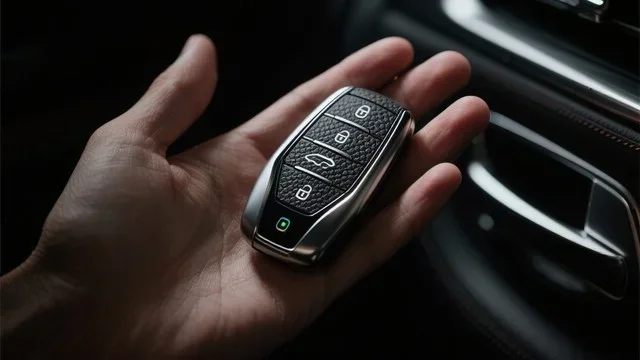
This is the number one reason people find themselves asking, “Why won’t my trunk open?” Your key fob sends a signal to the car’s central locking system. When the battery dies, that signal stops working. You might still be able to unlock the doors with a backup physical key, but the trunk release often needs the fob to be active.
If you have been using the same fob battery for over a year, it is probably time for a replacement. Most car key fobs use small coin-cell batteries like the CR2032. Swapping it out takes just a few seconds and costs almost nothing.
Broken Trunk Release Cable
The trunk release cable connects the trunk handle or button to the trunk latch. Over time, this cable can stretch, fray, or even snap completely. When that happens, pulling the trunk handle or pressing the button does nothing. The connection between your action and the latch is broken.
This problem is very common in older vehicles. If you hear a clicking sound but the trunk does not move, the cable is likely the issue. A broken release cable is one of the most frequent reasons a trunk stays locked shut.
Stuck or Rusty Trunk Latch
The trunk latch is the mechanical part that holds the trunk closed. It works like a hook that slides into a receiver. When dirt, grime, rust, or ice builds up around the latch, it can seize up. The trunk appears locked even though the release mechanism is working fine.
Cars parked outside in cold climates face this problem often. Ice can form around the latch and freeze the trunk shut. In warmer weather, road salt and moisture cause rust that slowly jams the mechanism.
Faulty Trunk Actuator
Many modern cars use an electric trunk actuator to pop the trunk open at the push of a button. This small motor does the heavy lifting for you. When the actuator fails, you lose the power trunk release. The trunk might still open manually, but the convenient button method stops working.
Actuator problems can come from a blown fuse, a wiring issue, or a worn-out motor. If you hear a clicking or grinding noise when you press the trunk button, the actuator is struggling.
Trunk Lock Cylinder Issues
Some trunks have a physical lock cylinder that requires a key. If the lock cylinder gets stuck or the key will not turn, the trunk stays locked. This can happen from a worn-out lock, a broken key, or simply debris getting inside the lock mechanism.
Using the wrong key or forcing a key into the lock can make things worse. Always use the correct key for your trunk lock cylinder to avoid damage.
How To Diagnose the Problem
Before you start pulling things apart, take a moment to figure out what is actually going wrong. A little detective work can save you a lot of time and effort.
Step One: Check the Key Fob
Stand close to your car and try the trunk release button on the key fob. If nothing happens, try the physical key in the trunk lock. If the physical key works, your problem is likely the key fob battery or the electronic release system.
If neither the fob nor the physical key works, the issue is probably mechanical. Move on to the next steps.
Step Two: Listen for Clicks or Sounds
When you press the trunk release, do you hear a click? A click means the electrical signal is reaching the latch, but the mechanical part is stuck. No sound at all suggests an electrical problem, a broken cable, or a dead actuator.
Step Three: Inspect the Trunk Handle and Cable
Open the trunk access panel inside your car. Look at the trunk release cable. Is it stretched, frayed, or disconnected? Gently pull on the cable to see if it moves freely. A cable that slides in and out without resistance is working. A stiff or stuck cable needs replacement.
Step Four: Look at the Latch Area
Have someone press the trunk release while you watch the latch from underneath or through the trunk access panel. Does the latch move? If it does not move at all, the cable or actuator is not doing its job. If it moves but the trunk stays shut, the latch itself is jammed.
Step-by-Step Fixes for a Stuck Trunk
Now that you know what is causing the problem, let us fix it. These solutions work for most common trunk issues.
Fix One: Replace the Key Fob Battery
This is the easiest fix of all. Follow these steps:
- Find the small seam on your key fob.
- Pry it open with a small flathead screwdriver or a coin.
- Remove the old battery and note its type.
- Insert a new CR2032 battery with the positive side facing up.
- Snap the fob back together.
- Test the trunk release from a few feet away.
This simple trick solves the problem more often than people realize. Do not underestimate a fresh battery.
Fix Two: Lubricate the Trunk Latch
If the latch is stuck due to rust or grime, a good lubricant can work wonders. Here is what to do:
- Spray a silicone-based lubricant or white lithium grease directly onto the trunk latch.
- Work the latch back and forth manually if you can reach it.
- Spray the latch mechanism from multiple angles to get full coverage.
- Let the lubricant sit for a few minutes.
- Try opening the trunk again.
Avoid using WD-40 as a long-term solution. It is a great cleaner but a poor lubricant that attracts dirt. Use it to clean the latch first, then follow up with a proper lubricant.
Fix Three: Replace the Trunk Release Cable
A broken or stretched cable needs to be replaced. You can do this yourself with basic tools:
- Open the trunk access panel inside your car behind the rear seats.
- Locate the trunk release cable.
- Disconnect the cable from the trunk handle and the latch.
- Feed the new cable through the same path.
- Connect it to the handle and the latch.
- Test the trunk release before closing the access panel.
Replacement cables are inexpensive and easy to find online for most car models. Make sure to get the exact cable for your vehicle’s make, model, and year.
Fix Four: Reset or Replace the Trunk Actuator
If the actuator is the problem, start by checking the fuse. Look at your car’s fuse box and find the trunk actuator fuse. A blown fuse will stop the actuator from working. Replace the fuse and test the trunk again.
If the fuse is fine, the actuator motor itself may be dead. You can replace an aftermarket trunk actuator fairly easily. Remove the mounting bolts, disconnect the wiring, swap in the new unit, and reconnect everything. This fix costs between $50 and $150 for the part.
Fix Five: Use the Emergency Trunk Release
Most cars built after 2001 have an emergency trunk release lever or handle inside the vehicle. It is usually located on the ceiling of the trunk area, near the rear seats, or on the driver’s side dashboard.
Simply pull this lever, and the trunk latch will release. This is a built-in safety feature designed to prevent people from getting trapped inside the trunk. If all else fails, this emergency release is your best friend.
Comparison: Common Trunk Problems and Solutions
Here is a quick look at the most frequent trunk problems and the best way to fix each one.
| Problem | Symptom | Best Fix | Difficulty Level |
|---|---|---|---|
| Dead key fob battery | No response from fob or button | Replace CR2032 battery | Very Easy |
| Broken release cable | Clicking sound but no movement | Replace trunk release cable | Moderate |
| Stuck trunk latch | Latch does not move at all | Lubricate and manually work the latch | Easy |
| Faulty trunk actuator | Grinding noise or no sound | Check fuse, then replace actuator | Moderate |
| Ice or rust on latch | Trunk frozen shut in winter | Thaw with warm water, then lubricate | Easy |
| Broken lock cylinder | Key will not turn in lock | Replace lock cylinder or call a locksmith | Moderate to Hard |
When To Call a Professional Mechanic
Not every trunk problem is a DIY job. Some issues need the skills and tools of a trained mechanic. Here are signs that it is time to call for help.
If you have tried the fixes above and the trunk still will not open, do not force it. Forcing a stuck trunk can damage the latch, the hinge, or the trunk lid itself. Repairs from forced opening can cost far more than a simple service call.
Also call a professional if you notice electrical issues beyond just the trunk. If your central locking system is not working, your dashboard lights are flickering, or you see warning lights on your instrument panel, there may be a bigger electrical problem at play.
A mechanic can run a diagnostic scan on your car’s computer to find hidden electrical faults. They can also replace parts like the trunk actuator or lock cylinder quickly and correctly. Most trunk repair jobs take less than an hour when handled by an experienced tech.
Preventing Trunk Problems in the Future
The best way to deal with a trunk that won’t open is to stop it from happening in the first place. A little regular maintenance goes a long way.
Lubricate the Trunk Latch Regularly
Every six months, spray your trunk latch with a silicone lubricant. This keeps rust and grime from building up and jamming the mechanism. It is a quick job that takes less than five minutes.
Replace Key Fob Batteries on Schedule
Do not wait for the fob to die completely. Replace the battery once a year, or whenever you notice the signal getting weaker. Most fobs give you plenty of warning with reduced range before the battery dies entirely.
Keep the Trunk Area Clean
Debris, dirt, and moisture can collect around the trunk latch and cables. Regularly wipe down the trunk area and check for any signs of corrosion or buildup. A clean trunk mechanism works smoothly and lasts longer.
Check the Trunk Seal and Struts
The rubber seal around the trunk keeps water out. If the seal cracks or deteriorates, water can seep in and cause rust on the latch and hinge. Inspect the seal once or twice a year and replace it if it looks worn. Also check the trunk struts, which hold the trunk open. Weak struts make the trunk harder to open and close safely.
Common Mistakes People Make With a Stuck Trunk
When frustration sets in, people make mistakes that make the problem worse. Here are a few to avoid.
- Yanking on the trunk lid: This can bend the trunk hinge or crack the trunk seal. Never force a stuck trunk open with brute strength.
- Using the wrong lubricant: WD-40 is great for cleaning but bad for long-term lubrication. Use silicone spray or white lithium grease instead.
- Ignoring the emergency release: Many people forget their car has a built-in emergency trunk release. Check your owner’s manual to find it.
- Delaying repairs: A small problem like a frayed cable gets worse over time. Address trunk issues early before they become expensive repairs.
- Using the wrong key: Forcing a key into the lock cylinder can break the key or damage the lock. Always use the correct trunk key.
Expert Insight: What Mechanics Wish You Knew
Professional mechanics see a trunk won’t open problem almost every day. Here is what the experts want you to know.
“Most trunk issues come down to three things: a dead key fob battery, a worn release cable, or a dirty latch,” says auto repair specialist Mike Torres. “People often skip the simplest fixes and jump to expensive repairs. Always start with the basics.”
Another mechanic, Sarah Lin, adds: “The emergency trunk release is a lifesaver. I have opened countless trunks for customers who did not even know it existed. Take two minutes to find yours and practice pulling it.”
These expert tips highlight something important. Most trunk problems are simple and fixable. You do not need to be a mechanic to handle them. A little knowledge and the right tools go a long way.
Key Takeaways
- Dead key fob battery: A weak or dead key fob battery is the most common reason a trunk won’t open.
- Broken trunk release cable: The cable connecting the trunk handle to the latch can stretch or snap over time.
- Stuck trunk latch mechanism: Dirt, rust, or ice can freeze or jam the trunk latch in place.
- Emergency trunk release: Most cars have a manual trunk release lever inside the vehicle for emergencies.
- Preventive maintenance: Regular lubrication and inspection can prevent most trunk problems before they start.
- Know when to call a pro: Some trunk issues require a professional mechanic, especially electrical or actuator problems.
Conclusion
A trunk that won’t open can feel like a major inconvenience, but it is almost always a fixable problem. Whether the cause is a dead key fob battery, a broken trunk release cable, or a stuck trunk latch, you now have the knowledge to tackle it yourself. Start with the simplest solutions, work your way up, and know when to bring in a professional.
Remember to maintain your trunk mechanism regularly. A little lubrication and attention can save you from a frustrating trunk stuck closed situation down the road. Keep your key fob battery fresh, clean the latch area, and always know where your emergency trunk release is located.
Next time your trunk won’t open, do not panic. You have got this. Use the tips and fixes from this guide, and you will be back to loading up your car in no time.
Frequently Asked Questions
Why does my trunk only open from inside the car?
This usually means the trunk release cable or the electronic release system is not working properly. The most common cause is a broken or stretched trunk release cable. Check the cable first, and if it looks fine, the problem may be with the trunk actuator or the key fob signal. Try replacing the key fob battery before calling a mechanic.
Can cold weather cause a trunk to freeze shut?
Yes, absolutely. Moisture around the trunk latch can freeze in cold temperatures and lock the trunk shut. To prevent this, spray the trunk latch with a silicone lubricant before winter sets in. If the trunk is already frozen, pour warm (not boiling) water over the latch area to thaw it, then lubricate the mechanism.
How much does it cost to replace a trunk actuator?
A trunk actuator replacement part typically costs between $50 and $150 for most car models. If you take it to a mechanic, the labor cost will add another $50 to $100. The total repair usually runs between $100 and $250. DIY replacement can save you the labor charge entirely.
Is it safe to drive with a trunk that won’t close properly?
It is not recommended. A trunk that will not stay closed can open while driving, which is a serious safety hazard. Items can fly out onto the road, and an open trunk can obstruct your rear visibility. If your trunk latch is broken, use a bungee cord or ratchet strap to secure the trunk temporarily until you get the latch repaired.
Where is the emergency trunk release lever located?
The emergency trunk release is typically found inside the vehicle, either on the ceiling of the trunk area, on the driver’s side dashboard, or near the rear seats. Check your car’s owner manual for the exact location. Every car sold in the United States since 2002 is required to have this safety feature.
How often should I lubricate my trunk latch?
Every six months is a good rule of thumb. If you live in a coastal area or a place with harsh winters, you may want to lubricate the latch every three months. Road salt and moisture speed up rust and corrosion. A quick spray of silicone lubricant keeps the trunk latch working smoothly year round.