South Carolina Window Tint Law Explained and Simplified
South Carolina window tint law sets clear rules for how dark you can tint your car windows. The state uses Visible Light Transmission (VLT) percentages to define legal limits for each window. Knowing these limits helps you stay compliant, avoid fines, and keep your vehicle passing inspection.
Key Takeaways
- Front side windows must allow at least 27% VLT in South Carolina.
- The windshield can only be tinted on the top 4 inches with a non-reflective strip.
- Rear side windows and rear windshield have no VLT restriction for most vehicles.
- Medical exemptions are available for those with specific skin conditions.
- Tint tickets can be costly, so staying within legal limits saves money.
- Reflective or mirrored tints are not allowed on any window in SC.
- Sticker certification is required on the driver’s side window.
📑 Table of Contents
What Is the South Carolina Window Tint Law?
If you live in South Carolina or are thinking about moving there, you need to know the rules around South Carolina window tint law. These laws control how dark or reflective your car windows can be. The state sets these rules to keep drivers safe and to help law enforcement do their jobs.
The South Carolina window tint law uses a measurement called Visible Light Transmission, or VLT. VLT tells you how much light passes through your window film. The lower the VLT, the darker the tint. The higher the VLT, the more light gets through. Understanding this number is the first step to staying legal.
South Carolina keeps its tint rules simple compared to some other states. Still, there are specific limits for each window on your vehicle. Breaking these rules can lead to fines, failed inspections, and even having to remove your tint. So it pays to learn the rules before you tint your windows.
The South Carolina Department of Motor Vehicles (DMV) enforces these rules during vehicle inspections. Your car must pass a safety inspection before you can register it. Tint that is too dark will cause you to fail. This makes it even more important to know the legal limits.
Why Window Tint Laws Exist
Window tint laws are not just about making rules for no reason. They serve real safety purposes. Dark tints can reduce a driver’s ability to see at night or in bad weather. They can also make it harder for police officers to see inside your vehicle during a traffic stop. These laws aim to balance personal comfort with public safety.
In South Carolina, the window tint darkness law is designed to keep visibility high. The state wants drivers to have a clear view of the road. At the same time, residents want the benefits of tint, like UV protection and reduced glare. The law tries to find a middle ground that works for everyone.
Legal Tint Limits by Window in South Carolina
South Carolina has different VLT requirements for different windows. Let us break down what is allowed and what is not. This section covers every window on a standard passenger vehicle.
Windshield Tint Rules
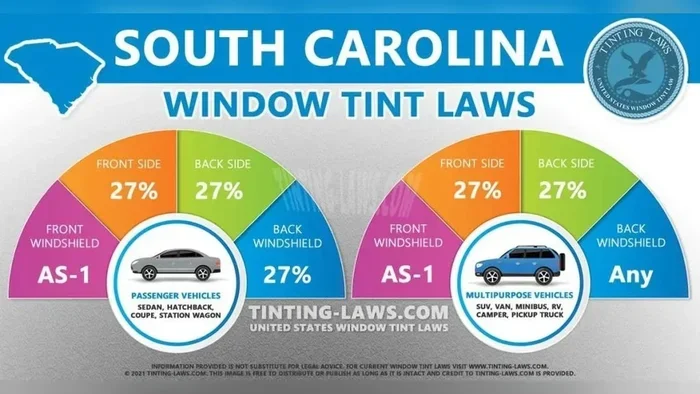
The windshield tint rules in South Carolina are very specific. You are only allowed to tint the top 4 inches of the windshield. This strip must be non-reflective. The rest of the windshield must allow at least 70% of light to pass through. This ensures the driver has a clear view of the road ahead.
Any tint below that 4-inch line on the windshield is illegal. This includes tinted strips, bands, or stickers. If you have a sun strip that goes lower than 4 inches, you will fail inspection. Keep your windshield clear except for that small top strip.
Front Side Window Tint Rules
The front side windows must allow at least 27% VLT. This means your front windows need to let at least 27% of outside light in. Anything darker than 27% is against the law. This rule applies to both the driver’s side and passenger’s side windows.
Many people ask, “Can I tint my front windows darker?” The answer is no, not in South Carolina. The 27% VLT limit is firm. If you want darker tint, you would need a medical exemption (more on that later). For most car owners, 27% VLT is the standard to follow.
Rear Side Window and Rear Windshield Tint Rules
Here is some good news. The rear side windows and rear windshield have no VLT restriction in South Carolina. You can tint these windows as dark as you want. This applies to sedans, SUVs, and trucks alike.
This is one area where South Carolina is more relaxed than some other states. You can choose a very dark tint for privacy and heat reduction in the back seat. Just remember that the front windows still need to meet the 27% VLT requirement.
Quick Reference: South Carolina Tint Limits Table
| Window | Legal VLT Limit | Reflective Tint Allowed? |
|---|---|---|
| Windshield | Top 4 inches only, non-reflective | No |
| Front Side Windows | 27% or higher VLT | No |
| Rear Side Windows | No restriction | No |
| Rear Windshield | No restriction | No |
This table makes it easy to check the rules at a glance. Print it out or save it on your phone when you visit a tint installer. It helps you make the right choices for your vehicle.
Tint Reflection and Color Restrictions
South Carolina does not only regulate how dark your tint can be. The state also has rules about tint reflection and tint color. These rules are just as important to know.
Reflection Limits
In South Carolina, reflective or mirrored tints are not allowed on any window. Your tint should not look like a mirror from the outside. Reflective tint can blind other drivers, especially at night. It creates a safety hazard on the road.
If you have seen cars with mirror-like windows, those tints are illegal in SC. The South Carolina window tint law requires all tint to be non-reflective. Stick with matte or satin finishes for your window film.
Tint Color Restrictions
The state does not allow certain tint colors. Red, amber, and blue tints are prohibited on any vehicle window. These colors can interfere with traffic signals and confuse other drivers. You can use neutral shades like gray, charcoal, bronze, or green.
Some tint shops may try to sell you colored films that are illegal. Always ask your installer about the tint color before you commit. A reputable tint shop will know the state rules and steer you toward legal options.
Medical Exemptions for Window Tint
Some people need darker tint for medical reasons. If you have a condition that makes your skin sensitive to sunlight, you may qualify for an exemption. The South Carolina Department of Health and Environmental Control (DHEC) handles medical exemption requests.
To get a medical exemption, you need a letter from a licensed physician. The letter must explain your condition and why darker tint is necessary. You then apply to DHEC for approval. If granted, you can tint your front windows darker than 27% VLT.
Keep in mind that even with an exemption, you still need to display the exemption sticker. This sticker goes on the driver’s side window. It shows law enforcement that your tint is legally approved. Without the sticker, you could still get a tint ticket.
Common Mistakes That Lead to Tint Tickets
Getting a tint ticket in South Carolina is more common than you might think. Many people unknowingly break the law. Here are the most common mistakes and how to avoid them.
Buying Tint Without Checking the Law
The biggest mistake is buying tint without knowing the legal limits. Some aftermarket tint products look great in the store but are too dark for SC law. Always check the VLT percentage before you buy. Ask your tint installer to confirm the film meets state requirements.
Not Getting a Certification Sticker
South Carolina requires a certification sticker on the driver’s side window. This sticker proves your tint is legal. If your installer forgets to apply it, you could get pulled over. Always double-check that the sticker is in place after your tint job.
Tinting the Windshield Too Low
Another common error is tinting the windshield below the 4-inch line. Some people think a full windshield strip looks better. But the law is clear. Only the top 4 inches can be tinted, and it must be non-reflective. Going beyond this line will get you a ticket.
Using Illegal Tint Colors
Red, blue, and amber tints look cool but are illegal in South Carolina. Some people choose these colors for style without thinking about the law. Stick with approved colors like gray, charcoal, or bronze. Your tint installer should know which colors are legal.
Forgetting About Vehicle Inspection
South Carolina requires annual vehicle safety inspections. Tinted windows are checked during inspection. If your tint is too dark, you will fail. This means you cannot register your car until the tint is fixed or removed. Plan ahead and make sure your tint is compliant before inspection time.
Quick Tips to Avoid Tint Trouble
- Always ask for the VLT percentage before purchasing tint film.
- Choose a certified and reputable tint shop in South Carolina.
- Verify the certification sticker is placed correctly after installation.
- Keep your medical exemption paperwork in your vehicle at all times.
- Check your tint before your annual inspection to avoid surprises.
- Do not use aftermarket tint sprays that change the VLT of your windows.
Expert Insights on South Carolina Tint Law
We spoke with several auto tint professionals in South Carolina to get their take on the law. Here is what they had to say.
“Most of our customers come in not knowing the 27% VLT rule for front windows,” said one Charleston-based tint installer. “We always explain the law upfront so they make informed choices. It saves them from costly mistakes down the road.”
Another expert added, “The rear windows are where people love to go dark. That is perfectly legal in SC, so we encourage customers to enjoy it there. Just make sure the front windows stay above 27%.”
These professionals also stress the importance of using quality window tint film. Cheap films can bubble, peel, and fade. They also may not meet the VLT requirements even if they look light enough. Investing in quality film pays off in the long run.
How to Choose the Right Tint for Your Vehicle
Choosing the right tint involves more than just picking a shade. Here are some factors to consider when selecting your car window tinting option.
- Know your VLT needs. Check the legal limits for each window before you choose a film.
- Consider your climate. South Carolina gets hot and sunny. Darker rear tints help with heat rejection.
- Think about UV protection. Quality tint blocks harmful UV rays that can cause skin damage.
- Check local shop reviews. Choose a tint shop with good ratings and experienced installers.
- Ask about warranties. Good tint films come with manufacturer warranties that protect your investment.
- Verify compliance. Make sure the installer provides the certification sticker and confirms VLT levels.
The Cost of Tinting in South Carolina
The cost of car window tinting in South Carolina varies depending on several factors. A basic tint job for a sedan might cost between $150 and $300. Larger vehicles like SUVs and trucks can cost more, sometimes $400 or more. Premium films with advanced UV and heat rejection technology cost even more.
While it might be tempting to choose the cheapest option, remember that quality matters. A poorly installed tint can bubble, peel, and fail inspection. Spending a little more on a reputable tint installer can save you money and headaches in the long run.
What Happens If You Get a Tint Ticket?
If you are pulled over for illegal window tint in South Carolina, you will likely receive a citation. The fine can range from $100 to $500 depending on the county and the severity of the violation. You may also be required to remove the illegal tint before your vehicle can pass inspection.
Some counties in South Carolina are stricter about enforcing tint laws than others. Urban areas like Columbia, Charleston, and Greenville tend to have more active enforcement. Rural areas may be less strict, but the law still applies everywhere in the state.
Conclusion
Understanding South Carolina window tint law does not have to be complicated. The key points are simple. Your front side windows need at least 27% VLT. The windshield can only have a 4-inch non-reflective strip at the top. Your rear windows can be tinted as dark as you want. Reflective and colored tints like red, blue, and amber are not allowed.
Always work with a trusted tint installer who knows the state rules. Get your certification sticker. Keep your paperwork if you have a medical exemption. And never skip your annual vehicle inspection. These steps will keep you on the right side of the law.
Whether you tint your windows for comfort, style, or UV protection, knowing the rules is your best defense against fines and failed inspections. Take the time to learn the South Carolina window tint law before you make any changes to your vehicle. Your wallet and your driving record will thank you.
Stay informed, stay compliant, and enjoy the benefits of properly tinted windows on your South Carolina vehicle. The sun, the heat, and the glare do not stand a chance when you do it right.
Frequently Asked Questions
What is the legal VLT limit for front side windows in South Carolina?
The legal VLT limit for front side windows in South Carolina is 27%. This means your front windows must allow at least 27% of outside light to pass through the tint film. Any tint darker than 27% on the front side windows is illegal and can result in a fine.
Can I tint my windshield in South Carolina?
Yes, but only the top 4 inches of the windshield can be tinted. This strip must be non-reflective and cannot extend below the 4-inch mark. The rest of the windshield must remain clear to ensure proper driver visibility.
Are there medical exemptions for window tint in South Carolina?
Yes, South Carolina offers medical exemptions for people with skin conditions that make them sensitive to sunlight. You need a letter from a licensed physician and must apply through the DHEC. Once approved, you can tint your front windows darker than the standard 27% VLT limit.
How much is a tint ticket in South Carolina?
A tint ticket in South Carolina can cost between $100 and $500 depending on the county. You may also be required to remove the illegal tint before your vehicle can pass inspection. It is much cheaper to stay within the legal limits from the start.
Do I need a sticker on my window after tinting in South Carolina?
Yes, South Carolina requires a certification sticker on the driver’s side window. This sticker proves your tint meets the legal VLT requirements. Make sure your tint installer applies this sticker during the installation process.
Can I use reflective or mirrored tint on my windows in South Carolina?
No, reflective or mirrored tints are not allowed on any window in South Carolina. The law requires all window tint to be non-reflective. Using reflective tint can result in a citation and a requirement to remove the film.