Georgia Window Tint Law Explained and What You Need to Know
Georgia Window Tint Law sets clear rules for how dark or reflective your car tint can be. The law uses Visible Light Transmission (VLT) percentages to define legal limits for each window. Understanding these Georgia tint law rules helps you avoid fines, stay safe, and choose the right automotive window film for your vehicle.
Georgia Window Tint Law can feel confusing if you have never looked at the rules before. Every state has its own set of rules, and Georgia is no exception. The Georgia tint law covers how dark your tint can be, how reflective it can look, and which windows you can tint. If you have ever driven past a car with super dark windows and wondered, “Is that even legal?” — you are not alone. This guide breaks down everything you need to know about window tint darkness and legal tint limits in Georgia. You will learn about VLT percentages, reflection rules, exemptions, and what happens if you get a tint ticket. By the end, you will feel confident choosing the right automotive window film for your car. Let us dive in and make sense of it all.
Tinting your windows is one of the most popular car upgrades people make. It looks great, reduces glare, and keeps your car cooler in the Georgia heat. But there is a fine line between looking cool and breaking the law. Georgia Window Tint Law exists to keep drivers safe by ensuring visibility on the road. If your tint is too dark or too reflective, it can make it hard for you and other drivers to see. That is why the state sets specific tint darkness levels and reflection limits for every window. Understanding these rules before you visit a tint installer can save you money, time, and hassle. This article covers every aspect of the law in simple, easy-to-understand language.
Whether you are a first-time car owner or thinking about re-tinting your current vehicle, this guide has you covered. We will walk through each window’s legal limit, explain what VLT means, discuss medical exemptions, and share practical tips to stay compliant. No jargon, no fluff — just the facts you need. So grab a drink, settle in, and let us explore Georgia Window Tint Law together.
Key Takeaways
- Front side windows must allow more than 32% VLT: This is the strict Georgia rule for driver and passenger side windows.
- Rear windows can be any darkness: Vehicles with rear tint are legal as long as they have dual side mirrors.
- Reflective tint is restricted: Georgia law limits how reflective your tint can be on both front and rear side windows.
- Medical exemptions are available: Drivers with certain health conditions can apply for a special tint permit.
- Violations carry fines up to $1,000: Getting caught with illegal tint can result in costly penalties and vehicle inspection requirements.
- Factory tint counts: Your original factory tint level matters when measuring total darkness after adding aftermarket film.
- Windshield tint is limited to the top 6 inches: Only a non-reflective strip along the top of the windshield is allowed.
📑 Table of Contents
Understanding Georgia Window Tint Law Basics
What Is VLT and Why Does It Matter?
VLT stands for Visible Light Transmission. It is the percentage of light that passes through your window tint and reaches your eyes. The lower the VLT number, the darker the tint. For example, a window tint percentage of 5% lets in very little light and looks almost black. A 50% VLT tint lets in half the light and looks much lighter. Georgia uses VLT as the main measurement for legal tint darkness levels. When the law says your front side windows must be above 32% VLT, it means at least 32% of outside light must pass through your tint. This measurement is the foundation of all Georgia tint law rules.
Here is why VLT matters so much. If your tint is too dark, it reduces your ability to see other cars, pedestrians, and road signs. This is especially dangerous at night or in bad weather. Law enforcement officers use VLT meters during a law enforcement tint inspection to check if your tint meets the legal standard. If your tint fails the test, you could receive a tint violation fine or even a ticket that requires you to remove the tint entirely.
How Georgia Measures Tint Darkness
Georgia measures tint darkness using the VLT percentage system. The state law differentiates between front side windows, rear side windows, and the rear windshield. Each window has its own legal limit. The Georgia vehicle code specifies these limits clearly. When you add aftermarket automotive window film to your car, you need to consider the combined darkness of your factory tint plus the new film. Some cars come with factory tint from the manufacturer, which already reduces light transmission. Adding another layer of tint on top can push you below the legal limit without you even realizing it.
To measure your total VLT, a tint shop will use a specialized meter. This device reads how much light passes through all layers of glass and film. Always ask your tint installer to measure the final VLT after installation. This ensures you stay within the legal tint limits set by Georgia law.
Legal Tint Limits for Each Window
Front Side Windows Rules
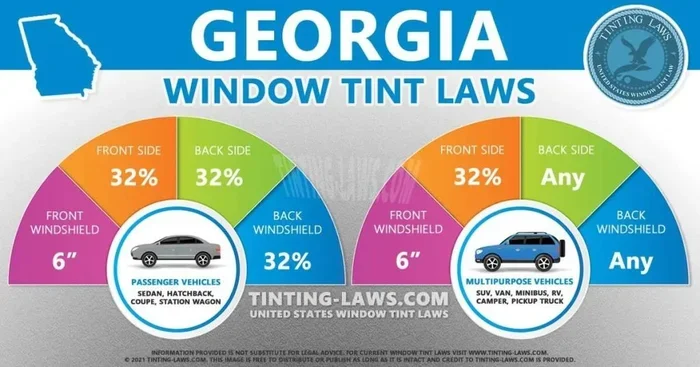
The front side windows on your vehicle must allow more than 32% of light to pass through. This is the strictest rule in the Georgia Window Tint Law. The driver and passenger side windows fall under this category. If your factory tint is already close to 32%, adding any aftermarket film could put you over the limit. Always check your current VLT before purchasing new tint.
Here are some quick facts about front side window tint in Georgia:
- Minimum VLT allowed: More than 32%
- Applies to: Driver and passenger side windows
- Reflectivity limit: Must not be more than 20% reflective
- Common tint types allowed: Dyed, metalized, and ceramic films that meet the VLT requirement
Rear Side and Rear Window Rules
Good news — the rear side windows and rear windshield have much more flexibility. Georgia allows any level of darkness on these windows. You can go as dark as 5% VLT if you want. However, there is one important condition. If you tint your rear windows dark, your vehicle must have working dual side mirrors. This rule ensures that the driver can still see behind the car clearly. Many SUVs, sedans, and trucks fall into this category easily.
Some popular window tint darkness choices for rear windows in Georgia include 20%, 15%, 10%, and 5% VLT. Ceramic tint and ceramic tint films are very popular choices because they block heat effectively without interfering with electronic signals. Just remember to keep those side mirrors clean and functional.
Windshield Tint Regulations
The windshield has its own set of rules in Georgia. You are allowed to tint the top 6 inches of your windshield. This strip must be non-reflective. The purpose of this rule is to reduce glare from the sun while keeping your main field of vision clear. Any tint below the AS-1 line (the top 6 inches) on the windshield is illegal.
Here is a quick tip. Ask your tint installer to show you the AS-1 line on your windshield before starting the job. This line is usually marked by the manufacturer near the top of the glass. Staying above this line keeps you fully compliant with Georgia Window Tint Law.
Georgia Window Tint Law Comparison Table
| Window | Legal VLT Limit | Reflectivity Limit | Additional Rules |
|---|---|---|---|
| Front Side Windows | Must be over 32% VLT | Max 20% reflective | Strictest rule in Georgia |
| Rear Side Windows | Any darkness allowed | Max 20% reflective | Dual side mirrors required |
| Rear Windshield | Any darkness allowed | Max 20% reflective | Dual side mirrors required |
| Windshield | Top 6 inches only | Non-reflective only | No tint below AS-1 line |
Tint Reflection and Color Restrictions
Reflective Tint Rules in Georgia
Not all tint looks the same. Some window films have a mirrored or metallic finish that reflects sunlight away from your car. While these tints look sleek, Georgia places limits on how reflective they can be. The law states that no window tint can be more than 20% reflective on the front side, rear side, or rear windows. This limit applies to all darkness levels.
Reflective tint can create problems for other drivers. It bounces sunlight and headlights back at oncoming traffic, which can cause temporary blindness. That is why Georgia keeps the reflectivity cap at 20%. If you love the look of reflective tint, make sure your tint installer uses a film that stays within this limit. Most quality automotive window film brands clearly label their reflectivity levels on the product specifications.
Prohibited Tint Colors
Georgia law does not allow certain tint colors. Red, amber, and blue tint films are prohibited on any vehicle window. These colors can interfere with how other drivers perceive your vehicle and can confuse traffic signals. Stick with neutral shades like charcoal, gray, or bronze. These colors are widely available and fully compliant with Georgia tint law.
If you are shopping for tint and the salesperson offers you a colored film, always ask if it is legal in Georgia. A reputable tint installer will know the rules and steer you toward compliant options. It is better to ask upfront than to deal with a tint ticket later.
Medical Exemptions and Special Permits
Who Qualifies for a Tint Exemption?
Some people have medical conditions that make them extremely sensitive to sunlight. For these individuals, standard tint limits may not provide enough protection. Georgia offers a medical exemption for drivers and passengers with qualifying health conditions. Conditions that may qualify include lupus, albinism, severe photosensitivity, and certain skin disorders. If you or a family member has a condition that requires limited sun exposure, you may be eligible for a special permit.
The tint exemption allows you to use darker tint than the standard legal limits. However, you must carry the exemption certificate in your vehicle at all times. Law enforcement officers may request to see this document during a traffic stop or law enforcement tint inspection. Without the certificate, you could still receive a tint violation fine even if you have a medical condition.
How to Apply for a Medical Exemption
Applying for a medical exemption in Georgia involves a few straightforward steps. First, you need a signed statement from a licensed physician. This statement must explain your condition and why darker tint is medically necessary. Next, you submit this statement to your local Department of Motor Vehicles (DMV) or the relevant licensing authority. Once approved, you will receive a certificate that you must keep in your vehicle.
Keep in mind that the exemption may have specific VLT requirements set by the approving authority. Even with an exemption, your tint must still allow a minimum level of light transmission for safety. Always verify the exact terms of your exemption with the DMV before installing any tint.
Penalties for Illegal Tint and Common Violations
What Happens If You Get a Tint Ticket?
Getting caught with illegal window tint darkness in Georgia can cost you. The penalty for a tint violation fine can range from a warning to a fine of up to $1,000, depending on the severity of the violation. In some cases, law enforcement may require you to remove the illegal tint before your vehicle can pass inspection. This means you would pay for the tint removal and potentially re-tint your windows to a legal level.
Here are common consequences of an illegal tint violation in Georgia:
- Traffic citation and fine: Fines can range from $50 to $1,000 depending on the violation.
- Vehicle inspection failure: Your car may not pass the annual safety inspection.
- Required tint removal: You may be ordered to remove the illegal tint within a set timeframe.
- Points on your license: Repeated violations could lead to additional penalties.
It is not worth the risk. Always verify your tint darkness levels before hitting the road. A quick visit to a trusted tint installer for a VLT check can save you from expensive fines and headaches.
Common Mistakes Drivers Make
Even well-meaning drivers run into trouble with Georgia Window Tint Law every year. Here are some common mistakes to avoid:
- Ignoring factory tint: Many drivers add aftermarket tint without checking their existing factory tint level. The combined darkness can exceed legal limits.
- Buying tint online without checking local laws: Tint laws vary by state. A tint that is legal in Florida may be illegal in Georgia.
- Assuming all tint shops know the law: Not every tint installer stays updated on the latest regulations. Always ask them to confirm the VLT of the final installation.
- Tinting the windshield below the AS-1 line: This is one of the most common violations and an easy one to avoid.
- Forgetting about dual mirrors for dark rear tint: If your rear windows are tinted dark, you must have working side mirrors.
Quick Tips for Staying Legal
- Always ask your tint installer for a VLT certificate after installation.
- Keep your medical exemption certificate in your glove box if you have one.
- Choose neutral tint colors like gray, charcoal, or bronze.
- Get your tint checked annually if you live in an area with frequent law enforcement tint inspections.
- When in doubt, go lighter. A slightly lighter tint is always safer than going too dark.
Tips for Choosing Compliant Window Tint
Expert Insights on Choosing the Right Tint
Choosing the right automotive window film is about more than just looks. You want a tint that looks great, blocks heat, and keeps you within the bounds of Georgia Window Tint Law. Experts recommend starting with a reputable brand that clearly labels the VLT of their products. Ceramic tint films are a popular choice because they offer excellent heat rejection without the metallic shine that some people find distracting.
When you visit a tint installer, ask them to show you the product specifications. Look for the VLT percentage, reflectivity level, and any color restrictions. A good installer will walk you through the Georgia legal limits and recommend a film that fits both your style and the law. Do not be afraid to ask questions. A professional will be happy to explain the differences between dyed tint, metalized tint, and ceramic tint.
Quick Tips for Staying Legal
- Measure before you buy: Know your current VLT on each window before purchasing new tint.
- Choose a certified installer: Look for tint installer professionals who understand Georgia regulations.
- Get it in writing: Ask for a written guarantee that your tint meets Georgia VLT requirements.
- Consider ceramic film: It offers great heat rejection and is less likely to interfere with electronics.
- Stay updated: Tint laws can change. Check the Georgia DMV website periodically for any updates to the Georgia vehicle code.
Taking a few extra minutes to research and choose compliant tint can save you from costly fines and the hassle of removal. The best window tint percentage for your car is one that looks great, performs well, and keeps you on the right side of the law.
Frequently Asked Questions
What is the legal tint limit for front side windows in Georgia?
The legal tint limit for front side windows in Georgia requires that the window tint percentage must be above 32% VLT. This means at least 32% of outside light must pass through the tint. This is the strictest rule under Georgia Window Tint Law and applies to both the driver and passenger side windows.
Can I tint my rear windows as dark as I want in Georgia?
Yes, Georgia allows any level of darkness on rear side windows and the rear windshield. However, if you tint your rear windows dark, your vehicle must have working dual side mirrors. This ensures the driver can maintain proper visibility behind the vehicle even with heavily tinted rear windows.
How much is the fine for illegal window tint in Georgia?
The tint violation fine in Georgia can range from $50 to $1,000 depending on the severity of the violation. In addition to fines, you may be required to remove the illegal tint and pass a vehicle inspection before your registration can be renewed. Repeated violations may lead to additional penalties.
Is reflective tint legal in Georgia?
Reflective tint is allowed in Georgia but with a strict limit. No window tint can be more than 20% reflective on the front side, rear side, or rear windows. The windshield tint strip must also be non-reflective. Always check the reflectivity rating of your chosen automotive window film before installation.
Can I get a medical exemption for darker window tint in Georgia?
Yes, Georgia offers a medical exemption for drivers and passengers with qualifying health conditions such as lupus, albinism, or severe photosensitivity. You will need a signed statement from a licensed physician and must carry the exemption certificate in your vehicle at all times. Without the certificate, you could still be fined for tint darkness levels that exceed the legal limit.
Does factory tint count toward the legal VLT limit in Georgia?
Yes, factory tint counts. When measuring the total window tint darkness, Georgia law considers the combined VLT of your factory glass and any aftermarket film added. If your car already has a medium factory tint, adding dark aftermarket film could push you below the 32% VLT limit for front side windows. Always have your total VLT measured after installation.
Conclusion
Georgia Window Tint Law is straightforward once you understand the basics. The key is knowing the VLT limits for each window, respecting the reflection rules, and staying aware of prohibited colors and tint placements. Whether you are tinting your car for the first time or re-tinting an older vehicle, compliance is essential. A little research goes a long way in helping you avoid fines and keep your vehicle road-ready.
Remember to work with a trusted tint installer, ask for VLT measurements, and keep your paperwork in order if you have a medical exemption. The right automotive window film can transform your driving experience — keeping you cooler, more comfortable, and protected from the sun. Stay informed, stay compliant, and enjoy your ride with confidence. Georgia Window Tint Law protects everyone on the road, and following it is the smartest choice you can make for your vehicle and your wallet.