Georgia Window Tint Law Everything You Need To Know
Georgia window tint law sets clear rules on how dark or reflective your car windows can be. Understanding these regulations helps you avoid costly tickets and keep your vehicle street legal. This guide covers VLT limits, exemptions, penalties, and everything drivers need to know about Georgia tint regulations.
Have you ever driven through Atlanta or Savannah and noticed how many cars have tinted windows? It is a popular upgrade for comfort, style, and UV protection. But here is the thing — Georgia window tint law has specific rules you need to follow. Getting it wrong can mean a costly ticket, a failed inspection, or even having to remove your tint entirely.
Whether you are shopping for a new car window tinting Georgia job or already have tinted windows on your ride, understanding the legal limits is essential. This guide breaks down everything you need to know about Georgia tint regulations in plain, simple language. No legal jargon. No confusing fine print. Just the facts you can use.
By the end of this article, you will know exactly what is legal, what is not, and how to stay on the right side of the law. Let us dive in.
Key Takeaways
- VLT Rules Differ by Vehicle Type: Sedans, SUVs, and vans each have specific tint darkness limits in Georgia.
- Front Windshield Tint Is Limited: Only the top six inches can be tinted on most vehicles.
- Medical Exemptions Are Available: Georgia allows exceptions for those with a valid medical need.
- Reflective Tint Has Strict Limits: Metallic or reflective finishes must meet specific guidelines.
- Penalties Can Be Expensive: Fines for illegal tint in Georgia range from $100 to over $250.
- Certificates and Stickers Are Required: Tint installers must provide proper documentation.
- Tint Darkness Varies by Window: Each window on your vehicle has its own legal limit.
📑 Table of Contents
- What Is Georgia Window Tint Law?
- Legal Tint Darkness by Vehicle Type
- Reflective and Metallic Tint Rules
- Medical Exemptions for Window Tint in Georgia
- Penalties for Illegal Window Tint in Georgia
- Quick Tips for Staying Compliant
- Common Mistakes People Make with Window Tint
- Expert Insights on Georgia Tint Laws
- Comparison: Legal Tint Limits by Vehicle Type
- Why Window Tint Is Worth It (When Done Right)
- Final Thoughts on Georgia Window Tint Law
- Frequently Asked Questions
What Is Georgia Window Tint Law?
Georgia window tint law refers to the state regulations that control how dark or reflective your vehicle windows can be. These rules are designed to balance driver privacy and comfort with safety on the road. Law enforcement needs clear visibility through windows, especially at night and during traffic stops.
The key measurement in Georgia tint regulations is Visible Light Transmission, or VLT. This is the percentage of light that passes through your window film. The lower the VLT, the darker the tint. For example, a 5% VLT tint lets in only 5% of light, making it very dark. A 70% VLT tint is nearly clear.
Georgia law sets different VLT limits depending on your vehicle type and which window you are tinting. These limits apply to all passenger cars, SUVs, and vans registered in the state.
Understanding VLT Percentages
VLT is the foundation of legal tint darkness in Georgia. Here is a simple way to think about it. Imagine holding a piece of tinted film up to a light source. The VLT tells you how much light gets through. State law uses this number to determine if your tint is compliant.
When you get your windows tinted, your installer should provide a Georgia tint certificate that shows the VLT of the film used. Keep this document in your vehicle. If you get pulled over, having proof of compliance can save you from a hassle.
Legal Tint Darkness by Vehicle Type
Georgia does not use a one-size-fits-all approach to tint darkness. The rules change based on whether you drive a sedan, SUV, or van. Let us break it down vehicle by vehicle.
Sedan Tint Rules in Georgia
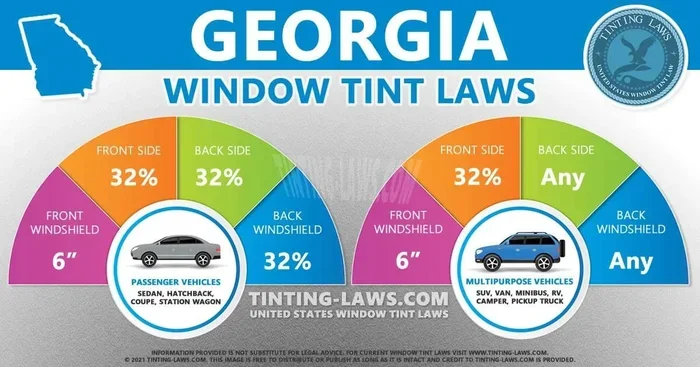
If you drive a sedan, the Georgia tint law applies the following limits:
- Front Windshield: Non-reflective tint is allowed on the top six inches only.
- Front Side Windows: Must allow more than 32% of light in (VLT above 32%).
- Rear Side Windows: Must allow more than 32% of light in (VLT above 32%).
- Rear Window: Must allow more than 32% of light in (VLT above 32%).
These limits are designed to ensure that law enforcement can see through your windows during traffic stops. The front side windows have the strictest rules because they are closest to the driver.
SUV and Van Tint Rules in Georgia
For SUVs and vans, the rules are slightly more flexible:
- Front Windshield: Non-reflective tint on the top six inches is permitted.
- Front Side Windows: Must allow more than 32% of light in (VLT above 32%).
- Rear Side Windows: Any darkness level is allowed.
- Rear Window: Any darkness level is allowed.
The main difference is that rear windows on SUVs and vans can be tinted as dark as you want. This gives owners of larger vehicles more flexibility. However, if your rear window is tinted, you must have dual side mirrors to compensate for reduced rear visibility.
Reflective and Metallic Tint Rules
Georgia window tint law also addresses reflective and metallic finishes. These types of tint can reduce glare and heat, but they can also create problems for other drivers and law enforcement.
In Georgia, the rules for reflective tint are clear:
- Front Side Windows: Reflective tint must not exceed 20% reflectivity.
- Rear Side Windows: Reflective tint must not exceed 20% reflectivity.
- Rear Window: Reflective tint must not exceed 20% reflectivity.
Essentially, no window on your vehicle can have a mirror-like finish that exceeds 20% reflectivity. This rule helps prevent the blinding effect that highly reflective windows can cause, especially during bright Georgia sunshine or at night.
Why Reflectivity Matters
When a window is too reflective, it acts like a mirror. Other drivers cannot see through it, and police officers cannot see inside your vehicle during a traffic stop. This is a serious safety concern. That is why Georgia tint regulations cap reflectivity at 20% for all windows.
If you are considering a metallic or ceramic finish, make sure your installer can confirm the reflectivity level. A reputable aftermarket window tint provider will always disclose this information upfront.
Medical Exemptions for Window Tint in Georgia
Not everyone can tolerate standard tint darkness levels. Some people have medical conditions that make them extremely sensitive to sunlight or UV radiation. Georgia recognizes this and offers a medical exemption window tint option.
To qualify for a medical exemption, you need a signed statement from a licensed physician. This statement must explain your condition and why darker tint is medically necessary. The exemption allows for lower VLT levels than what is normally legal.
How to Get a Medical Exemption
Follow these steps to apply for a Georgia tint law exemption:
- Visit your doctor and discuss your sensitivity to sunlight.
- Obtain a written medical statement explaining your condition.
- Submit the statement to your local Department of Motor Vehicles (DMV) or County Tag Office.
- Receive your exemption sticker or certificate.
- Place the exemption sticker on your vehicle as required.
Keep in mind that even with a medical exemption, you must follow specific guidelines. The exemption does not give you a free pass to tint every window as dark as possible. There are still rules about which windows can be tinted and how reflective they can be.
Common Conditions That Qualify
Several medical conditions may qualify for a tint exemption in Georgia:
- Lupus and other autoimmune disorders
- Severe photosensitivity
- History of skin cancer
- Retinal diseases
- Certain medications that increase sun sensitivity
If you have any of these conditions, talk to your doctor about whether a darker tint could benefit your health. A medical exemption window tint can significantly improve your quality of life while keeping you within the bounds of the law.
Penalties for Illegal Window Tint in Georgia
What happens if you get caught with tint that does not meet Georgia window tint law? The penalties are not worth the risk. Let us look at what you could face.
Fines and Costs
Under Georgia tint penalty rules, a citation for illegal window tint typically results in a fine. The amount can vary depending on your county and how many violations you have. Generally, fines range from $100 to $250 for a first offense.
Repeat offenses can cost even more. Some counties may also add court fees and administrative costs on top of the base fine. Over time, these costs can add up quickly.
Other Consequences
Beyond fines, illegal tint can cause other problems:
- Failed Inspection: Your vehicle may not pass its annual safety inspection.
- Required Removal: You may be ordered to remove the illegal tint.
- Points on Your License: In some cases, a tint violation can add points to your driving record.
- Insurance Issues: Multiple violations could affect your car insurance rates.
No one wants to deal with a tint ticket Georgia situation. It is far easier to make sure your tint is legal from the start.
Quick Tips for Staying Compliant
Staying on the right side of Georgia tint regulations does not have to be complicated. Here are some practical tips to keep in mind.
- Ask Your Installer About VLT: Before you get tinted, ask your installer what VLT the film provides. Make sure it meets Georgia requirements.
- Keep Your Certificate: Always keep the Georgia tint certificate in your vehicle. You may need it if you get pulled over.
- Check Local County Rules: Some counties may have additional enforcement policies. Check with your local tag office.
- Choose a Reputable Installer: A professional installer will know the law and apply tint that meets legal standards.
- Consider Ceramic Tint: Ceramic tint Georgia options offer excellent heat rejection without excessive reflectivity.
- Get It Checked Annually: Over time, tint can fade or bubble. Check your windows yearly to make sure they are still compliant.
Common Mistakes People Make with Window Tint
Even well-meaning car owners can run into trouble with Georgia window tint law. Here are some common mistakes to avoid.
Buying Tint Online Without Checking VLT
One of the biggest mistakes is buying window tint online without verifying the VLT percentage. Not all films labeled the same way are actually the same darkness. A film marketed as “dark” could be 20% VLT or 50% VLT. Always check the specifications and compare them to Georgia requirements.
Forgetting About the Windshield
Many people focus on side and rear windows but forget about the front windshield. In Georgia, you can only tint the top six inches of the windshield with non-reflective film. Any tint below that line is illegal and will result in a citation.
Ignoring the Sticker Requirement
Georgia requires a sticker or certificate proving your tint meets legal standards. Some people skip this step or lose the documentation. Without proof, you have no way to defend yourself during a traffic stop.
Using Too Dark a Film on Front Windows
Some drivers want their front side windows as dark as their rear windows. In Georgia, front side windows must allow more than 32% of light through. Going below this limit, even by a small margin, is illegal.
Skipping the Medical Exemption When You Qualify
If you have a medical condition that requires darker tint, do not just go ahead and tint your windows illegally. Apply for a medical exemption window tint through the proper channels. It is free, easy, and keeps you protected under the law.
Expert Insights on Georgia Tint Laws
Georgia window tint law is enforced by law enforcement officers during routine traffic stops and safety inspections. Officers use specialized tools called tint meters to measure the VLT of your windows. These devices give an accurate reading of how much light passes through each window.
According to industry experts, the most common reason drivers get cited for illegal tint is simply not knowing the law. Many people assume that if the tint looks fine, it is legal. But appearance can be deceiving. A tint that looks moderately dark to the naked eye may actually be below the legal VLT threshold.
Professional car window tinting Georgia installers stay up to date on state regulations and apply films that meet legal standards. They also provide the necessary documentation to prove compliance. This is one of the best reasons to choose a licensed, experienced installer over a DIY kit.
Tint technology has evolved significantly in recent years. Modern ceramic tint Georgia products offer superior heat rejection, UV protection, and clarity without violating reflectivity limits. If you are considering a tint upgrade, these advanced films are worth exploring.
Comparison: Legal Tint Limits by Vehicle Type
To make it easy to reference, here is a comparison table of legal tint limits in Georgia by vehicle type.
| Vehicle Type | Front Windshield | Front Side Windows | Rear Side Windows | Rear Window |
|---|---|---|---|---|
| Sedan | Top 6 inches non-reflective only | VLT above 32% | VLT above 32% | VLT above 32% |
| SUV / Van | Top 6 inches non-reflective only | VLT above 32% | Any darkness allowed | Any darkness allowed |
This table shows the core differences between sedan and SUV/van tint rules in Georgia. Remember that all reflective tints must stay at or below 20% reflectivity regardless of vehicle type.
Why Window Tint Is Worth It (When Done Right)
Despite all the rules, window tint remains one of the most popular vehicle upgrades in Georgia. And for good reason. When installed correctly and within legal limits, car window tinting Georgia offers real benefits.
- UV Protection: Quality tint blocks up to 99% of harmful UV rays, protecting your skin and your interior.
- Heat Reduction: Tinted windows can reduce cabin temperatures by up to 60%, making your drive more comfortable.
- Glare Reduction: Tint cuts down on blinding sunlight and headlights from other vehicles.
- Privacy and Security: Tinted windows make it harder for outsiders to see into your vehicle.
- Interior Protection: UV rays can fade your dashboard, seats, and carpet over time. Tint helps preserve your interior.
The key is choosing the right film and installer. Look for a provider who understands Georgia window tint law and can guarantee compliance. A quality installation gives you all the benefits of tint without the risk of a citation.
Final Thoughts on Georgia Window Tint Law
Understanding Georgia window tint law does not have to be overwhelming. The rules are clear, and once you know the VLT limits for your vehicle type, it is easy to stay compliant. Remember the key numbers: front side windows must be above 32% VLT for sedans, while SUVs and vans have more flexibility with rear windows.
Always work with a reputable installer who provides a Georgia tint certificate. Keep that certificate in your vehicle at all times. If you have a medical condition, apply for an exemption through the proper channels. And if you ever get pulled over, having your documentation ready makes all the difference.
Georgia window tint law exists to keep everyone safe on the road. By following these rules, you enjoy the benefits of tinted windows while avoiding fines and legal trouble. Take the time to get it right the first time, and you will enjoy your tint for years to come.
Frequently Asked Questions
What is the legal tint darkness for front windows in Georgia?
In Georgia, front side windows on both sedans and SUVs must allow more than 32% of light to pass through. This means the VLT must be above 32%. Front windshields can only have non-reflective tint on the top six inches.
Can I tint my rear windows as dark as I want in Georgia?
Yes, but only if you drive an SUV or van. Sedans must have rear side windows and rear windows with a VLT above 32%. SUVs and vans can have any darkness level on rear windows, but dual side mirrors are required if the rear window is tinted.
What happens if I get a tint ticket in Georgia?
A tint ticket in Georgia typically results in a fine ranging from $100 to $250 depending on the county. You may also be required to remove the illegal tint or fail your vehicle inspection. Repeat offenses can lead to higher fines and additional consequences.
How do I get a medical exemption for window tint in Georgia?
You need a signed medical statement from a licensed physician explaining your condition and why darker tint is necessary. Submit this statement to your local DMV or County Tag Office. Once approved, you will receive an exemption sticker to display on your vehicle.
Is reflective tint legal in Georgia?
Reflective tint is legal in Georgia but must not exceed 20% reflectivity on any window. This applies to front side windows, rear side windows, and the rear window. Metallic or mirror-like finishes above this limit are illegal.
Do I need a tint certificate in Georgia?
Yes, Georgia requires a tint certificate from your installer proving your tint meets legal VLT standards. Keep this certificate in your vehicle at all times. You may need to show it during a traffic stop or vehicle inspection.