How a Car Runs at a Constant Speed and Why It Matters
When a car runs at a constant speed, the engine delivers steady power without frequent acceleration or braking. This smooth driving style improves fuel economy, reduces engine wear, and makes your trips more comfortable. Understanding how constant speed works helps every driver save money and stay safe on the road.
Have you ever noticed how smooth and effortless driving feels when a car runs at a constant speed? There is something deeply satisfying about cruising down an open road with the engine humming steadily. You do not need to keep tapping the gas pedal or slamming the brakes. Everything just flows.
But constant speed driving is about more than just a pleasant ride. It plays a big role in fuel efficiency, engine health, and overall safety. When your vehicle maintains a steady pace, the engine works less hard, burns less fuel, and lasts longer. Whether you are commuting to work or taking a long road trip, understanding how this works can change the way you drive.
In this guide, we will break down exactly how a car runs at a constant speed. We will explore the science behind it, the benefits you get, the problems that can get in the way, and practical tips you can use right away. By the end, you will know why steady speed driving deserves more attention than it usually gets.
Key Takeaways
- Steady driving saves fuel: A car runs at a constant speed uses less gas than stop-and-go driving.
- Cruise control is your best friend: It helps maintain a constant speed on highways with ease.
- Engine life improves: Consistent speed reduces strain on engine parts and lowers maintenance costs.
- Safety increases: Predictable speed makes it easier for other drivers to anticipate your moves.
- Common problems exist: Faulty sensors, throttle issues, and worn parts can prevent steady speed.
- Small habits matter: Smooth acceleration and gentle braking go a long way toward constant speed driving.
📑 Table of Contents
- Understanding What It Means When a Car Runs at a Constant Speed
- How Cruise Control Helps a Car Maintain Constant Speed
- The Science Behind a Car Running at a Constant Speed
- Benefits of Keeping a Car at a Constant Speed
- Common Problems That Stop a Car From Running at a Constant Speed
- Practical Tips for Maintaining a Constant Speed While Driving
- Conclusion
Understanding What It Means When a Car Runs at a Constant Speed
Let us start with the basics. When a car runs at a constant speed, it means the vehicle moves forward at an unchanging velocity. There is no speeding up, no slowing down, and no stopping. The speedometer needle stays put. The engine output remains steady. Everything is balanced.
This state is also called uniform motion in physics. The car covers equal distances in equal amounts of time. The forces acting on the vehicle, like engine force and road resistance, are in balance. When these forces are equal, the car does not accelerate or decelerate. It just keeps moving at the same pace.
Why Constant Speed Matters for Everyday Driving
You might wonder why this concept matters so much in everyday driving. The answer is simple. Most drivers spend a lot of time on highways and open roads where maintaining a steady pace is not only possible but also ideal. Constant speed driving reduces the constant changes that strain your engine and waste fuel.
Think about it this way. Every time you press the gas pedal harder, the engine burns more fuel. Every time you hit the brakes, you lose the momentum you built. A car that runs at a constant speed avoids all of that back-and-forth waste. It just keeps rolling smoothly.
The Difference Between Constant Speed and Average Speed
It is important to understand that constant speed is not the same as average speed. Average speed is just the total distance divided by total time. Your car might average 60 miles per hour on a trip, but if you sped up and slowed down the whole way, you were not driving at a constant speed.
True constant speed means the car never changes pace during the drive. This is what cruise control tries to achieve on highways. It keeps the vehicle locked at one speed so you do not have to think about it.
How Cruise Control Helps a Car Maintain Constant Speed
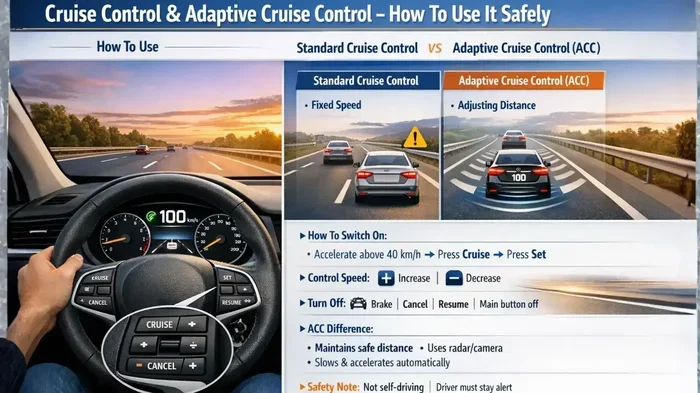
Most modern vehicles come with cruise control. This feature is designed to do exactly one thing: keep a car running at a constant speed without you touching the gas pedal. It is one of the most useful tools for steady highway driving.
When you set cruise control, the car uses sensors and the throttle system to regulate engine power. If the road starts to slope upward, the system adds more fuel to keep the speed steady. On a downhill slope, it eases off. The result is a smooth, hands-free driving experience that keeps your pace consistent.
How Cruise Control Works Under the Hood
Here is a quick look at the process. When you activate cruise control, you set your desired speed. The car’s computer then monitors the current speed using the wheel speed sensors. If the speed drops, the computer opens the throttle to let more air and fuel into the engine. If the speed rises, it closes the throttle slightly.
This entire process happens in milliseconds. You do not feel any jerking or hesitation. The car just stays right at the speed you picked. It is a clever piece of engineering that makes constant speed driving easy for everyone.
Adaptive Cruise Control: The Next Level
Many newer cars now offer adaptive cruise control. This goes a step further by using radar and cameras to detect the vehicle ahead. If the car in front slows down, your car slows down too. Once the road clears, it speeds back up to your set pace.
Adaptive cruise control takes the burden off your feet during long drives. It is especially helpful in heavy traffic or on long stretches of highway where fatigue can set in. Just remember that it still requires your full attention behind the wheel.
When to Use Cruise Control and When Not To
Cruise control works best on open highways with steady traffic flow. It is great for long road trips where you want to maintain a constant speed for hours. However, you should turn it off in heavy traffic, on winding roads, or in wet or icy conditions.
Using cruise control on slippery roads can be dangerous. If the car starts to slide, the system might try to accelerate, which makes things worse. Always use good judgment and be ready to take manual control when conditions change.
Quick Tips for Using Cruise Control Effectively
- Set your speed to the limit or just below it for safe, steady driving.
- Turn off cruise control in rain, snow, or icy conditions.
- Use adaptive cruise control in heavy traffic for added convenience.
- Do not rely on cruise control to keep you alert. Stay focused on the road.
- Practice deactivating cruise control quickly so you are ready for sudden changes.
The Science Behind a Car Running at a Constant Speed
There is some real science behind why a car runs at a constant speed the way it does. Understanding the basic forces at play can help you appreciate how your vehicle works and why steady driving is so efficient.
The Forces at Play: Thrust, Drag, and Friction
When a car moves, several forces act on it at the same time. The engine produces thrust, which pushes the car forward. At the same time, aerodynamic drag pushes back against the car as it moves through the air. Tire friction and road resistance also work against the motion.
When a car runs at a constant speed, thrust exactly balances all the opposing forces. The engine produces just enough power to overcome drag and friction. No extra power is needed because there is no acceleration. This balance is what keeps the speed steady.
How Engine Load Affects Constant Speed
Engine load plays a big role in maintaining constant speed. Load refers to the amount of work the engine has to do. Driving uphill increases the load because gravity pulls the car backward. Driving downhill decreases the load because gravity helps push the car forward.
A car that runs at a constant speed on flat ground needs less engine power than one climbing a hill. This is why you might notice your engine working harder on mountain roads, even if you are using cruise control. The system compensates by adding more fuel to keep the speed steady.
Kinetic Energy and Fuel Efficiency
Kinetic energy is the energy a moving car carries. The faster you go, the more kinetic energy you have. Keeping a car at a constant speed means you are not constantly building up and losing kinetic energy. This is a key reason why steady driving saves fuel.
Every time you accelerate, the engine burns extra fuel to build new kinetic energy. Every time you brake, that energy is wasted as heat. Constant speed driving skips all of that waste. The engine just maintains the energy the car already has, which is much more efficient.
Benefits of Keeping a Car at a Constant Speed
Driving at a constant speed offers a long list of benefits. From saving money at the pump to protecting your engine, the advantages are hard to ignore. Let us look at the biggest reasons why steady speed driving is worth your attention.
Better Fuel Economy
This is the most obvious benefit. A car that runs at a constant speed uses fuel far more efficiently than one that constantly speeds up and slows down. Studies show that steady highway driving can improve fuel economy by 10 to 15 percent compared to stop-and-go driving.
When you avoid unnecessary acceleration, the engine does not have to work as hard. It stays in its most efficient operating range. Over time, these fuel savings add up to real money in your pocket. For regular commuters and long-distance travelers alike, the difference is significant.
Reduced Engine Wear and Tear
Constant speed driving is gentle on your engine. The parts move at a steady rhythm without sudden spikes in power demand. This reduces wear on the pistons, crankshaft, bearings, and other moving components.
Less wear means fewer repairs over the life of your car. It also means your engine is more likely to reach high mileage without major problems. Taking care of your engine through steady driving habits is one of the best things you can do as a car owner.
Improved Safety on the Road
Driving at a constant speed makes your vehicle more predictable. Other drivers can anticipate your movements more easily. This reduces the risk of sudden lane changes, rear-end collisions, and other common highway accidents.
When you are not constantly adjusting your speed, you can pay more attention to the road ahead. You have more time to react to hazards, traffic changes, and unexpected obstacles. Steady driving creates a calmer, safer environment for everyone on the road.
Lower Emissions and Environmental Benefits
A car that runs at a constant speed produces fewer emissions. The engine burns fuel more completely when it operates at a steady load. This means less unburned fuel, fewer harmful pollutants, and a smaller carbon footprint.
If you care about the environment, constant speed driving is a simple way to make a difference. It does not require any special equipment or expensive upgrades. Just a change in how you drive can help reduce air pollution and conserve fuel resources.
Common Problems That Stop a Car From Running at a Constant Speed
Sometimes a car has trouble maintaining a steady speed. Several issues can cause this, and some are easy to fix while others need professional attention. Knowing what to look for can save you time, money, and frustration.
Faulty Cruise Control System
The cruise control system itself can malfunction. A broken speed sensor, a faulty actuator, or a wiring problem can prevent the system from holding a constant speed. You might notice the car speeding up or slowing down on its own, even with cruise control engaged.
If your cruise control stops working properly, do not ignore it. Have a mechanic check the system. In most cases, the fix is straightforward and affordable. But driving without working cruise control on long trips can be tiring and less efficient.
Throttle Body Issues
The throttle body controls how much air enters the engine. If it becomes dirty or malfunctions, the engine cannot maintain a steady supply of air. This leads to inconsistent speed, surging, or hesitation.
Throttle body cleaning is a common fix. A mechanic can remove the buildup of carbon and grime that restricts airflow. In more serious cases, the throttle body may need to be replaced entirely. Either way, addressing throttle issues promptly helps your car run smoothly.
Dirty or Failing Mass Airflow Sensor
The mass airflow sensor measures the amount of air entering the engine. It sends this data to the computer, which then determines the right fuel mixture. If the sensor is dirty or failing, it sends incorrect readings. The engine gets too much or too little fuel, causing speed fluctuations.
A bad mass airflow sensor often triggers the check engine light. If you notice this warning along with rough idling or inconsistent speed, get the sensor checked. Replacing it is usually inexpensive and can make a big difference in your car’s performance.
Vacuum Leaks
Your car’s engine relies on a system of vacuum lines to regulate various functions. If a vacuum line develops a leak, it can cause the engine to run lean or rich. This disrupts the balance of air and fuel, making it hard for the car to hold a constant speed.
Vacuum leaks often cause a rough idle or a hissing sound from the engine bay. A mechanic can use smoke testing or other diagnostic tools to find and fix the leak. This is a common and usually affordable repair that restores smooth driving.
Worn Spark Plugs or Fuel Injectors
Spark plugs and fuel injectors are essential for consistent engine performance. Worn spark plugs fire inconsistently, causing misfires and speed variations. Dirty fuel injectors deliver uneven fuel amounts, which also disrupts steady speed.
Regular maintenance goes a long way here. Replacing spark plugs on schedule and using fuel system cleaners can prevent these issues. If the problem has already started, replacing the worn parts usually brings back smooth, constant speed driving.
Practical Tips for Maintaining a Constant Speed While Driving
Now that you understand the science and benefits, let us talk about what you can actually do. These practical tips will help you keep a car running at a constant speed, whether you are using cruise control or driving manually.
Accelerate Gently and Gradually
One of the simplest habits you can build is gentle acceleration. Instead of pressing the gas pedal hard when the light turns green, ease into it smoothly. This keeps the engine in its efficient range and avoids sudden spikes in fuel use.
Gentle acceleration also reduces wear on your tires, brakes, and transmission. Over time, this smooth driving style becomes second nature. You will notice how much calmer and more controlled your drives feel.
Use the Right Gear for Your Speed
Keeping the car in the correct gear is essential for constant speed driving. If you are in too low a gear, the engine revs high and works too hard. If you are in too high a gear, the engine struggles and may lug.
For manual transmission cars, shift up early and keep the RPMs in the moderate range. For automatic cars, trust the transmission to find the right gear, but avoid riding the brakes or constantly toggling between overdrive and drive.
Keep Your Tires Properly Inflated
Tire pressure affects rolling resistance, which directly impacts how hard the engine has to work. Underinflated tires create more friction with the road. The engine has to push harder to maintain the same speed, which wastes fuel and makes steady driving harder.
Check your tire pressure at least once a month. Keep them at the level recommended by your car’s manufacturer. This small habit improves fuel economy, tire life, and your ability to drive at a constant speed with less effort.
Plan Your Routes to Avoid Heavy Traffic
Stop-and-go traffic is the enemy of constant speed driving. If you can, plan your routes to avoid peak traffic hours or congested areas. Using side streets or less popular routes can help you maintain a steadier pace.
GPS apps can help you find the smoothest route. Look for options that avoid heavy traffic and frequent stops. Even a slightly longer route with less congestion can lead to a more efficient and enjoyable drive.
Do Not Overload Your Vehicle
Carrying extra weight makes the engine work harder. If your trunk or roof rack is loaded with unnecessary items, the car needs more power to maintain the same speed. This extra effort disrupts the balance needed for constant speed driving.
Travel light whenever possible. Remove roof racks when you are not using them. Every bit of weight reduction helps the engine run more efficiently and makes it easier to keep a steady pace.
Get Regular Maintenance
Regular maintenance keeps your car in top shape for steady driving. Oil changes, air filter replacements, and fuel system cleaning all contribute to smooth engine performance. A well-maintained car is much better at holding a constant speed than one that has been neglected.
Follow your manufacturer’s maintenance schedule and do not skip recommended services. Think of it as an investment in your car’s performance, efficiency, and longevity. A little preventive care goes a long way.
Expert Insight: The Mental Benefits of Constant Speed Driving
Experienced driving instructors often emphasize that constant speed driving reduces driver fatigue. When you do not have to constantly adjust your speed, you can focus more on the road and your surroundings. This mental ease leads to better concentration and fewer mistakes.
Long-haul truck drivers and professional racers both know the value of steady speed. It keeps them alert, saves fuel, and reduces stress. You do not need to be a professional to benefit from the same approach. Just a few small changes in your driving habits can make a big difference.
Conclusion
A car runs at a constant speed when the forces acting on it are in perfect balance. The engine delivers steady power, the wheels turn at a consistent pace, and the drive feels smooth and effortless. This simple state of uniform motion brings real benefits to your wallet, your engine, and your safety.
From better fuel economy to reduced emissions and less engine wear, constant speed driving is one of the easiest ways to get more out of every trip. Cruise control is a great tool for maintaining steady speed on highways, but even manual driving can benefit from gentle acceleration and smooth gear changes.
When problems arise, such as faulty sensors or throttle issues, addressing them quickly keeps your car running at its best. And with regular maintenance, proper tire pressure, and smart route planning, you set yourself up for success every time you get behind the wheel.
The next time you hit the open road, try keeping a constant speed. Feel the difference it makes. You might just make it a permanent part of your driving style.
Frequently Asked Questions
What does it mean when a car runs at a constant speed?
It means the vehicle moves forward at an unchanging velocity with no acceleration or deceleration. The engine delivers steady power, and all forces acting on the car are balanced. This results in smooth, efficient driving with minimal fuel waste.
How does cruise control help a car maintain constant speed?
Cruise control uses sensors and a computer to monitor your car’s speed. It automatically adjusts the throttle to keep the vehicle at the set speed, even on hills. This takes the pressure off your foot and helps maintain a steady pace on long drives.
Does driving at a constant speed really save fuel?
Yes, it does. Constant speed driving avoids the extra fuel burned during acceleration and the energy lost during braking. Studies show that steady highway driving can improve fuel economy by 10 to 15 percent compared to inconsistent speed patterns.
What problems can prevent a car from running at a constant speed?
Common issues include a faulty cruise control system, dirty throttle body, failing mass airflow sensor, vacuum leaks, and worn spark plugs or fuel injectors. Each of these disrupts the engine’s ability to deliver consistent power, causing speed fluctuations.
Is constant speed driving safer than variable speed driving?
Yes, it generally is. When you drive at a steady pace, your vehicle is more predictable to other drivers. This reduces the risk of sudden collisions. Constant speed also reduces driver fatigue, which helps you stay alert and react better to road conditions.
Can driving at a constant speed reduce car maintenance costs?
Absolutely. Steady driving puts less stress on the engine, brakes, and transmission. It reduces wear and tear on these components, which means fewer repairs over time. Regular maintenance combined with smooth driving habits keeps your car running efficiently for years.
=== SEO Title ===
How a Car Runs at a Constant Speed and Why It Matters
=== META TITLE ===
How a Car Runs at Constant Speed | Why It Matters
=== URL SLUG ===
/car-runs-constant-speed