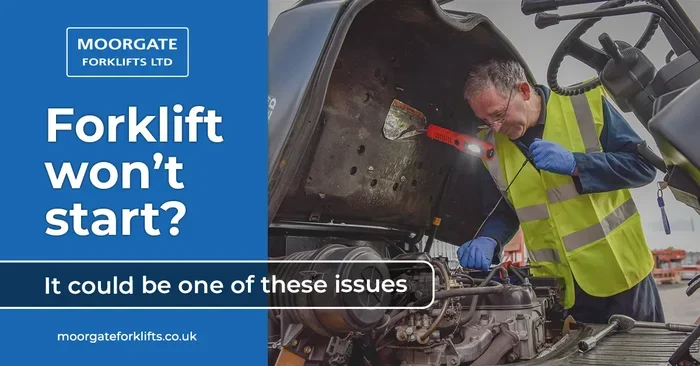
Why Isnt My Forklift Starting And How To Fix It Today
A forklift that wont start can shut down your entire operation. Whether you drive a diesel forklift or an electric model, the reasons are often simple and fixable. This guide walks you through the most common causes and gives you clear steps to get your forklift starting again today. You will learn how to check the battery, fuel system, starter motor, and more without calling a repair tech every time.
You walk up to your forklift on a busy Monday morning. You turn the key or press the start button. Nothing happens. Not even a click. Your heart sinks because you know every minute this machine sits idle, your warehouse operation loses momentum.
The good news is that a forklift not starting is one of the most common problems operators face. And most of the time, the fix is simpler than you think. Whether you run a diesel forklift, an electric model, or an LPG-powered unit, the starting process follows the same basic principles. Something is interrupting the flow of power, fuel, or air. Once you find that interruption, you can usually fix it yourself.
In this article, we will go deep into every reason your forklift might refuse to turn over. We will cover electrical problems, fuel issues, starter motor failures, and even mistakes you might be making without realizing it. By the end, you will have a clear troubleshooting roadmap and the confidence to get back to work.
Key Takeaways
- Dead or weak battery: The number one reason forklifts fail to start, especially electric models.
- Fuel system blockages: Clogged filters and low fuel levels are sneaky culprits that stop diesel and LPG forklifts cold.
- Starter motor and ignition faults: A clicking sound with no crank means your starter or solenoid may need attention.
- Operator error and safety locks: Simple mistakes like leaving the parking brake engaged or the key in the wrong position can prevent startup.
- Regular maintenance prevents most problems: A solid forklift maintenance schedule saves time and money.
- Know when to call a pro: Some issues like internal engine damage or alternator failure need a trained technician.
📑 Table of Contents
Common Reasons Your Forklift Wont Start
When your forklift wont start, the problem almost always falls into one of three categories: electrical, fuel, or mechanical. Let us break each one down so you know exactly what to look for.
Battery and Electrical Issues
The battery is the heart of your forklift starting system. Without a strong charge, nothing else matters. This is true for both electric forklifts and internal combustion models that rely on electrical ignition.
Here are the most common battery-related problems:
- Dead battery: The battery has completely lost its charge. This happens often when a forklift sits unused for a long time or when lights and accessories were left on overnight.
- Corroded terminals: White or greenish buildup on the battery terminals blocks the electrical connection. Even a thin layer of corrosion can prevent your forklift from turning over.
- Weak battery: The battery still has some charge but not enough to crank the engine. You might hear a slow, labored turning sound instead of a crisp start.
- Loose cables: The battery cables have come loose or the connections are not tight enough to deliver full power.
- Faulty alternator: The alternator is not recharging the battery while the engine runs. This means the battery slowly drains over time until it cannot start the forklift anymore.
Quick Tip: Keep a battery tester in your toolkit. A quick voltage check takes only a few seconds and tells you immediately whether the battery is the problem. For electric forklifts, check the water level in the battery cells if they are the conventional type. Low water levels lead to poor performance and a forklift not starting situation.
Fuel System Problems
If your battery is fine and you still hear nothing, the fuel system is the next place to look. A forklift needs fuel, air, and spark (or compression for diesel) to run. When any one of these is missing, you get a forklift wont start scenario.
Common fuel system issues include:
- Empty fuel tank: It sounds obvious, but this happens more often than you would think. Always check the fuel gauge first.
- Clogged fuel filter: Debris and contaminants build up over time and block fuel flow to the engine. A clogged filter starves the engine of fuel.
- Air in the fuel lines: Air bubbles in diesel fuel lines prevent proper injection. This is especially common after a fuel filter change or when the tank runs very low.
- Faulty fuel pump: The pump that moves fuel from the tank to the engine has failed. You will hear no humming sound when you turn the key.
- Bad fuel: Contaminated or old fuel can cause starting problems. Water in the diesel tank is a frequent offender.
Quick Tip: For diesel forklifts, always bleed the fuel system after running low on fuel. Air trapped in the lines is one of the top reasons a diesel forklift will not start after refueling. Most manufacturers include a hand primer pump near the fuel filter — use it until you feel solid resistance.
Starter Motor and Ignition Troubles
The starter motor is what actually cranks the engine. If the starter fails, you might hear a single click or nothing at all when you turn the key. This is a very common reason for forklift starting failures in warehouses and distribution centers.
Here is what to check:
- Bad starter motor: The motor itself has burned out or the brushes are worn down. You may hear a grinding noise before it stopped working entirely.
- Faulty solenoid: The solenoid is the switch that sends power to the starter motor. A bad solenoid means the starter never receives the signal to engage.
- Ignition switch failure: The switch that sends power from the battery to the starter has worn out. You might notice the dashboard lights come on but the engine does not crank.
- Wiring issues: Corroded or damaged wiring between the battery, solenoid, and starter can break the circuit.
Quick Tip: When you turn the key and hear a single click but the engine does not crank, the solenoid is usually the culprit. If you hear nothing at all, check the battery first because a dead battery mimics starter failure perfectly.
Electric vs Diesel Forklift Starting Problems
Not all forklifts are the same, and neither are their starting problems. Understanding the differences between electric and diesel models helps you narrow down the cause faster.
Electric Forklift Starting Issues
Electric forklifts are simpler in many ways because they do not have an engine with spark plugs, fuel injectors, or a complex fuel system. When an electric forklift wont start, the problem is almost always electrical.
Here are the top issues for electric models:
- Battery discharge: The main battery has run out of charge. This is the most common reason electric forklifts fail to start.
- Contactor failure: The contactors are heavy-duty switches that deliver power from the battery to the motor. A burned contactor means no power reaches the drivetrain.
- Controller malfunction: The electronic controller that manages power delivery has failed or has a fault code locked in.
- Safety interlock issues: Most electric forklifts have safety interlocks that prevent starting unless the brake pedal is pressed and the directional control is in neutral.
- Worn traction motor: In rare cases, the traction motor itself has failed and the forklift cannot start.
Expert Insight: Electric forklift operators should check the battery water level weekly if they use conventional lead-acid batteries. Modern lithium-ion batteries do not require this, but they can still develop charging faults that prevent starting. Always check the charger connection and make sure the charger is functioning properly.
Diesel and LPG Forklift Starting Issues
Internal combustion forklifts have more components that can fail. The forklift not starting problem for diesel and LPG models can involve fuel, air, compression, and electrical systems all at once.
Common issues include:
- Glow plug failure (diesel): Glow plugs heat the combustion chamber for cold starts. When they fail, the engine will not start, especially in cold environments.
- Compression loss: Worn piston rings or valve problems reduce compression. The engine turns but will not fire. This is a more serious mechanical issue.
- Clogged air filter: A dirty air filter restricts airflow to the engine. Without enough air, the fuel mixture cannot ignite properly.
- LPG gas leak: If the gas line has a leak, the engine will not receive enough fuel to start. Check for the smell of gas near the engine compartment.
- Timing belt or chain issues: A broken timing belt means the engine valves and pistons are out of sync. The forklift will not start and the engine will not turn over properly.
Quick Tip: On cold mornings, diesel forklifts especially need proper glow plug function. If your forklift struggles to start in winter but works fine in summer, the glow plugs or the glow plug relay are likely the problem. Replace them before the cold season hits.
Step-by-Step Troubleshooting Guide
When your forklift starting problem hits, follow this systematic approach. Working through the steps in order saves time and prevents you from replacing parts that are not actually broken.
Step 1: Check the obvious first. Is the parking brake engaged? Is the directional lever in neutral? Many modern forklifts have safety systems that prevent starting if these conditions are not met. It sounds silly, but operator error accounts for a surprising number of forklift wont start calls.
Step 2: Inspect the battery. Look at the battery terminals. Are they clean and tight? Use a multimeter to check the voltage. A fully charged battery should read 12.6 volts or higher. If it reads below 12.0 volts, the battery needs charging or replacement.
Step 3: Check the fuel level. Look at the fuel gauge. If the gauge says you have fuel but the forklift still will not start, the gauge sensor might be faulty. Try adding a small amount of fresh fuel to eliminate a false reading.
Step 4: Listen carefully when you turn the key. A single click usually points to the solenoid or starter motor. A rapid clicking sound means the battery does not have enough power. No sound at all suggests a wiring or ignition switch problem.
Step 5: Check the fuel system. For diesel forklifts, look at the fuel filter and bleed the lines. For LPG forklifts, check the gas cylinder valve and fuel lines for leaks or blockages.
Step 6: Inspect the air filter. A clogged air filter is an easy fix that many operators overlook. Remove the air filter element and hold it up to a light. If no light passes through, replace it.
Step 7: Call for help if needed. If you have gone through all the steps and the forklift still will not start, it is time to call a qualified forklift repair technician. Forcing the issue can lead to more expensive damage.
When To Call a Professional for Forklift Repair
Not every starting problem is a DIY fix. Some issues require specialized tools, diagnostic equipment, and trained mechanics. Knowing when to call a professional saves you time and prevents costly mistakes.
You should call a forklift repair service when you notice any of the following:
- Internal engine damage: If the engine makes unusual knocking or grinding sounds and will not turn over, there may be internal mechanical failure.
- Repeated electrical faults: If you have replaced the battery and the forklift still will not start, the problem might be in the wiring harness, fuse box, or control module.
- Hydraulic pump failure: Some forklifts will not start if the hydraulic pump has seized. This requires professional diagnosis and repair.
- ECU or computer faults: Modern forklifts have onboard computers that control starting sequences. A fault code stored in the ECU may prevent startup even if all mechanical parts are working.
- Warranty considerations: If your forklift is still under warranty, attempting your own repairs may void the coverage. Always check with your dealer first.
Expert Insight: Keep a relationship with a local forklift service provider. They can often diagnose problems over the phone and walk you through simple fixes before dispatching a technician. This saves you both time and money.
Preventive Maintenance Tips to Avoid Starting Problems
The best way to deal with a forklift not starting is to prevent it from happening in the first place. A solid forklift maintenance schedule keeps your machines running reliably and extends their lifespan.
Here is a maintenance checklist every operator and warehouse manager should follow:
- Daily battery checks: For electric forklifts, check the battery charge level and water level every morning before the shift starts.
- Weekly terminal cleaning: Clean battery terminals with a wire brush every week to prevent corrosion buildup.
- Monthly fuel filter inspection: Inspect the fuel filter for debris and replace it on schedule. A clean fuel filter prevents most fuel-related starting problems.
- Quarterly air filter replacement: Replace the air filter every three months or more often in dusty environments.
- Glow plug testing (diesel): Test glow plugs every quarter, especially before winter, to ensure they heat properly for cold starts.
- Starter motor inspection: Listen for unusual sounds when starting. A grinding noise is an early warning sign that the starter motor is wearing out.
- Scheduled professional servicing: Follow the manufacturer’s recommended service intervals. A trained technician can catch problems before they cause a starting failure.
Quick Tip: Keep a maintenance log for every forklift in your fleet. Record every check, every repair, and every part replacement. This log helps you spot patterns and predict when a component is about to fail. It also proves your team follows proper forklift maintenance practices during safety audits.
Common Mistakes That Cause Starting Problems
Many forklift starting problems are caused by simple mistakes that operators make every day. Avoiding these errors can save you hours of frustration.
- Leaving the directional lever out of neutral: Most forklifts will not start unless the directional lever is in the neutral position. This is a safety feature, and it is easy to forget after moving the forklift.
- Not pressing the brake pedal: Many models require the brake pedal to be pressed before the start button will work. This is another safety lockout that catches people off guard.
- Ignoring warning lights: Dashboard warning lights are there for a reason. A glowing battery light or check engine light is your forklift telling you something is wrong. Address it immediately.
- Using the wrong fuel: Putting gasoline in a diesel forklift or vice versa causes serious starting problems and can damage the engine permanently.
- Skipping the pre-shift inspection: The pre-shift inspection checklist exists to catch problems early. Skipping it means you might start a shift with a forklift that has a known issue.
- Overcharging the battery: Leaving the battery on the charger for too long can damage the cells and reduce their ability to hold a charge. This leads to a forklift wont start situation the next morning.
Key Takeaways
- Start with the battery: A dead or weak battery is the most common reason any forklift will not start. Always check this first.
- Follow a systematic troubleshooting approach: Work from the simplest possible cause to the most complex. Check the fuel level, battery, and safety interlocks before diving into electrical or mechanical repairs.
- Know your forklift type: Electric, diesel, and LPG forklifts have different starting systems and different common failure points. Tailor your troubleshooting to your specific model.
- Preventive maintenance is your best defense: Regular battery checks, filter replacements, and professional servicing prevent most starting problems before they happen.
- Do not ignore safety interlocks: Parking brake, neutral position, and brake pedal requirements are not annoyances — they are critical safety features that also affect starting.
- Call a professional when needed: Internal engine damage, ECU faults, and complex electrical issues need trained technicians. Trying to fix these yourself can make the problem worse.
Conclusion
A forklift not starting is never a fun way to start your day. But with the right knowledge, you can quickly identify the cause and get your machine back online. The most common reasons — dead batteries, fuel system problems, starter motor failures, and simple operator errors — are all fixable with basic tools and a little patience.
Remember to follow a logical troubleshooting process. Start with the simplest checks and work your way up. Keep up with your forklift maintenance schedule so problems do not catch you off guard. And when the issue is beyond your expertise, do not hesitate to call a professional forklift repair service.
The next time you face a forklift wont start situation, you will know exactly what to do. You will check the battery, inspect the fuel system, listen for telltale sounds, and work through the steps with confidence. That is the difference between an operator who gets stuck and an operator who gets back to work.
Keep this guide bookmarked. Share it with your team. And most importantly, take care of your forklifts and they will take care of your operation. A little prevention goes a long way toward avoiding the frustration of a forklift starting failure on the worst possible day.
Frequently Asked Questions
Why is my forklift completely silent when I turn the key?
A completely silent forklift usually points to a dead battery, a faulty ignition switch, or a broken electrical connection. Start by checking the battery voltage and cleaning the terminals. If the battery is fully charged, the problem is likely in the ignition switch or the wiring between the switch and the starter motor.
Can cold weather cause my forklift not to start?
Yes, cold weather is a major factor. Cold temperatures reduce battery capacity and make diesel fuel thicker and harder to pump. Diesel forklifts especially struggle in winter if the glow plugs are worn or the fuel has gelled. Keep your forklift in a warm area when possible and use winter-grade fuel in cold climates.
How do I know if my forklift battery needs replacing?
If your battery is more than four to five years old and consistently fails to hold a charge, it is time for a replacement. Other signs include slow cranking, dim dashboard lights, and the need to jump-start the forklift frequently. A simple load test from a forklift repair shop will confirm whether the battery is still healthy.
What should I do if my forklift starts but immediately stalls?
A forklift that starts but stalls right away usually has a fuel delivery problem. Check the fuel filter for clogs, bleed the fuel lines to remove air, and inspect the fuel pump for proper operation. In diesel models, also check the injection pump and ensure the fuel is not contaminated with water or debris.
Is it safe to jump-start a forklift battery?
Yes, jump-starting is safe when done correctly. Use a compatible battery with the same voltage rating. Connect the positive cable first, then the negative cable. Start the good battery first, then try starting the forklift. Always follow the manufacturer’s jump-starting procedures to avoid damaging the electrical system.
How often should I perform forklift maintenance to prevent starting problems?
Perform a daily visual inspection before each shift. Conduct a more thorough weekly check of the battery, fuel system, and air filter. Follow the manufacturer’s recommended service schedule for professional maintenance, which typically includes quarterly or semi-annual inspections depending on how heavily the forklift is used.