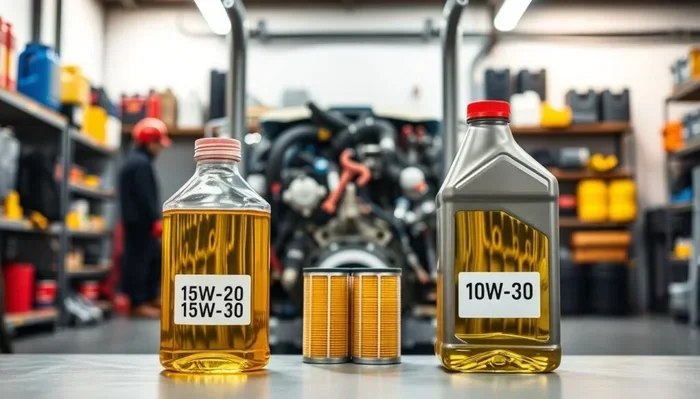
Can I Use 5W30 Instead of 5W20 Without Damaging My Engine
Using 5W30 instead of 5W20 is possible in many cases, but it depends on your engine, driving conditions, and manufacturer guidelines. The difference between these two oils lies in their viscosity at operating temperature, which affects how well your engine is protected. Switching to a thicker oil without checking compatibility can reduce fuel efficiency and potentially harm engine components over time. Always consult your owner’s manual before making any oil change decision.
You are standing in the auto parts store, staring at two bottles of motor oil. One says 5W20. The other says 5W30. Your car manual calls for 5W20, but the 5W30 is cheaper or on sale. So you wonder, can I use 5W30 instead of 5W20? This is a question car owners ask all the time. The answer is not as simple as yes or no. It depends on your engine type, driving habits, and what your vehicle manufacturer recommends.
Oil viscosity is the science behind this choice. Viscosity describes how thick or thin your oil is at different temperatures. The “W” stands for winter. The number before the W tells you how the oil flows in cold weather. The number after the W tells you how the oil behaves at normal operating temperature. So 5W20 and 5W30 behave the same way when it is cold. But they differ when your engine is warm. Understanding this difference is essential for keeping your engine healthy and running smoothly.
Key Takeaways
- Viscosity Matters: 5W30 and 5W20 differ in thickness at operating temperature, which directly impacts engine protection and performance.
- Manufacturer Recommendations Are Key: Always follow your vehicle maker’s oil weight suggestion to avoid warranty issues and engine damage.
- 5W30 Can Work in Some Cases: In certain engines and driving conditions, using 5W30 instead of 5W20 may be acceptable and even beneficial.
- Fuel Economy May Drop: Thicker oil creates more internal friction, which can slightly reduce your miles per gallon.
- Cold Weather Performance Stays the Same: Both oils flow similarly in cold starts because they share the same “5W” rating.
- Check Oil Pressure: Thicker oil can lower oil pressure readings, which may affect engine lubrication at high temperatures.
- When in Doubt, Ask a Pro: Consult a trusted mechanic if you are unsure which oil weight is best for your engine.
📑 Table of Contents
- What Does 5W20 vs 5W30 Actually Mean?
- Can I Use 5W30 Instead of 5W20 Safely?
- How Oil Viscosity Affects Engine Performance
- Common Mistakes People Make When Choosing Motor Oil
- Expert Tips for Choosing the Right Oil Weight
- What Happens If You Use the Wrong Oil Weight Long-Term?
- Key Takeaways
- Conclusion
What Does 5W20 vs 5W30 Actually Mean?
Let us break this down in plain language. The “5W” part means both oils flow well in cold weather. They both handle winter starts similarly. The number after the W is where things change. 5W20 oil is thinner at operating temperature. 5W30 oil is thicker at operating temperature. This single difference has a big impact on how your engine performs.
Understanding Oil Viscosity Ratings
The Society of Automotive Engineers, or SAE, created the viscosity rating system. It helps drivers choose the right oil for their engines. The first number (the “5W”) measures cold-flow performance. A lower number means the oil flows faster in cold conditions. The second number measures thickness at 100 degrees Celsius. This is roughly your engine’s normal operating temperature.
So when you ask, “can I use 5W30 instead of 5W20,” you are really asking about that second number. You are asking about oil thickness when your engine is hot. A 30-weight oil is thicker than a 20-weight oil. This means it creates more resistance as it moves through your engine. More resistance means your oil pump works harder. It also means your engine parts face slightly more friction.
Why Does Oil Thickness Matter?
Engine oil has several jobs. It lubricates moving parts. It reduces friction. It cools components that your radiator cannot reach. It also carries away tiny metal particles and debris. The thickness of your oil affects how well it does all of these tasks.
Thinner oil, like 5W20, flows more easily. It reaches engine components faster after a cold start. This means less wear during the most vulnerable moments. Thicker oil, like 5W30, creates a slightly stronger film between metal parts. This can offer extra protection in high-heat or high-stress situations.
Both oils have their place. The key is matching the right oil to your specific engine. Using the wrong weight can lead to problems over time.
Can I Use 5W30 Instead of 5W20 Safely?
This is the million-dollar question. The short answer is: it depends. In many modern engines, using 5W30 instead of 5W20 will not cause immediate damage. But long-term use of the wrong oil weight can lead to issues. Let us look at when it is safe and when it is not.
When 5W30 May Be Acceptable
There are situations where switching to 5W30 instead of 5W20 makes sense. Here are a few examples:
- High-mileage engines: Older engines with more wear may benefit from slightly thicker oil. It can help fill gaps between worn components.
- Hot climates: If you live in a very hot area, thicker oil maintains its protective film better at high temperatures.
- Towing or hauling: Heavy loads generate more heat. Thicker oil can offer extra protection under these conditions.
- Emergency situations: If you are stranded and only 5W30 is available, using it temporarily is generally fine.
In these cases, using 5W30 instead of 5W20 is unlikely to harm your engine. But it is still best to return to the manufacturer-recommended weight as soon as possible.
When You Should Stick with 5W20
There are also times when you should absolutely use 5W20 as recommended. Here are the main scenarios:
- New vehicles with tight tolerances: Modern engines are built with very small clearances. They are designed for thinner oil.
- Warranty requirements: Using the wrong oil weight can void your powertrain warranty in some cases.
- Fuel economy goals: Thinner oil reduces internal friction, which helps your engine sip fuel rather than guzzle it.
- Cold weather driving: While both oils flow well in the cold, 5W20 reaches critical engine parts slightly faster.
If your owner’s manual says 5W20, that recommendation comes from engineers who designed your engine. They know exactly what your engine needs for the best performance and longevity.
How Oil Viscosity Affects Engine Performance
Switching from 5W20 to 5W30 changes how your engine operates at a fundamental level. Let us explore the real-world effects.
Fuel Economy Impact
One of the biggest concerns with using a thicker oil is fuel economy. Thicker oil creates more drag inside your engine. Your engine has to work harder to pump it through passages and bearings. This extra work uses more fuel. Studies show that switching from a 20-weight to a 30-weight oil can reduce fuel efficiency by 1 to 3 percent. That may not sound like much, but it adds up over thousands of miles.
If you are trying to maximize your miles per gallon, sticking with 5W20 is the better choice. The difference is small, but it is real.
Oil Pressure and Flow
Thicker oil moves more slowly through your engine’s oil passages. This can affect your oil pressure readings. Some drivers notice lower oil pressure when using 5W30 instead of 5W20 in engines designed for thinner oil. Low oil pressure means less lubrication reaching critical components. Over time, this can increase engine wear.
On the other hand, some older engines with wider oil passages actually run better with slightly thicker oil. The oil stays in the gallery longer and provides more consistent coverage. This is why understanding your specific engine matters so much.
Engine Wear and Protection
Engine wear happens most during cold starts. This is when metal parts rub together before the oil fully circulates. Both 5W20 and 5W30 flow similarly in cold weather because they share the same “5W” rating. So cold-start protection is nearly identical between the two.
At operating temperature, the differences emerge. Thinner 5W20 reaches the top of your engine faster. It provides quicker protection to valve trains and camshafts. Thicker 5W30 may take a fraction of a second longer to reach those areas. In most modern engines, this difference is negligible. But in high-performance or tightly toleranced engines, it can matter.
Common Mistakes People Make When Choosing Motor Oil
Choosing the right oil is more important than most people realize. Here are some mistakes to avoid.
Assuming All Oils Are the Same
Not all motor oils are created equal. Even if two oils share the same viscosity rating, they can have different additive packages. Additives are chemicals blended into the oil to enhance performance. Some improve anti-wear protection. Others boost cleaning ability or help the oil last longer. Using the wrong additive package can cause problems even if the viscosity is correct.
Ignoring the Owner’s Manual
This is the most common mistake of all. Your vehicle owner’s manual contains the manufacturer’s oil recommendations. It tells you the correct viscosity, the required certifications, and the recommended oil change interval. Ignoring this guide can lead to poor performance, reduced engine life, or even voided warranties.
Following Someone Else’s Advice Blindly
Your uncle might swear by 5W30 in his truck. Your neighbor uses 5W20 in her sedan. But their engines are different from yours. Every engine has unique tolerances, designs, and requirements. What works for one vehicle may not work for another. Always base your oil choice on your specific vehicle’s needs.
Chasing Mileage with the Wrong Oil
Some people use thicker oil thinking it will last longer or protect better. This is a myth in most cases. Modern engines are designed to work with specific oil weights. Using a different weight to extend oil change intervals can actually cause more harm than good. The oil breaks down faster under improper conditions, not slower.
Expert Tips for Choosing the Right Oil Weight
Still unsure about which oil to use? Here are some practical tips from experienced mechanics and automotive engineers.
Check Your Owner’s Manual First
This should be your first and final authority. The manual lists the exact oil specification your engine needs. Look for the viscosity rating and any required certifications like API SP or ILSAC GF-6.
Consider Your Driving Conditions
Think about how and where you drive. Do you drive short trips in cold weather? Do you tow heavy loads? Do you spend hours on the highway in hot temperatures? Your driving conditions can influence which oil weight works best for your situation.
Look at Oil Labels Carefully
Oil bottles display important information on the label. Look for the viscosity rating, the API service category, and any manufacturer approvals. Some oils are specifically certified for certain engine types. Choosing an oil with the right certifications ensures it meets the performance standards your engine needs.
When to Consult a Professional
If you are ever in doubt, ask a qualified mechanic. They can inspect your engine, review your driving habits, and recommend the best oil weight. This small investment can save you from costly engine repairs down the road.
What Happens If You Use the Wrong Oil Weight Long-Term?
Using the wrong oil weight over a long period can cause real damage. Here are some potential consequences of consistently using 5W30 instead of 5W20 in an engine designed for 5W20.
- Reduced fuel economy: The thicker oil increases internal friction, costing you more at the pump.
- Increased engine wear: Thicker oil may not flow as quickly to all engine parts, especially during cold starts.
- Higher operating temperatures: More friction means more heat, which can degrade the oil faster.
- Poor cold-weather performance: While the “5W” rating is the same, the thicker oil at operating temperature can affect overall engine efficiency.
- Potential warranty issues: Some manufacturers require specific oil weights to maintain warranty coverage.
These risks are real but manageable. The key is to use the correct oil weight consistently and change your oil on schedule. If you accidentally used 5W30 once, do not panic. Switch back to 5W20 at your next oil change and your engine will be just fine.
Key Takeaways
- Viscosity Matters: 5W30 and 5W20 differ in thickness at operating temperature, which directly impacts engine protection and performance.
- Manufacturer Recommendations Are Key: Always follow your vehicle maker’s oil weight suggestion to avoid warranty issues and engine damage.
- 5W30 Can Work in Some Cases: In certain engines and driving conditions, using 5W30 instead of 5W20 may be acceptable and even beneficial.
- Fuel Economy May Drop: Thicker oil creates more internal friction, which can slightly reduce your miles per gallon.
- Cold Weather Performance Stays the Same: Both oils flow similarly in cold starts because they share the same “5W” rating.
- Check Oil Pressure: Thicker oil can lower oil pressure readings, which may affect engine lubrication at high temperatures.
- When in Doubt, Ask a Pro: Consult a trusted mechanic if you are unsure which oil weight is best for your engine.
Conclusion
The question “can I use 5W30 instead of 5W20” comes up often, and for good reason. The answer is not a simple yes or no. It depends on your engine, your driving conditions, and what your vehicle manufacturer recommends. In many cases, using 5W30 instead of 5W20 temporarily will not cause damage. But long-term use of the wrong oil weight can reduce fuel economy, affect engine performance, and potentially shorten your engine’s lifespan.
The safest approach is always to follow your owner’s manual. If your manual calls for 5W20, use 5W20. If you have a specific reason to switch, such as a high-mileage engine or extreme driving conditions, consult a professional first. Taking a few extra minutes to choose the right oil can save you thousands of dollars in engine repairs over the life of your vehicle.
Your engine is the heart of your car. Treat it right by giving it the oil it was designed to use. When in doubt, stick with the manufacturer’s recommendation. Your engine will thank you for it.
Frequently Asked Questions
What happens if I accidentally put 5W30 instead of 5W20?
One-time use of 5W30 instead of 5W20 is unlikely to cause immediate damage. The oil will still lubricate your engine properly. However, you should switch back to the recommended 5W20 at your next oil change to avoid any long-term effects on fuel economy or engine performance.
Is 5W30 thicker than 5W20?
Yes, 5W30 is thicker than 5W20 at operating temperature. Both oils flow the same way in cold weather because they share the “5W” rating. But at your engine’s normal running temperature, 5W30 maintains a thicker film than 5W20.
Can using 5W30 instead of 5W20 void my warranty?
It can, depending on your manufacturer’s policies. Many automakers require specific oil weights to maintain warranty coverage. If you use the wrong oil and experience engine damage, the manufacturer may deny your warranty claim. Always check your owner’s manual.
Does 5W30 give better engine protection than 5W20?
Thicker oil can offer a stronger protective film between metal parts. But engine protection depends on many factors, including the oil’s additive package and your engine’s design. For most modern engines, 5W20 provides excellent protection when used as recommended.
Can I mix 5W20 and 5W30 oil?
Mixing the two oils is not ideal but will not cause immediate harm in an emergency. The resulting blend will have a viscosity somewhere between the two. However, it is best to use a single oil weight consistently for optimal engine protection and performance.
Which oil is better for hot weather: 5W20 or 5W30?
In extremely hot climates, 5W30 may maintain its protective properties slightly better at high temperatures. However, most modern engines are designed to run on 5W20 even in warm weather. Always prioritize your manufacturer’s recommendation over general climate assumptions.