Where Can I Find the Year of My Forklift Right Here
Need to know the year of your forklift? Where Can I Find the Year of My Forklift is answered right here. This guide reveals the exact locations of the data plate, serial number, and year code on every major brand. You’ll also learn how to decode the number and avoid common mistakes.
You walk up to your forklift and need to know the year. Maybe it is for a safety inspection, a parts order, or a resale listing. The question Where Can I Find the Year of My Forklift is one of the most common calls we get. You are not alone if you have stood in front of the machine, staring at a metal plate covered in numbers and letters, and felt completely lost. The good news is that finding the year is easier than you think. This guide will walk you through every location, every code, and every trick that works for all major brands. You will walk away with the exact year in hand.
Knowing the year of manufacture matters more than most people realize. It affects which parts you can order, what safety standards apply, and even the resale value. A forklift that is ten years old may need different components than a five-year-old model. The forklift serial number and the data plate hold the key to this information. Once you learn how to read them, you will never guess again. Let us start with the main locations where the year hides.
Key Takeaways
- Check the data plate first: It is usually on the mast or dashboard and often lists the year of manufacture directly.
- Decode the serial number: The 10th character in most serial numbers indicates the model year.
- Look at the engine code plate: Some engines have a separate date stamp that reveals the production year.
- Brand-specific locations matter: Toyota, Crown, Hyster, and Komatsu each hide the plate in different spots.
- Use online lookup tools: Enter the serial number on the manufacturer’s website to get the exact year instantly.
- Don’t panic if you can’t find it: Maintenance records or a local dealer can help you determine the forklift’s age.
- Avoid common mistakes: Never confuse the forklift ID number with the serial number or engine stamp.
📑 Table of Contents
Why Knowing Your Forklift’s Year Matters
Before we dive into the search, let us talk about why this matters. The year of manufacture tells you a lot about your machine. It helps you determine the correct forklift model specifications. It also tells you which safety regulations apply. For example, a forklift built before 2000 might not meet current emission standards. Insurance companies often ask for the year when you file a claim. Parts departments need the year to ensure you get the right component. Even the forklift age can affect your maintenance schedule. A machine that is 15 years old needs more frequent checks than a newer one. So finding the year is not just a trivia game. It is a practical step that saves time, money, and headaches.
There are also legal reasons. In many regions, you must prove the year of manufacture during annual inspections. If you cannot show the correct documentation, you might face fines or downtime. That is why we put together this complete guide. We want you to find the year quickly and confidently, whether you are in a warehouse, a construction site, or a dealer lot.
Where Can I Find the Year of My Forklift: The Main Locations
The year of your forklift is stamped or printed in several places. Different manufacturers hide the information in different spots. Here are the main locations you should check first. Where Can I Find the Year of My Forklift becomes a simple task once you know where to look.
The Data Plate
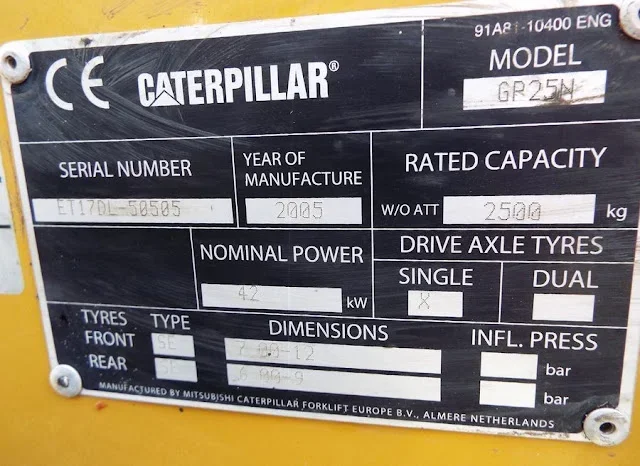
The data plate is the most common place to find the year. Also called the nameplate or identification plate, this metal tag is usually bolted to the forklift. On most internal combustion trucks, you will find it on the mast or the dashboard area. On electric forklifts, it is often on the battery tray or the overhead guard. The data plate lists the truck’s capacity, weight, and serial number. The year of manufacture is often printed right there, sometimes labeled as “Year” or “Mfr. Year.” If you see a date code like “E10” or “D12,” that is the year. The letter represents the month and the number the year. For example, “E10” means May 2010. This is the easiest way to answer where can I find the year of my forklift for most machines.
The Serial Number Plate
Almost every forklift has a serial number plate. This plate is separate from the data plate in some brands. On Toyota forklifts, the serial number plate is on the left side of the mast, near the carriage. On Crown forklifts, you will often find it on the right side of the frame. The serial number itself contains the year code. We will decode that in the next section. The plate is usually made of aluminum and is resistant to rust. If your forklift has been in a harsh environment, the plate might be hard to read, but it is still there. Use a wire brush or a damp cloth to clean it off. The serial number is your best friend when you need the year.
The Engine Date Code
If your forklift has an internal combustion engine, the engine itself often has a date stamp. This engine serial number includes the manufacturing date. On Caterpillar engines, you will find the date code on the engine block near the fuel pump. On Komatsu engines, check the cylinder head or the timing gear cover. The format varies, but it usually includes a letter for the month and numbers for the year. For instance, “A9” might mean January 2009. This method works especially well if the forklift’s main data plate is missing or damaged. The engine date code gives you a reliable year of manufacture for the powerplant. Just remember that the engine might have been replaced at some point, so the engine date might not match the truck’s build date.
The Frame Stamping
Some forklifts have the year stamped directly into the frame. This is common on older Hyster and Yale models. You will need to look closely at the rear axle area or the underside of the carriage. The stamping is often small and covered in grease or paint. Use a flashlight and a wire brush to reveal it. The frame stamping is permanent and cannot be easily altered. That makes it a trustworthy source for the forklift year. If you find a series of numbers and letters, the last two digits usually represent the year. For example, “12345Y68” means 1968. This method requires a bit of detective work, but it pays off.
The VIN on Electric Forklifts
Electric forklifts often have a VIN (Vehicle Identification Number) similar to a car. The VIN is usually located on the battery compartment or the chassis. The 10th character of the VIN represents the model year. For example, the letter “L” stands for 2020, and “M” stands for 2021. You can use a VIN decoder tool online to get the exact year. This is a quick method if you know where to find the VIN. It is especially useful for electric pallet jacks and reach trucks. The VIN also gives you access to the full forklift history, including any recalls or service records.
How to Decode the Serial Number for the Year
Once you have the serial number, you can decode it to find the year. Every manufacturer has a slightly different format, but most follow a standard pattern. The serial number is a long string of letters and numbers. The 10th character is the most common place for the year code. Let us break this down.
Understanding the 10th Character Rule
In the forklift serial number, the 10th character indicates the model year. The code uses a rolling alphabet. For example, the letter “A” might mean 1980 or 2010, depending on the brand. “B” means 1981 or 2011, and so on. The letter “J” usually stands for 2018, and “K” for 2019. The letter “L” is 2020, “M” is 2021, and “N” is 2022. After “Y,” the cycle resets. This system is used by many brands, including Toyota, Crown, and Hyster-Yale. If you see the 10th character as “R,” that means 2024. You can find charts online that map the letters to years. Just search for “forklift serial number year lookup” and you will find plenty of resources.
Using Online Lookup Tools
If decoding the serial number feels overwhelming, you can use an online forklift year lookup tool. Most major manufacturers offer a free lookup form on their websites. You simply enter the serial number, and the system returns the year, model, and specifications. For Toyota, go to the Toyota Material Handling website and enter the serial number in the “Lookup” section. For Crown, use the Crown Equipment serial number decoder. Hyster-Yale has a similar tool on their site. These tools are fast and accurate. They save you from guessing. Just make sure you have the full serial number, including any prefixes or suffixes. The lookup tool will also give you the forklift model and the plant where it was built. This is a great way to get a complete picture of your machine’s forklift history.
Common Forklift Brands and Their Year Code Locations
Different brands hide the year information in different places. Here is a quick guide to the most common forklift manufacturers. Use this table to find the right spot for your machine.
| Brand | Data Plate Location | Serial Number Location | Year Code Format |
|---|---|---|---|
| Toyota | Left side of the mast | Left side of the mast, near the carriage | 10th character of serial number |
| Crown | Right side of the frame | Right side of the frame, near the counterweight | 10th character of serial number |
| Hyster-Yale | On the dashboard or mast | On the frame, near the rear axle | Letter-number combo on data plate |
| Komatsu | On the engine block or frame | On the frame, near the fuel tank | Date stamp on engine block |
| Caterpillar | On the data plate near the mast | On the engine block, near the fuel pump | Engine date code |
Toyota forklifts are very straightforward. The data plate is on the left side of the mast, and the serial number is on the same plate. The year is often printed as “Year: 2015” or encoded in the serial number. Crown forklifts place the data plate on the right side of the frame. The serial number is right next to it. Hyster-Yale uses a combination of a data plate and a frame stamping. The year is usually on the data plate, but older models may have it stamped on the rear axle. Komatsu forklifts often have the year on the engine date code. Caterpillar engines have a clear date stamp on the block. If you own a Komatsu forklift or a Caterpillar forklift, checking the engine is your best bet.
Quick Tips for Finding the Plate
- Bring a flashlight. The plate is often in a dark corner.
- Wear gloves. The plate can be sharp or greasy.
- Clean the plate first. Dirt and grime can hide the numbers.
- Take a photo. If you cannot read it on the spot, zoom in later.
- Check the owner’s manual. It will show the exact plate location for your model.
What If You Can’t Find the Year?
Sometimes the plate is missing, damaged, or worn beyond recognition. Do not panic. There are several backup methods to determine the year of manufacture. Even if the forklift looks like a mystery box, you can still find its age.
Contact the Manufacturer
Call the manufacturer’s customer service line. They can look up the serial number in their database and tell you the exact year. Toyota’s support team is very helpful with this. Crown and Hyster-Yale also have dedicated lookup services. You will need the full serial number and the model name if you have it. The manufacturer can also tell you if the forklift had any special configurations or updates. This is the most accurate method, especially for older machines.
Check Maintenance Logs
If the forklift is still in active service, check the maintenance logs. The service records often note the year during the first inspection. Fleet managers keep detailed logs of every repair and part replacement. You can also check the parts catalog. When you order a part, the catalog lists the compatible years. If a part fits a 2015–2020 model, you know the forklift falls in that range. This method is not exact, but it narrows down the forklift age significantly.
Use a Third-Party Service
Several third-party companies specialize in forklift year lookup services. You pay a small fee, and they run the serial number through their database. These services often have broader coverage than the manufacturer’s own tools. They can identify the year even if the forklift was sold under a different brand name. For example, some forklifts were rebadged and sold under multiple names. A third-party service will know the original manufacturer and the build year. This is a great option if you are buying a used forklift and the seller cannot provide the year.
Ask a Local Dealer
A local forklift dealer can often tell the year just by looking at the machine. They have seen thousands of forklifts and recognize the subtle differences between model years. They can also check the forklift ID number against their internal records. Even if the forklift is not from their brand, they usually have access to cross-reference databases. This is a quick and easy solution if you have a dealer nearby.
Quick Tips and Common Mistakes
Finding the year of your forklift is straightforward once you know the basics. Here are some quick tips to make the process even easier, followed by the most common mistakes to avoid.
Quick Tips
- Always start with the data plate. It is the most reliable source and usually lists the year directly.
- Use a smartphone camera. Zoom in on the plate and enhance the contrast to read faint numbers.
- Keep a record. Once you find the year, write it down and keep it with the forklift’s manual. This saves time in the future.
- Check multiple locations. If one plate is missing, try the engine date code or the frame stamping.
- Verify with the owner’s manual. The manual will show the exact plate location and format for your specific model.
Common Mistakes
- Confusing the serial number with the forklift ID number. The ID number is for the truck as a whole, while the serial number is for the specific model and year.
- Assuming the engine year is the truck year. The engine might have been replaced. The engine date code reflects the engine’s build date, not the forklift’s.
- Ignoring the data plate location. Some people look only on the dashboard and miss the plate on the mast or frame.
- Relying on a single character. The 10th character of the serial number is a common method, but some brands use a different position. Always double-check with a lookup chart.
- Guessing based on appearance. A forklift with new paint or updated stickers might look newer than it is. Always rely on the official codes.
By avoiding these mistakes, you will save hours of frustration. The forklift year is there, waiting to be found. Once you know where to look, it becomes second nature.
Conclusion
Finding the year of your forklift does not have to be a mystery. Whether you check the data plate, decode the serial number, or look at the engine date code, the answer is always within reach. You now know the main locations for every major brand. You also have the tools to decode the year yourself or use online lookup services. Remember to start with the data plate, clean it if needed, and use the 10th character rule for the serial number. If all else fails, contact the manufacturer or a local dealer. They are there to help. The next time someone asks where can I find the year of my forklift, you will be the expert who gives the answer with confidence. Take a few minutes today to locate your forklift’s year. It is one of the simplest yet most valuable things you can do for your equipment.
Frequently Asked Questions
What is the easiest way to find the year of my forklift?
The easiest way is to check the data plate, which is usually on the mast or dashboard. The year of manufacture is often printed directly on this plate, labeled as “Year” or “Mfr. Year.” If the plate is missing, you can decode the serial number or check the engine date code.
Where is the data plate located on a Toyota forklift?
On a Toyota forklift, the data plate is located on the left side of the mast, near the carriage. It is a metal tag that lists the truck’s capacity, serial number, and year of manufacture. You can also find the serial number on the same plate.
Can I find the forklift year using the serial number?
Yes, you can. Most forklift serial numbers use the 10th character to indicate the model year. For example, the letter “L” stands for 2020, and “M” stands for 2021. You can use an online forklift year lookup tool to decode the serial number quickly and accurately.
What if the data plate is missing or damaged?
If the data plate is missing, check the engine date code on the engine block or the frame stamping on the rear axle. You can also contact the manufacturer with the serial number, check maintenance logs, or use a third-party forklift year lookup service. A local dealer may also be able to identify the year by visual inspection.
Does the engine year match the forklift year?
Not always. The engine date code reflects when the engine was manufactured, not necessarily when the forklift was built. The engine might have been replaced during the forklift’s life. Always check the data plate or serial number for the actual year of the forklift itself.
How do I know if my forklift is too old for certain parts?
The year of manufacture helps you determine parts compatibility. Manufacturers often stop producing parts for models that are 15–20 years old. If your forklift is older than that, you may need to look for aftermarket or refurbished components. Knowing the exact year ensures you order the right parts the first time.