What Is the Most Sold Car Brand in the World Right Now
Toyota holds the title of the most sold car brand in the world right now, leading global automotive sales with millions of vehicles sold each year. The best-selling car brand owes its dominance to reliability, a massive global footprint, and smart product strategy. Understanding car sales figures and global automotive sales trends helps buyers and industry fans alike grasp why certain brands dominate the car brand rankings.
If you have ever wondered which most sold car brand in the world is, the answer might surprise you. Toyota has claimed the top spot for years, and its grip on the global market shows no signs of loosening. But the race among top car manufacturers is closer than many people think.
The auto industry is massive. Every year, tens of millions of vehicles roll off assembly lines around the globe. Brands compete fiercely for car brand market share, and the most popular car brand changes based on sales numbers, new models, and shifting consumer tastes. In this article, we break down the best-selling car brand, explore why it leads, and look at the brands chasing close behind.
Whether you are a car enthusiast, a buyer shopping for a new ride, or just curious about global automotive sales, this guide has everything you need. We will cover sales data, brand strategies, and the automotive industry trends that are reshaping the road ahead.
Key Takeaways
- Toyota is the most sold car brand in the world right now: The Japanese automaker leads global vehicle sales year after year.
- Volkswagen Group is the strong runner-up: Its group-wide sales put it close behind Toyota in the car brand rankings.
- Reliability drives sales: Toyota’s reputation for durability is a major reason it stays on top of the global car market.
- Hybrid technology gives Toyota an edge: The best-selling vehicles from Toyota include hybrid models that appeal to eco-conscious buyers.
- Hyundai is rising fast: The South Korean brand is closing the gap in passenger car sales worldwide.
- Sales methods matter: How car sales figures are counted can change which brand appears at the top of the list.
- Electric vehicles are reshaping the auto industry: EV adoption is shifting the automotive industry trends that define the largest automaker title.
📑 Table of Contents
The Current Leader in Global Car Sales
When it comes to vehicle sales worldwide, Toyota stands tall. The Japanese automaker has held the crown as the most sold car brand in the world for many consecutive years. Its Toyota Motor Corporation operations span more than 170 countries, making it a true global powerhouse.
Toyota’s Dominance in Numbers
Toyota sold over 11 million vehicles in recent years. That number puts it far ahead of most competitors. Its lineup includes sedans, SUVs, trucks, and commercial vehicles. Models like the Corolla, Camry, RAV4, and Hilux are best-selling vehicles in multiple markets. The Corolla alone has sold over 50 million units since its launch in 1966.
What makes Toyota’s numbers so impressive? The brand sells well in nearly every region. North America loves its trucks and SUVs. Europe favors its hybrid models. Asia and Africa rely on Toyota’s durable and affordable cars. This broad appeal is a key reason Toyota remains the most popular car brand on the planet.
How Toyota Stays Ahead of the Competition
Toyota does not just sell cars. It builds a system around them. The Toyota Production System, known for lean manufacturing, reduces waste and improves quality. This approach lets Toyota build vehicles faster and cheaper than many rivals.
Here is what keeps Toyota on top:
- Reliability: Toyota cars are known to last. Owners trust them for low maintenance costs and long lifespans.
- Global manufacturing: Toyota operates factories in Japan, the United States, Thailand, India, and many other countries. This lets it build cars close to where they are sold.
- Strong dealer network: Toyota dealerships are easy to find in most countries, making buying and servicing a breeze.
- Smart product mix: Toyota balances economy cars, luxury models, and performance vehicles to appeal to a wide audience.
- Hybrid leadership: Toyota was the first to mass-produce hybrid cars. The Prius started it all, and now hybrid versions of popular models drive strong sales.
Expert Insight: According to industry analysts, Toyota’s ability to adapt to local markets is its greatest strength. The brand does not force a one-size-fits-all approach. Instead, it tailors models to regional needs, from compact cars for crowded cities to rugged trucks for rural areas.
Top Car Brands by Sales Volume
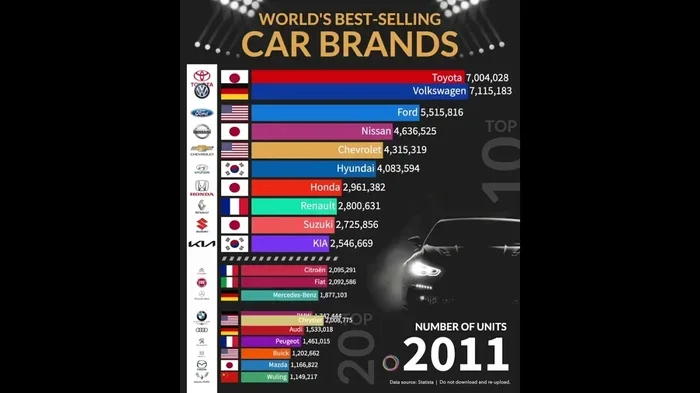
Toyota leads, but who else makes up the top of the car brand rankings? Let us look at the brands that dominate global automotive sales and see how they compare.
| Brand | Parent Group | Approximate Annual Sales (millions) | Home Country | Key Strengths |
|---|---|---|---|---|
| Toyota | Toyota Motor Corporation | ~11.2M | Japan | Reliability, hybrids, global reach |
| Volkswagen | Volkswagen AG | ~9.2M | Germany | Volume through group brands, strong in Europe |
| Hyundai | Hyundai Motor Group | ~7.5M | South Korea | Value for money, fast EV rollout |
| Chevrolet | General Motors | ~6.0M | United States | Strong in North America, trucks and SUVs |
| Ford | Ford Motor Company | ~4.7M | United States | Truck dominance in the U.S., growing EV lineup |
| Honda | Honda Motor Co. | ~4.5M | Japan | Fuel efficiency, reliability, strong motorcycle division |
As you can see from the car sales figures, Toyota holds a clear lead. But Volkswagen Group is a close second. When you count all the brands under its umbrella, including Audi, Skoda, SEAT, and Lamborghini, the group’s total sales are massive.
Volkswagen Group: The Strong Runner-Up
Volkswagen AG is based in Wolfsburg, Germany. The group sells cars under many brands. On its own, the VW brand sells around 9 million vehicles per year. Add in Audi, Skoda, and SEAT, and the group’s total climbs even higher. This is why many experts consider Volkswagen Group the largest automaker by group volume.
Volkswagen’s strength lies in Europe and China. The Golf, Passat, and Tiguan are best-selling vehicles in many European markets. In China, VW has partnerships with local automakers that help it sell millions of cars each year.
Hyundai Motor Group and Other Challengers
Hyundai Motor Group, which includes Hyundai and Kia, has been gaining ground fast. The group sold over 7.5 million vehicles in recent years. Hyundai’s success comes from offering great value. You get modern features, solid build quality, and long warranties at a lower price than many Japanese and European rivals.
Hyundai is also investing heavily in electric vehicles. The Ioniq 5 and EV6 have received rave reviews. This push into EVs could help Hyundai climb even higher in the car brand rankings in the coming years.
Quick Tips for Buyers:
- Compare total cost of ownership: A cheaper car may cost more in repairs over time. Toyota’s reliability often saves money in the long run.
- Check local availability: Some brands have better dealer networks in certain regions. Choose a brand that is easy to service where you live.
- Consider resale value: Best-selling vehicles like Toyota models tend to hold their value better than niche brands.
Why Toyota Leads the Global Market
Toyota’s position as the most sold car brand in the world is not an accident. Several factors work together to keep the brand on top. Let us break them down.
Reliability and Build Quality
When people think of Toyota, they think of reliability. The brand consistently ranks at the top of reliability surveys. Cars like the Toyota Camry and Corolla have earned reputations for lasting well over 200,000 miles with proper care.
This reputation matters. Buyers choose Toyota because they trust it. They know a Toyota will start every morning, require fewer repairs, and hold its value. In the global car market, trust translates directly into sales.
Global Production and Distribution Network
Toyota builds cars on every continent except Antarctica. The brand has manufacturing plants in Japan, the United States, Thailand, Indonesia, India, Brazil, Mexico, and more. This global network gives Toyota several advantages.
- Lower shipping costs: Building cars close to where they are sold reduces transport expenses.
- Faster response to local demand: Toyota can adjust production based on what each market needs.
- Protection from trade disruptions: With factories in many countries, Toyota is less vulnerable to tariffs and supply chain issues.
This wide reach is a big reason Toyota sales remain strong worldwide. The brand understands local tastes and builds accordingly.
Hybrid Technology Leadership
Toyota launched the Prius in 1997, making it the first mass-market hybrid car. Today, Toyota offers hybrid versions of many of its models, from the Corolla to the RAV4. Hybrids appeal to buyers who want better fuel economy without the range anxiety of full electric vehicles.
Toyota has sold over 20 million hybrid vehicles globally. No other automaker comes close to this number. This hybrid expertise gives Toyota a unique selling point in the auto industry, especially in markets where fuel prices are high and emissions regulations are strict.
Common Mistakes Buyers Make:
- Ignoring total cost of ownership: Many buyers focus only on the sticker price. Toyota’s lower maintenance and fuel costs often make it the cheaper choice over time.
- Overlooking hybrid options: Some shoppers skip hybrids because they think they are too expensive. In reality, Toyota hybrids often pay for themselves through fuel savings.
- Assuming all brands are equal in reliability: Not all top car manufacturers share Toyota’s track record. Research reliability ratings before buying.
How Car Sales Are Measured Around the World
Understanding car sales figures is not as simple as it sounds. Different organizations count sales in different ways. Some count registrations. Others count deliveries from factories. And some include both new and used vehicle sales.
Here is how the most sold car brand in the world is typically determined:
- Registration data: This counts how many new cars are registered with government authorities in each country. It is the most common method used by industry groups.
- Factory deliveries: This counts how many cars automakers ship to dealers. It can be higher than registration numbers because some cars sit on dealer lots for months.
- Retail sales: This counts actual sales to end consumers. It is the most accurate measure of what people are actually buying.
For the purpose of this article, we focus on registration and factory delivery data from major industry sources like the International Organization of Motor Vehicle Manufacturers (OICA) and consulting firms like Cox Automotive and JATO Dynamics.
One important note: some brands sell more when you group them by parent company. For example, the Volkswagen Group includes brands like Audi, Skoda, and Porsche. If you count the group as one entity, its numbers jump significantly. Toyota Motor Corporation is a single brand, which makes direct comparisons trickier.
Automotive Industry Trends Shaping the Future
The auto industry is changing fast. New automotive industry trends are reshaping which brands lead the global car market. Let us look at the biggest forces driving change.
The Rise of Electric Vehicles
Electric vehicles, or EVs, are growing fast. Brands like Tesla, BYD, and Hyundai are investing billions in EV development. Governments around the world are pushing for stricter emissions rules, which is accelerating the shift to electric powertrains.
Toyota has been slower to embrace full EVs compared to some rivals. The brand has bet heavily on hybrids and hydrogen fuel cells instead. This strategy has worked well so far, but the auto industry is watching closely to see if Toyota can keep its lead as the most sold car brand in the world in an increasingly electric future.
Shifting Consumer Preferences
Buyers today want more than just reliability. They want technology, connectivity, and sustainability. Younger buyers especially care about a brand’s environmental impact. This is pushing all top car manufacturers to invest in cleaner vehicles and digital features.
Brands that adapt fastest to these changing preferences will likely rise in the car brand rankings. Those that resist change risk losing market share, even if they have long histories of success.
Supply Chain Challenges
The COVID-19 pandemic and subsequent chip shortages hit the auto industry hard. Factory shutdowns and parts shortages slowed vehicle sales worldwide for several years. Toyota was affected too, but its strong supply chain management helped it recover faster than many competitors.
Today, the industry is stabilizing, but risks remain. Geopolitical tensions, trade wars, and raw material shortages continue to pose challenges for automakers trying to meet global demand.
Expert Insight: Industry analysts believe the next decade will see even more consolidation among top car manufacturers. Brands that cannot invest in new technologies like EVs and autonomous driving may struggle to stay competitive. The title of most popular car brand could shift as new players emerge and consumer habits evolve.
Conclusion
So, what is the most sold car brand in the world right now? The answer is clear: Toyota. The Japanese giant leads the global automotive sales charts thanks to its unmatched reliability, vast global production network, hybrid technology leadership, and deep understanding of local markets.
But the race is far from over. Volkswagen Group, Hyundai Motor Group, and other top car manufacturers are closing the gap. The rise of electric vehicles and shifting consumer preferences are reshaping the auto industry in real time. Brands that adapt quickly will have the best chance of challenging Toyota’s long reign.
If you are in the market for a new car, Toyota remains a safe and smart choice. Its best-selling vehicles offer proven quality, strong resale value, and low ownership costs. But it is always worth exploring the full car brand rankings to find the model that fits your needs and budget best.
The global car market is dynamic and exciting. Whether you care about car sales figures or simply want a reliable ride, understanding which brands lead the way helps you make a smarter decision. Toyota has earned its place at the top, and it will be fascinating to see how the automotive industry trends of the next decade reshape the landscape of the most popular car brand on earth.
Frequently Asked Questions
Which is the most sold car brand in the world right now?
Toyota is the most sold car brand in the world right now. The Japanese automaker has led global vehicle sales for many years, selling over 11 million vehicles annually across its lineup of sedans, SUVs, trucks, and hybrids.
What makes Toyota the most sold car brand in the world?
Toyota’s dominance comes from its reputation for reliability, a massive global manufacturing network, and a smart product strategy. The brand builds cars that last long, costs less to maintain, and appeals to buyers in nearly every country. Its hybrid technology leadership also gives it a unique edge in the auto industry.
Is Volkswagen Group the largest automaker by total sales?
When you count all brands under the Volkswagen Group umbrella, including Audi, Skoda, SEAT, and Porsche, the group’s total sales are very competitive with Toyota. However, Toyota remains the single most popular car brand by its own sales numbers.
How are car sales figures counted for the car brand rankings?
Car sales figures are typically counted using registration data from government agencies, factory deliveries to dealers, and retail sales to end consumers. Different sources may use different methods, which can cause slight variations in rankings. Organizations like OICA and JATO Dynamics are commonly used as data sources.
Will Hyundai or another brand overtake Toyota as the most sold car brand?
Hyundai Motor Group is growing fast and investing heavily in electric vehicles. While it is closing the gap, Toyota’s long history of reliability and global reach give it a strong lead. It would take significant shifts in automotive industry trends for another brand to overtake Toyota in the near future.
Why do Toyota vehicles hold their value better than other brands?
Toyota vehicles hold their value because of their proven reliability, low maintenance costs, and strong demand in the used car market. Buyers trust Toyotas to last, which keeps demand high for pre-owned models. This reputation for durability is a key reason Toyota sales remain strong in both new and used segments.