What Button Turns Off Traction Control Fast and Easy
Knowing what button turns off traction control can save you from getting stuck and give you more control in tricky driving situations. The traction control button is usually found on the steering wheel, center console, or dash panel of most vehicles. This guide walks you through the exact steps for every car type, explains why you might want to disable it, and warns you about common mistakes drivers make.
Have you ever been driving and felt your car losing grip on a wet or icy road? That feeling can be scary. Your vehicle has a safety system called traction control that helps keep your wheels from spinning out. But sometimes, you need to turn it off. Whether you are stuck in snow, heading off-road, or just curious about how your car works, knowing what button turns off traction control is a useful skill every driver should have.
Not all cars have the same setup. Some vehicles place the button right on the steering wheel. Others hide it on the center console or near the gear shift. This guide will show you exactly where to look and how to find it fast. We will also cover when it makes sense to turn traction control off and when you should leave it on for safety.
By the end of this article, you will never have to guess again. You will understand your traction control system, locate the switch in any vehicle, and drive with confidence in all conditions.
Key Takeaways
- Location Varies by Vehicle: The traction control button can be on the steering wheel, center console, or dash, depending on your car model.
- Quick Access Matters: Most modern vehicles let you turn off traction control in under two seconds with a single button press.
- Know When to Use It: Disabling traction control helps in off-road driving, deep snow, or when your car is stuck, but it should stay on for normal road conditions.
- Warning Lights Tell the Story: A traction control warning light on your dashboard confirms the system is on or off.
- Reset Is Simple: Restarting your vehicle or pressing the button again typically resets the traction control system back to default.
- Safety First: Always re-enable traction control when driving on regular roads to maintain vehicle stability and prevent accidents.
📑 Table of Contents
- What Is Traction Control and Why Does It Matter?
- Where Is the Traction Control Button Located?
- How to Turn Off Traction Control in Different Vehicles
- When Should You Turn Off Traction Control?
- When Should You Keep Traction Control On?
- Common Mistakes When Disabling Traction Control
- Quick Tips for Finding the Traction Control Button
- What to Do If the Button Does Not Work
- Resetting the Traction Control System
- Expert Insights on Traction Control and Safe Driving
- Key Takeaways
- Conclusion
What Is Traction Control and Why Does It Matter?
Before you learn what button turns off traction control, it helps to understand what the system does. Traction control is a safety feature in modern vehicles. It prevents your wheels from spinning too fast when the road surface is slippery. The system uses sensors on each wheel to detect wheel slippage. When it senses a loss of grip, it reduces engine power or applies the brakes to that wheel.
This technology works hand in hand with your anti-lock braking system, or ABS. Together, these systems help you maintain control during sudden stops or slippery conditions. Most drivers never think about traction control because it works quietly in the background. But when you are stuck in mud or deep snow, the system can actually make things worse by limiting wheel spin.
How Traction Control Works Under the Hood
Your car uses wheel speed sensors to monitor how fast each tire is spinning. If one wheel starts spinning faster than the others, the system kicks in. It either reduces fuel delivery to the engine or applies a light brake to that specific wheel. This helps the tire regain grip on the road surface.
The entire process happens in milliseconds. You might not even notice it working. But if you are trying to rock your car free from a snowbank, that constant intervention can frustrate you. This is exactly when you need to know what button turns off traction control on your specific vehicle.
Where Is the Traction Control Button Located?
The location of the traction control button varies widely across vehicle brands and models. Automakers place the switch in different spots based on the dashboard layout. Below are the most common locations you will find.
On the Steering Wheel
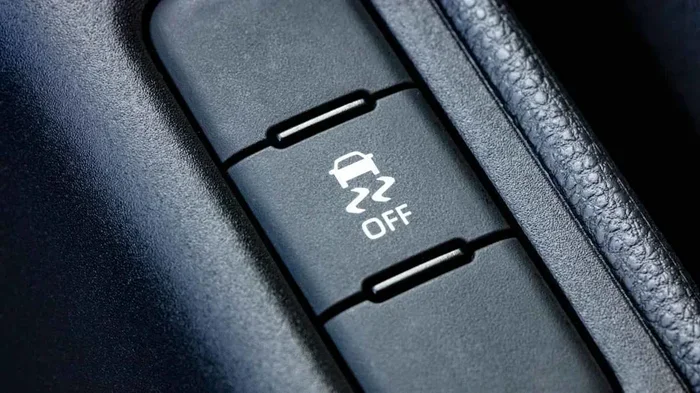
Many modern vehicles, especially luxury and sporty models, place the traction control switch on the steering wheel. You will often find it near the left side of the wheel or on the paddle shifters. Look for a small button with an icon that looks like a car with wavy lines behind it. This icon represents the traction control system being active or disabled.
Brands like BMW, Mercedes-Benz, and Audi frequently use this placement. The button is easy to reach when your hands are on the wheel. A quick press turns the system off immediately.
On the Center Console
A large number of vehicles place the traction control switch on the center console between the front seats. You will find it near the gear shift, infotainment system, or climate controls. In many Toyota, Honda, and Ford models, the button sits in a row of small switches in this area.
Look carefully at the labels printed on these buttons. The traction control icon is usually a car with squiggly lines or the letters “TC” with a slash through them. Pressing this button toggles the system on and off.
On the Dashboard or Near the Gear Shift
Some older vehicles and certain models place the button on the dashboard itself or right next to the gear selector. This is common in trucks and SUVs from manufacturers like Chevrolet and GMC. The button may be tucked into a small panel near the steering column or along the lower edge of the dashboard.
If you cannot find it in the usual spots, check your vehicle owner’s manual. The manual will have a diagram showing the exact location of every button and switch in your car.
How to Turn Off Traction Control in Different Vehicles
Now that you know where to look, let us walk through the process for different types of vehicles. Finding what button turns off traction control becomes much easier when you know the steps specific to your car.
Turn Off Traction Control in Sedans and Compact Cars
Most sedans and compact cars from brands like Toyota, Honda, and Hyundai follow a similar pattern. Start by sitting in the driver seat and looking at the center console. The traction control button is usually located to the left of the gear shift. It often shares a spot with the stability control button.
Press the button once. You should see a light appear on your dashboard. This light confirms the traction control system is now disabled. The light usually looks like a car with wavy lines or the letters “TC” inside a triangle.
Turn Off Traction Control in Trucks and SUVs
Trucks and SUVs often have more buttons on the center console, which can make finding the right one tricky. In Ford F-Series trucks, the traction control button is usually on the left side of the steering wheel or on the dash near the steering column. In Chevrolet Silverado models, look for it on the center console near the transfer case shifter.
For four-wheel drive vehicles, the process can be slightly different. Some trucks require you to put the vehicle in neutral before you can disable traction control. Always refer to your owner’s manual for the exact steps.
Turn Off Traction Control in Luxury and Sports Cars
Luxury and sports vehicles from brands like BMW, Porsche, and Audi often have the button on the steering wheel or integrated into the infotainment screen. In BMW vehicles, you can find the traction control button on the left side of the steering wheel near the turn signal lever. In Porsche models, the button is often on the left spoke of the steering wheel.
Some high-end vehicles allow you to adjust traction control settings through the digital display. You may need to navigate to the vehicle settings menu and select “Traction Control” or “Drive Mode” to turn it off.
When Should You Turn Off Traction Control?
Knowing what button turns off traction control is only half the battle. You also need to understand when it makes sense to disable it. The traction control system is designed for everyday driving on paved roads. But there are specific situations where turning it off gives you better control.
Driving in Deep Snow or Mud
When your car is stuck in deep snow or thick mud, traction control can actually work against you. The system prevents your wheels from spinning, but spinning is exactly what you need to build momentum and get unstuck. By turning off traction control, you allow the wheels to spin freely. This helps you rock the vehicle back and forth to escape the snow or mud.
Off-Road Driving
Off-road trails often have loose gravel, sand, or uneven terrain. In these conditions, you need your wheels to spin at different speeds to maintain grip. Traction control can interfere with this natural movement. Many off-road enthusiasts turn off the system before hitting the trail to give themselves more control over the vehicle.
Installing Snow Chains or Recovery Equipment
If you need to install snow chains on your drive wheels, you should turn off traction control first. The system might apply brakes unexpectedly while you are working near the wheels. This can be dangerous. Disabling it ensures the wheels remain still while you install or remove chains.
Rock Crawling or Low-Speed Maneuvering
When rock crawling or navigating very slow, technical terrain, traction control can interrupt your momentum at the worst times. Turning it off lets you use the throttle more precisely and maintain a steady crawl over obstacles.
When Should You Keep Traction Control On?
While there are valid reasons to turn off traction control, you should always re-enable it when driving on normal roads. The traction control system significantly reduces your risk of accidents on wet, icy, or oily pavement. It works alongside your electronic stability control to keep the vehicle pointing in the right direction.
Driving with traction control off on a rainy highway can be very dangerous. Your wheels are more likely to spin during acceleration, which can cause you to lose control. Always turn the system back on as soon as you return to regular driving conditions.
Common Mistakes When Disabling Traction Control
Many drivers make avoidable mistakes when turning off their traction control system. Here are the most common ones you should watch out for.
Forgetting to Turn It Back On
This is the number one mistake. Drivers turn off traction control to get unstuck and then forget to turn it back on. The next time you drive on a wet road, your vehicle will not have the safety boost it needs. Always make it a habit to check your dashboard lights before merging onto a highway or entering a busy road.
Confusing Traction Control with Stability Control
Some vehicles combine traction control and stability control into one button. Others have separate switches. Turning off the wrong system can leave you with reduced safety features. If you are unsure, consult your owner’s manual or look for labels on the buttons.
Pressing the Wrong Button
Center consoles have many small buttons that look similar. You might accidentally press the button for four-wheel drive or ABS instead of traction control. Take a moment to identify the correct button before pressing it. The icon on the button should clearly show a car with wavy lines or the letters “TC.”
Ignoring the Traction Control Warning Light
If you see a traction control warning light on your dashboard, do not ignore it. This light can mean the system is turned off, or it can signal a malfunction. A steady light usually means the system is disabled. A flashing light often means there is a problem with the sensors or the system itself. In either case, get it checked by a mechanic.
Quick Tips for Finding the Traction Control Button
Here are some fast tips to help you locate the button quickly and avoid frustration.
- Check the owner’s manual first. It has a diagram of every button in your vehicle.
- Look for the TC icon. The traction control symbol looks like a car with wavy lines behind it.
- Feel around the steering wheel. Many vehicles hide the button on the left side of the wheel.
- Look near the gear shift. The center console area is the second most common location.
- Use the search function on infotainment screens. Some vehicles let you access traction control settings through the touchscreen display.
- Ask a dealer or mechanic. If you bought a used car and cannot find the button, a dealer can show you exactly where it is.
What to Do If the Button Does Not Work
Sometimes you press the button but nothing happens. The traction control light does not change, and the system stays active. This can happen for several reasons.
First, the button itself might be faulty. Over time, switches wear out and stop working properly. Second, there might be a problem with the traction control fuse. A blown fuse can prevent the system from responding to the button. Third, a sensor failure can cause the entire traction control system to malfunction.
If the button does not work, check the fuse box under your hood. Look for the fuse labeled “TCS” or “Traction Control.” Replace it if it is blown. If the fuse is fine, you may need to have a mechanic diagnose the issue with the sensors or the control module.
Resetting the Traction Control System
After you turn off traction control, you may want to reset it back to the default “on” setting. The easiest way to do this is to simply press the traction control button again. The dashboard light should turn off, confirming the system is active once more.
Another method is to restart your vehicle. Turning the engine off and back on resets most vehicle systems, including traction control. This is a quick fix if you are unsure whether the system is on or off.
Some vehicles also allow you to reset traction control through the infotainment menu. Navigate to the vehicle settings, find the traction control option, and select “Default” or “On.” This method works well in vehicles with digital displays and touchscreen controls.
Expert Insights on Traction Control and Safe Driving
Automotive experts agree that traction control is one of the most important safety features in modern vehicles. According to the National Highway Traffic Safety Administration, electronic stability and traction control systems significantly reduce the risk of fatal single-vehicle crashes. However, experts also emphasize that knowing how and when to disable the system gives drivers more versatility in challenging conditions.
Professional driving instructors recommend keeping traction control on for 95% of your driving. Only disable it in specific situations like deep snow, mud, or off-road trails. Always re-enable it before returning to paved roads. This balanced approach gives you the best of both worlds: safety on the road and flexibility when you need it.
Mechanics also suggest checking your wheel speed sensors regularly. Dirty or damaged sensors can cause the traction control system to activate when it is not needed or fail to activate when it should. A simple cleaning or replacement can keep the entire system working properly.
Key Takeaways
- Button Location Varies: The traction control button can be on the steering wheel, center console, or dashboard depending on your vehicle model.
- Look for the TC Icon: The button usually has a car with wavy lines or “TC” with a slash through it.
- Use It in Snow and Off-Road: Turning off traction control helps when you are stuck in snow, mud, or navigating off-road trails.
- Turn It Back On: Always re-enable traction control before driving on regular paved roads for safety.
- Warning Lights Matter: Pay attention to the traction control warning light on your dashboard for system status.
- Reset Is Easy: Press the button again or restart your vehicle to reset the system to default.
- Check the Fuse: If the button does not work, a blown fuse may be the culprit.
Conclusion
Finding what button turns off traction control is simpler than most people think. Whether your switch is on the steering wheel, center console, or dashboard, you can disable the system in seconds once you know where to look. The key is to understand not just how to turn it off, but when it makes sense to do so.
Use traction control for everyday driving on wet or icy roads. Turn it off when you are stuck in snow, navigating off-road trails, or installing snow chains. Always remember to turn it back on before returning to normal driving conditions. This simple habit keeps you safe while giving you the flexibility to handle tough situations with confidence.
Now that you have all the information you need, go ahead and locate the traction control button in your vehicle. Practice finding it so you are ready the next time you need it. Safe driving starts with understanding your vehicle, and knowing how to manage your traction control system is a big part of that.
Frequently Asked Questions
What does the traction control button look like?
The traction control button usually has an icon showing a car with wavy lines behind it. Some vehicles display the letters “TC” with a slash through them. The icon is small and may be printed directly on the button or nearby on the dashboard.
Can I drive with traction control off all the time?
You can, but it is not recommended for normal road driving. Traction control helps prevent wheel spin and maintains vehicle stability on wet, icy, or oily surfaces. Leaving it off increases your risk of accidents in everyday driving conditions.
Why is my traction control light flashing on the dashboard?
A flashing traction control light usually means there is a problem with the system. It could be a faulty wheel speed sensor, a malfunction in the control module, or a blown fuse. Have a mechanic inspect your vehicle as soon as possible to diagnose the issue.
Does turning off traction control affect my brakes?
Turning off traction control does not disable your brakes. Your anti-lock braking system, or ABS, continues to work independently. However, traction control works closely with ABS, so disabling one can reduce overall vehicle stability during sudden stops or slippery conditions.
Where is the traction control fuse located?
The traction control fuse is usually located in the fuse box under the hood or inside the driver’s side dashboard panel. Check your vehicle owner’s manual for the exact fuse location and amperage rating. Replace a blown fuse with one of the same rating.
Can a dirty wheel speed sensor affect traction control?
Yes, a dirty or damaged wheel speed sensor can cause the traction control system to malfunction. Dirt, snow, or road debris can block the sensor and send incorrect readings to the control module. Cleaning the sensor or replacing it usually fixes the problem.