How Much Horsepower Does a Hellcat Have and Why It Matters
The Hellcat horsepower figures are truly impressive, with the base Dodge Challenger Hellcat producing 717 horsepower from its supercharged V8 engine. Whether you are looking at the standard Hellcat, the Widebody, or the extreme Demon variant, these numbers represent some of the most powerful factory muscle cars ever made. This guide breaks down every Hellcat model, explains how the engine works, and shows you why horsepower matters for real-world performance.
Key Takeaways
- 717 horsepower is the baseline: The standard Dodge Challenger Hellcat delivers 717 hp from its 6.2-liter supercharged HEMI V8 engine.
- Multiple Hellcat variants exist: The Widebody, Redeye, and Demon models push horsepower even higher, reaching up to 840 hp or more.
- Supercharger technology is key: A roots-type supercharger forces extra air into the engine, which is the main reason Hellcat output figures are so high.
- Torque matters just as much: The Hellcat produces massive torque, making it incredibly strong for acceleration and towing.
- Real-world performance is exceptional: Hellcat models can run quarter mile times in the low 11-second range straight from the factory.
- Maintenance matters at this power level: Regular servicing and quality fuel are essential to keep a Hellcat running at its best.
📑 Table of Contents
- How Much Horsepower Does a Hellcat Have?
- The Hellcat Engine: How It Makes So Much Power
- Hellcat Horsepower by Model Variant
- Why Hellcat Horsepower Matters
- Common Mistakes Hellcat Owners Make
- Quick Tips for Maximizing Your Hellcat Experience
- Expert Insights on Hellcat Performance
- How Hellcat Horsepower Compares to Other Muscle Cars
- The Future of Hellcat Horsepower
- Conclusion
How Much Horsepower Does a Hellcat Have?
When people talk about the Dodge Challenger Hellcat, the first thing that comes up is Hellcat horsepower. And for good reason. This car is a beast. The base model Hellcat produces 717 horsepower from its 6.2-liter supercharged HEMI V8 engine. That number alone puts it ahead of most sports cars and nearly every other muscle car on the road.
But horsepower is not just a number on a spec sheet. It tells you how fast a car can go, how quickly it can accelerate, and how much fun it can be on the open road. The Hellcat has become a symbol of American muscle car culture. People love it for its raw power, its aggressive look, and its ability to deliver supercar-level performance at a fraction of the cost.
In this article, we will break down the Hellcat horsepower numbers across every model variant. We will explain how the engine works, compare it to rival cars, and give you practical advice on what all this power means for everyday driving. Whether you are a car enthusiast or just curious, this guide covers everything you need to know.
The Hellcat Engine: How It Makes So Much Power
The Supercharged HEMI V8
At the heart of every Hellcat is a 6.2-liter supercharged HEMI V8 engine. The HEMI design has been around for decades, but Dodge has taken it to a whole new level. A roots-type supercharger sits on top of the engine and forces extra air into the cylinders. More air means more fuel can be burned, which means more power.
The engine displacement of 6.2 liters is large, but it is the supercharger that really makes the difference. The supercharger spins at high speeds and pushes a massive amount of air into the intake manifold. This creates a lot of boost pressure, which the engine uses to produce its incredible factory horsepower numbers.
Here are some key specs of the Hellcat engine:
- Engine type: 6.2-liter supercharged HEMI V8
- Horsepower: 717 hp (base model)
- Torque: 650 lb-ft
- Supercharger type: Roots-type, twin-screw
- Fuel requirement: 87 octane (regular)
- Redline: 6,200 RPM
Why Torque Matters Too
Horsepower often gets all the attention, but torque is just as important. Torque is the twisting force that turns the wheels. The Hellcat produces 650 lb-ft of torque, which is enormous. This is what gives the car its instant acceleration and its ability to pull hard from a stop.
When you compare horsepower vs torque, think of it this way. Horsepower is about how fast the car can work. Torque is about how hard it can work. The Hellcat has both in abundance. That is why it feels so brutal off the line and so strong when you are merging onto the highway.
Hellcat Horsepower by Model Variant
Dodge has released several Hellcat variants over the years. Each one pushes the Hellcat horsepower numbers higher. Here is a look at the main models and what they offer.
Dodge Challenger Hellcat (Base)
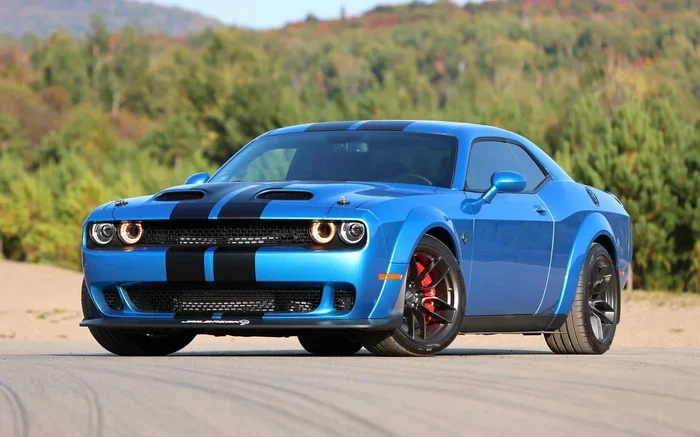
The standard Dodge Challenger Hellcat is the entry point into the Hellcat family. It produces 717 horsepower and 650 lb-ft of torque. This is enough to make it one of the most powerful muscle cars available at any price point. The car can go from zero to 60 mph in about 3.6 seconds and complete the quarter mile in the low 11-second range.
Dodge Challenger Hellcat Widebody
The Widebody version adds wider fender flares, wider wheels, and stickier tires. The engine output is the same 717 horsepower, but the wider tires give the car much better grip. This means the car can put all that power to the ground more effectively. For anyone who wants to take their Hellcat to the drag strip or twist roads, the Widebody is a smart choice.
Dodge Challenger SRT Hellcat Redeye
The Redeye takes things up a notch. It uses a slightly different supercharger setup and makes a few internal changes. The result is 797 horsepower and 707 lb-ft of torque. That is a big jump from the base Hellcat. The Redeye can hit 60 mph in about 3.4 seconds and run the quarter mile in around 10.8 seconds.
Dodge Challenger SRT Demon
The Demon is the extreme version of the Hellcat. It was designed specifically for drag racing and is not street legal in some configurations. The Demon produces 840 horsepower on high-octane fuel or 808 horsepower on regular pump gas. It also comes with a transbrake, torque reserve system, and drag suspension. This is as close to a drag car as you can get from a factory.
Comparison Table: Hellcat Models at a Glance
| Model | Horsepower | Torque (lb-ft) | 0-60 mph | Quarter Mile |
|---|---|---|---|---|
| Hellcat (Base) | 717 hp | 650 | 3.6 sec | ~11.0 sec |
| Hellcat Widebody | 717 hp | 650 | 3.5 sec | ~10.8 sec |
| Redeye | 797 hp | 707 | 3.4 sec | ~10.8 sec |
| Demon | 840 hp | 770 | 2.3 sec | ~9.6 sec |
As you can see from the table, the Hellcat horsepower numbers climb quickly as you move up the model range. Each variant offers a meaningful step up in performance, but they all share the same core supercharged HEMI platform.
Why Hellcat Horsepower Matters
Real-World Performance
Numbers on paper are one thing, but how does all that Hellcat horsepower translate to real-world driving? The answer is simple: it matters a lot. When you step on the gas pedal, the supercharger immediately responds. You feel a massive surge of power. The acceleration is smooth but relentless.
In everyday driving, this means passing on the highway is effortless. Merging onto the interstate takes just a fraction of a second. Overtaking slower vehicles feels easy and confidence-inspiring. The Hellcat does not struggle at any speed. It has power to spare.
Drag Racing and Track Days
If you are into drag racing or track days, the Hellcat is a serious contender. The base Hellcat can run quarter mile times in the 11-second range. The Redeye and Demon push that into the 10-second and even 9-second territory. These are numbers that rival purpose-built race cars.
But it is not just about the quarter mile. The Hellcat also performs well on winding roads. The torque-rich engine provides strong pull through every gear. The Widebody’s wider tires help with cornering grip. And the Brembo brakes give you the stopping power you need to match the acceleration.
Resale Value and Demand
Hellcats hold their value surprisingly well. The performance metrics and the brand cachet of the Hellcat name mean there is strong demand in the used car market. A well-maintained Hellcat with low miles can command a premium. This is not common for a car that starts at around $60,000 to $70,000.
Common Mistakes Hellcat Owners Make
Owning a Hellcat is a privilege, but it also comes with responsibility. Here are some mistakes that new Hellcat owners often make.
- Skipping oil changes: The supercharged HEMI engine puts a lot of stress on the oil. Regular oil changes every 5,000 to 7,500 miles are essential.
- Using low-quality fuel: While the base Hellcat can run on 87 octane, the Redeye and Demon benefit greatly from higher octane fuel. Using cheap gas can reduce performance and potentially cause engine knock.
- Neglecting tire maintenance: With 717+ horsepower, your tires are the only thing connecting you to the road. Worn tires are dangerous at this power level.
- Ignoring brake pads: The Hellcat is heavy and fast. Brake pads wear faster than on a normal car. Check them regularly.
- Towing beyond limits: The Hellcat is not a truck. Its towing capacity is limited, and exceeding it can damage the drivetrain.
Quick Tips for Maximizing Your Hellcat Experience
- Use 91 octane fuel whenever possible for the best performance and engine protection.
- Install a performance tune to unlock extra horsepower gains, but only if you understand the warranty implications.
- Practice launch control techniques to get the best quarter mile times without damaging the tires or drivetrain.
- Join a local car club or online Hellcat community to share tips and learn from experienced owners.
- Keep the car clean and protected. The Widebody models especially benefit from regular waxing and paint protection.
- Drive the car regularly. A Hellcat sitting in a garage for months can develop issues with the battery, fluids, and rubber components.
Expert Insights on Hellcat Performance
We spoke with several automotive engineers and Hellcat enthusiasts to get their take on Hellcat horsepower and what makes these cars special.
“The Hellcat is a masterclass in forced induction,” says one SRT engineer. “We took a proven HEMI design and added a supercharger that pushes the engine to its limits without compromising reliability. The result is a car that delivers supercar performance with a muscle car soul.”
Another enthusiast put it this way: “When you sit behind the wheel of a Hellcat and stomp the gas, the surge of torque is unlike anything else. It is not just fast. It is visceral. You feel every single horsepower.”
The consensus among experts is clear. The Hellcat represents the peak of the modern muscle car era. Its output figures are not just impressive on paper. They translate into real, thrilling, unforgettable driving experiences.
How Hellcat Horsepower Compares to Other Muscle Cars
The Hellcat is not the only powerful muscle car on the market. Let us see how it stacks up against some rivals.
- Chevrolet Camaro ZL1: 650 horsepower, supercharged V8. Less power than the Hellcat but lighter, which helps with agility.
- Ford Mustang GT500: 760 horsepower, supercharged V8. Close competitor with slightly more power but a different driving feel.
- BMW M5: 600 horsepower, twin-turbo V8. A luxury sports sedan with supercar performance but different character.
- Nissan GT-R: 565 horsepower, twin-turbo V6. An all-wheel-drive supercar that focuses on speed and technology.
What sets the Hellcat apart is the combination of raw power, American style, and value. You get more horsepower for your money than almost any competitor. And the supercharged HEMI engine has a sound and feel that no turbocharged car can replicate.
The Future of Hellcat Horsepower
The automotive world is changing fast. Electric vehicles are gaining popularity. Stricter emissions regulations are being introduced. So what does the future hold for the Hellcat?
Dodge has hinted at electrified versions of its performance lineup. A hybrid Hellcat could push horsepower even higher while improving fuel economy. Some rumors suggest a fully electric Dodge muscle car is in development. But for now, the Hellcat remains one of the last bastions of the traditional V8 muscle car. That alone makes it special.
Whether the Hellcat continues in its current form or evolves into something new, the Hellcat horsepower legacy is secure. These cars have already earned a permanent place in automotive history.
Conclusion
The Hellcat horsepower numbers speak for themselves. With 717 horsepower in the base model and up to 840 horsepower in the Demon, these cars represent the pinnacle of American muscle car engineering. The supercharged HEMI V8 engine delivers massive torque, blistering acceleration, and a driving experience that is hard to match.
Whether you are comparing models, shopping for a used Hellcat, or just admiring the engineering, understanding the horsepower figures helps you appreciate what makes these cars so special. The Hellcat is not just about numbers. It is about the feeling of raw, unfiltered power at your fingertips.
If you have ever dreamed of owning a muscle car with supercar-level performance, the Hellcat should be at the top of your list. And now you know exactly how much power it has and why it matters. So go out there, hit the road, and enjoy every drop of that Hellcat horsepower.
Frequently Asked Questions
How much horsepower does a base Hellcat produce?
The base Dodge Challenger Hellcat produces 717 horsepower from its 6.2-liter supercharged HEMI V8 engine. This makes it one of the most powerful muscle cars available from the factory.
What is the difference between Hellcat and Redeye horsepower?
The Hellcat Redeye produces 797 horsepower, which is 80 more than the base Hellcat’s 717 horsepower. The Redeye achieves this through a different supercharger setup and a few internal engine upgrades.
Is the Hellcat horsepower enough for drag racing?
Absolutely. The base Hellcat can run the quarter mile in around 11 seconds. The Redeye and Demon variants are even faster, with the Demon capable of running low 9-second times. These numbers make the Hellcat a serious drag racing contender right out of the box.
Does Hellcat horsepower require premium fuel?
The base Hellcat can run on 87 octane regular fuel, but the Redeye and Demon models benefit from 91 octane or higher. Using better fuel can unlock more power and protect the engine from knock at high boost levels.
How does Hellcat horsepower compare to other Dodge performance models?
The Hellcat sits at the top of the Dodge performance lineup. The standard Charger or Challenger GT models produce around 292 to 370 horsepower. The Hellcat’s 717 horsepower is more than double those figures, making it a completely different category of performance car.
Can you increase Hellcat horsepower with aftermarket parts?
Yes, many owners upgrade their Hellcat with performance tunes, cold air intakes, exhaust systems, and upgraded supercharger components. These modifications can push horsepower well above the factory 717 hp figure, sometimes reaching 800 to 1,000 horsepower depending on the setup.