How Much Does a Honda Civic Weigh Compared to Other Cars
The Honda Civic typically weighs between 2,600 and 3,100 pounds depending on the trim and model year. This compact sedan sits lighter than most mid-size sedans and SUVs, which helps it deliver excellent fuel efficiency and agile handling. Understanding your Civic’s weight matters for everything from towing and payload limits to insurance and fuel costs.
Have you ever wondered how much does a Honda Civic weigh? It is a question that might seem simple, but the answer opens the door to a lot of useful information. Whether you are buying a Civic, planning a road trip, or just curious about car specs, knowing the weight of your vehicle matters more than most people realize.
The Honda Civic is one of the most popular compact sedans on the road. It has earned a reputation for being reliable, fun to drive, and surprisingly efficient. A big part of that efficiency comes down to its weight. A lighter car uses less fuel, handles better, and can even save you money on insurance. In this article, we will break down the Honda Civic weight in detail, compare it to other vehicles, and explain why those numbers matter to you.
Key Takeaways
- Standard Honda Civic curb weight: Ranges from about 2,600 to 3,100 pounds across trims.
- Weight affects fuel economy: Lighter cars like the Civic use less gas than heavier models.
- Trim differences matter: Sport and Touring trims weigh more due to added features and equipment.
- Payload capacity is tied to weight: Knowing your Civic’s weight helps you understand how much cargo or passengers it can safely carry.
- Comparison context is useful: The Civic weighs significantly less than SUVs, trucks, and luxury sedans.
- Weight impacts insurance and registration: Heavier vehicles often cost more to insure and register.
📑 Table of Contents
- Understanding Honda Civic Weight Basics
- Honda Civic Weight Compared to Other Cars
- Why Vehicle Weight Matters
- How Much Weight Can You Put in a Honda Civic?
- How to Find Your Honda Civic’s Exact Weight
- Quick Tips for Managing Your Civic’s Weight
- Common Mistakes People Make About Car Weight
- Final Thoughts
Understanding Honda Civic Weight Basics
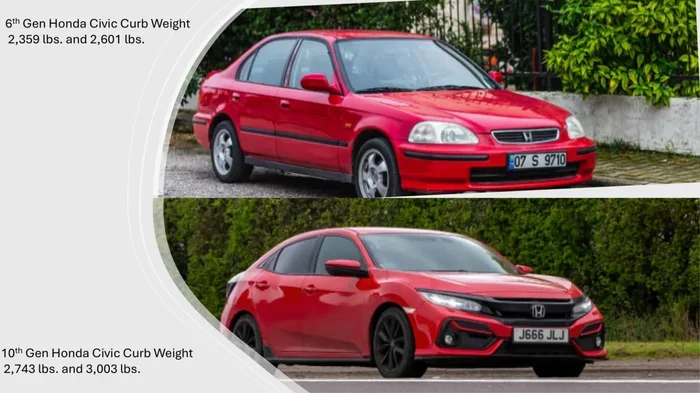
Every car has a curb weight. That is the weight of the vehicle with all standard equipment, a full tank of fuel, and no passengers or cargo. For the Honda Civic, curb weight varies by trim level, engine type, and model year. The base LX trim usually starts around 2,600 pounds, while higher trims like the Touring can push closer to 3,100 pounds.
There is also something called gross vehicle weight rating, or GVWR. This is the maximum safe weight your car can carry, including passengers, cargo, and fuel. For a Honda Civic, this number typically sits around 3,500 to 3,800 pounds depending on the model. Knowing both curb weight and GVWR helps you understand what your car can safely handle.
What Affects the Weight of a Honda Civic?
Several factors influence how much a Honda Civic weighs. Here are the main ones:
- Trim level: Higher trims add features like leather seats, upgraded sound systems, and larger wheels. All of that adds pounds.
- Engine type: The standard Civic comes with a 2.0-liter four-cylinder engine. The Civic Si and Type R have turbocharged engines that weigh more.
- Body style: The sedan is the most common, but the Civic Hatchback and Civic Coupe can have slightly different weights.
- Optional packages: Sunroofs, navigation systems, and premium audio all add weight.
- Model year: Newer models may use lighter materials or heavier tech, shifting the weight slightly.
Honda Civic Weight Compared to Other Cars
So where does the Civic sit on the scale compared to other popular cars? Let us put it into perspective. The Honda Civic is a compact car, which means it is lighter than most mid-size sedans and much lighter than SUVs and trucks.
Civic vs. Compact Competitors
When you compare the Civic to other compact sedans, the weight differences are interesting. The Honda Civic weighs about the same as a Toyota Corolla, which also clocks in around 3,000 to 3,100 pounds. The Mazda3 is similar, coming in at roughly 3,000 pounds for most trims. The Hyundai Elantra is a bit lighter, often around 2,900 pounds.
What does this mean for you? Cars in this weight class tend to offer similar fuel economy and driving dynamics. The Civic holds its own well against competitors. Its weight gives it a good balance between comfort and sportiness.
Civic vs. Mid-Size and Full-Size Sedans
The difference becomes much clearer when you step up to larger cars. A Honda Accord weighs around 3,300 to 3,500 pounds. That is 200 to 400 pounds more than a Civic. A Toyota Camry is in a similar range. Full-size sedans like the Chevrolet Impala can weigh over 3,700 pounds.
All that extra weight affects fuel economy and driving feel. Heavier sedans use more gas and may feel less nimble. The Civic’s lighter weight is one reason it feels so responsive on the road.
Civic vs. SUVs and Trucks
The weight gap gets even bigger when you compare the Civic to SUVs and trucks. A Honda CR-V weighs around 3,400 to 3,600 pounds. A Toyota RAV4 comes in at roughly 3,500 to 3,700 pounds. Full-size trucks like the Ford F-150 can weigh over 5,000 pounds.
This is why the Civic is such a popular choice for daily driving. Its lower weight translates directly into better gas mileage and easier maneuverability. If you are looking at how much horsepower does a hellcat have, you can see that muscle cars and heavy trucks are in a completely different weight class entirely.
| Vehicle | Approximate Curb Weight | Body Style |
|---|---|---|
| Honda Civic (Base LX) | ~2,600 lbs | Sedan |
| Honda Civic (Touring) | ~3,100 lbs | Sedan |
| Toyota Corolla | ~3,050 lbs | Sedan |
| Honda Accord | ~3,400 lbs | Sedan |
| Toyota RAV4 | ~3,550 lbs | Compact SUV |
| Ford F-150 | ~5,000+ lbs | Pickup Truck |
Why Vehicle Weight Matters
You might be thinking, “Why does the weight of my car matter so much?” The answer touches almost every part of car ownership. From fuel costs to safety, weight plays a bigger role than most people expect.
Fuel Efficiency and Weight
Lighter cars burn less fuel. This is basic physics. The Honda Civic weighs less than most cars on the road, which is a big reason it delivers such strong fuel economy. The base Civic gets around 32 mpg in the city and 42 mpg on the highway. A heavier car with a similar engine would struggle to match those numbers.
If you want to maximize your fuel savings, keeping your Civic light is key. Avoid loading it up with unnecessary cargo. The less weight your car carries, the less fuel it uses. This also means fewer trips to the gas station and more money in your pocket.
Safety and Weight
Weight plays an important role in crash safety. Heavier vehicles tend to perform better in collisions with lighter vehicles. However, modern Hondas are engineered to protect occupants regardless of weight. The Civic has earned top safety ratings from both the IIHS and NHTSA.
That said, in a collision with a much heavier vehicle like a full-size truck, the Civic will be at a disadvantage due to the weight difference. This is something to keep in mind, but Honda’s engineering does a lot to compensate for the lighter curb weight.
Insurance and Registration Costs
Insurance companies sometimes factor in vehicle weight when calculating premiums. Lighter cars like the Civic often cost less to insure than heavier vehicles. Registration fees can also be weight-based in some states. So owning a lighter car can save you money in more ways than one.
How Much Weight Can You Put in a Honda Civic?
This is a practical question that many Civic owners ask. The answer depends on your vehicle’s payload capacity. Payload is the maximum weight of passengers and cargo your car can safely carry.
Most Honda Civics have a payload capacity of around 850 to 1,000 pounds. That means you can safely carry about four average-sized adults plus some luggage. But if you are planning a road trip with gear, you need to be mindful of the total weight.
Overloading your car is dangerous. It affects handling, braking, and tire wear. If you are unsure about your Civic’s specific payload, check the owner’s manual or the sticker on the driver’s door jamb. That sticker lists the curb weight, GVWR, and payload limits for your exact vehicle.
For comparison, how much weight can I put in my car varies widely depending on the vehicle. A compact sedan like the Civic has much less payload than a full-size SUV or pickup truck.
How to Find Your Honda Civic’s Exact Weight
If you want the precise weight for your specific Honda Civic, there are a few reliable ways to find it.
- Check the owner’s manual: The manual lists curb weight, GVWR, and payload capacity for your exact trim and model year.
- Look at the door jamb sticker: Open the driver’s door and find the sticker on the door frame. It has all the key weight specifications.
- Use the VIN decoder: Online VIN decoders can pull your car’s exact specs, including weight, from the vehicle identification number.
- Contact a Honda dealer: A dealer can look up your vehicle’s weight using the VIN or trim details.
Knowing your exact weight helps with everything from planning a move to understanding your car’s limits. It is one of those small details that can make a big difference in how you use and maintain your vehicle.
Quick Tips for Managing Your Civic’s Weight
- Remove heavy items from your trunk when they are not needed.
- Avoid installing aftermarket parts that add significant weight without adding value.
- Keep your fuel tank at a reasonable level for daily driving.
- Check tire pressure regularly. Under-inflated tires add rolling resistance and reduce efficiency.
- If you are how to cool your car down faster, lighter loads help your AC system work less hard.
Common Mistakes People Make About Car Weight
There are a few mistakes that many car owners make when it comes to understanding vehicle weight.
- Confusing curb weight with GVWR: Curb weight is the car itself. GVWR is the maximum total weight including everything. These are very different numbers.
- Ignoring payload limits: Overloading a car can damage suspension, brakes, and tires. Always stay within the recommended payload.
- Assuming all trims weigh the same: Even small differences in trim can shift the weight by 50 to 100 pounds.
- Forgetting about fuel weight: A full tank of gas adds about 100 pounds. That matters when you are close to your payload limit.
Avoiding these mistakes helps you get the most out of your Honda Civic and stay safe on the road.
Final Thoughts
The Honda Civic is a well-balanced compact car that offers a great blend of efficiency, performance, and practicality. Its weight, typically ranging from 2,600 to 3,100 pounds, plays a big role in why it feels so good to drive and why it gets such strong fuel economy.
Whether you are comparing it to heavier SUVs or lighter competitors, the Civic holds its own. Understanding your vehicle’s weight helps you make smarter decisions about cargo, fuel, insurance, and safety. Next time someone asks how much does a Honda Civic weigh, you will have the full picture to share with them.
Take a moment to check your own Civic’s weight specs. You might be surprised at what those numbers can tell you about your daily driving experience. And if you are ever in the market to sell, knowing your car’s details can help you get a fair price. After all, how much can I sell my car for often depends on factors like condition, mileage, and yes, even weight.
Frequently Asked Questions
What is the curb weight of a Honda Civic?
The curb weight of a Honda Civic typically ranges from about 2,600 pounds for the base LX trim to around 3,100 pounds for higher trims like the Touring. Curb weight includes the vehicle with a full tank of fuel and all standard equipment, but no passengers or cargo.
Does the Honda Civic weight vary by trim level?
Yes, trim level has a noticeable impact on weight. Higher trims come with more features like leather seats, larger wheels, and advanced tech packages, which all add pounds to the vehicle.
How does Honda Civic weight compare to a Toyota Corolla?
The Honda Civic and Toyota Corolla are very similar in weight. Both compact sedans typically fall in the 2,900 to 3,100 pound range depending on trim and model year.
Can I overload my Honda Civic with cargo?
You should not overload your Civic. Most models have a payload capacity of around 850 to 1,000 pounds. Exceeding this limit can affect handling, braking, and tire wear, and it may also void parts of your warranty.
Does a lighter car get better gas mileage?
Yes, lighter cars generally get better gas mileage because the engine does not have to work as hard to move the vehicle. The Honda Civic’s relatively light weight is one reason it delivers excellent fuel economy.
Where can I find the exact weight of my Honda Civic?
You can find your Civic’s exact weight on the driver’s door jamb sticker, in the owner’s manual, or by using an online VIN decoder. A Honda dealer can also look it up for you using your vehicle’s trim and model year details.