How Much Can a Subaru Crosstrek Tow and What to Know
The Subaru Crosstrek towing capacity is a key detail for anyone planning to haul a trailer. Most models can tow up to 1,500 pounds when properly equipped, but the exact limit depends on the trim and engine. This guide covers everything you need to know about Subaru Crosstrek towing, from hitch types to safety tips.
The Subaru Crosstrek is a small SUV that blends rugged style with everyday practicality. Many owners wonder about its towing abilities. Can you really pull a camper or a small trailer with this compact vehicle? The answer is yes, but there are important limits and setup details you must know.
Understanding the Subaru Crosstrek towing capacity helps you plan trips safely. You do not want to overload the vehicle or strain the engine. This guide walks you through the numbers, the right equipment, and smart towing habits. Whether you are heading to a campsite or hauling gear, the Crosstrek can handle the job if you follow the rules.
We will cover everything from hitch types to weight distribution. You will also find maintenance tips and common mistakes to avoid. By the end, you will feel confident about using your Crosstrek for towing. Let us dive into the details of Subaru Crosstrek towing and make sure you stay safe on the road.
Key Takeaways
- Maximum Towing Capacity: The Subaru Crosstrek can tow up to 1,500 pounds when equipped with the right hitch and package.
- Trim Matters: Different trims and engine options affect the towing limit, so always check your specific model year.
- Proper Hitch Setup Is Essential: A receiver hitch, weight distribution system, and correct wiring are critical for safe towing.
- Load Distribution Prevents Sway: Placing heavy items low and centered in the trailer keeps the Crosstrek stable.
- Regular Maintenance Protects Your Vehicle: Towing puts extra strain on the engine, brakes, and suspension, so follow a strict service schedule.
- Know the Legal Limits: Stay within the Gross Vehicle Weight Rating (GVWR) and avoid exceeding payload capacity.
📑 Table of Contents
Understanding Subaru Crosstrek Towing Capacity
The towing capacity of a Subaru Crosstrek is not a single magic number. It depends on several factors, including the model year, trim level, and engine configuration. Most modern Crosstrek models share a common baseline, but small differences can change the limit. Always refer to your owner’s manual for the exact figure for your specific vehicle.
What the Numbers Mean
Towing capacity refers to the maximum weight a vehicle can pull behind it with a trailer. This number includes the weight of the trailer itself plus everything inside it. It is not just the cargo weight. The Crosstrek’s towing capacity is typically rated at 1,500 pounds for most recent model years. This is enough for a small pop-up camper, a pair of kayaks, or a modest utility trailer.
You also need to understand payload capacity. Payload is the weight the vehicle carries itself, including passengers, cargo, and any fluids. The Crosstrek has a limited payload compared to larger trucks. Overloading the payload can be just as dangerous as exceeding the towing limit. Always add the weight of the trailer tongue to the payload calculation.
Factors That Affect Towing Capacity
Several elements influence how much a Crosstrek can safely tow. The engine produces torque, which is the twisting force that moves the load. The Crosstrek uses a 2.5-liter four-cylinder engine that delivers enough grunt for light-duty towing. The transmission also plays a role. A well-maintained transmission shifts smoothly under load, reducing wear.
The drivetrain matters too. The Crosstrek comes standard with all-wheel drive (AWD). AWD helps with traction when towing, especially on wet or uneven roads. However, AWD adds weight to the vehicle, which slightly reduces the available towing capacity compared to a two-wheel-drive version. The cooling system must also be in top shape. Towing raises engine temperatures, so a functioning radiator and coolant system are vital.
The 1,500-Pound Limit in Practice
The 1,500-pound towing limit is a hard ceiling. You should not exceed it. To put this in perspective, a small teardrop trailer weighs around 1,000 to 1,200 pounds. That leaves little room for extra gear. A fully loaded kayak trailer or a utility trailer with lawn furniture might also hit that limit quickly. Always weigh your trailer and cargo before you drive.
For a full overview of the Crosstrek’s towing abilities, check out our guide on Can a Subaru Crosstrek Tow. It provides model-year-specific details and answers common questions about towing with this compact SUV.
| Model Year | Engine | Trim | Towing Capacity |
|---|---|---|---|
| 2018–2024 | 2.5L 4-Cylinder | Base, Premium, Sport | 1,500 lbs |
| 2018–2024 | 2.5L 4-Cylinder | Touring, Limited | 1,500 lbs |
| 2018–2024 | 2.5L 4-Cylinder | AWD Standard | 1,500 lbs |
As you can see, the towing capacity remains consistent across trims. The key variable is whether the vehicle has the proper towing package and hitch installed. Always confirm with your dealer if you are unsure.
Hitch Types and Equipment for the Crosstrek
Having the right hitch and accessories makes a huge difference. A proper setup ensures safe towing and protects your vehicle. The Crosstrek uses a standard receiver hitch, and you have several options to choose from. Let us break down the essential equipment.
Receiver Hitches and Ball Mounts
A receiver hitch is the most common type for the Crosstrek. It attaches to the rear underbody and provides a stable mounting point. You will see hitch classes listed as Class I, Class II, and so on. The Crosstrek typically uses a Class II hitch, which is rated for up to 3,500 pounds of gross trailer weight. However, the vehicle’s own towing limit is lower, so you still stay within the 1,500-pound cap.
The ball mount connects the hitch to the trailer. You need the correct ball size, usually 1-7/8 inches for small trailers. Make sure the ball mount is rated for the weight you are pulling. A loose or mismatched ball mount can cause dangerous sway. Always lock the hitch pin and check the connection before every trip.
Weight Distribution and Sway Control
Even with a light trailer, weight distribution is important. A weight distribution hitch uses spring bars to spread the tongue weight evenly across all axles. This improves steering and braking. For the Crosstrek, a simple friction sway control can add stability. Trailers tend to sway in crosswinds, and a sway control unit helps dampen that motion.
You do not always need a weight distribution system for a 1,500-pound load, but it helps if the trailer is heavily loaded at the rear. Proper tongue weight, usually 10 to 15 percent of the total trailer weight, keeps the Crosstrek balanced.
Wiring and Lighting Essentials
Legal towing requires working trailer lights. You need a wiring harness that connects the Crosstrek’s electrical system to the trailer. Most aftermarket hitches include a plug-and-play wiring kit. The harness powers the brake lights, turn signals, and running lights on the trailer. Some setups also require a brake controller if the trailer has electric brakes, though many small trailers use surge brakes that do not need a controller.
Take the time to test all lights before you hit the highway. A burned-out trailer bulb can lead to a ticket or, worse, an accident. Keep spare bulbs in the vehicle.
Safe Towing Practices and Weight Distribution
Towing safely is about more than just hooking up a trailer. You must manage weight, speed, and braking. The Crosstrek is a lightweight SUV, so it reacts differently to a loaded trailer than a heavy truck would. Follow these practices to stay safe.
Loading the Trailer Correctly
How you load the trailer affects stability. Place heavy items low and over the axle or axles. This keeps the center of gravity down and reduces the chance of the trailer tipping. Distribute weight evenly from side to side. An unbalanced load can cause the trailer to pull to one side, making steering difficult.
Secure all cargo with straps or bungee cords. Loose items shift during driving and can change the weight distribution on the fly. A sudden shift can cause a jackknife or loss of control. Always do a walk-around check before you leave the driveway.
Braking and Stability Tips
The Crosstrek relies on its own brakes to stop both the car and the trailer. Brake fade can occur on long downhill stretches if the brakes overheat. Use lower gears on descents to let engine braking do the work. This reduces strain on the brake pads and rotors.
Keep a longer following distance when towing. A loaded trailer adds momentum, so stopping takes more time. Avoid sudden hard braking whenever possible. If you feel the trailer starting to sway, ease off the accelerator gently. Do not slam the brakes or jerk the steering wheel. Slow down gradually until the sway stops.
Tire Pressure and Pre-Trip Checks
Check the tire pressure on both the Crosstrek and the trailer before every trip. Underinflated tires can overheat and fail, especially under the extra load. The Crosstrek’s owner manual lists the correct pressure for the loaded condition. Also inspect the trailer tires for wear and proper tread depth.
Quick Tips for Pre-Trip Towing Checks:
- Verify hitch pin and clip are secure.
- Test all trailer lights and signals.
- Check tire pressure on the vehicle and trailer.
- Confirm cargo is tied down and balanced.
- Ensure the trailer brake battery (if equipped) is charged.
- Review the weight of the trailer and cargo against the 1,500-pound limit.
Common Mistakes to Avoid
One frequent mistake is ignoring tongue weight. If the trailer tongue pushes down too hard on the hitch, it can overload the rear suspension of the Crosstrek. This affects steering and ride quality. Another error is exceeding the payload limit. Remember that the passengers, gear, and tongue weight all count toward the vehicle’s total payload.
Many owners also forget to account for the weight of the hitch itself and any accessories. A receiver hitch can weigh 20 to 30 pounds. While that seems small, every pound counts when you are near the 1,500-pound towing ceiling. For more on how much weight your vehicle can handle overall, see our article on how much weight you can put in your car. It covers payload and cargo limits for many popular models.
Expert Insights on Towing with Small SUVs
Towing experts often emphasize that the vehicle’s cooling system is the limiting factor for sustained towing. The Crosstrek’s 2.5-liter engine works hard when pulling a trailer on hot days or up steep grades. If you notice the temperature gauge climbing, pull over safely and let the engine cool. Continuing to drive an overheating engine can cause serious damage.
Another expert tip is to practice towing in an empty parking lot before your trip. Get a feel for how the Crosstrek handles with the trailer attached. Learn how wide the turning radius is and how the brakes respond. This simple exercise builds confidence and helps you avoid surprises on the road.
Common Uses for Crosstrek Towing
The Subaru Crosstrek is a versatile vehicle that fits an active lifestyle. Many owners use it for weekend getaways and outdoor adventures. Towing opens up new possibilities for how you use the vehicle. Let us explore the most common towing use cases.
Camping and Outdoor Adventures
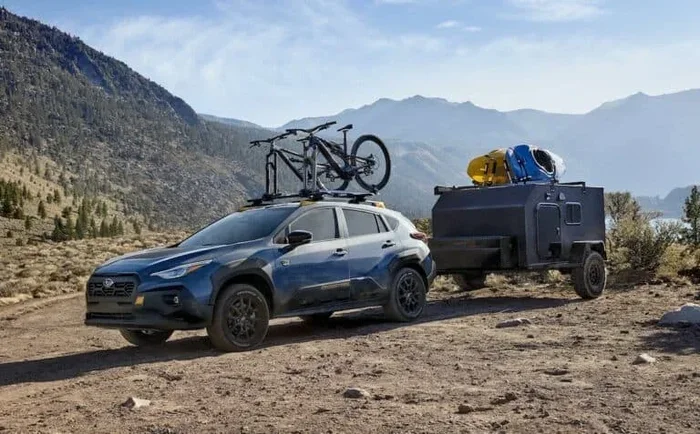
Camping is a natural fit for the Crosstrek. A small pop-up tent trailer or a teardrop camper weighs within the 1,500-pound range. You can sleep comfortably under the stars and wake up ready to hike or fish. The Crosstrek’s AWD system handles dirt roads and campgrounds with ease. Just make sure the trailer has proper braking if it exceeds 1,000 pounds, as some states require it.
Hauling Gear and Equipment
Do you need to move a load of lumber, a kayak, or a small utility trailer full of tools? The Crosstrek can handle these jobs. A kayak trailer with two boats might weigh around 150 pounds for the trailer plus 60 to 80 pounds per kayak. That totals well under the limit. Even a trailer loaded with camping gear, coolers, and bikes stays comfortably within 1,500 pounds.
Comparing with Other Subarus
If you are curious how the Crosstrek stacks up against other Subaru models, consider the Forester. The Subaru Forester has a higher towing capacity because it is a larger vehicle. For details on the Forester’s towing abilities, see our article on Can a Subaru Forester Tow a Trailer. It compares towing limits across Subaru models and helps you decide which vehicle fits your needs.
The Crosstrek is not a heavy-duty hauler. It is a compact SUV designed for light-duty towing. That does not mean it cannot do the job. It just means you should plan carefully and stay within the rated limits. If you need to tow heavier loads regularly, a larger Subaru like the Ascent or an Outback might be a better choice.
Maintenance Tips for Towing with a Crosstrek
Towing puts extra stress on your vehicle. Regular maintenance keeps the Crosstrek running strong and prevents costly repairs. Follow these tips to protect your investment.
Engine and Transmission Care
The engine works harder when towing. Change the oil more frequently if you tow often. Standard oil change intervals might be every 6,000 miles, but towing can shorten that. Use the recommended oil viscosity, typically 0W-20 or 5W-30 for the Crosstrek. Check the transmission fluid level and condition at regular intervals. The transmission manages the extra load, and fresh fluid helps it shift smoothly.
Watch for signs of transmission trouble. Slipping gears, hesitation during acceleration, or unusual noises are red flags. Address them immediately. A transmission repair can be expensive, and towing only makes the problem worse.
Brake System and Suspension
Brake pads and rotors wear faster when you tow. The extra weight increases stopping distance and heat. Inspect the brakes every 10,000 miles or at least once a year. Replace pads when they reach the minimum thickness. Also check the brake fluid; moisture in the fluid can lower the boiling point and lead to brake fade on long descents.
The suspension components absorb the extra load. Inspect shocks and struts for leaks or bottoming out. Worn suspension parts reduce handling and can make the vehicle feel unstable when towing. A simple alignment check after heavy towing can prevent uneven tire wear.
Hitch and Electrical Maintenance
Keep the hitch clean and free of rust. A corroded hitch pin can seize up, making it hard to connect or disconnect the trailer. Apply a light coat of grease to the hitch ball and receiver. Check the wiring harness for frayed wires or loose connections. A faulty ground can cause trailer lights to flicker or fail.
Store the hitch ball and accessories in a dry place when not in use. Moisture leads to rust, and rust weakens the metal. Replace any damaged hardware immediately. Safety should always come first.
Conclusion
The Subaru Crosstrek offers a practical and capable towing capacity of up to 1,500 pounds. This makes it a great choice for light-duty towing, including small trailers, campers, and gear haulers. By understanding the limits, choosing the right hitch, and following safe towing practices, you can enjoy many worry-free adventures. Remember to respect the weight limits, maintain your vehicle, and never exceed the rated capacity. The Crosstrek is a reliable companion for your trips, and with the proper setup, it will serve you well for years to come.
Now you have the knowledge to tow safely and confidently. Plan your next outing, pack your gear, and let the Crosstrek do the work. Happy trails and safe travels.
Frequently Asked Questions
What is the maximum towing capacity of a Subaru Crosstrek?
The Subaru Crosstrek can tow up to 1,500 pounds when equipped with the proper hitch and towing package. This limit applies to most model years from 2018 onward. Always confirm the exact rating for your specific trim and engine.
Do I need a special towing package for the Crosstrek?
Most Crosstrek models come with a towing prep package that includes a receiver hitch and wiring harness. Some trims may require an optional towing package that adds a weight distribution hitch and upgraded cooling. Check with your dealer to confirm what is included.
Can I tow a travel trailer with a Subaru Crosstrek?
Yes, you can tow a small travel trailer or pop-up camper that weighs under 1,500 pounds. Make sure the trailer has proper brakes if it exceeds 1,000 pounds in some states. Always distribute weight evenly and use a sway control device for added stability.
What happens if I exceed the Subaru Crosstrek towing capacity?
Exceeding the towing limit can overheat the engine, strain the transmission, and reduce braking effectiveness. It also increases the risk of accidents and trailer sway. Staying within the rated capacity protects both you and your vehicle.
Is all-wheel drive necessary for towing a Crosstrek?
AWD is standard on most Crosstrek models and provides better traction when towing, especially on wet or uneven surfaces. While you can tow with front-wheel-drive models, AWD offers a significant safety and stability advantage for light-duty towing.
How often should I service my Crosstrek if I tow regularly?
If you tow frequently, shorten your oil change interval to every 3,000–5,000 miles. Inspect the brakes, transmission fluid, and suspension more often. Regular maintenance prevents wear and keeps the towing setup safe and reliable.