How Many Feet of Vinyl Do I Need to Wrap My SUV Exactly
Knowing how many feet of vinyl do I need to wrap my SUV is the first step to a great-looking vehicle wrap. Most full-size SUVs need between 50 and 75 feet of wrap vinyl for a complete cover. Your exact amount depends on the SUV model, wrap type, and whether you go full or partial.
How Many Feet of Vinyl Do I Need to Wrap My SUV Exactly
If you have been staring at your SUV and thinking about giving it a fresh new look, you are not alone. Vinyl wrapping has exploded in popularity over the last few years. People love it because it changes the look of a vehicle without permanent changes. But before you dive in, one question keeps coming up: how many feet of vinyl do I need to wrap my SUV?
The answer is not a single number. It depends on your SUV size, the type of wrap you want, and whether you go full coverage or just a partial design. This guide breaks it all down in simple terms. By the end, you will know exactly how much wrap vinyl to buy, what type to choose, and how to avoid costly mistakes.
Let us get into it. No guesswork. No wasted money. Just clear, practical advice that actually works.
Key Takeaways
- Measure Twice, Buy Once: Always calculate your SUV’s surface area before purchasing wrap vinyl to avoid waste and shortages.
- Full Wrap vs Partial Wrap: A full SUV wrap requires more material than a partial wrap, so choose based on your budget and goals.
- Material Matters: Cast vinyl lasts longer and conforms better than calendered vinyl, especially on curved SUV surfaces.
- DIY Saves Money: With the right wrap tools and patience, you can save hundreds by installing the vinyl wrap yourself.
- Plan for Extra: Always buy 10-15% more material than your calculation to account for mistakes, overlaps, and seams.
- Professional vs DIY: Complex curves and tight areas may warrant a professional wrap installer for the best results.
- Lifespan Expectancy: A quality vinyl wrap on an SUV lasts 5-7 years with proper care and maintenance.
📑 Table of Contents
- Understanding Vinyl Wrap Basics for SUVs
- How to Calculate the Exact Feet of Vinyl You Need
- Full Wrap vs Partial Wrap: How Much Vinyl Does Each Need
- Types of Vinyl Wrap Material and How They Affect Your Needs
- Tools and Supplies You Will Need for the Job
- DIY vs Professional Installation: Which Saves You More?
- How Long Does a Vinyl Wrap Last on an SUV
- Common Mistakes to Avoid When Wrapping Your SUV
- Final Thoughts on Vinyl Wrapping Your SUV
Understanding Vinyl Wrap Basics for SUVs
Before you grab a measuring tape, it helps to understand what you are working with. A vinyl wrap is a thin layer of adhesive material that sticks directly to your vehicle’s exterior. It comes in rolls, and those rolls have a fixed width and length. Most wrap vinyl rolls are about 5 feet wide and come in lengths of 25 to 100 feet.
The width matters because you need to cover large panels like doors, hoods, and roofs in one or two pieces. The length is what you are really buying when you ask, “how many feet of vinyl do I need to wrap my SUV.” More length means more coverage.
Why SUV Size Changes Everything
Not all SUVs are the same size. A compact SUV like a Honda CR-V has much less surface area than a full-size SUV like a Chevrolet Tahoe. That difference can change your vinyl needs by 20 feet or more. Here is a quick breakdown of common SUV categories:
- Compact SUVs: Smaller surface area. Usually needs 40-55 feet for a full wrap.
- Mid-Size SUVs: Medium coverage area. Typically 50-65 feet for a full wrap.
- Full-Size SUVs: Large surface area. Often requires 60-75 feet for full coverage.
- Luxury SUVs: Extra features like roof racks add surface area. Budget 65-80 feet.
These numbers are starting points. Your exact SUV may fall outside these ranges. That is why measuring is so important.
How to Calculate the Exact Feet of Vinyl You Need
Calculating how many feet of vinyl do I need to wrap my SUV is simpler than it sounds. You do not need to be a math expert. You just need a few basic measurements and a simple formula.
Step 1: Measure Each Panel
Start by measuring the height and width of each major panel on your SUV. Use a soft measuring tape for accuracy. Here are the panels you need to measure:
- Roof panel
- Front hood
- Front fenders (both sides)
- Doors (both sides, front and rear)
- Rear quarter panels (both sides)
- Rear bumper area
- Trunk or tailgate
Write each measurement down in inches. Then multiply the height by the width for each panel to get the square inches. Add all the panels together and divide by 144 to convert to square feet.
Step 2: Add Extra for Overlaps and Seams
Never skip this step. When you wrap curves and edges, you need extra material for overlapping and tucking. A good rule of thumb is to add 15-20% to your total square footage. This accounts for:
- Seam overlaps where panels meet
- Material that wraps around edges and corners
- Small mistakes or misalignments during installation
Step 3: Convert Square Feet to Linear Feet
Since vinyl comes in standard roll widths, you need to convert your total square footage into linear feet. Divide your total square feet by the roll width (usually 5 feet). Then add your extra percentage. The result is your baseline linear feet requirement.
For example, if your SUV needs 350 square feet of coverage and you use 5-foot wide rolls, you need 70 linear feet. Add 15% for safety, and you are at about 80 feet. That is your answer to “how many feet of vinyl do I need to wrap my SUV” in this scenario.
Quick Reference Table
| SUV Type | Approx. Surface Area (sq ft) | Linear Feet Needed (5ft roll) | With 15% Extra |
|---|---|---|---|
| Compact SUV | 280-350 | 56-70 | 65-80 |
| Mid-Size SUV | 350-420 | 70-84 | 80-100 |
| Full-Size SUV | 420-500 | 84-100 | 100-115 |
| Luxury/Extended SUV | 500-580 | 100-116 | 115-135 |
Keep in mind that these are estimates. Always measure your specific vehicle for the most accurate number.
Full Wrap vs Partial Wrap: How Much Vinyl Does Each Need
One of the biggest decisions you will make is whether to do a full wrap or a partial wrap. This choice directly affects how many feet of vinyl you need to buy.
What Is a Full Wrap?
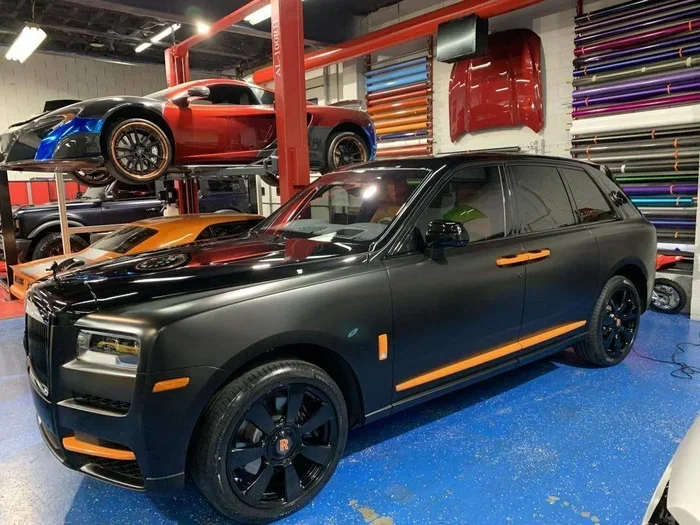
A full vehicle wrap covers every visible exterior panel of your SUV. That means the roof, hood, doors, fenders, quarter panels, and rear. A full SUV wrap gives you maximum coverage and the boldest visual impact. It also uses the most wrap material.
For a full wrap, use the calculations we covered above. Plan for the higher end of the range to be safe.
What Is a Partial Wrap?
A partial wrap covers only certain sections of the vehicle. Common partial wrap styles include:
- Half Wrap: Covers the lower half of the vehicle. Usually needs 25-35 feet of vinyl.
- Racing Stripes or Accent Wrap: Covers specific design elements. May only need 10-20 feet.
- Roof or Hood Only: Targets a single panel. Typically 8-15 feet of material.
- Three-Quarter Wrap: Covers most of the vehicle but leaves the front or rear exposed. Needs 40-55 feet.
If you are going with a partial design, you can save a significant amount on vinyl wrap cost. But make sure you still measure carefully. Even partial wraps need precise cutting and fitting.
Types of Vinyl Wrap Material and How They Affect Your Needs
Not all wrap vinyl is the same. The type of material you choose affects how much you need, how it fits on your SUV, and how long it lasts.
Cast Vinyl
Cast vinyl is the premium option. It is manufactured using a casting process that makes it thin, flexible, and durable. Cast vinyl conforms beautifully to the complex curves of an SUV. It also resists fading, cracking, and peeling.
Because cast vinyl is thinner, it stretches more easily around edges. This means you may need slightly less material compared to thicker alternatives. Many professional wrap installers prefer cast vinyl for SUV projects.
Calendered Vinyl
Calendered vinyl is thicker and more rigid. It is a budget-friendly option, but it does not conform as well to curves. On an SUV with lots of body lines and contours, calendered vinyl can bunch up or wrinkle at sharp edges.
If you use calendered vinyl, buy a few extra feet. The material does not stretch as easily, so you will need more overlap and extra material for tight areas.
Specialty Vinyl Options
Beyond the basic types, there are specialty adhesive vinyl options worth considering:
- Matte finish: Popular for a modern, sleek look. Hides minor imperfections well.
- Gloss finish: Gives a shiny, polished appearance. Reflects light beautifully.
- Satin finish: A middle ground between matte and gloss. Unique and eye-catching.
- Chrome or metallic: High-impact look but requires more precision during installation.
- Textured vinyl: Mimics textures like carbon fiber or brushed metal. Adds depth to the design.
Each type may require slightly different amounts of material due to stretching and conforming differences. Always check the manufacturer’s recommendations for coverage per roll.
Tools and Supplies You Will Need for the Job
If you are planning a DIY vinyl wrap, having the right tools makes all the difference. Here is what you need before you start:
Essential Wrap Tools
- Measuring tape: A soft, flexible cloth tape for accurate panel measurements.
- Heat gun: Helps soften the vinyl so it conforms to curves and edges.
- Squeegee: Pushes out air bubbles and smooths the vinyl onto the surface.
- Utility knife or wrap blade: For cutting the vinyl to shape. Use a sharp blade to avoid jagged edges.
- Application fluid: A slip solution that lets you reposition the vinyl during installation.
- Microfiber cloths: For cleaning the vehicle surface before wrapping.
- Trim rollers: Small rollers that press vinyl into tight areas like mirrors and trim edges.
Having the right wrap tools saves time and reduces frustration. It also helps you use less material because you make fewer mistakes during installation.
Surface Preparation Supplies
Your SUV’s surface must be clean and smooth before you apply any wrap material. Use a car wash to remove dirt and grease. Then wipe down each panel with an isopropyl alcohol solution. This removes any remaining oils and helps the adhesive bond properly.
Do not wrap over wax, rust, or peeling paint. The adhesive vinyl will not stick properly to a dirty or damaged surface. If your SUV has paint issues, fix them first before applying any vehicle wrap.
DIY vs Professional Installation: Which Saves You More?
This is a big decision that affects both your budget and your results. Let us look at the pros and cons of each approach.
DIY Vinyl Wrap: What to Expect
A DIY vinyl wrap can save you a lot of money. Professional wrap installation costs can range from $2,000 to $5,000 or more for a full SUV wrap. Doing it yourself, you mainly pay for the vinyl wrap cost of the material plus the tools. That can be $500 to $1,500 depending on the vinyl type and your SUV size.
But DIY wrapping is not easy. You need patience, precision, and a clean workspace. If you are new to wrapping, start with a small partial project before tackling a full SUV wrap. Practice on a flat surface like a garage door or a piece of plywood first.
Professional Wrap Installer: What to Expect
A professional wrap installer has the experience, tools, and workspace to do the job right. They know how to handle complex curves, tight corners, and tricky panel edges. A pro also has access to commercial-grade equipment that makes the process faster and cleaner.
The downside is cost. But for a first-time wrapper, hiring a professional can save you from expensive mistakes. A botched DIY wrap can waste material and even damage your vehicle’s paint during removal.
Cost Comparison
Here is a simple comparison of DIY vs professional vehicle wrapping costs:
- DIY Full Wrap: $500-$1,500 (material + tools). Time: 2-4 days.
- Professional Full Wrap: $2,000-$5,000+. Time: 1-3 days.
- DIY Partial Wrap: $150-$500 (material only). Time: 1-2 days.
- Professional Partial Wrap: $800-$2,000. Time: 1-2 days.
Your choice depends on your budget, skill level, and how much time you have. Both options can deliver great results when done correctly.
How Long Does a Vinyl Wrap Last on an SUV
One of the biggest advantages of a vinyl wrap is its longevity. A quality wrap on an SUV can last anywhere from 5 to 7 years with proper care. But several factors influence that lifespan.
Sun exposure is the biggest enemy. UV rays break down the adhesive and fade the color over time. If your SUV sits outside most of the day, the wrap may last closer to 5 years. Garaged vehicles or those that spend most of their time indoors can push past 7 years.
Climate matters too. Extreme heat, cold, and salt exposure all take a toll. If you live near the coast or in a harsh winter climate, expect the wrap to wear faster.
Regular maintenance helps. Wash your wrapped SUV with a gentle soap and a soft cloth. Avoid high-pressure washers directly on the edges of the wrap. And never use harsh chemicals or abrasive scrubbers. A little care goes a long way in preserving your SUV wrap.
When to Replace or Remove a Wrap
Signs that your wrap needs replacing include bubbling, peeling edges, fading colors, and a rough or cracked texture. If you notice any of these, it is time to consider removal and a fresh vehicle wrap.
Removal is straightforward. A professional can heat the vinyl and peel it off cleanly. If you are removing a DIY vinyl wrap yourself, go slow and use a heat gun on low settings. Never pull aggressively, as this can damage the paint underneath.
In most cases, a quality wrap vinyl leaves no residue and does not harm the original paint. That is one of the reasons so many SUV owners love this option.
Common Mistakes to Avoid When Wrapping Your SUV
Even experienced wrappers make mistakes. Here are the most common ones and how to avoid them:
Not Buying Enough Material
The biggest mistake is underestimating how much wrap material you need. Always add that 10-15% buffer. Running short mid-project is frustrating and can leave your SUV with visible seams or unfinished edges.
Skipping Surface Preparation
Dirty or greasy surfaces cause the adhesive to fail. Take the time to wash and degrease every panel before you start applying the adhesive vinyl. It is the most important step in the entire process.
Wrapping in Direct Sunlight
Never apply wrap vinyl in direct sunlight. The heat causes the material to stretch and conform incorrectly. Work in a shaded area or a climate-controlled garage for the best results.
Cutting Too Early
Do not cut the vinyl to final shape until you have positioned it perfectly. Leave extra material at the edges and trim only after the vinyl is fully seated and smooth.
Using the Wrong Application Fluid
Not all slip solutions are created equal. Use a dedicated wrap application fluid or a mixture of water and a drop of dish soap. Avoid products with oils or solvents that can damage the adhesive.
Ignoring Temperature Guidelines
Most wrap vinyl manufacturers recommend applying between 60°F and 80°F. Too cold and the material is stiff. Too hot and it stretches too much. Follow the temperature guidelines on the packaging.
Final Thoughts on Vinyl Wrapping Your SUV
So, how many feet of vinyl do I need to wrap my SUV? The honest answer is it depends on your vehicle, your wrap style, and the material you choose. But with the measurements and guidelines in this article, you are now equipped to figure it out with confidence.
Start by measuring every panel of your SUV carefully. Add 15-20% for overlaps and seams. Choose between a full wrap or a partial design based on your budget and goals. Pick the right wrap vinyl type for your needs. And whether you go DIY or hire a professional wrap installer, take your time and enjoy the process.
A vinyl wrap is more than just a cosmetic upgrade. It protects your SUV’s original paint from scratches, UV damage, and everyday wear. It gives your vehicle a custom look that turns heads wherever you go. And when you are ready for a change, it comes off clean without harming the factory paint underneath.
Now that you know exactly how much material you need, you can shop with confidence. Measure your SUV, pick your favorite design, and get ready to transform your ride. The road ahead just got a whole lot more stylish.
Frequently Asked Questions
Can I wrap my SUV myself if I have no experience?
Yes, many first-time wrappers successfully wrap their SUVs at home. Start with a small partial project to build your skills before attempting a full SUV wrap. Watch tutorials, practice on flat surfaces, and take your time. The key is patience and careful preparation.
How much does it cost to vinyl wrap an SUV?
The vinyl wrap cost for an SUV ranges from about $500 for a DIY partial wrap to $5,000 or more for a professional full wrap. The price depends on the type of wrap material, the size of your SUV, and whether you hire a professional wrap installer or do it yourself.
What is the difference between cast and calendered vinyl?
Cast vinyl is thinner, more flexible, and conforms better to curved surfaces like an SUV. It is the premium choice with a longer lifespan. Calendered vinyl is thicker, more rigid, and budget-friendly, but it does not stretch as easily around complex curves and edges.
How do I remove a vinyl wrap without damaging my paint?
Use a heat gun on low to warm the vinyl slowly. Peel it off gently in small sections. Never pull aggressively. Most quality adhesive vinyl removes cleanly without leaving residue or harming the original paint underneath.
Can I wash my SUV after getting it wrapped?
Yes, you can and should wash your wrapped SUV regularly. Wait at least 48 hours after application before washing. Use a gentle soap, a soft cloth, and avoid high-pressure washers near the edges of the wrap. Proper washing extends your wrap lifespan significantly.
How long does a full SUV vinyl wrap typically last?
A quality vinyl wrap on an SUV lasts between 5 and 7 years on average. The lifespan depends on sun exposure, climate, how well you maintain it, and the type of wrap material you used. Garaged vehicles tend to see longer-lasting wraps than those exposed to the elements daily.