Does a 2010 Toyota Tundra Have a Timing Belt or Chain
The 2010 Toyota Tundra uses a timing chain, not a timing belt, in both its 4.6L and 5.7L V8 engines. Timing chains are built to last the life of the engine under normal conditions, but they can wear over time. Understanding how your Tundra’s timing system works helps you keep your truck running strong for years.
When you own a truck like the 2010 Toyota Tundra, you want to know every detail about how it works. One question that comes up a lot is whether the engine uses a timing belt or a timing chain. The answer matters for maintenance, cost, and long-term reliability.
The 2010 Toyota Tundra uses a timing chain in both its 4.6L V8 and 5.7L V8 engines. Unlike a rubber belt that needs regular replacement, a metal chain is built to last. But that does not mean you can ignore it forever. Understanding how the timing system works helps you take better care of your truck.
In this article, we break down everything you need to know. We cover how the timing chain operates, what signs show it is wearing out, what replacement costs look like, and how to keep your chain running smoothly. Whether you are a DIY mechanic or just want to stay informed, this guide has you covered.
Key Takeaways
- The 2010 Tundra uses a timing chain: Both the 4.6L and 5.7L V8 engines come with a chain, not a belt.
- Timing chains last a long time: They are designed to handle high engine temperatures and heavy loads.
- Watch for warning signs: Rattling noises, rough idle, and check engine lights can signal chain wear.
- Replacement is expensive: Expect to pay between $1,000 and $2,500 depending on the engine and labor costs.
- Regular maintenance helps: Staying on top of oil changes and the 60,000-mile service extends chain life.
- Timing chains differ from timing belts: Chains are metal and durable, while belts are rubber and need periodic replacement.
📑 Table of Contents
- What Is the Difference Between a Timing Belt and a Timing Chain?
- Does the 2010 Toyota Tundra Have a Timing Belt or Chain?
- How Does the Timing Chain Work in the Tundra Engine?
- Signs Your Tundra Timing Chain Is Wearing Out
- Timing Chain Replacement Cost and Maintenance
- Tips for Keeping Your Tundra Timing Chain in Top Shape
- Common Myths About Timing Chains
- How the 2010 Tundra Compares to Other Trucks
- Final Thoughts
What Is the Difference Between a Timing Belt and a Timing Chain?
Before we dive into the Tundra specifically, let us clear up the basics. Many people confuse timing belts with timing chains. They do the same job, but they are very different in design and lifespan.
A timing belt is made of rubber with teeth on the inside. It sits outside the engine and connects the crankshaft to the camshaft. The belt keeps the engine valves opening and closing at the right time. Most cars used timing belts for decades, and they need replacement every 60,000 to 100,000 miles.
A timing chain is made of metal links, similar to a bicycle chain. It sits inside the engine and is lubricated by engine oil. Because it is metal, it is much more durable. A timing chain can last the entire life of the engine if properly maintained. The 2010 Tundra uses a chain, which is one reason these engines are known for their longevity.
Here is a quick comparison of the two systems:
- Material: Belt is rubber, chain is metal.
- Location: Belt sits outside the engine, chain sits inside.
- Lifespan: Belt needs replacement every 60,000 to 100,000 miles. Chain can last 150,000+ miles or the life of the engine.
- Cost: Belt replacement is cheaper, usually $300 to $500. Chain replacement is more expensive, often $1,000 to $2,500.
- Noise: Chains can rattle when worn. Belts are generally quieter.
Now that you understand the difference, let us look at what the 2010 Tundra specifically uses.
Does the 2010 Toyota Tundra Have a Timing Belt or Chain?
The answer is clear: the 2010 Toyota Tundra has a timing chain. Both engine options, the 4.6L V8 and the 5.7L V8, use a single-row timing chain. Toyota has used chains in its V8 engines for many years, and the 2010 Tundra is no exception.
The 4.6L V8 engine produces about 310 horsepower and 327 lb-ft of torque. The 5.7L V8 engine produces 381 horsepower and 401 lb-ft of torque. Both are powerful engines that handle heavy towing and hauling. The timing chain in each engine is designed to handle the demands of these powerful powertrains.
Toyota chose a chain over a belt for several reasons. Chains are stronger and more reliable under heavy loads. They do not stretch or crack like rubber belts. And they do not need the scheduled replacement that belts do. This makes the 2010 Tundra a great choice for people who want a low-maintenance, durable truck.
It is worth noting that some earlier Toyota models used timing belts. But by 2010, Toyota had moved to chains across its V8 lineup. If you are coming from a vehicle with a belt, the switch to a chain means less scheduled maintenance. You will not need to worry about replacing a belt every 60,000 miles.
How Does the Timing Chain Work in the Tundra Engine?
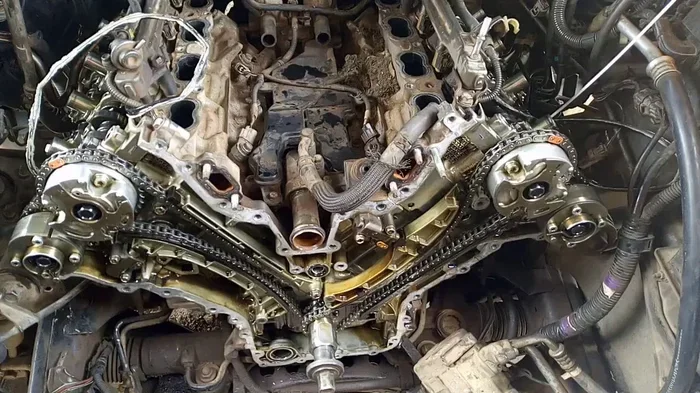
The timing chain connects the crankshaft to the camshaft. The crankshaft spins when the pistons move up and down. The camshaft controls when the intake and exhaust valves open. The chain keeps these two components synchronized.
Inside the 2010 Tundra engine, the chain wraps around several gears. The chain tensioner keeps the chain tight and prevents it from skipping teeth. A guide rail helps the chain stay aligned. Together, these components ensure smooth and precise valve timing.
Engine oil plays a big role in the health of the timing chain. The chain sits inside the engine block and relies on oil pressure for lubrication. Clean oil keeps the chain, tensioner, and gears running smoothly. Dirty or old oil can cause increased wear on the chain and its components.
The Role of the Chain Tensioner
The chain tensioner is a small but important part. It maintains proper tension on the chain so it does not become loose. Over time, the tensioner can wear out. A weak tensioner can allow the chain to stretch or skip teeth, which leads to serious engine problems.
In the 2010 Tundra, the tensioner is hydraulic. It uses engine oil pressure to keep the chain tight. This means that maintaining proper oil levels and changing your oil on schedule is critical. If the oil gets too low or too dirty, the tensioner may not work correctly.
Valve Timing and Engine Performance
The timing chain directly affects how your engine performs. If the chain is properly timed, the valves open and close at exactly the right moment. This gives you smooth power delivery, good fuel economy, and clean emissions.
When the chain stretches or the tensioner fails, the timing can shift. Even a small timing error can cause rough idling, reduced power, or poor fuel economy. In worst-case scenarios, a jumped chain can cause the pistons to hit the valves, leading to expensive engine damage.
Signs Your Tundra Timing Chain Is Wearing Out
Timing chains do not fail often, but they do wear over time, especially if maintenance is neglected. Here are the most common signs that your 2010 Tundra timing chain needs attention.
- Rattling noise on startup: A metallic rattling or clattering sound when you first start the engine is a classic sign of a loose or worn chain. The noise usually goes away after a few seconds as oil pressure builds up.
- Rough idle: If your engine idles unevenly or shakes more than usual, the chain may have stretched and thrown off the valve timing.
- Check engine light: A loose or stretched chain can trigger error codes related to camshaft or crankshaft position sensors. Codes like P0008 or P0016 often point to timing issues.
- Engine misfires: When the timing is off, the cylinders may not fire at the right moment. This can cause a rough running engine or misfires.
- Difficulty starting: A severely worn chain can make it hard to start the engine, especially when cold.
- Metal shavings in oil: If you check your oil and see small metal particles, chain or gear wear could be the cause.
If you notice any of these symptoms, have a mechanic inspect the timing chain as soon as possible. Ignoring the problem can lead to catastrophic engine failure. A jumped chain can bend valves and damage pistons, turning a simple repair into a full engine rebuild.
Regular oil changes are your best defense against timing chain wear. Clean oil keeps all the internal components lubricated and functioning properly. If you have been putting off your oil change reset, now is a great time to take care of it.
Timing Chain Replacement Cost and Maintenance
While the timing chain on a 2010 Tundra is built to last, there are situations where replacement becomes necessary. Understanding the costs and what is involved can help you plan ahead.
How Much Does It Cost to Replace a Timing Chain?
The cost of replacing a timing chain on a 2010 Toyota Tundra typically ranges from $1,000 to $2,500. The wide range depends on several factors:
- Engine type: The 5.7L V8 may cost slightly more to service than the 4.6L V8 due to its larger size and access complexity.
- Labor rates: Labor costs vary by region and shop. Dealerships usually charge more than independent mechanics.
- Parts quality: OEM Toyota parts cost more than aftermarket alternatives, but they offer better reliability and fit.
- Additional repairs: If the chain has caused damage to the tensioner, guide rail, or valves, the repair cost will increase.
On average, you can expect to pay around $1,500 to $2,000 for a complete timing chain replacement on a 2010 Tundra. This includes the chain, tensioner, guide rail, and any necessary gaskets or seals.
When Should You Replace the Timing Chain?
Unlike a timing belt that has a strict replacement interval, a timing chain does not have a set mileage for replacement. Toyota designed the chain to last the life of the engine. However, high-mileage trucks or those with poor maintenance histories may need a chain replacement between 150,000 and 200,000 miles.
If you are buying a used 2010 Tundra with over 150,000 miles, it is a good idea to have the timing chain inspected. A mechanic can check for excessive play in the chain and assess the condition of the tensioner and guide rail.
Staying on top of your 60,000-mile service and other scheduled maintenance goes a long way in preventing timing chain issues. Regular oil changes with the correct grade of oil keep the chain and its components well-lubricated.
Tips for Keeping Your Tundra Timing Chain in Top Shape
The best way to deal with timing chain problems is to prevent them. Here are some practical tips to keep your 2010 Tundra timing chain in excellent condition.
- Change your oil regularly: Stick to the recommended oil change interval of every 5,000 to 7,500 miles. Use the oil grade specified in your owner manual, which is typically 5W-30 or 0W-20.
- Use quality oil and filters: Cheap oil can break down faster and leave sludge inside the engine. Invest in a good quality synthetic or conventional oil and a reliable oil filter.
- Check oil levels often: Low oil levels can starve the timing chain tensioner and cause premature wear. Make it a habit to check your oil at least once a month.
- Address rattling noises early: If you hear a rattle when starting your engine, do not ignore it. Early diagnosis can prevent a small chain issue from becoming a major engine repair.
- Follow the maintenance schedule: The 2010 Tundra has a detailed maintenance schedule in the owner manual. Following it ensures all engine components, including the timing chain, stay in good shape.
- Avoid short trips when possible: Short trips can cause oil contamination and sludge buildup. If you can, take longer drives to allow the engine to reach full operating temperature.
These simple habits can add years of life to your Tundra engine. The timing chain is one of the most durable components in the 2010 Tundra, but it still needs proper care to perform at its best.
Common Myths About Timing Chains
There are several myths floating around about timing chains that can confuse truck owners. Let us clear up a few of the most common ones.
Myth 1: Timing chains never need replacement. While chains are much more durable than belts, they can still wear out. High-mileage engines or poorly maintained vehicles may need a chain replacement. It is not a lifetime component in every case.
Myth 2: A timing chain failure is always sudden. Most timing chain failures are gradual. They start with minor symptoms like a slight rattle or rough idle. Catching these early signs gives you time to address the problem before it causes major damage.
Myth 3: You can ignore timing chain maintenance. Some people think that because the chain does not need scheduled replacement, it does not need any attention. This is not true. Regular oil changes and prompt attention to warning signs are essential for chain longevity.
Myth 4: Aftermarket chains are just as good as OEM. While some aftermarket parts are excellent, others are not. OEM Toyota parts are specifically engineered for your engine and offer the best fit and reliability. If you are replacing your chain, consider going with genuine Toyota components.
How the 2010 Tundra Compares to Other Trucks
The 2010 Toyota Tundra is not the only full-size truck on the road. How does its timing chain system stack up against competitors like the Ford F-150 and Chevrolet Silverado?
Ford has used timing chains in most of its V8 engines for many years. The Ford 5.4L and 6.2L engines feature chains that are generally reliable but can develop noise over time. Chevrolet used timing chains in its LS and LT engines as well. Both competitors share a similar approach to using chains instead of belts.
What sets the 2010 Tundra apart is Toyota’s reputation for reliability. The Tundra’s 4.6L and 5.7L engines are known for lasting well beyond 200,000 miles with proper care. The timing chain is just one component that contributes to this long lifespan. When you compare the Tundra reliability to other full-size trucks, the timing system is one area where Toyota excels.
If you are comparing the Tundra to other used trucks, keep in mind that the timing chain is a low-maintenance advantage. You will not need to budget for belt replacements like you would with some other vehicles. This is one less thing to worry about as a truck owner.
Final Thoughts
The 2010 Toyota Tundra uses a timing chain, not a timing belt, in both its 4.6L and 5.7L V8 engines. This is a big advantage for owners who want a durable, low-maintenance truck. The chain is built to last, and with proper care, it can easily go the distance with the rest of the engine.
Staying on top of oil changes, watching for warning signs, and following the maintenance schedule are the best ways to protect your timing chain. If you ever notice a rattle, rough idle, or check engine light, get it checked out right away. Catching problems early saves you money and prevents bigger headaches down the road.
The 2010 Tundra is a solid truck that has earned its reputation for reliability. Understanding how the timing chain works and what it needs to stay healthy gives you the knowledge to keep your truck running strong for many more miles. Take care of your Tundra, and it will take care of you.
Frequently Asked Questions
Can a 2010 Tundra timing chain last over 200,000 miles?
Yes, with regular oil changes and proper maintenance, the timing chain in a 2010 Tundra can last well beyond 200,000 miles. Many owners report chains that never needed replacement. The key is keeping the oil clean and at the proper level so the chain and tensioner stay lubricated.
Is a timing chain louder than a timing belt?
Yes, timing chains can be noisier than belts, especially when they start to wear. A healthy chain is relatively quiet, but a worn chain may produce a rattling sound, particularly on cold startup. If you hear unusual noises, have a mechanic inspect the chain and tensioner promptly.
What happens if the timing chain breaks on a 2010 Tundra?
A broken timing chain is a serious problem. The engine will stop running immediately, and the pistons can collide with the open valves. This causes significant internal damage that often requires a full engine rebuild or replacement. This is why early detection of chain wear is so important.
Does the 4.6L V8 and 5.7L V8 both use the same timing chain?
Both engines use a single-row timing chain, but the 5.7L V8 has a slightly longer chain due to its larger displacement. The basic design and components are similar, including the chain tensioner and guide rail. Replacement procedures are also very similar between the two engines.
How often should I check the timing chain on my 2010 Tundra?
There is no set interval for checking the timing chain. However, having a mechanic inspect it during major service appointments, such as at 100,000 and 150,000 miles, is a smart practice. This is especially important if you notice any rattling or rough running symptoms.
Can I replace the timing chain myself?
Replacing a timing chain is a complex job that requires significant engine knowledge and specialized tools. It involves removing the engine front cover, tensioner, and chain assembly. Unless you are an experienced mechanic with the right equipment, it is best to have a professional handle the replacement to avoid costly mistakes.