Are Tesla Tires Run Flats Here Is What You Need to Know
Tesla tires are not run flat tires. Most Tesla models use standard all-season tires that lose air pressure when punctured. Understanding how your Tesla tires run flats differ from other vehicles helps you handle flats safely. This guide covers what to do when you get a flat, how to maintain your tires, and when to visit a Tesla service center.
Are Tesla tires run flats? This is one of the most common questions Tesla owners and buyers ask. The short answer is no. Tesla vehicles do not come equipped with run flat tires. Instead, they use standard all-season tires that require proper air pressure to function safely. Knowing this fact changes how you handle a tire emergency on the road.
Whether you drive a Tesla Model 3, Model Y, Model S, or Model X, understanding your tire setup is essential. Standard tires offer a smoother ride and better handling compared to run flat alternatives. However, they also mean you need a plan when a puncture or blowout happens. This guide covers everything you need to know about Tesla tires, flat tire situations, and how to keep your tires in great shape.
Many new Tesla owners assume their car has run flat tires because Teslas are so advanced in other areas. The truth is simpler. Tesla focuses on comfort, efficiency, and performance with its tire choices. This article breaks down the details so you never get caught off guard by a flat tire again.
Key Takeaways
- Tesla tires are not run flats: Most Tesla models come with standard tires, not run flat tires, so a puncture means you need a replacement or repair.
- TPMS alerts you quickly: Tesla vehicles have a tire pressure monitoring system that warns you the moment pressure drops.
- Driving on a flat is risky: You should not drive more than a short distance on a completely flat Tesla tire.
- Maintenance matters: Regular tire rotation and pressure checks extend the life of your Tesla tires significantly.
- Replacement costs vary: Tesla tire prices range from $200 to $400 per tire depending on the model and tire size.
- Road hazard protection helps: Adding tire protection plans can save you money on unexpected punctures and damage.
📑 Table of Contents
What Are Run Flat Tires?
Before diving into Tesla specifics, it helps to understand what run flat tires actually are. Run flat tires are designed to keep working even after a complete loss of air pressure. They have reinforced sidewalls that support the vehicle weight when the tire is deflated. This technology allows drivers to continue driving for a limited distance, usually between 50 and 100 miles, at reduced speeds.
How Run Flat Technology Works
Run flat tires use special rubber compounds and reinforced sidewalls. These sidewalls are much stiffer than standard tires. When air escapes, the sidewall still holds the shape of the tire. This prevents the rim from touching the road surface directly. As a result, you can drive to a safe location or a repair shop without changing a tire on the side of the road.
The technology sounds amazing, but it comes with tradeoffs. Run flat tires tend to provide a firmer ride. They also cost more than standard tires. Some drivers report that run flat tires wear out faster too. The reinforced sidewall design can affect overall comfort and noise levels inside the cabin.
Pros and Cons of Run Flat Tires
- Pros: You can keep driving after a puncture. No need for a roadside tire change. Added safety from sudden blowouts. Better stability when pressure is lost.
- Cons: Higher cost per tire. Firmer ride quality. Limited driving distance after a flat. Harder to repair in some cases. Not all vehicles support them.
Now that you know what run flat tires are, the next question is whether Tesla uses them. The answer might surprise you.
Do Tesla Vehicles Come With Run Flat Tires?
No. Tesla does not use run flat tires on any of its current models. Every Tesla vehicle comes standard with regular low-profile all-season tires. Tesla works with tire manufacturers like Michelin, Pirelli, and Continental to design tires that balance comfort, performance, and efficiency. These tires are optimized for electric vehicles, which means they handle the instant torque and heavier battery weight of Teslas.
Tesla chose standard tires for a few important reasons. First, standard tires provide a more comfortable ride. Tesla owners value the smooth, quiet driving experience. Run flat tires would add noise and stiffness to the cabin. Second, standard tires are easier and cheaper to replace. Third, Tesla relies on its tire pressure monitoring system to alert drivers of any issues before they become dangerous.
Tesla Model 3 Tire Setup
The Tesla Model 3 uses standard all-season tires in either 18-inch or 19-inch wheel sizes. The base Model 3 comes with 18-inch wheels and all-season tires. The Performance variant uses 19-inch wheels with performance-rated all-season tires. These tires are not run flats. They are standard tires that offer excellent grip, low rolling resistance, and a comfortable ride.
Model 3 owners should check their tire pressure every two weeks. The recommended pressure is usually listed on the driver’s door jamb. Keeping the right pressure improves range, handling, and tire life. A Model 3 tire typically lasts between 40,000 and 60,000 miles depending on driving habits and road conditions.
Tesla Model Y Tire Setup
The Tesla Model Y follows a similar tire philosophy. Standard Model Y trims come with 19-inch wheels and all-season tires. The Performance version uses 20-inch wheels. None of these are run flat tires. The Model Y uses high-performance all-season tires designed for the extra weight of the battery pack and the SUV driving dynamics.
Model Y tires tend to wear a bit faster than Model 3 tires because of the heavier vehicle weight. Regular rotation and alignment checks help extend tire life. Most Model Y owners replace their tires every 30,000 to 50,000 miles.
Tesla Model S and Model X Tires
The Model S and Model X also use standard all-season tires, not run flats. The Model S comes with 19-inch or 21-inch wheel options. The Model X offers 20-inch or 22-inch wheels. These larger wheels use performance all-season tires that handle the weight and power of these full-size electric vehicles.
Larger wheel sizes on the Model S and Model X mean lower-profile tires. Low-profile tires have less sidewall, which can make them more susceptible to damage from potholes and road debris. This is an important consideration for Tesla owners who choose larger wheel options.
What Happens When a Tesla Tire Gets Punctured
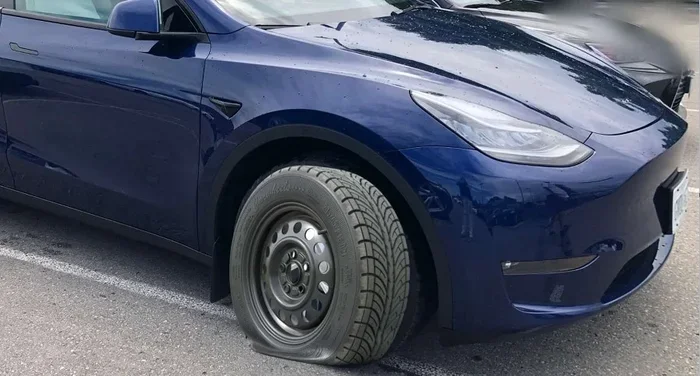
Since Tesla tires are not run flats, a puncture means the tire loses air pressure quickly. This is where many Tesla owners feel uncertain. Unlike vehicles with run flat tires, you cannot simply keep driving to your destination. You need to address the situation right away.
Tesla Tire Pressure Monitoring System
Every Tesla has a tire pressure monitoring system, often called TPMS. This system uses sensors on each wheel to measure air pressure in real time. When pressure drops below the recommended level, your Tesla dashboard displays a warning. You will see a tire pressure alert on the touchscreen. Some Tesla models also show which specific tire is low.
The TPMS is one of the best safety features in any Tesla. It gives you early warning before a tire becomes completely flat. If you see a pressure warning, pull over safely and check the tire. Do not ignore the alert. Driving on an underinflated tire can cause further damage to the tire and even the wheel rim.
Can You Drive on a Flat Tesla Tire?
The short answer is no. You should not drive on a completely flat Tesla tire. Standard Tesla tires are not designed to support the vehicle without air pressure. Driving on a flat tire can cause irreversible damage to the tire sidewall. It can also harm the wheel rim, which is expensive to replace.
If you get a flat while driving, reduce your speed gradually. Pull over to a safe location as soon as possible. Turn on your hazard lights. If you have a spare tire or a mobile tire repair kit, you can use it temporarily. However, the best approach is to call for roadside assistance or a Tesla service appointment.
Tesla offers roadside assistance for new vehicles. This service can help with tire changes and towing. If your Tesla is still under warranty, roadside assistance is usually included at no extra cost. Keep your Tesla mobile app handy. You can request roadside help directly from the app.
Tesla Tire Maintenance Tips
Proper maintenance keeps your Tesla tires healthy and safe. Since Tesla tires are not run flats, taking care of them is even more important. A well-maintained tire lasts longer and performs better on the road. Here are the most important maintenance tips every Tesla owner should follow.
Checking Tire Pressure Regularly
Tire pressure affects everything from safety to battery range. Check your Tesla tire pressure at least once a month. Use a reliable tire pressure gauge. The recommended pressure for your specific Tesla model is listed on the driver’s door jamb sticker. You can also find this information in the Tesla mobile app under the vehicle settings.
Temperature changes affect tire pressure. In cold weather, air inside tires contracts and pressure drops. In hot weather, pressure can rise. Adjust your tire pressure seasonally to stay within the recommended range. Tesla also allows you to set a tire pressure alert in the vehicle settings. Turn this feature on so you get notified of any pressure changes.
Rotating Your Tesla Tires
Tire rotation means moving tires from one position to another. This ensures even wear across all four tires. Tesla recommends rotating tires every 6,000 to 8,000 miles. You can do this at a Tesla service center or at an independent tire shop.
Regular rotation extends the life of your tires significantly. Without rotation, front tires wear faster because they handle steering and braking. Rear tires wear more slowly. Rotating them balances the wear pattern. This means you get more miles out of every set of tires.
Wheel Alignment
Wheel alignment keeps your Tesla tires pointing in the right direction. Poor alignment causes uneven tire wear. It can also affect handling and range. Signs of bad alignment include the car pulling to one side or the steering wheel feeling off-center.
Get a wheel alignment check every 12,000 miles or whenever you notice uneven tire wear. Tesla service centers can perform alignment checks. Some third-party tire shops also offer this service at a lower cost.
Tesla Tire Replacement and Repair Costs
Replacing a Tesla tire costs more than replacing a tire on a regular car. This is because Tesla tires are performance-rated and often come in larger sizes. Understanding the costs helps you budget for tire maintenance.
How Much Does a Tesla Tire Cost?
A single Tesla tire typically costs between $200 and $400. The exact price depends on your Tesla model and the tire size. Model 3 tires generally cost less than Model X tires because the wheels are smaller. Performance tire variants also cost more than standard all-season tires.
Here is a rough breakdown of Tesla tire replacement costs:
- Tesla Model 3 tires: $200 to $300 per tire
- Tesla Model Y tires: $220 to $330 per tire
- Tesla Model S tires: $250 to $400 per tire
- Tesla Model X tires: $250 to $400 per tire
These prices are for the tire only. Installation, balancing, and valve stem replacement may add $50 to $100 per tire. If you need all four tires replaced, the total cost can range from $800 to $1,600 or more.
Does Tesla Warranty Cover Tire Damage?
The Tesla basic warranty does not cover tire damage. Tires are considered wear items and fall outside the standard vehicle warranty. However, Tesla offers an extended service agreement that may include tire coverage. You can also purchase third-party tire protection plans from companies like Endurance or CarShield.
Road hazard protection is a valuable add-on. It covers damage from potholes, nails, glass, and other road debris. If you frequently drive on rough roads or in areas with construction, road hazard protection is worth considering. It can save you hundreds of dollars in tire repair and replacement costs.
Common Tesla Tire Problems and How to Avoid Them
Tesla tires face unique challenges because of the weight and torque of electric vehicles. Being aware of common problems helps you prevent them before they become expensive repairs.
Uneven Tire Wear
Uneven tire wear is one of the most common Tesla tire issues. It happens when tires do not wear at the same rate. Front tires often wear faster than rear tires because they handle steering and braking forces. Without regular rotation, you may need to replace front tires long before the rear tires.
To avoid uneven wear, rotate your tires on schedule. Check alignment at least once a year. Avoid aggressive driving habits like hard cornering and sudden braking. These habits accelerate tire wear on specific parts of the tire tread.
Sidewall Damage and Road Hazards
Tesla tires, especially low-profile versions, are vulnerable to sidewall damage. Potholes, curbs, and road debris can cause cuts or bulges in the sidewall. Unlike a tread puncture, sidewall damage usually cannot be repaired. The tire must be replaced.
You can reduce sidewall damage by avoiding potholes whenever possible. Drive slowly over speed bumps. Inspect your tires visually every time you wash your car. Look for cuts, bulges, or objects embedded in the tread. Catching damage early prevents a sudden flat.
Tire Noise and Road Comfort
Some Tesla owners notice increased road noise from their tires. This is especially common with performance tires and larger wheel sizes. Low-profile tires have less sidewall to absorb road imperfections. As a result, you feel more road texture inside the cabin.
If road noise bothers you, consider switching to a tire with a comfort-focused tread design. Many tire manufacturers offer all-season tires specifically tuned for electric vehicles. These tires balance low rolling resistance with reduced road noise. Talk to a tire specialist about the best option for your Tesla model.
Expert Insights on Tesla Tire Care
Tesla tire experts recommend a proactive approach to tire care. Waiting until a tire is visibly low or damaged is not the best strategy. Regular checks and preventive maintenance save money and keep you safe on the road.
Tesla service advisors suggest keeping a portable tire inflator in your trunk. This small device lets you add air to a slightly low tire without visiting a gas station. It is a simple tool that prevents minor pressure loss from becoming a major problem.
Another expert tip is to inspect your spare tire regularly. If your Tesla came with a full-size spare, make sure it has proper pressure too. A spare tire that is also flat defeats the purpose of having one. Check the spare every few months and add air as needed.
Some Tesla owners choose to upgrade their tires. Aftermarket tires from brands like Michelin Pilot Sport or Continental ExtremeContact offer enhanced performance. Before upgrading, verify that the new tires fit your wheel size and are compatible with your Tesla model. Tesla provides a list of recommended tire sizes for each model on their service website.
Key Takeaways
- Tesla tires are not run flats: All Tesla models use standard all-season tires that require air pressure to function safely.
- TPMS keeps you informed: Tesla’s tire pressure monitoring system alerts you immediately when pressure drops on any tire.
- Do not drive on a flat: Standard Tesla tires cannot support the vehicle without air. Pull over safely and seek assistance.
- Maintenance extends tire life: Regular pressure checks, rotations, and alignment checks keep your tires performing well for thousands of miles.
- Replacement costs are significant: Tesla tires range from $200 to $400 per tire. Budget for replacement every 30,000 to 60,000 miles.
- Road hazard protection adds value: Consider tire protection plans to cover unexpected punctures and road damage.
Conclusion
Are Tesla tires run flats? No, they are not. Tesla vehicles use standard all-season tires that deliver excellent comfort, performance, and efficiency. While this means you cannot drive on a flat tire like you could with run flat-equipped vehicles, it also means you enjoy a smoother and quieter ride. Understanding how your Tesla tires work is the first step toward safe and confident driving.
Taking care of your Tesla tires does not have to be complicated. Check pressure regularly. Rotate tires on schedule. Watch for signs of uneven wear or sidewall damage. These simple habits keep your tires in great shape and protect your investment. When a flat does happen, you know exactly what to do: pull over safely, use your roadside assistance, and get the tire repaired or replaced promptly.
Tesla tires are a key part of the driving experience. They connect your electric vehicle to the road in ways that affect range, comfort, and safety. By following the tips in this guide, you can enjoy every mile in your Tesla with confidence. Stay proactive, stay informed, and your Tesla tires will serve you well for years to come.
Frequently Asked Questions
Can I put run flat tires on my Tesla instead of standard tires?
Yes, you can replace standard Tesla tires with run flat tires. However, Tesla does not recommend or endorse this change. Run flat tires may affect ride comfort and handling. They can also trigger TPMS warnings if not properly calibrated. Always consult a Tesla service advisor before switching tire types.
How far can I drive on a slightly low Tesla tire?
You should not drive far on a low tire. Even a small pressure loss affects handling, braking, and range. Drive to the nearest safe location and check the pressure. If the tire is significantly low, do not continue driving. Call for roadside assistance to avoid further damage to the tire or wheel.
Does Tesla provide a spare tire with new vehicles?
Most new Tesla vehicles do not come with a full-size spare tire. Some models include a compact temporary spare or a tire repair kit with sealant and an inflator. Check your specific model’s equipment list. Tesla recommends using roadside assistance for flat tire situations in most cases.
How often should I replace my Tesla tires?
Tesla tires typically last between 30,000 and 60,000 miles depending on driving habits, road conditions, and tire size. Performance tires may wear faster. Regular rotation and alignment checks help maximize tire life. Inspect your tires visually every month for signs of wear or damage.
What should I do if my Tesla tire gets a nail or screw in it?
If you find a nail or screw in your Tesla tire, do not remove it immediately if the tire is still holding air. A lodged object can actually slow the air leak. Drive carefully to a tire repair shop. A professional can patch or plug the puncture if the damage is in the tread area. Sidewall punctures usually require a full tire replacement.
Are Tesla tires more expensive than regular car tires?
Yes, Tesla tires generally cost more than standard car tires. This is because Tesla tires are performance-rated and designed to handle the weight and torque of electric vehicles. Larger wheel sizes also increase the cost. However, many Tesla owners find that the improved handling and range efficiency justify the higher price.
=== CONCLUSION ===
Tesla tires are not run flats, and understanding this fact helps every Tesla owner prepare for tire emergencies. Standard all-season tires offer comfort and performance but require proper care and attention. Regular maintenance, pressure checks, and timely replacements keep your Tesla safe and efficient. When a flat occurs, pull over safely and use Tesla’s roadside assistance. With the right knowledge and a proactive approach, you can handle any tire situation confidently and keep your Tesla running at its best.