Upgrade Your Car With a USB Bluetooth Receiver Today
A USB Bluetooth receiver for car is a small device that brings wireless audio and hands-free calling to any vehicle with a USB port. It lets you stream music directly from your phone to your car stereo without cables or hassle. These receivers are affordable, easy to install, and work with almost any car model. You get a cleaner sound, safer driving, and a modern audio experience in minutes. Upgrading your car with a USB Bluetooth receiver for car is one of the simplest and most affordable car audio upgrades you can make.
A USB Bluetooth receiver for car is one of the smartest small purchases you can make for your vehicle. It is a tiny gadget that plugs into your car’s USB port and turns any car stereo into a wireless music machine. You get to play songs from your phone, take calls, and enjoy podcasts without tangled cords or annoying cables. It is simple, affordable, and works with almost every car on the road today.
If you still rely on FM transmitters or scratchy auxiliary cables, you are missing out on a much better driving experience. A Bluetooth receiver for car solves those problems in one clean move. No static. No dropped signals. No fumbling with cords while driving. Just smooth, wireless audio every time you turn the key. This guide covers everything you need to know about picking, setting up, and enjoying a USB Bluetooth receiver for car.
Key Takeaways
- Simple Plug-and-Play: A USB Bluetooth receiver for car connects in seconds and needs no special tools or wiring.
- Wireless Music Streaming: Stream music, podcasts, and audiobooks from your phone directly to your car speakers.
- Hands-Free Safety: Make and receive calls without taking your hands off the wheel or eyes off the road.
- Affordable Upgrade: Most USB Bluetooth receivers cost between $15 and $50, making them budget-friendly car audio upgrades.
- Works With Almost Any Car: If your car has a USB port, a Bluetooth receiver will work with it.
- Better Sound Quality: Modern receivers support aptX and HD audio codecs for clear, rich sound.
- No More FM Interference: Skip the static and signal drops that come with FM transmitters.
📑 Table of Contents
- What Is a USB Bluetooth Receiver for Car?
- Top Benefits of Using a USB Bluetooth Receiver
- Key Features to Look For When Buying
- How to Set Up Your USB Bluetooth Receiver for Car
- USB Bluetooth Receiver vs. Other Car Connectivity Options
- Quick Tips for the Best Experience
- Expert Insights on Car Bluetooth Upgrades
- Common Mistakes People Make With Bluetooth Receivers
- Conclusion
What Is a USB Bluetooth Receiver for Car?
A USB Bluetooth receiver for car is a small adapter that connects to your car’s USB port or cigarette lighter. It receives Bluetooth signals from your phone, tablet, or laptop and sends the audio to your car’s speakers. Think of it as a bridge between your phone and your car’s audio system.
How Does It Work?
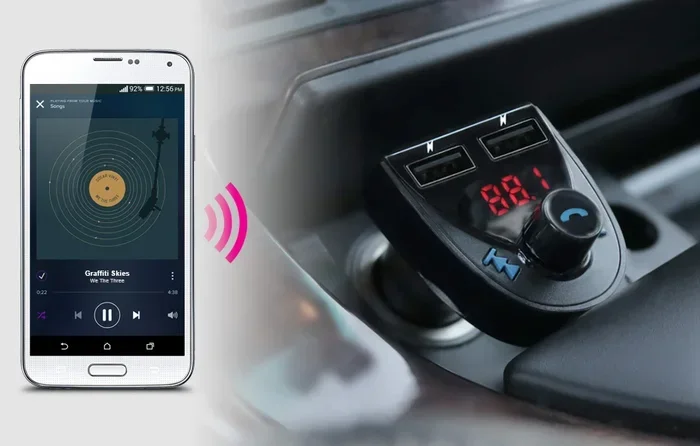
The device uses Bluetooth technology to pair with your phone. Once paired, any audio from your phone streams wirelessly to the receiver. The receiver then sends that audio signal through the USB connection to your car stereo. Your car speakers play the sound just like they would for a CD or radio station.
Most receivers use a standard Bluetooth connection. Some newer models support advanced codecs like aptX or LDAC. These codecs deliver higher quality audio with less compression. The result is richer bass, clearer vocals, and a much better listening experience overall.
Why It Beats FM Transmitters
Many drivers still use FM transmitters to get Bluetooth audio in their cars. But these devices have big flaws. They pick up radio interference. The sound quality is often muddy. And finding a clear FM frequency can be a frustrating guessing game every time you drive.
A USB Bluetooth receiver for car solves all of these problems. It uses a direct digital connection through USB. There is no radio signal to interfere with. The audio stays clean and crisp. You also get a more stable connection that does not drop out when you hit a bump in the road.
Top Benefits of Using a USB Bluetooth Receiver
Switching to a Bluetooth receiver for car brings a long list of real-world benefits. Here are the top reasons drivers love these little devices.
Wireless Music Streaming
The biggest benefit is wireless music streaming. You can play any song from Spotify, Apple Music, YouTube, or your personal music library. The audio goes straight from your phone to your car speakers. No cables. No fuss. You can even control playback from your phone’s lock screen.
This is a game-changer for long road trips. You get hours of uninterrupted music without worrying about cords getting tangled or pulled loose. It makes every drive more enjoyable.
Hands-Free Calling
Safety is a huge deal when you are behind the wheel. A USB Bluetooth receiver for car lets you make and receive calls completely hands-free. The built-in microphone picks up your voice clearly. Your passengers hear you just fine, and you stay focused on the road.
Many receivers also support call waiting and call rejection. You can switch between music and calls seamlessly. This feature alone makes a Bluetooth receiver worth the small investment.
Easy Plug-and-Play Setup
You do not need to be a tech expert to set up a Bluetooth adapter for car. Most models work right out of the box. You plug the receiver into a USB port, wait for the LED light to blink, and pair your phone. That is it.
Some models remember your paired devices. So the next time you get in the car, it connects automatically. No need to search for your phone or enter a PIN code every single time. The whole process takes less than two minutes.
Affordable Car Audio Upgrade
Replacing a car stereo can cost hundreds of dollars. A USB Bluetooth receiver for car costs a fraction of that price. Most models range from $15 to $50. You get modern wireless features without replacing your entire audio system.
It is the most budget-friendly way to bring Bluetooth into your car. Whether you drive an older model or a newer vehicle, a Bluetooth receiver works as a simple add-on that instantly upgrades your experience.
Key Features to Look For When Buying
Not all Bluetooth receivers are the same. Some are basic and functional. Others offer premium features that make a big difference. Here are the key features to check before you buy.
Bluetooth Version and Range
Look for a receiver with Bluetooth 4.0 or higher. Newer versions offer better range and lower power use. Bluetooth 5.0 is the current standard and gives you a connection range of up to 30 feet. This means your phone can stay in your pocket or on the passenger seat without losing the signal.
Older Bluetooth versions may disconnect if your phone moves too far away. They also use more battery power on your phone. Always check the Bluetooth version before purchasing.
Audio Codec Support
Audio codecs control how your music is compressed and sent over Bluetooth. The most common codecs are SBC and AAC. Higher-end receivers support aptX or aptX HD. These codecs deliver noticeably better sound quality.
If you care about audio quality, look for a Bluetooth receiver for car that supports aptX. You will hear more detail in your music, better bass response, and clearer vocals. It makes a real difference, especially with genres like jazz, classical, and acoustic music.
Multipoint Connectivity
Multipoint Bluetooth lets the receiver connect to two devices at the same time. This is handy if you share your car with a partner. Both phones can stay paired, and you can switch between them easily.
Some receivers also allow a tablet and phone to connect simultaneously. This feature is not available on every model, so check the product specs if it matters to you.
Built-In Microphone Quality
If you plan to take calls through the receiver, pay attention to the microphone quality. Cheap models often have muffled or quiet microphones. Look for receivers with noise cancellation or echo reduction. These features make your voice clearer during calls.
Read user reviews to find out which models have the best call quality. Real-world feedback is often more reliable than the manufacturer’s claims.
USB Port Compatibility
Make sure the receiver fits your car’s USB port. Most models use a standard USB-A connection. Some newer cars have USB-C ports. Check your car’s manual or look at the existing USB port shape before buying.
Also consider whether the receiver needs its own power source. Some draw power directly from the USB port. Others come with a car charger plug that also serves as a power source. Both options work fine, but it is good to know which setup you prefer.
How to Set Up Your USB Bluetooth Receiver for Car
Setting up a USB Bluetooth receiver for car is quick and easy. Follow these simple steps for a smooth installation every time.
Step-by-Step Installation
Step 1: Find an available USB port in your car. Most cars have at least one USB port under the dashboard or in the center console.
Step 2: Plug the Bluetooth receiver into the USB port. Wait for the LED light to start blinking. This means the device is ready to pair.
Step 3: Open the Bluetooth settings on your phone. Turn on Bluetooth and search for available devices.
Step 4: Select the receiver from the list of available devices. Some models have a default name like “BT Receiver” or “Audio BT.”
Step 5: Wait for the pairing to complete. You will usually hear a confirmation tone or see the LED light stop blinking.
Step 6: Start playing music on your phone. The audio should now come through your car speakers. Adjust the volume on both your phone and your car stereo for the best sound.
Common Setup Mistakes to Avoid
Here are a few common mistakes that can cause problems during setup:
- Not clearing old pairings: If the receiver was previously paired to another phone, it may not connect to your new device. Reset the receiver before pairing.
- Using a low-power USB port: Some car USB ports only provide enough power for data, not for charging devices. If the receiver keeps disconnecting, try a different USB port.
- Ignoring firmware updates: Some manufacturers release firmware updates that improve performance. Check the product page for any available updates.
- Placing the phone too far away: Keep your phone within 10 feet of the receiver for the most stable connection, especially during the first pairing.
USB Bluetooth Receiver vs. Other Car Connectivity Options
There are several ways to get Bluetooth audio in your car. Let us compare the most popular options so you can see why a USB Bluetooth receiver stands out.
| Feature | USB Bluetooth Receiver | FM Transmitter | Aux Cable | Built-In Bluetooth |
|---|---|---|---|---|
| Sound Quality | Excellent | Fair | Good | Excellent |
| Setup Ease | Very Easy | Easy | Very Easy | Built-In |
| Price Range | $15-$50 | $10-$30 | $5-$15 | Included |
| Hands-Free Calls | Yes | Yes | No | Yes |
| Interference | None | High | None | None |
| Works With Older Cars | Yes (USB port needed) | Yes | Yes (aux needed) | No |
As you can see, a USB Bluetooth receiver for car offers the best balance of sound quality, ease of use, and price. It is a better choice than FM transmitters in almost every way. And it works with older cars that do not have built-in Bluetooth.
If your car already has Bluetooth, you may not need a receiver. But for older cars or cars with broken Bluetooth systems, a USB receiver is the perfect fix. It brings modern connectivity to vehicles that would otherwise be stuck in the past.
Quick Tips for the Best Experience
Follow these quick tips to get the most out of your Bluetooth receiver for car:
- Keep your phone’s Bluetooth software updated for the best compatibility.
- Place the receiver in a spot where it is not blocked by other devices or cables.
- Restart the receiver once a month to clear the memory and keep it running smoothly.
- Use a high-quality USB cable if the receiver comes with one included.
- Turn off Bluetooth on other devices nearby to avoid connection conflicts.
- Store the receiver in a safe spot when not in use to prevent damage.
Expert Insights on Car Bluetooth Upgrades
Car audio experts agree that a USB Bluetooth receiver for car is the easiest way to modernize an older vehicle. Many mechanics and audio specialists recommend these devices because they require zero permanent changes to the car. You can remove the receiver anytime and sell it with the car or take it to your next vehicle.
Experts also point out that the sound quality of modern Bluetooth receivers is nearly indistinguishable from wired connections. With support for high-quality codecs, you can enjoy studio-level audio right from your phone. It is no longer necessary to spend hundreds of dollars on a new stereo system to get great sound.
One car audio specialist shared this insight: “A lot of people think they need a whole new stereo to get Bluetooth. That is simply not true. A small USB Bluetooth receiver does the job perfectly for a fraction of the price.” This advice applies to sedans, SUVs, trucks, and even older classic cars.
Another expert added that multipoint connectivity is a feature worth paying extra for. “If you share your car with a partner or family member, multipoint Bluetooth saves a lot of hassle. Both phones stay connected, and you switch between them with a simple tap.”
Common Mistakes People Make With Bluetooth Receivers
Even though these devices are simple, some common mistakes can cause frustration. Here is what to watch out for:
Buying the wrong Bluetooth version: Older Bluetooth versions have shorter range and worse battery efficiency. Always choose Bluetooth 4.0 or higher, and ideally Bluetooth 5.0.
Ignoring the power source: Some receivers need more power than certain car USB ports can provide. If the device keeps turning off, try plugging it into a different port or use the included car charger adapter.
Not testing before a long drive: Always test the receiver in your driveway or garage before heading out on a long trip. Make sure the pairing works and the audio sounds clear on your car speakers.
Forgetting to unpair old devices: If the receiver is still connected to an old phone, it may not pair with your new one. Go into your phone’s Bluetooth settings and remove old connections before trying to pair again.
Conclusion
A USB Bluetooth receiver for car is one of the best small upgrades you can make for your vehicle. It brings wireless music, hands-free calling, and modern connectivity to any car with a USB port. The setup takes less than two minutes, and the cost is incredibly low compared to other car audio upgrades.
Whether you drive an old sedan that has no Bluetooth or a newer car with a broken audio system, a Bluetooth receiver solves the problem quickly and affordably. You get better sound, safer driving, and a more enjoyable experience every time you get behind the wheel.
Do not let tangled cords and poor sound quality ruin your drives anymore. Pick up a USB Bluetooth receiver for car today and transform the way you listen to music on the road. Your ears and your driving experience will thank you.
Frequently Asked Questions
Do USB Bluetooth receivers work with all car brands?
Yes, most USB Bluetooth receivers work with any car that has a USB port. This includes cars from Ford, Toyota, Honda, Chevrolet, BMW, and many other brands. If your car has a USB port for charging or data, a Bluetooth receiver will work with it. Always check the product specs to confirm USB-A or USB-C compatibility with your car model.
Does a Bluetooth receiver drain my car battery?
No, a USB Bluetooth receiver uses very little power. It draws the same amount of electricity as charging your phone. Most models use less than 1 watt of power. Even if you leave it plugged in for days, it will not noticeably drain your car battery. However, it is a good habit to unplug it if you do not plan to drive for several weeks.
Can I use a USB Bluetooth receiver with a car that has an aux input but no USB port?
Yes, some Bluetooth receivers come with a 3.5mm aux output. You can plug the receiver into your car’s aux port using a standard aux cable. The receiver powers up through the USB port or a car charger plug. This setup works great for cars that have aux but no USB port.
What is the difference between a USB Bluetooth receiver and an FM transmitter?
A USB Bluetooth receiver connects directly to your car’s stereo through a USB cable. It sends a clean digital audio signal with no interference. An FM transmitter broadcasts your phone’s audio over an FM radio frequency. This causes static, signal drops, and lower sound quality. A Bluetooth receiver is the better choice for sound quality and reliability.
How far can my phone be from the Bluetooth receiver?
Most USB Bluetooth receivers for car have a range of 10 to 30 feet. Bluetooth 5.0 models offer the longest range. As long as your phone stays within this range, the connection stays stable. If you move too far away, the audio may pause or disconnect. Keep your phone in the car for the best experience.
Can I pair multiple phones to one Bluetooth receiver?
Yes, most Bluetooth receivers can remember multiple paired devices. You can pair your phone, your partner’s phone, and even a tablet. Switching between devices is usually quick and easy. Some models support multipoint Bluetooth, which allows two phones to stay connected at the same time.