Does a Toyota Spare Tire Have TPMS And Why It Matters
Most Toyota vehicles do not include a TPMS sensor in the spare tire. The Toyota spare tire TPMS system typically monitors only the four main wheels. If you rely on a compact or full-size spare, you must manually check its pressure because the system will not warn you. This simple oversight can leave you stranded with an unusable spare when you need it most.
Does a Toyota spare tire have TPMS? This is a question many drivers overlook until they are stuck on the side of the road with a flat. The short answer is that most Toyota vehicles do not include a tire pressure monitoring system sensor in the spare tire. The system is designed to watch the four main wheels only. That means your spare can slowly lose air without any warning light on your dashboard.
Knowing this gap in your vehicle’s safety net is important. A flat tire is stressful enough. Finding out your spare is also flat because nobody checked the pressure adds unnecessary frustration. In this guide, we will explain exactly how the Toyota spare tire TPMS system works, why your spare pressure matters, and what you can do to stay safe. We will also cover practical steps you can take right now to avoid a roadside surprise.
Whether you drive a Toyota RAV4, Camry, Tacoma, or Highlander, the spare tire story is similar. Full-size spares and compact donuts share the same limitation. The Toyota spare tire TPMS feature simply does not exist on the majority of models. Understanding this helps you take control of your vehicle’s maintenance and keep your family safe. You will learn what the system does, what it does not do, and how to fill the gap with simple habits.
Key Takeaways
- No factory TPMS in spare: Most Toyota models do not include a TPMS sensor in the spare tire.
- Only main wheels are monitored: The system only tracks pressure in the four driving wheels.
- Manual checks are essential: You must physically check spare tire pressure at least once a year.
- Compact spares lose air faster: Donut spares can lose pressure over time even if unused.
- TPMS reset may be needed: After installing a spare, you might need to reset the system once the main tire is back.
- Check engine light connection: A TPMS fault can trigger the check engine light, which may or may not turn off on its own.
- AWD models need extra care: Proper tire pressure on all wheels is critical for AWD systems.
📑 Table of Contents
What Is TPMS and How Does It Work?
The tire pressure monitoring system is a safety feature that tracks the air pressure inside your tires. When pressure drops below a safe level, a warning light appears on your dashboard. This system helps prevent blowouts, improves fuel economy, and keeps your handling stable. Most modern Toyota vehicles use direct TPMS sensors. Each sensor lives inside the valve stem of the tire.
How Tire Pressure Sensors Work
Direct TPMS sensors use a small battery and radio transmitter. They measure the exact pressure inside the tire and send data to the car’s computer. If the pressure falls by 25 percent or more below the recommended level, the system triggers the warning light. The sensor also sends a unique ID for each wheel so the car knows which tire is low. The battery inside the sensor typically lasts between five and ten years. When the battery dies, the sensor stops transmitting, and the light comes on.
Indirect TPMS works differently. It does not have a physical sensor inside the tire. Instead, it uses the wheel speed sensors from the ABS system. A tire with low pressure has a smaller rolling radius. This causes it to spin faster than the other tires. The car’s computer detects this difference and lights the warning. Toyota uses both types depending on the model and trim level. Direct TPMS is more common on newer and higher-trim vehicles because it gives an exact pressure reading.
TPMS Sensor Battery Life and Replacement
TPMS sensor batteries are not user-replaceable in most cases. The entire sensor unit must be replaced when the battery dies. The cost ranges from 50 to 100 dollars per sensor. Because the spare tire does not have a sensor, you never have to worry about replacing a spare tire TPMS battery. This is one less maintenance item to track. However, it also means you have no electronic reminder for the spare.
Why Toyota Owners Should Care About TPMS
Toyota builds vehicles with safety and reliability in mind. The TPMS is a key part of that promise. When the light comes on, it tells you to check your tires before they become a danger. Ignoring the light can lead to uneven wear, reduced braking performance, and even a catastrophic blowout at highway speeds. Keeping your main tires properly inflated is the first step in car care. But what about the fifth tire?
Just as using the right oil like 5W20 instead of 5W30 in a Toyota protects your engine, maintaining proper spare tire pressure protects your safety on the road.
Does a Toyota Spare Tire Have TPMS?
The direct answer is no. The vast majority of Toyota vehicles do not have a TPMS sensor installed in the spare tire. The system is programmed to monitor only the four wheels that touch the road during normal driving. The spare tire sits quietly in the trunk or under the vehicle, and the car does not track its pressure.
The Factory Spare Tire Setup
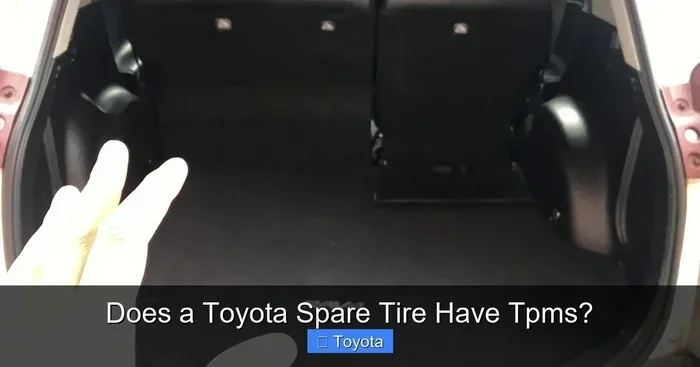
When you buy a new Toyota, the spare tire comes with the vehicle. It may be a full-size match or a compact temporary spare. In either case, the factory does not install a TPMS sensor on it. The reason is simple. The spare is not in use during normal driving. It only becomes active when a main tire fails. The engineers decided that adding a sensor to a tire that sits idle was not worth the cost or complexity.
Some higher-end trims or newer models might include a spare tire carrier with a pressure gauge built into the tool kit. But this is not the same as an active TPMS sensor. It is just a manual gauge. You still have to check the pressure yourself. The gauge can give you a reading, but it cannot send a warning to your dashboard.
Full-Size Spare vs Compact Spare
Toyota offers two main types of spare tires. Full-size spares match the diameter and width of your regular tires. They can be driven on for long distances and at highway speeds. Compact spares, often called donuts, are smaller and lighter. They are meant for temporary use only, usually up to 50 miles at speeds under 50 mph.
Neither type includes a TPMS sensor from the factory. A full-size spare will not trigger a pressure warning even if it is completely flat. A compact spare will not either. This is a common source of confusion. Drivers assume that because their main tires have sensors, the spare must too. It does not. The Toyota spare tire TPMS system is limited to the four active wheels.
Checking Your Owner’s Manual
Your owner’s manual is the best place to confirm whether your specific Toyota model has a spare tire sensor. Look for the tire and loading information section. You will find the recommended pressure for the main tires and the spare. If the manual mentions a TPMS sensor for the spare, it will be noted there. In most cases, you will see no mention of a spare tire sensor. That is your confirmation that it is not present.
Aftermarket Spare Tires and Sensors
You can buy aftermarket spare tires with TPMS sensors built in. These are rare and usually expensive. They require a compatible receiver in the vehicle. Even if you install one, the Toyota system may not recognize the sensor. The car expects a specific sensor ID for each wheel position. Adding a fifth sensor can cause error messages or false warnings. For most owners, the cost and hassle outweigh the benefit. It is simpler to just check the spare pressure manually.
Why Your Spare Tire Pressure Matters
A spare tire is only useful if it is ready to go. Many people forget about it until they need it. By that time, the rubber may be cracked, the tread worn, or the pressure dangerously low. An underinflated spare can cause handling problems, reduced braking, and even a blowout when you are driving on it. The stakes are high because you are often in an unfamiliar or stressful situation.
The Hidden Danger of an Unchecked Spare
Tire pressure naturally leaks over time. Even a brand new spare can lose a few pounds per square inch each month. Temperature changes also affect pressure. Cold weather can drop the pressure by 1 PSI for every 10 degrees Fahrenheit. If you last checked your spare tire in the summer, it may be low by winter. A spare tire that looks fine on the outside can be flat on the inside.
Compact spares are especially vulnerable. Their smaller air volume means a small leak can drop the pressure quickly. The rubber walls are thinner, and the tire is not designed for long-term use. A donut spare that has been sitting for two years may not hold air at all. This is why the Toyota spare tire TPMS gap is a real safety concern.
Common Mistakes to Avoid
- Assuming the spare is fine because it looks okay: Visual inspection is not enough. You need a gauge.
- Never checking the spare until you need it: By then, it may be too late.
- Overinflating the spare: Compact spares need high pressure, but exceeding the limit is dangerous.
- Ignoring the spare after a long trip: If you used the spare, have it inspected and repaired or replaced.
- Storing the spare in a damp or hot garage: This accelerates rubber degradation.
AWD and Tire Pressure
On AWD Toyota models, tire pressure becomes even more critical. The all-wheel drive system relies on all four tires rotating at the same speed. If one tire, including the spare, has a different pressure, it can cause strain on the transfer case and differential. Regular AWD service includes verifying that all tires, including the spare, are at the correct pressure. This simple check can prevent expensive drivetrain repairs.
Legal and Insurance Considerations
Driving on a spare tire with incorrect pressure can affect your insurance claim after an accident. If the spare fails and causes a collision, the insurer may argue that you did not maintain the vehicle properly. Keeping your spare tire at the right pressure is part of basic vehicle maintenance. It is a small habit that can save you from big headaches.
How to Check and Maintain Your Spare Tire
Checking your spare tire pressure is easy and takes only a few minutes. You should do it at least once every six months. A tire pressure gauge is a cheap and essential tool. Every Toyota comes with a recommended pressure listed on the driver’s side door jamb. For the spare, the pressure is often higher than the main tires. Full-size spares usually need 32 to 35 PSI. Compact spares often require 60 PSI. Check the label on the spare tire itself or the owner’s manual.
Step-by-Step Pressure Check
- Locate the spare tire in the trunk or under the vehicle.
- Remove the valve cap from the tire.
- Press the tire pressure gauge firmly onto the valve stem.
- Read the PSI number on the gauge.
- Compare it to the recommended pressure.
- Add air if needed using a portable compressor or gas station air pump.
- Replace the valve cap and store the gauge.
Make this part of your routine. Pair it with your oil change or tire rotation. That way you never forget.
Quick Tips for Spare Tire Care
- Keep a tire pressure gauge in your glove box.
- Check the spare pressure before any long road trip.
- Clean the spare tire and remove any dirt or debris.
- Ensure the jack and lug wrench are in good working order.
- Practice installing the spare in your driveway so you are prepared.
When to Replace Your Spare Tire
Spare tires have a limited lifespan. Even if you never use them, the rubber degrades over time. Most manufacturers recommend replacing a spare tire every six to ten years, regardless of tread depth. Look for cracks in the sidewall, bulges, or flat spots. If the spare tire has been used, inspect it for uneven wear and proper balance.
Storing the spare in a cool, dry place helps extend its life. Avoid placing it near chemicals or direct sunlight. The Toyota spare tire TPMS absence means you are the only one watching over its condition.
Testing the Spare Before You Need It
Do not wait for an emergency to discover your spare is faulty. Once a year, take the spare out and visually inspect it. Check the date code on the sidewall to see how old it is. Spin it to make sure it is not warped. If it has been used before, have a tire shop inspect it for internal damage. A few minutes of prevention can save hours of frustration.
What to Do When the TPMS Light Comes On
The TPMS warning light looks like a horseshoe with an exclamation point. It can come on for many reasons. Sometimes it is a simple fix. Other times it signals a real problem. Understanding the common causes helps you respond calmly.
Common Reasons for a TPMS Warning
- Low pressure in a main tire: This is the most common cause. A nail, valve stem leak, or temperature drop can trigger it.
- Sensor battery failure: TPMS batteries last about 5 to 10 years. When they die, the sensor stops transmitting.
- Sensor damage: Hitting a pothole or curb can knock a sensor out of place or break it.
- Temperature changes: Cold weather can temporarily lower pressure and light the warning.
- Aftermarket tire install: New tires without sensors will not be monitored.
Resetting the System After a Spare Tire Installation
If you have been driving on your spare, the TPMS light may stay on after you install the main tire back. The system needs to be reset. The procedure varies by Toyota model. In many vehicles, you can find the reset button under the steering column or near the gear shift. Turn the ignition to the ON position, press and hold the reset button until the light blinks three times, then release it. Drive the car for a few minutes and the system should relearn the pressure.
If the light does not go off, a scanner tool at a Toyota dealership can clear the code. Always check the main tire pressure first before resetting. A false reset will not fix a real leak.
Expert Insight: TPMS and the Check Engine Light
Sometimes a TPMS fault can trigger the check engine light, and you might wonder if it will turn off on its own. The answer depends on the root cause. A temporary pressure drop from cold weather often resolves itself once the tires warm up. However, a dead sensor battery or a damaged sensor will not fix itself. You can read more about whether a check engine light can turn off by itself in our guide. The same principles apply to TPMS-related lights.
When to Visit a Toyota Dealer
If the TPMS light stays on after you check all tire pressures, it is time for a professional diagnosis. A Toyota dealer has the tools to read the specific error codes. They can identify which sensor has failed or if there is a deeper issue. Do not ignore the light. A functioning TPMS is a key part of your vehicle’s safety system.
Final Thoughts: Stay Safe with Your Spare
So, does a Toyota spare tire have TPMS? The answer is no for most models. This does not mean the spare is unimportant. It means you must take an active role in its care. The Toyota spare tire TPMS system is designed to protect you on the road, but it only covers the tires you are currently using. The fifth tire is out of sight and out of mind until you need it.
Make spare tire checks a habit. Keep a quality gauge in your glove box. Know the correct pressure for your specific model. And remember that a spare tire is a temporary solution, not a permanent one. Replace it when it ages or after it has been used. These small actions add up to big safety benefits. You will have peace of mind knowing that when a flat happens, your spare is ready to get you home.
Stay proactive. Check your pressure, inspect your spare, and drive with confidence. Your Toyota is built to last, and with a little extra attention, it will keep you safe for many miles to come.
Frequently Asked Questions
Do all Toyota models have TPMS on the spare tire?
No. The vast majority of Toyota vehicles do not include a TPMS sensor in the spare tire. The system only monitors the four main wheels. Whether you have a full-size spare or a compact donut, the factory does not install a sensor on it.
Can I add a TPMS sensor to my Toyota spare tire?
Yes, aftermarket sensors exist, but they are rarely worth the cost. The Toyota system may not recognize a fifth sensor, and it can cause error messages. Most owners find it simpler to check the spare pressure manually with a gauge.
How often should I check my Toyota spare tire pressure?
You should check your spare tire pressure at least every six months. A compact spare can lose air quickly, and a full-size spare can slowly leak over time. Make it part of your regular maintenance routine.
What PSI should my Toyota spare tire have?
Full-size spares usually need 32 to 35 PSI, matching your main tires. Compact spares, or donuts, often require 60 PSI. Check the label on the spare tire itself or your owner’s manual for the exact number.
Will driving on a spare tire trigger the TPMS light?
If the spare has no TPMS sensor, the system may not detect it at all. However, if a main tire is low and you switch to the spare, the light may stay on until you reset the system. Always check the pressure of the main tire before resetting.
Can a low spare tire affect my Toyota’s AWD system?
Yes. On AWD models, all tires must have similar pressure and rolling diameter. A spare tire with low pressure can cause uneven wheel speeds, which may strain the transfer case and drivetrain. Regular AWD service includes checking the spare.