How Much Does It Really Cost to Put in Free Parking
Putting in free parking involves several hidden costs that most people overlook, from land preparation and paving to signage and ongoing maintenance. Whether you are a business owner or a homeowner, understanding the free parking installation cost upfront helps you avoid budget surprises and plan effectively.
So you want to build a free parking area. Maybe you run a small business and want to attract more customers. Or perhaps you own a property and want to make it more convenient for visitors. Whatever the reason, one question keeps coming up: how much does it really cost to put in free parking?
The honest answer is that the cost varies a lot. A simple gravel pad might set you back a few hundred dollars. A full paved lot with lights, signs, and proper drainage could easily run into the tens of thousands. The good news is that once you understand what goes into the free parking installation cost, you can plan your budget with confidence and avoid nasty surprises down the road.
In this guide, we walk through every major expense involved in building a free parking area. We break down material costs, labor costs, permit fees, and ongoing maintenance. By the end, you will have a clear picture of what to expect and how to make smart decisions about your project.
Key Takeaways
- Basic installation costs: A simple gravel parking area starts around $1,500 to $3,000, while a paved lot can range from $5,000 to $25,000 or more depending on size and materials.
- Hidden expenses add up fast: Permits, drainage systems, lighting, striping, and signage all contribute to the total free parking setup cost beyond just the surface.
- Ongoing maintenance matters: Resealing, restriping, and repairs can cost $500 to $2,000 per year, so factor this into your long-term budget.
- DIY vs. professional: Small projects may be doable yourself, but larger lots benefit from professional installation to meet local codes and ensure durability.
- Location drives pricing: Urban areas like Houston often have higher labor and material costs compared to rural locations, and local regulations can affect your total expense.
📑 Table of Contents
- Understanding the Free Parking Installation Cost
- Breaking Down the Total Free Parking Setup Cost
- Comparing DIY vs. Professional Installation for Free Parking
- How Vehicle Weight Affects Parking Area Design
- Ongoing Maintenance Costs for Free Parking Areas
- How Location and Local Regulations Impact Free Parking Costs
- Tips to Save Money on Your Free Parking Project
- Common Mistakes to Avoid When Building Free Parking
- Final Thoughts on Free Parking Costs
Understanding the Free Parking Installation Cost
The first step in any free parking project is understanding what you are actually paying for. The total cost is not just about paving a surface. It includes land prep, materials, labor, permits, and finishing touches like striping and signage. Let us break this down piece by piece.
Land Preparation and Grading
Before you lay down any surface, the land needs to be ready. This means clearing trees, rocks, and debris. It also means grading the ground so water drains properly. Land prep alone can cost anywhere from $500 to $3,000 depending on the size of the area and the condition of the soil.
If the land is flat and clear, you are in good shape. But if it is sloped or has a lot of vegetation, expect to pay more. A professional grading contractor can give you an accurate estimate after surveying the site.
Surface Materials and Paving Options
The surface you choose has the biggest impact on your free parking budget. Here are the most common options:
- Gravel: The cheapest option. Gravel parking areas cost about $0.50 to $2 per square foot. A basic 500-square-foot gravel pad might run $250 to $1,000.
- Asphalt: A popular choice for commercial lots. Asphalt costs about $3 to $7 per square foot installed. A standard 1,000-square-foot asphalt lot runs roughly $3,000 to $7,000.
- Concrete: More durable than asphalt but also more expensive. Concrete parking surfaces cost about $5 to $10 per square foot installed.
- Permeable pavers: Great for drainage but pricier. These run about $8 to $15 per square foot depending on the material and design.
Your choice depends on your budget, the intended use, and local climate. In areas with heavy rain, permeable surfaces help prevent flooding. In colder climates, concrete holds up better against freeze-thaw cycles.
Breaking Down the Total Free Parking Setup Cost
Now that you know the basic material costs, let us look at the full picture. The free parking setup cost includes several components beyond just the surface. Here is a more detailed breakdown of what you can expect.
Permits and Regulatory Fees
Most municipalities require permits before you can build a parking area. These fees vary widely by location. In some areas, a simple residential parking pad might only need a minor permit costing $50 to $200. Commercial lots often require more extensive approvals and can cost $500 to $2,000 in permit fees alone.
It is important to check with your local zoning office early in the process. Some areas have strict rules about how close you can build to property lines or how many spaces you must provide. Skipping this step can lead to costly fines or even orders to remove the parking area.
Drainage and Grading Systems
Proper drainage is essential for any free parking area. Without it, water pools on the surface, causing erosion and damage over time. Installing a basic drainage system might cost $500 to $2,000. This includes grading the surface, installing French drains, or creating retention areas.
For larger commercial lots, drainage costs can be much higher. You may need stormwater management systems that meet local environmental regulations. Always budget for drainage, even if it adds to the upfront cost. It saves you money on repairs later.
Striping and Line Marking
Once the surface is in place, you need to mark the parking spaces. Striping costs typically run $0.15 to $0.50 per square foot. For a standard 10-car lot, striping might cost $200 to $800. You will also need parking lot stencils for individual spaces, handicap spots, and directional arrows.
Thermoplastic striping is the most durable option and costs a bit more. Paint is cheaper but needs to be reapplied every one to two years. Either way, striping is a necessary part of the free parking installation process.
Signage and Free Parking Signs
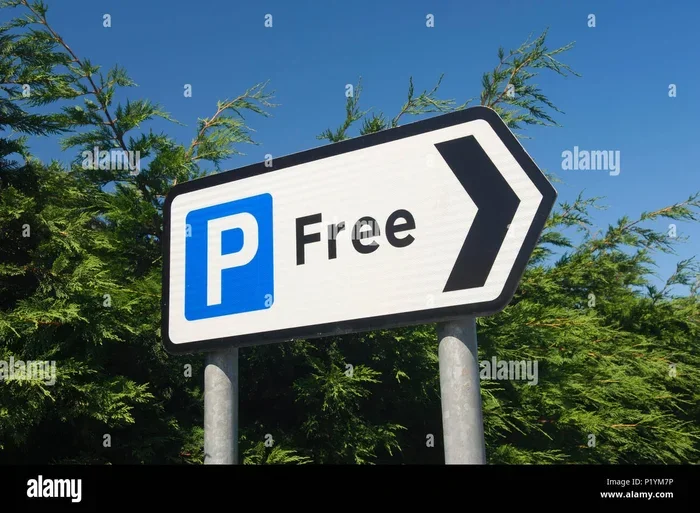
Clear signage helps manage your free parking area effectively. You might need signs that say “Free Parking,” “Visitor Parking,” or “No Parking” for certain zones. Sign costs range from $50 to $300 per sign, depending on the material and size.
Metal signs last longer but cost more. Plastic or aluminum signs are more affordable and work well for most applications. If you need illuminated signs, add another $200 to $1,000 per sign for the lighting fixture and electrical work.
Lighting for Free Parking Areas
If your free parking area needs to be usable at night, lighting is a must. Parking lot lights cost between $100 and $500 per fixture, and you typically need one fixture per 200 to 300 square feet. Installation adds another $200 to $1,000 per fixture depending on electrical work.
LED fixtures are the best choice for most projects. They use less energy, last longer, and provide better light coverage. While the upfront cost is higher than traditional lighting, LEDs save money over time.
Comparing DIY vs. Professional Installation for Free Parking
One of the biggest decisions in any free parking project is whether to do it yourself or hire a professional. Both options have pros and cons, and the right choice depends on your budget, skills, and the scope of the project.
When DIY Makes Sense
Small projects like a gravel parking pad for a single vehicle or a simple concrete slab for one car are great DIY candidates. You can save 30 to 50 percent on labor costs by doing the work yourself. Basic tools like a shovel, rake, and plate compactor are all you need for a gravel area.
However, DIY only works well when you have the right skills and equipment. Poor drainage or uneven grading can cause serious problems later. If you are not confident in your abilities, it is worth hiring a pro for the critical steps.
When to Hire a Professional
For anything larger than a small residential pad, professional installation is usually the better choice. A paved commercial lot involves complex grading, drainage planning, and precise striping. Professionals also handle permit applications and ensure the work meets local building codes.
Labor typically makes up 40 to 60 percent of the total free parking installation cost. While this adds to the upfront expense, professional work tends to last longer and require fewer repairs. Think of it as an investment in durability.
How Vehicle Weight Affects Parking Area Design
Not all vehicles are the same weight, and this matters when you are building a free parking area. A standard passenger car weighs between 2,500 and 4,000 pounds, but trucks and vans can be much heavier. If your parking area will accommodate various vehicle types, you need to plan for the weight.
For example, if you are designing a parking area near a business where vans frequently visit, you should consider how much weight can be put on the surface. A standard passenger car can carry a certain amount of weight, but the parking surface itself needs to support the vehicle plus any cargo. This is especially important for asphalt and concrete surfaces, which have different load-bearing capacities.
For heavier vehicles like pickup trucks or vans, the weight limits become even more relevant. You want to make sure your parking surface can handle the load without cracking or sinking. Consulting a structural engineer is a smart move if you expect heavy vehicles to use the space regularly.
Also consider that some parking areas near commercial properties see a mix of vehicles. A pickup truck carrying construction materials weighs very differently than a sedan with just the driver. Planning for the heaviest expected load ensures your free parking area stays in good shape for years.
Ongoing Maintenance Costs for Free Parking Areas
Building a free parking area is only half the battle. You also need to budget for ongoing maintenance. A well-maintained parking area lasts longer and looks better, which reflects positively on your property.
Annual Maintenance Checklist
- Resealing asphalt: Every 2 to 3 years at a cost of $0.10 to $0.25 per square foot.
- Restriping: Every 1 to 2 years depending on traffic and weather, costing $0.15 to $0.50 per square foot.
- Crack filling: $1 to $3 per linear foot for sealant.
- Drainage clearing: $100 to $500 per year to keep water flowing properly.
- Sign replacement: $50 to $300 per sign every 3 to 5 years.
- Lighting maintenance: $50 to $200 per fixture per year for bulb replacement and cleaning.
On average, expect to spend 1 to 3 percent of the original installation cost each year on maintenance. A $10,000 parking lot would therefore cost $100 to $300 per year to maintain. This is a small price to pay for a parking area that stays functional and attractive.
How Location and Local Regulations Impact Free Parking Costs
Where you live has a big impact on the cost of putting in free parking. Labor rates, material prices, and permit fees all vary by region. Urban areas tend to be more expensive than rural locations, and some cities have stricter regulations than others.
For instance, the way parking works in Houston involves specific local codes and zoning requirements that can affect your project timeline and budget. Cities with heavy traffic or limited space often require more detailed planning and higher-quality materials to meet municipal standards.
Climate also plays a role. Areas with harsh winters need more durable surfaces and better drainage systems. Hot, sunny climates may require UV-resistant sealants and materials that can handle extreme heat. Always factor in your local climate when choosing materials and designing your free parking area.
Tips to Save Money on Your Free Parking Project
Building a free parking area does not have to break the bank. Here are some practical tips to keep costs down without sacrificing quality:
- Start with gravel for temporary or low-traffic areas. It is the most affordable option and works well for overflow parking or rural properties.
- Get multiple quotes from contractors. Prices can vary by 20 to 30 percent between different providers. Always ask for a detailed written estimate.
- Do some of the work yourself. Clearing the land, hauling materials, and basic grading can be done without professional help if you have the right tools.
- Choose standard dimensions. Custom-sized lots cost more. Using standard parking space dimensions (9 by 18 feet for parallel parking) keeps material waste low.
- Plan for drainage from the start. Fixing drainage problems after installation is much more expensive than building it in from the beginning.
- Buy materials in bulk. Whether it is gravel, asphalt, or concrete, buying in larger quantities usually reduces the per-unit cost.
These simple strategies can save you hundreds or even thousands of dollars on your free parking project. The key is to plan ahead and make informed decisions at every stage.
Common Mistakes to Avoid When Building Free Parking
Even with the best intentions, mistakes happen. Here are the most common errors people make when building a free parking area and how to avoid them:
- Skipping permits: This can result in fines, orders to remove the parking area, or legal disputes with neighbors. Always check with your local authorities first.
- Ignoring drainage: Water damage is the number one killer of parking surfaces. A proper drainage plan is non-negotiable.
- Underestimating the cost: Many people only budget for the surface material and forget about grading, permits, striping, and maintenance. Build in a 15 to 20 percent contingency budget.
- Using the wrong materials: Cheap materials save money upfront but cost more in repairs later. Choose durable materials that fit your climate and usage needs.
- Poor grading: A level surface that does not slope slightly for drainage will collect water and deteriorate quickly. Always grade with a 1 to 2 percent slope away from buildings.
Avoiding these mistakes keeps your free parking project on budget and on schedule. It also ensures the parking area remains functional and safe for years to come.
Final Thoughts on Free Parking Costs
The free parking installation cost depends on many factors, including the size of the area, the materials you choose, local labor rates, and the complexity of the project. A simple gravel pad is affordable and quick to build. A full paved commercial lot with lighting and signage requires a bigger investment but delivers long-term value.
The most important thing you can do is plan thoroughly. Understand every component of the cost, from land prep to maintenance. Get multiple quotes, check your local regulations, and build in a buffer for unexpected expenses. With the right approach, your free parking area will be a valuable addition to your property that serves visitors and customers for years to come.
Remember, the cheapest option is not always the best. Invest in quality materials and proper installation, and your parking area will pay for itself many times over through increased property value, customer convenience, and reduced repair costs. Start planning your free parking project today, and you will be glad you did.
Frequently Asked Questions
What is the average cost to install a basic free parking lot?
A basic gravel parking area costs around $1,500 to $3,000 for a small residential lot. A paved asphalt lot for a small commercial property typically runs between $5,000 and $15,000 depending on size and local labor rates. The free parking installation cost varies based on materials, site conditions, and location.
Do I need a permit to build a free parking area?
Most municipalities require at least a basic permit for any new parking area, even if it is free. Residential driveways may have different requirements than commercial lots. Check with your local zoning or building department to avoid fines or costly corrections later.
How much does it cost to maintain a free parking area each year?
Annual maintenance typically costs 1 to 3 percent of the original installation price. For a $10,000 lot, that means $100 to $300 per year for sealcoating, restriping, crack filling, and drainage upkeep. Regular maintenance extends the life of your free parking surface significantly.
Can I build free parking on my own property without any restrictions?
Not always. Even on private property, local zoning laws may limit how much impervious surface you can have, how close parking can be to property lines, and what drainage standards must be met. Always check local regulations before starting your free parking project.
What is the cheapest way to create a free parking space?
Gravel is the most affordable option, costing $0.50 to $2 per square foot. A simple crushed stone pad with basic grading can serve as a functional parking area for very little money. Just make sure you address drainage to prevent the surface from washing out over time.
How long does a free parking lot last before needing major repairs?
A well-built asphalt parking lot lasts 15 to 20 years with proper maintenance. Concrete can last 20 to 30 years. Gravel areas need periodic regrading and replenishment every 3 to 5 years. Regular maintenance like sealcoating and crack filling makes a big difference in longevity.