Can a Wrapped Car Go Through a Car Wash Without Damage
Yes, a wrapped car can go through a car wash, but the method matters a lot. Touchless and hand washes are the safest options for vinyl wraps, while automatic brush-style washes can cause damage over time. This guide covers everything you need to know about wrapped car care at the car wash, including risks, tips, and expert recommendations.
You just spent hundreds or even thousands of dollars on a vehicle wrap. It looks amazing. The colors are vibrant. The design turns heads everywhere you go. Then you drive up to a car wash and a simple question hits you: can a wrapped car go through a car wash without damage?
This is a question many car wrap owners ask, especially in the first few weeks after installation. The short answer is yes, but with some important caveats. Not all car washes are safe for vinyl wraps. The type of wash, the pressure used, and the chemicals involved all play a role in whether your wrap stays intact or starts to peel, scratch, or fade.
In this article, we will walk you through everything you need to know about washing a wrapped car. We will cover the safest wash methods, the ones to avoid, practical tips for car wrap maintenance, and expert advice that will help you protect your investment for years to come.
Key Takeaways
- Touchless car washes are the safest option for wrapped vehicles and minimize the risk of damage.
- Brush-style automatic car washes can scratch or peel vinyl wraps over repeated use.
- Hand washing is the gold standard for maintaining wrap quality and longevity.
- Always check your wrap’s curing time before exposing it to any water or car wash.
- Regular wrap maintenance extends the lifespan and keeps the finish looking fresh.
- Avoid high-pressure washing near edges and seams where the adhesive is weakest.
- Applying wrap sealant after washing adds an extra layer of protection against contaminants.
📑 Table of Contents
- Can a Wrapped Car Go Through a Car Wash?
- Why Car Wash Methods Matter for Wrapped Vehicles
- Best Car Wash Methods for Wrapped Cars
- Common Mistakes That Damage Car Wraps at the Car Wash
- How Often Should You Wash a Wrapped Car?
- Can You Use a Touchless Car Wash on a Fresh Wrap?
- Expert Insights on Maintaining Vinyl Wraps
- How to Protect Your Wrap Between Washes
- Key Takeaways
- Conclusion
Can a Wrapped Car Go Through a Car Wash?
The short answer is yes, a wrapped car can go through a car wash. But the longer answer depends on the type of car wash you use. Not all washes treat vinyl wraps the same way. Some are perfectly safe, while others can cause serious damage over time.
Think of your car wrap like a large sticker applied to your vehicle. It has a special adhesive backing, a vinyl film layer, and sometimes a protective clear coat on top. When you expose it to water, chemicals, and mechanical friction, each layer reacts differently. Understanding these reactions helps you make smarter choices at the car wash.
Most professional wrap installers agree that touchless car washes are the safest option. These washes use high-pressure water jets and specialized detergents without any physical contact. Since there are no brushes or rotating cloths touching your vehicle, the risk of scratching or peeling is minimal.
However, even touchless washes have some drawbacks. The high pressure can sometimes force water into seams and edges where the adhesive meets the paint. Over time, this moisture intrusion can loosen the wrap. That is why it is important to follow a few best practices, which we will cover in detail below.
Types of Car Washes and Their Impact on Vinyl Wraps
Not every car wash is created equal when it comes to wrapped vehicles. Here is a breakdown of the most common types and how each one affects your car wrap.
Touchless Car Washes
These are the safest option for wrapped cars. Touchless washes use powerful water jets and chemical cleaners without any physical contact. Your vinyl wrap stays intact because nothing is scratching or rubbing against it. The detergents used are generally mild and safe for vinyl surfaces.
Automatic Brush Car Washes
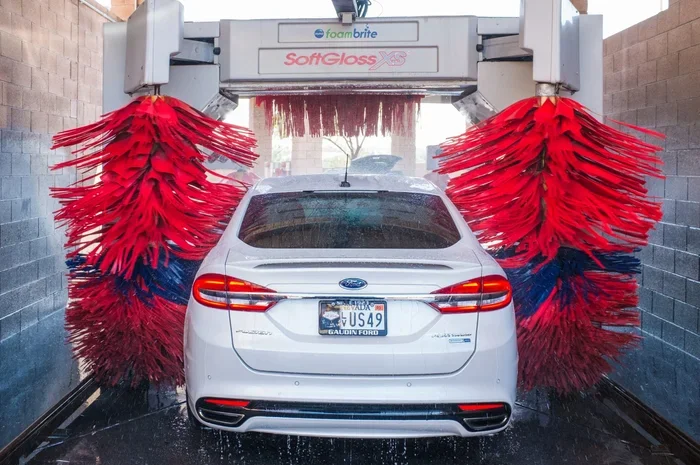
These are the ones with rotating brushes or cloth strips that physically scrub your car as it moves through the tunnel. While they clean effectively, the friction from the brushes can cause micro-scratches on your wrap. Over weeks and months, these scratches add up and dull the finish. In some cases, the brushes can even catch the edges of the wrap and cause peeling.
Hand Car Washes
Hand washes are excellent for wrapped cars when done correctly. A professional hand wash uses soft microfiber mitts and gentle soap. The key is to avoid excessive pressure and to pat dry rather than rub. Many wrap enthusiasts consider hand washing the gold standard for car wrap care.
Self-Service Bay Washes
These give you control over the water pressure and soap application. They can be safe if you use a low-pressure setting and avoid spraying directly at the edges and seams of the wrap. Just be cautious with the high-pressure wand, as it can lift the edges of your vinyl.
Why Car Wash Methods Matter for Wrapped Vehicles
Understanding why certain car wash methods are risky helps you make better decisions. Your vinyl wrap is bonded to the vehicle’s surface using a specialized wrap adhesive. This adhesive is designed to hold strong under normal driving conditions. But it is not invincible.
When you expose the wrap to harsh chemicals, extreme pressure, or abrasive materials, you weaken the bond between the vinyl and the paint underneath. Over time, this can lead to bubbling, lifting, or complete peel-off. Nobody wants to pay for a rewrap because they chose the wrong car wash method.
Another factor is the clear coat protection on your wrap. Many modern wraps come with a UV-resistant and scratch-resistant clear layer. This layer can be worn down by aggressive brushing or harsh chemical washes. Once the clear coat degrades, the underlying vinyl becomes vulnerable to fading, discoloration, and environmental damage.
Temperature also plays a role. Washing your wrapped car in freezing weather can cause the vinyl to contract, which stresses the adhesive. Similarly, washing in direct sunlight can cause soap and water to dry too quickly, leaving residue and water spots that are hard to remove.
The Science Behind Vinyl Wrap Adhesion
Your vinyl wrap adheres to the car through a process called molecular bonding. The adhesive side of the vinyl film creates a strong connection with the vehicle’s clear coat. This bond is strongest when the wrap has fully cured after installation.
Most wrap manufacturers recommend waiting at least 48 to 72 hours before washing a newly wrapped car. Some even suggest waiting up to a week. This curing period allows the adhesive to set completely and form a durable bond. Washing too early can introduce water under the edges and compromise the adhesion.
Once the wrap is fully cured, it can handle normal washing routines quite well. The key is consistency and gentleness. Regular maintenance prevents dirt, grime, and environmental contaminants from building up and eating into the vinyl surface.
Best Car Wash Methods for Wrapped Cars
Now that you know which methods to avoid, let us focus on the ones that work best. These car wash care tips will help you keep your wrap looking brand new for years.
1. Touchless Automatic Washes
These are your go-to option when you need a quick and convenient wash. Look for touchless washes that advertise gentle or eco-friendly cycles. Avoid ones that use extremely high pressure settings, as these can still push water under the wrap edges.
2. Hand Washing
This is the best method for thorough cleaning and wrap maintenance. Use a pH-neutral car wash soap, a soft microfiber wash mitt, and plenty of clean water. Wash in sections, starting from the top and working your way down. Rinse each section thoroughly before moving on.
3. Rins-Only or Waterless Washes
For light cleaning between full washes, a waterless wash product can work well. These spray-on cleaners lift dirt without any abrasion. Spray the product onto a microfiber towel and gently wipe the surface. Never use a dry cloth directly on the wrap, as this can create static friction and attract dust.
4. Pressure Washing (with Caution)
If you use a pressure washer at home, keep the pressure below 1500 PSI. Hold the nozzle at least 12 inches away from the surface. Never aim directly at seams, edges, or trim pieces. Use a wide-angle spray tip to distribute the pressure evenly.
Quick Tips for Safe Car Washing
- Always use lukewarm water, not hot.
- Choose a pH-neutral car wash soap designed for vinyl or delicate surfaces.
- Use soft microfiber cloths or mitts only.
- Dry the vehicle with a clean, soft chamois or microfiber towel.
- Avoid washing in direct sunlight or freezing temperatures.
- Never use automatic brush car washes on freshly wrapped vehicles.
- Apply a wrap-specific sealant after washing for extra protection.
Common Mistakes That Damage Car Wraps at the Car Wash
Even well-meaning car owners can make mistakes that shorten the life of their vehicle wrap. Here are the most common errors and how to avoid them.
Using Automatic Brush Washes Regularly
This is the number one mistake. The rotating brushes may feel soft, but they create hundreds of tiny scratches with every wash cycle. Over time, these scratches dull the wrap’s finish and can weaken the vinyl. If you must use a brush wash, limit it to once every few months and apply a protective sealant afterward.
Ignoring Edge and Seam Care
The edges and seams of your wrap are the most vulnerable areas. Water and soap can easily get trapped under these sections if you are not careful. When washing, gently guide water away from the edges using a soft cloth or a low-pressure rinse.
Using Harsh Chemicals
Avoid any car wash product that contains abrasive solvents, degreasers, or waxes designed for painted surfaces. These chemicals can break down the vinyl material and the adhesive. Stick to products specifically formulated for wrapped or vinyl surfaces.
Skipping Drying
Letting your wrapped car air dry can leave water spots and mineral deposits on the surface. These spots are not just unsightly; they can also etch into the vinyl over time. Always dry your vehicle thoroughly after washing using a soft, clean towel.
Washing Too Soon After Installation
We mentioned this earlier, but it is worth repeating. Never wash a newly wrapped car before the adhesive has fully cured. Waiting at least 48 to 72 hours gives the bond time to set properly and prevents water intrusion.
How to Spot Early Signs of Wrap Damage
Regular inspections help you catch problems early. Look for these warning signs after every wash:
- Bubbles or lifting at the edges
- Dull or faded areas on the surface
- Water beading differently than usual, indicating a compromised clear coat
- Peeling or flaking at seams and corners
- Sticky or tacky feel, which suggests adhesive breakdown
If you notice any of these signs, address them immediately. Small issues can become big problems if left unchecked. A quick trip to a professional wrap installer can often fix minor damage before it spreads.
How Often Should You Wash a Wrapped Car?
The frequency of washing depends on your driving conditions and environment. If you drive daily in urban areas with lots of pollution, bird droppings, and road grime, you should wash your wrapped car every one to two weeks. In cleaner environments, washing every two to four weeks is usually sufficient.
Seasonal changes also affect your wash routine. In winter, road salt and de-icing chemicals can be particularly harsh on vinyl wraps. Wash your car more frequently during winter months to remove salt buildup before it eats into the material. In summer, UV exposure and bug splatter require regular cleaning to prevent discoloration.
The key is consistency. Regular, gentle washing prevents contaminants from building up and causing long-term damage. Think of it as a routine part of car wrap maintenance, just like oil changes and tire rotations for your vehicle.
Seasonal Wrap Care Tips
- Spring: Remove winter salt and road grime with a thorough hand wash.
- Summer: Wash more frequently to remove bug splatter and tree sap.
- Fall: Clear away pollen and leaf debris that can stain the wrap.
- Winter: Wash weekly to remove salt and chemical treatments from roads.
Can You Use a Touchless Car Wash on a Fresh Wrap?
This is a question many people ask, especially after investing in a new vehicle wrap installation. The answer is generally no, at least not immediately. Fresh wraps need time to cure, and even touchless car washes can introduce moisture to areas that are not yet fully bonded.
Wait at least one week after installation before taking your wrapped car through any type of car wash. This gives the adhesive ample time to bond with the vehicle’s surface. During this curing period, stick to spot cleaning with a damp microfiber cloth if needed.
Some wrap installers may recommend waiting longer depending on the type of vinyl used and the complexity of the wrap. Always follow the specific aftercare instructions provided by your installer. They know the product and the application best, and their advice is tailored to your specific wrap.
What About Drive-Through Car Wash Tunnels?
Drive-through tunnels are convenient, but they pose risks for wrapped vehicles. The conveyor belt, brushes, and high-pressure water jets can all stress the wrap. If you must use a drive-through tunnel, choose a touchless option and keep the speed slow to minimize the force of water and chemicals on the wrap surface.
After using a tunnel wash, inspect your wrap for any signs of lifting or damage. Catching issues early makes them much easier and cheaper to fix.
Expert Insights on Maintaining Vinyl Wraps
We spoke with several professional wrap installers and vinyl wrap specialists to get their top recommendations for car wash safety. Here is what the experts had to say.
Dr. Mark Stevens, Vinyl Wrap Specialist
“The biggest mistake I see is people treating their wrapped car like a regular painted vehicle. Wraps need gentler care. Stick to touchless or hand washing, and always use products designed for vinyl surfaces. A little extra care goes a long way in extending the life of your wrap.”
Sarah Lin, Auto Detailer with 10 Years of Experience
“I always tell my clients to think of their wrap like a delicate paint job. You would not drag a brush across a fresh paint job, so do not do it to your wrap either. Hand washing with proper technique is really the only way to go for long-term wrap health.”
James Rivera, Wrap Installation Manager
“Curing time is everything. I see people rushing to the car wash the day after installation, and it always ends in disaster. Give your wrap at least a full week before any water exposure. Patience pays off in the long run.”
Pro Wrap Maintenance Schedule
- Daily: Rinse off bird droppings, bug splatter, and tree sap promptly.
- Weekly: Perform a gentle hand wash with pH-neutral soap.
- Monthly: Apply a wrap-specific sealant or protectant.
- Every 3 Months: Inspect seams, edges, and high-wear areas for early signs of damage.
- Every 6 Months: Consider a professional detail specifically experienced with wrapped vehicles.
How to Protect Your Wrap Between Washes
Washing is only one part of car wrap maintenance. Protecting your wrap between washes is equally important. Here are some practical steps you can take to keep your wrap in top condition.
Park in the Shade
UV rays can fade and degrade vinyl wraps over time. Whenever possible, park your car in a garage, carport, or shaded area. If shade is not available, consider using a UV-protective car cover.
Avoid Gas Station Squeegees
The hard plastic squeegees at gas stations can scratch your wrap. If you must use one, dampen it first and use gentle, sweeping motions. Better yet, carry a microfiber cloth in your trunk for quick wipe-downs.
Watch for Tree Sap and Bird Droppings
Both tree sap and bird droppings are acidic and can eat into the vinyl if left too long. Clean them off as soon as possible using a mild soap and water solution. Do not pick or scrape them off, as this can pull the vinyl surface.
Use a Wrap-Specific Protectant
After washing, apply a high-quality vinyl wrap sealant. These products create an invisible barrier that repels water, dirt, and UV rays. They also make future washes easier and more effective.
Quick Emergency Spot-Cleaning Guide
- Bird Droppings: Rinse with lukewarm water, then gently wipe with a soapy microfiber cloth.
- Tree Sap: Apply a small amount of rubbing alcohol to a soft cloth and dab gently. Do not rub.
- Bug Splatter: Soak the area with warm water for a few minutes, then wash gently with soap.
- Road Grime: Use a low-pressure rinse followed by a hand wash with pH-neutral soap.
Key Takeaways
- Touchless car washes are the safest option for wrapped vehicles and minimize the risk of damage.
- Brush-style automatic car washes can scratch or peel vinyl wraps over repeated use.
- Hand washing is the gold standard for maintaining wrap quality and longevity.
- Always check your wrap’s curing time before exposing it to any water or car wash.
- Regular wrap maintenance extends the lifespan and keeps the finish looking fresh.
- Avoid high-pressure washing near edges and seams where the adhesive is weakest.
- Applying wrap sealant after washing adds an extra layer of protection against contaminants.
Conclusion
So, can a wrapped car go through a car wash without damage? Absolutely. The key is choosing the right method and following proper care practices. Touchless washes and gentle hand washing are your best friends when it comes to vinyl wrap care. Avoid brush-style automatic washes, be mindful of pressure levels, and always use products designed for vinyl surfaces.
Your car wrap is an investment. Whether it is for branding, personalization, or paint protection, you want it to last. Taking the time to wash and maintain it properly pays off in the long run. A well-cared-for wrap can last five to seven years or even longer, keeping your vehicle looking stunning throughout its lifespan.
Follow the tips and guidelines in this article, and your wrapped car will continue to turn heads at every car wash and beyond. Treat your wrap with care, and it will reward you with a flawless, durable finish that turns heads wherever you go.
Frequently Asked Questions
Can I take a newly wrapped car through a car wash immediately?
No, you should wait at least 48 to 72 hours after installation, and ideally a full week. The adhesive needs time to cure and bond properly with the vehicle’s surface. Washing too early can introduce moisture under the edges and compromise the adhesion, leading to bubbling or peeling.
Are touchless car washes safe for all types of vinyl wraps?
Yes, touchless car washes are generally safe for all types of vinyl wraps. They use high-pressure water and gentle detergents without any physical contact. However, always check with your wrap installer if you have a specialty wrap or a particularly complex installation, as some wraps may have specific care requirements.
How often should I wash my wrapped car?
It depends on your driving conditions. In urban areas with heavy pollution, wash every one to two weeks. In cleaner environments, every two to four weeks is usually sufficient. During winter, wash more frequently to remove road salt, and in summer, clean off bug splatter and tree sap regularly to prevent staining.
Can automatic brush car washes permanently damage a vinyl wrap?
Repeated use of automatic brush car washes can cause cumulative damage. The friction from the brushes creates micro-scratches that dull the finish over time. In some cases, the brushes can catch wrap edges and cause peeling. While a single visit is unlikely to cause major damage, regular use significantly shortens the wrap’s lifespan.
What is the best soap to use when hand washing a wrapped car?
Use a pH-neutral car wash soap specifically designed for delicate surfaces or vinyl wraps. Avoid harsh detergents, abrasive cleaners, and wax-based products meant for painted surfaces. These can degrade the vinyl material and strip away the protective clear coat on your wrap.
Does waxing a wrapped car help protect it?
Traditional car wax is not recommended for vinyl wraps. It can be difficult to remove and may leave residue that affects the wrap’s appearance. Instead, use a wrap-specific sealant or protectant designed for vinyl surfaces. These products provide excellent protection without damaging the material or affecting the adhesive bond.