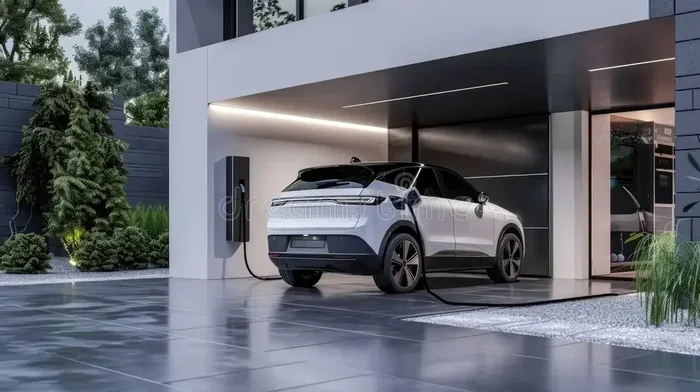
Can You Charge an Electric Car at Home on a Budget
Yes, you absolutely can charge an electric car at home on a budget. With a standard outlet or an affordable Level 2 charger, home EV charging is simpler and cheaper than most people think. You will learn the real costs, the best budget options, and smart ways to cut your electricity bill. This guide covers everything from installation to daily savings so you can make an informed decision without overspending.
So you are wondering whether you can charge an electric car at home on a budget. The short answer is yes. You absolutely can. More and more people are making the switch to electric vehicles every single day. And the biggest question on their minds is always the same. Can they charge at home without breaking the bank?
The truth is that home charging is one of the biggest advantages of owning an electric vehicle. You wake up every morning with a full tank. No more stopping at gas stations. No more fluctuating fuel prices. And the best part is that it does not have to cost a fortune to set up. Whether you live in a house with a garage or an apartment with a parking spot, there is a budget-friendly option for you.
In this guide, we will walk you through every affordable way to charge your EV at home. We will cover the different types of chargers, real costs, money-saving tips, and common mistakes to avoid. By the end, you will have a clear picture of what it takes to charge electric car at home on a budget. Let us get into it.
Key Takeaways
- You can plug into a standard outlet: Level 1 charging works with any regular household outlet and costs nothing extra to set up.
- Level 2 chargers are affordable: A budget-friendly home charging station costs between $200 and $600, plus installation.
- Home charging saves money long-term: Charging at home is significantly cheaper than gas, even after factoring in electricity costs.
- Government incentives help: Tax credits and rebates can offset a large portion of your charger purchase and installation fees.
- Off-peak rates cut costs further: Charging your EV overnight or during low-demand hours reduces your electricity bill dramatically.
- DIY installation is possible: If you have electrical knowledge, you can save on professional installation costs.
- Solar panels add massive savings: Pairing your home charger with solar energy can make EV charging nearly free over time.
📑 Table of Contents
- How Home EV Charging Actually Works
- Budget-Friendly Charging Options You Can Use Today
- Installation Costs and How to Reduce Them
- How Much Does It Really Cost to Charge at Home?
- Smart Tips to Save Even More Money on Home EV Charging
- Common Mistakes to Avoid When Setting Up Home EV Charging
- Final Thoughts on Charging an Electric Car at Home on a Budget
How Home EV Charging Actually Works
Before you spend a single dollar, it helps to understand how home EV charging works. The process is much simpler than most people assume. Your electric vehicle comes with a charging port. You plug a cable into that port. The other end goes into an electrical source. That is basically it.
The speed and cost of charging depend on a few key factors. These include the type of charger you use, your electrical panel capacity, and your local electricity rates. Let us break down the two main levels of home charging so you can see what fits your budget and lifestyle.
Level 1 Charging: The Simplest and Cheapest Option
Level 1 charging uses a standard 120-volt household outlet. Every electric vehicle comes with a Level 1 charging cable in the box. That means you do not need to buy anything extra to get started. You just plug it in.
The downside is speed. Level 1 charging adds about 3 to 5 miles of range per hour. So if you drive 30 miles a day, you need roughly 6 to 10 hours to fully recharge. This works great if you only drive short distances. It also works well if you plug in overnight while you sleep.
The upside is cost. Level 1 charging costs you absolutely nothing in equipment. You already have the outlet. There is no installation fee. No electrician needed. No permit required in most cases. For many people, this is the perfect starting point for budget home EV charging.
Level 2 Charging: Faster and Worth the Investment
Level 2 charging uses a 240-volt outlet, similar to what a clothes dryer uses. This is where a dedicated home charging station comes in. A Level 2 charger adds about 25 to 30 miles of range per hour. That means a full charge overnight is very realistic for most drivers.
The equipment cost for a Level 2 charger ranges from $200 to $600 for most budget models. Popular affordable options include the JuiceBox 32, the Grizzl-E, and the Tesla Wall Connector. You will also need a licensed electrician to install a dedicated 240-volt circuit. Installation typically costs between $200 and $800 depending on your electrical panel and local labor rates.
Overall, a full Level 2 setup can cost anywhere from $400 to $1,400. That sounds like a lot at first. But when you compare it to years of fuel savings, it pays for itself quickly. And remember, many government incentives can bring that cost down even further.
Budget-Friendly Charging Options You Can Use Today
You do not need to spend a fortune to start charging your electric vehicle at home. There are several affordable paths depending on your situation and budget. Let us look at the most practical options available right now.
Option 1: The Standard Wall Outlet
If you are on a tight budget, a standard wall outlet is your best friend. As we mentioned, Level 1 charging costs nothing to set up. You get the cable that comes with your car. You plug it into any regular outlet. Done.
This option works best for people with short daily commutes. If you drive less than 30 miles a day, Level 1 charging will keep you topped up every night. It is slow, yes. But it is also free and requires zero investment. For many budget-conscious EV owners, this is more than enough.
Option 2: An Affordable Level 2 Home Charger
If you want faster charging without a huge price tag, a budget Level 2 charger is the sweet spot. Most affordable units fall in the $200 to $500 range. They deliver 32 to 40 amps of power. That is more than enough for overnight charging.
Some popular budget-friendly chargers include the Grizzl-E Standard, the Webasto Evo, and the Tesla Mobile Connector with a NEMA 14-50 adapter. These units are reliable, safe, and easy to install. They also come with smart features like app controls and scheduling in many cases.
Option 3: Used or Refurbished Chargers
Another great way to save money is to buy a used or refurbished charger. Many EV owners upgrade their equipment after a year or two. This means there is a steady market for pre-owned home charging stations. You can often find quality Level 2 chargers for 50% off retail price.
Just make sure you buy from a reputable source. Check the warranty and verify the unit is compatible with your vehicle. A used charger can save you a lot of money upfront without sacrificing performance.
Installation Costs and How to Reduce Them
Installation is where many people get sticker shock. But the good news is that there are real ways to bring these costs down. Let us talk about what goes into installation and how you can save.
DIY vs Professional Installation
If you have experience with electrical work, you might consider a DIY installation. In some areas, you can install a Level 2 charger yourself if you pull the proper permits. This can save you $300 to $500 in labor costs.
However, electrical work can be dangerous if you do not know what you are doing. A licensed electrician ensures everything is safe and up to code. Most experts recommend hiring a professional unless you have solid electrical experience. A bad installation can cause fires, damage your vehicle, or void your warranty.
Government Incentives and Rebates
Here is where it gets really good for budget-conscious buyers. The federal government offers a tax credit of up to $1,000 for home EV charger installation. Many states and local utilities offer additional rebates. Some utility companies even provide free or discounted chargers to their customers.
You should also check for state-specific incentives. California, New York, Colorado, and several other states have generous programs for EV owners. A quick search for your state plus “EV charging rebate” will show you what is available. These incentives can cut your total setup cost by 30% or more.
How Much Does It Really Cost to Charge at Home?
This is the question everyone wants answered. And the answer is very encouraging for budget-minded EV owners. Charging at home is dramatically cheaper than filling up a gas tank. Let us look at the real numbers.
Calculating Your Charging Costs
To calculate your charging cost, you need two numbers. The first is your electricity rate per kilowatt-hour. The average rate in the United States is about $0.15 per kWh. The second is your vehicle’s efficiency. Most EVs use about 0.3 kWh per mile.
So if you drive 30 miles a day, that is 9 kWh per day. At $0.15 per kWh, your daily charging cost is about $1.35. That works out to roughly $40 per month. Compare that to the average gas vehicle spending $150 to $200 per month on fuel. The savings are clear.
Comparing Gas vs Electric Fuel Costs
Let us put this in perspective with a quick comparison. The average gas price in the US is around $3.50 per gallon. A typical car gets 30 miles per gallon. Driving 30 miles a day costs about $3.50 per day in gas. That is $105 per month.
Now compare that to charging an EV at home. The same 30 miles costs about $1.35 per day. That is $40.50 per month. You are saving roughly $65 every single month. Over a year, that adds up to nearly $800 in savings. Over five years, you are looking at $4,000 or more.
| Cost Factor | Gas Vehicle | Electric Vehicle (Home Charging) |
|---|---|---|
| Daily Fuel Cost (30 miles) | $3.50 | $1.35 |
| Monthly Fuel Cost | $105 | $40.50 |
| Annual Fuel Cost | $1,260 | $486 |
| 5-Year Fuel Cost | $6,300 | $2,430 |
| Setup Cost | $0 | $400 to $1,400 |
Even with the upfront cost of a home charger, the EV pays for itself in fuel savings within the first two to three years. And after that, you are saving money every single month for the life of the vehicle.
Smart Tips to Save Even More Money on Home EV Charging
Want to stretch your budget even further? There are several smart strategies that can significantly reduce your charging costs. These are easy to implement and can make a real difference on your electricity bill.
Charge During Off-Peak Hours
Many electricity providers offer time-of-use pricing. This means electricity is cheaper during off-peak hours, typically late at night or early morning. By scheduling your EV charging for these hours, you can cut your charging cost in half or more.
Most modern home chargers have built-in scheduling features. You can set your charger to start at 11 PM and finish by 6 AM. You wake up to a full battery and a lower electricity bill. It is one of the easiest money-saving tricks for EV owners.
Consider Solar Panels
If you really want to eliminate charging costs, solar panels are the answer. A home solar panel system can generate enough electricity to power your EV and your entire house. The upfront cost is significant, but federal tax credits can offset 30% of the installation cost.
Over time, solar energy is essentially free. Once your panels are paid off, you could be charging your electric vehicle for years without paying a dime for electricity. It is the ultimate budget-friendly charging solution.
Join a Community Charging Program
Some utility companies and local programs offer discounted EV charging rates or shared charging stations. Check with your electricity provider to see if they have any special programs for EV owners. These programs can reduce your per-kWh cost and make home charging even more affordable.
Common Mistakes to Avoid When Setting Up Home EV Charging
Even with the best intentions, people make mistakes when setting up home EV charging. Avoiding these pitfalls can save you money, time, and frustration.
Skipping the electrical panel assessment. Before buying a charger, have an electrician check your panel. Older homes may need an upgrade to handle a Level 2 charger. This is a cost you want to know about before you start shopping.
Ignoring local permits and codes. Most areas require permits for EV charger installation. Skipping this step can lead to fines and insurance issues. Always check with your local building department first.
Buying the wrong charger. Not all chargers work with all vehicles. Make sure the charger you buy is compatible with your EV. Most modern chargers are universal, but it is always worth double-checking.
Forgetting about warranty and support. A cheap charger is not a good deal if it breaks after six months. Look for units with solid warranties and good customer support. Spending a little more upfront can save you a lot in the long run.
Final Thoughts on Charging an Electric Car at Home on a Budget
Charging an electric car at home on a budget is absolutely doable. You have options ranging from free Level 1 charging to affordable Level 2 setups. The key is to start with what fits your budget and needs. You can always upgrade later as your savings grow.
The real beauty of home EV charging is the long-term savings. Yes, there is an upfront cost. But the monthly fuel savings quickly make up for it. Add in government incentives, off-peak rates, and maybe even solar panels, and you have a winning financial picture.
If you have been sitting on the fence about going electric, now is a great time to explore your options. Start small if you need to. Plug into a standard outlet and see how it fits your lifestyle. Then decide if you want to invest in a faster home charging station. Either way, you are already saving money compared to gas. And that is a win for both your wallet and the environment.
Take the first step today. Look at your driving habits. Check your local electricity rates. Research available incentives in your area. You will be surprised at how affordable and practical home EV charging really is. The future is electric, and it is more budget-friendly than you might think.
Frequently Asked Questions
Can I charge my electric car using a regular home outlet?
Yes, you can. Every electric vehicle comes with a Level 1 charging cable that plugs into a standard 120-volt outlet. It is the slowest option but costs nothing extra to set up. It works best for short daily commutes under 30 miles.
How much does it cost to install a home EV charger?
A budget Level 2 charger costs $200 to $600 for the equipment. Installation by a licensed electrician typically adds $200 to $800. Total setup costs usually range from $400 to $1,400. Government incentives can reduce this significantly.
Is home EV charging cheaper than gas?
Absolutely. Charging at home costs about $1.35 per day for 30 miles of driving. The same distance in a gas vehicle costs around $3.50 per day. Over a year, EV owners save hundreds or even thousands of dollars on fuel costs.
Do I need a special electrical panel for a home charger?
Level 1 charging works with any standard panel. Level 2 charging requires a 240-volt dedicated circuit. Older homes may need an electrical panel upgrade, which adds to the cost. An electrician can assess your panel before installation.
Can I install a home EV charger myself?
It depends on your electrical knowledge and local codes. Some areas allow DIY installation with proper permits. However, hiring a licensed electrician is recommended for safety and warranty protection. Improper installation can be dangerous and void your charger warranty.
Are there government incentives for home EV charging?
Yes, there are. The federal tax credit offers up to $1,000 for home charger installation. Many states and utility companies offer additional rebates. Check the Database of State Incentives for Renewables and Efficiency (DSIRE) to find programs in your area.
=== CONCLUSION ===
Charging an electric car at home on a budget is not only possible, it is one of the smartest financial moves an EV owner can make. From free Level 1 charging to affordable Level 2 setups, there is a solution for every budget. The upfront costs are manageable, especially with government incentives and rebates available today.
Once your home charging station is set up, the savings begin immediately. Lower fuel costs, reduced maintenance expenses, and the convenience of waking up to a full battery every morning. These benefits add up fast and make EV ownership more affordable than ever before.
Start with what works for you right now. Whether that is a simple wall outlet or a budget-friendly Level 2 charger, every step toward home EV charging saves you money. The road ahead is electric, and it is more accessible than you think. Plug in, save money, and enjoy the drive.